
Indonesia Travel Safety Under Spotlight As Java Sea Ferry Incident Raises New Concerns For Island Tourism Connectivity
Indonesia Travel Safety Under Spotlight As Java Sea Ferry Incident Raises New Concerns For Island Tourism Connectivity

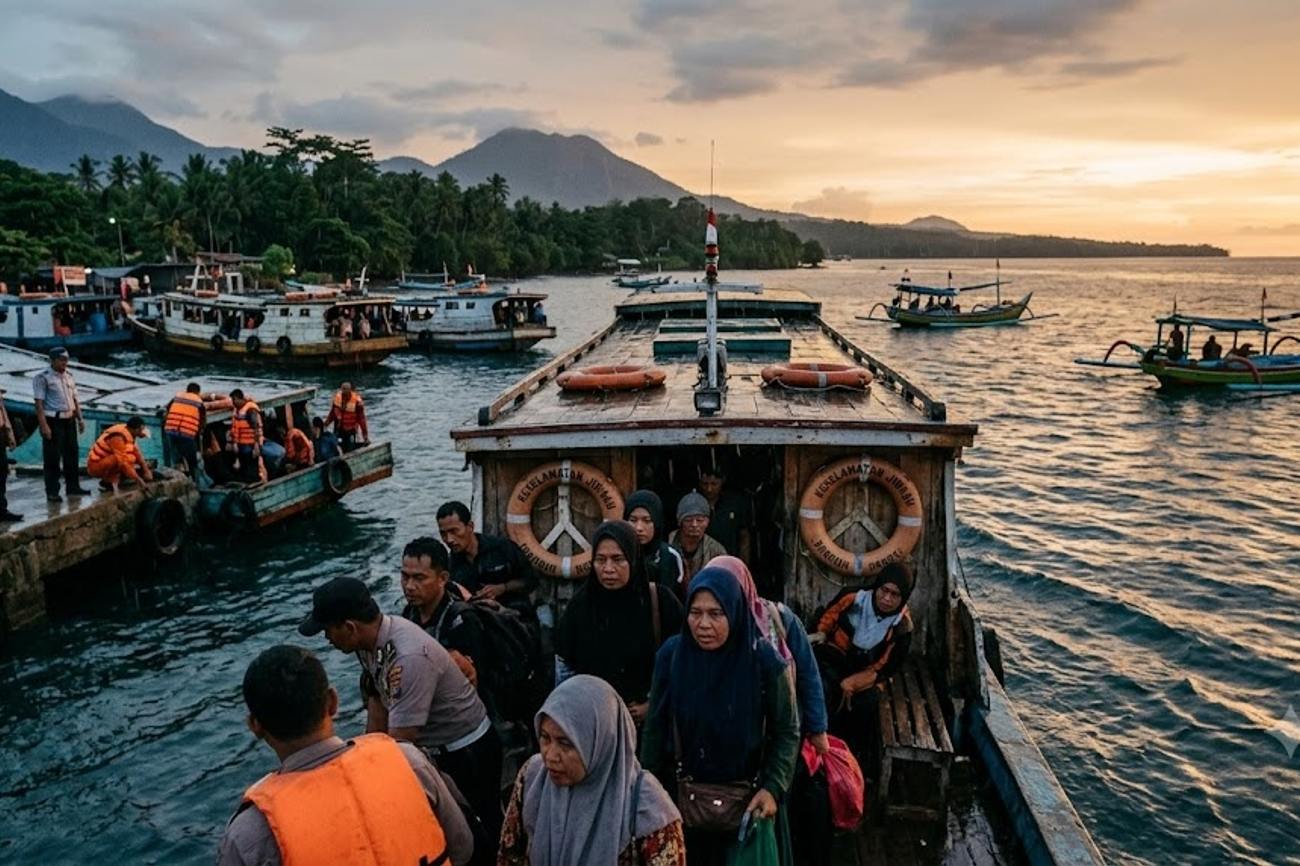
Image generated by AI
17,000 islands create a geographic dependency on maritime transit that transforms a single vessel's disappearance into a systemic risk for the Indonesian tourism economy. The loss of contact with a passenger ship traveling from Surabaya to Banjarmasin on September 13, 2026, serves as a stark reminder that Indonesia's "connectivity" is only as strong as its weakest maritime link. When a vessel vanishes during bad weather in the Java Sea, it does not merely trigger a search-and-rescue operation; it exposes the fragile infrastructure supporting the movement of millions of residents and international tourists across the archipelago.
The Surabaya-Banjarmasin Corridor Crisis
The disappearance of the vessel on September 13, 2026, occurred on one of the nation's most economically vital maritime arteries. The route connects Surabaya, the primary gateway of East Java and the jumping-off point for Mount Bromo and eastern Indonesian expeditions, to Banjarmasin in South Kalimantan, a hub for river-based tourism and floating markets.
This specific corridor is more than a transit line; it is a tourism pipeline. The failure of a vessel on this route highlights a critical vulnerability in how Indonesia manages its "island-hopping" logistics. While the Ministry of Tourism has aggressively marketed the country's diverse destinations, the physical movement between these hubs remains susceptible to the volatility of the Java Sea. The incident underscores a disconnect between the growth of visitor demand and the reliability of the maritime assets used to meet that demand.
Maritime Logistics and the Safety Gap
Indonesia's reliance on sea transport is not a choice but a geographic necessity. The country's transport architecture is a hybrid of aviation, road, and sea, but the "last mile" for many of the most prized tourist destinations—diving spots, remote cultural sites, and nature reserves—is almost exclusively maritime.
The current operational framework for these routes relies on a complex web of ferries and smaller passenger boats. However, as indicated by the recent Java Sea incident, the margin for error is slim. The following table outlines the primary corridors where maritime safety directly impacts tourism stability:
| Region | Primary Connection | Tourism Impact |
|---|---|---|
| Java $\rightarrow$ Kalimantan | Surabaya to Banjarmasin | Access to river tourism and nature-based experiences |
| Bali $\rightarrow$ Nusa Islands | Bali to Lembongan/Penida | High-volume international diving and coastal tourism |
| Sumatra $\rightarrow$ Riau Archipelago | Mainland to outlying islands | Cultural tourism and regional transit |
| Eastern Indonesia | Various Inter-island routes | Remote exploration and high-end niche tourism |
The deployment of the National Search and Rescue Agency (BASARNAS) in response to the September 13 disappearance demonstrates the state's capacity for reaction, but it does not address the systemic need for prevention. The coordination between naval units, water police, and local emergency agencies is a necessary safety net, but for the high-value international traveler, a "rescue-based" system is less appealing than a "prevention-based" one.
Expert Analysis: The Connectivity Paradox
For travelers booking routes within the Indonesian archipelago, the direct consequence of this incident is a shift in the "perceived risk" versus "cost" equation. Indonesia is currently experiencing a paradox: while Statistics Indonesia (BPS) reports a strong recovery in international visitor arrivals, the infrastructure used to move these visitors into the interior is lagging behind the growth in demand.
The pricing pressure created by this safety gap will likely manifest in two ways. First, we will see a "flight to safety" where travelers migrate from affordable ferry options to more expensive domestic aviation. This increases the load on airports and drives up ticket prices for short-haul hops that could be handled by sea. Second, premium tour operators will likely increase their margins to cover the cost of chartered, higher-specification vessels that offer better communication and safety redundancies than the standard public ferries.
Furthermore, the role of the Indonesian Meteorology, Climatology and Geophysics Agency (BMKG) cannot be overstated. In a region where "bad weather" is the primary cause of maritime failure, the lack of real-time, integrated weather alerts for passengers—rather than just operators—creates a dangerous information asymmetry. When a ship loses contact, it is often a failure of communication technology as much as it is a failure of seamanship. For the nomad lawyer or the corporate traveler, the lack of standardized safety certifications across all ferry operators means that the "legal" status of a vessel does not always equate to "safe" operational standards.
Key Takeaways
- Systemic Vulnerability: The September 13, 2026, incident proves that maritime connectivity remains the "Achilles heel" of Indonesian tourism, specifically on the Surabaya-Banjarmasin route.
- Economic Ripple Effect: Maritime disruptions directly impact hotel occupancy and local spending in South Kalimantan and East Java, as arrival schedules are thrown into chaos.
- Aviation Shift: Safety concerns in the Java Sea are likely to drive a short-term increase in demand for domestic flights, potentially raising airfares for inter-island travel.
- Information Gap: There is a critical need for travelers to independently verify weather warnings via BMKG rather than relying solely on operator announcements.
- Operational Risk: The heavy reliance on BASARNAS for reactive rescue highlights a need for more proactive, technology-driven vessel tracking systems.
FAQ: Indonesia Maritime Travel 2026
Is it safe to use ferries in the Java Sea? While ferries are essential, safety varies by operator. Travelers should prioritize licensed vessels, check current BMKG weather warnings, and ensure the vessel has functioning communication equipment before departing.
What should I do if a ferry is cancelled due to weather? Contact your hotel and tour operator immediately to adjust bookings. Check for alternative flight options between major hubs like Surabaya and Banjarmasin to avoid long delays.
How can I verify if a boat operator is licensed? Request to see the operator's official permits and check for certifications from the Indonesian Ministry of Transportation. Avoid unregistered "private" charters that lack standard safety gear.
Which agencies handle emergencies at sea in Indonesia? BASARNAS (National Search and Rescue Agency) is the primary body, working in tandem with the Indonesian Navy and water police to coordinate search and rescue operations.
When the map is made of water, the safety of the vessel is the only law that matters.
Tags: BASARNAS, Java Sea, Surabaya-Banjarmasin Route, Indonesia Maritime Safety 2026, BMKG Weather Alerts, Indonesian Archipelago Tourism
Related Travel Guides
- China Steps Up With Oman And More Nations To Offer Peace Efforts That Could Transform Middle East Tourism
- US Destinations Launch Targeted Campaigns to Recover Canadian Tourism
- US Air Travel Gridlock Triggers 6,750 Flight Delays and 283 Cancellations Across Chicago, Boston, and New York Airports in September 2026
Disclaimer
This article is for informational and educational purposes only. It does not constitute legal, financial, or professional advice. While we strive to provide accurate and up-to-date information, travel policies, regulations, and conditions change rapidly. Always verify information with official sources before making travel decisions. Nomad Lawyer makes no representations about the accuracy, reliability, completeness, or suitability of the information provided. Readers should consult qualified professionals for advice specific to their circumstances. The views expressed in this article are those of the author and do not necessarily reflect the views of Nomad Lawyer.
Raushan Kumar
Founder & Lead Developer
Full-stack developer with 11+ years of experience and a passionate traveller. Raushan built Nomad Lawyer from the ground up with a vision to create the best travel and law experience on the web.
Learn more about our team →