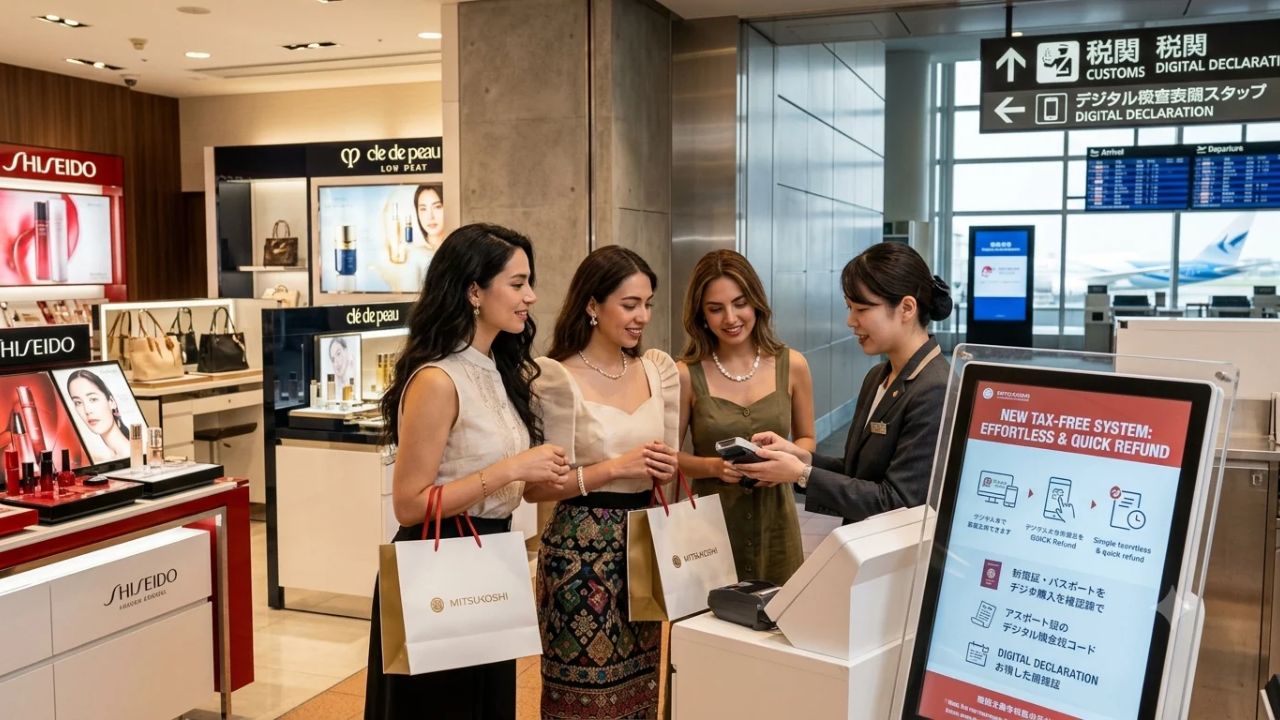
Japan Leads South Korea and Other Countries in Asia’s Humanoid Robotics Revolution, Transforming Smart Airports and Tourism Cities

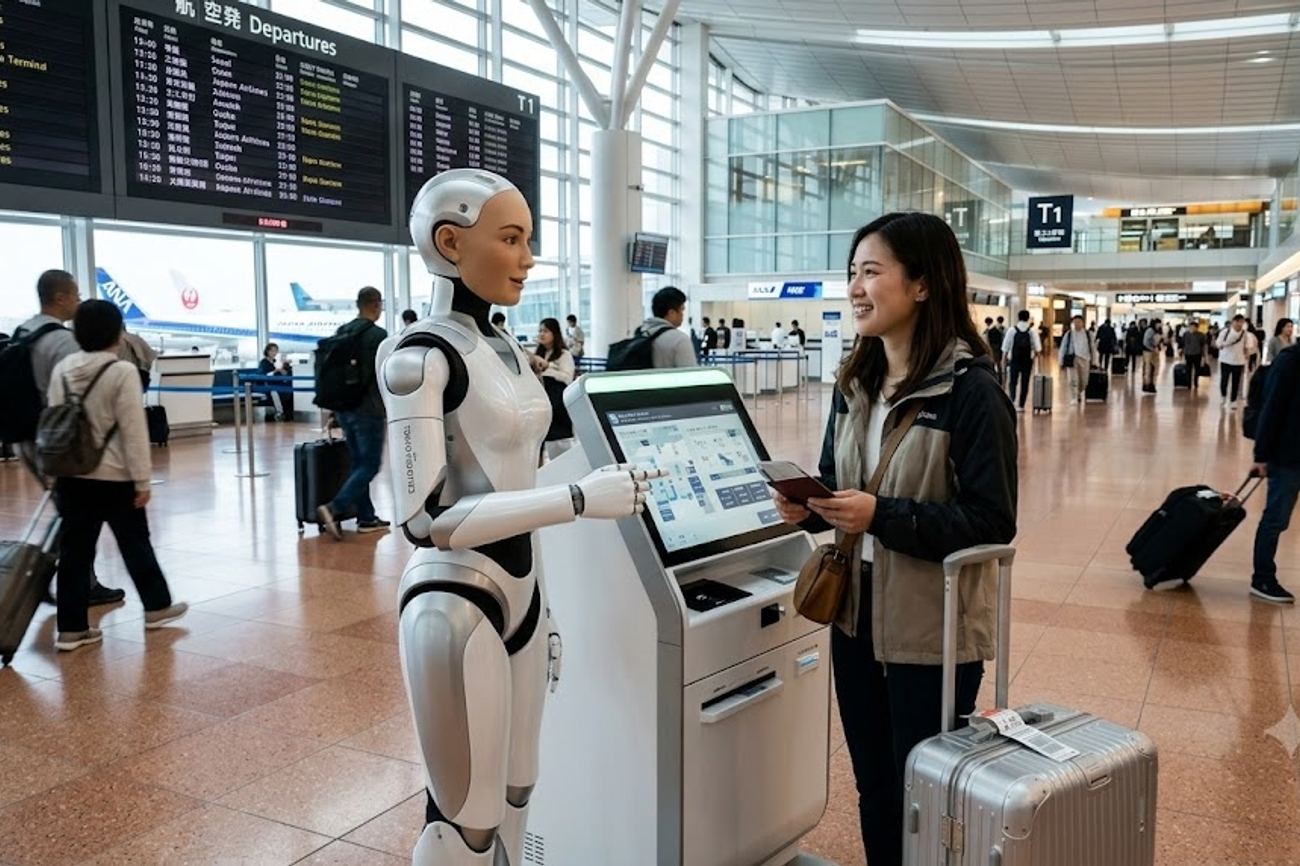
Image generated by AI
Japan's inbound tourism surged to 42.7 million visitors in 2025, yet the country continues to face a shrinking working-age population—a demographic gap that has forced a pivot toward physical AI to maintain operational capacity. This structural deficit is no longer being managed solely through digital kiosks; it is being solved through the deployment of bipedal humanoid robotics that transition from airport concourses directly into urban commercial centers.
The Robotics Integration Metric — From Terminals to City Streets
The shift in Asian hospitality is defined by the movement of "physical AI" beyond the perimeter of the airport. Historically, automation was stationary—think of the self-service check-in kiosks or automated baggage belts. The current data shows a transition toward mobile, humanoid units capable of navigating human-centric environments without requiring structural modifications to the architecture.
In Tokyo, the deployment of Unitree G1 units (standing 130 cm and weighing 35 kg) and UBTECH Walker E units (172 cm) at Haneda International Airport (HND) marks a shift in labor utility. These robots are not merely providing information; they are performing physical labor, including the manipulation of container locking levers and the pushing of heavy dollies. This is a direct response to the labor crisis, particularly as Japan recorded over 7 million arrivals in just the first two months of 2026.
In South Korea, the integration is data-centric. The AirStar Robotic Series at Incheon International Airport (ICN) utilizes Selvas AI Multimodal Voice Synthesis. The critical trend here is the "data bus" connectivity; these robots are linked to the Songdo Smart City IoT sensor networks. This allows a robot in a public park to provide a traveler with a real-time gate update based on live flight databases from the airport.
Singapore represents the high-volume benchmark. With Changi Airport Group (CAG) reporting 68.4 million passenger movements across 170 destinations in the 2024/25 operating year, the scale of automation is a national economic imperative. The Singapore Tourism Board (STB) has tied this automation to its Tourism 2040 roadmap, which targets international tourism receipts between SGD 47 billion and SGD 50 billion.
Comparative Regional Robotics Deployment
The following table breaks down the current state of humanoid and autonomous deployment across the primary Asian hubs, highlighting the shift from airport-specific tasks to civic infrastructure integration.
| Region | Primary Hub & Urban Zone | Core Hardware/AI Architecture | Key Hospitality Functions | Infrastructure Integration |
|---|---|---|---|---|
| Japan | Haneda (HND) $\rightarrow$ Ginza/Shinjuku | Unitree G1 / UBTECH Walker E / GMO AIR | Luggage handling, wayfinding, urban hosting | GMO Humanoid Lab / Mobile "Humanoid Ambulances" |
| South Korea | Incheon (ICN) $\rightarrow$ Songdo Smart City | AirStar Series / Selvas AI Voice Synthesis | Passport scanning, gate escorting, park concierge | ICN Data Bus / Songdo IoT / Smart Street Lighting |
| Singapore | Changi (SIN) $\rightarrow$ Orchard Rd/Gardens by the Bay | CAG Autonomous Bots / Alibaba Amap / OpenAI | GST refund guidance, queue triage, crowd control | STB Tourism 2040 / Tcube / Sentosa SensoryScape |
| Philippines | Davao (DVO) $\rightarrow$ CBD/People's Park | Municipal Autonomous Bots / CITC | eTravel verification, QRPH routing, multilingual guide | Davao Tier 3 Data Center / PSSO Video / Central 911 |
Practical Traveler Advisory and Strategic Insights
The deployment of physical AI changes the "friction points" of international travel. For the modern nomad or business traveler, the traditional gauntlet of immigration queues and confusing transit machines is being replaced by active, mobile assistance.
1. Reduced Transit Friction in Japan: If you are landing at Haneda (HND) starting in mid-2026, expect bipedal robots to handle baggage transfer and rail guidance. The presence of "humanoid ambulances" in districts like Shibuya and Shinjuku suggests that these bots will be ubiquitous and highly reliable, reducing the need to navigate complex Japanese transit maps manually.
2. Seamless Urban Transitions in Korea: Travelers using Incheon (ICN) can now expect a continuum of support. Because the robots are integrated with the Songdo Smart City grid, you can receive real-time flight updates while visiting city parks. This eliminates the need to constantly check mobile apps for gate changes while exploring.
3. Automated Compliance in Singapore and Philippines: In Singapore, the use of autonomous bots for GST tax-refund kiosks and queue triage means shorter wait times for administrative tasks. Similarly, in Davao (DVO), the use of bots for eTravel digital verification streamlines the entry process, reducing the time spent at manual checkpoints.
For those planning trips to these regions, the reliance on these systems means that ensuring your digital documentation (passports, eTravel QR codes) is updated and accessible is more important than ever, as the "human" element of the greeting process is being replaced by AI scanners. According to IATA, the move toward digital identity and automated processing is the primary driver for reducing terminal congestion globally.
Forward Projection: The "Unbroken Continuum" of Hospitality
The trajectory of this technology suggests that the airport will soon cease to be a separate entity from the city. We are moving toward an "unbroken continuum" where the same AI identity that greets you at the gate follows you into the metropolitan rail network and eventually to your hotel.
The data from the World Travel & Tourism Council (WTTC) indicates a massive rebound in Asian travel, but the labor supply is not rebounding at the same rate. This gap will drive the adoption of "Humanoid-as-a-Service" (HaaS). We can expect to see the "humanoid ambulance" model—first pioneered by GMO AIR in Tokyo—become a global standard for maintaining robot fleets in high-traffic tourist zones.
Furthermore, the integration of OpenAI and Alibaba Amap in Singapore signals a shift toward "contextual wayfinding." Future bots will not just tell you where a museum is; they will analyze real-time pedestrian crowd control data to suggest the fastest, least-congested route to get there. As these systems link with Statista style consumer behavior data, the bots will likely begin offering personalized, AI-driven merchant routing (similar to the QRPH routing seen in Davao) based on the traveler's spending habits.
FAQ: Asian Hospitality Robotics 2026
Will the use of robots increase travel costs? Unlikely. These deployments are designed to solve labor deficits and operational inefficiencies. By reducing the cost of ground handling and administrative friction, carriers and airports can maintain capacity without drastically increasing passenger fees.
Is it a good time to book travel to Japan or Korea? Yes, provided you are comfortable with automated systems. The integration of AI in Haneda and Incheon is specifically designed to handle the surge of 2025-2026 tourism, meaning the "friction" of visiting these hubs is actually decreasing.
Which airlines are leading this expansion? JAL Ground Service is a primary mover in Japan, partnering with GMO AI & Robotics Shoji. In Singapore, the Changi Airport Group (CAG) is driving the infrastructure, which benefits all carriers operating within Terminals 1–4 and Jewel.
Do I need special apps to interact with these robots? Generally, no. The trend is toward "multimodal interaction," meaning these robots use voice synthesis (like Selvas AI) and physical scanning (passports/QR codes) to interact with travelers without requiring third-party app downloads.
The invisible revolution in Asia proves that the future of travel is not just digital, but physical.
Related Travel Guides
- Newark Stands Alongside John F. Kennedy and Others as Air Traffic Control Failure Creates Widespread Flight Disruptions Across America’s Northeast Aviation Network
- Philippines and More Asian Countries Transform Tourism Codes to Protect Local Markets and Reshape Sustainable Overtourism Management
- Norway Travel Unveils Hidden Arctic Beach With Untouched Beauty Among World’s Best Coastal Wonders
This article is for informational purposes. Flight routes, passenger regulations, visa rules, and transit advisories are subject to change by airlines and aviation authorities. Readers are advised to verify schedules and travel documentation with relevant carriers and border agencies before departure.
Related Stories
Typhoon Champi 2026: Taiwan and Japan Flight Cancellations and Passenger Rights Guide

European Mass Protests Disrupt Travel Across France, Italy, Belgium, and Turkey in 2026