Newark Stands Alongside John F. Kennedy and Others as Air Traffic Control Failure Creates Widespread Flight Disruptions Across America’s Northeast Aviation Network

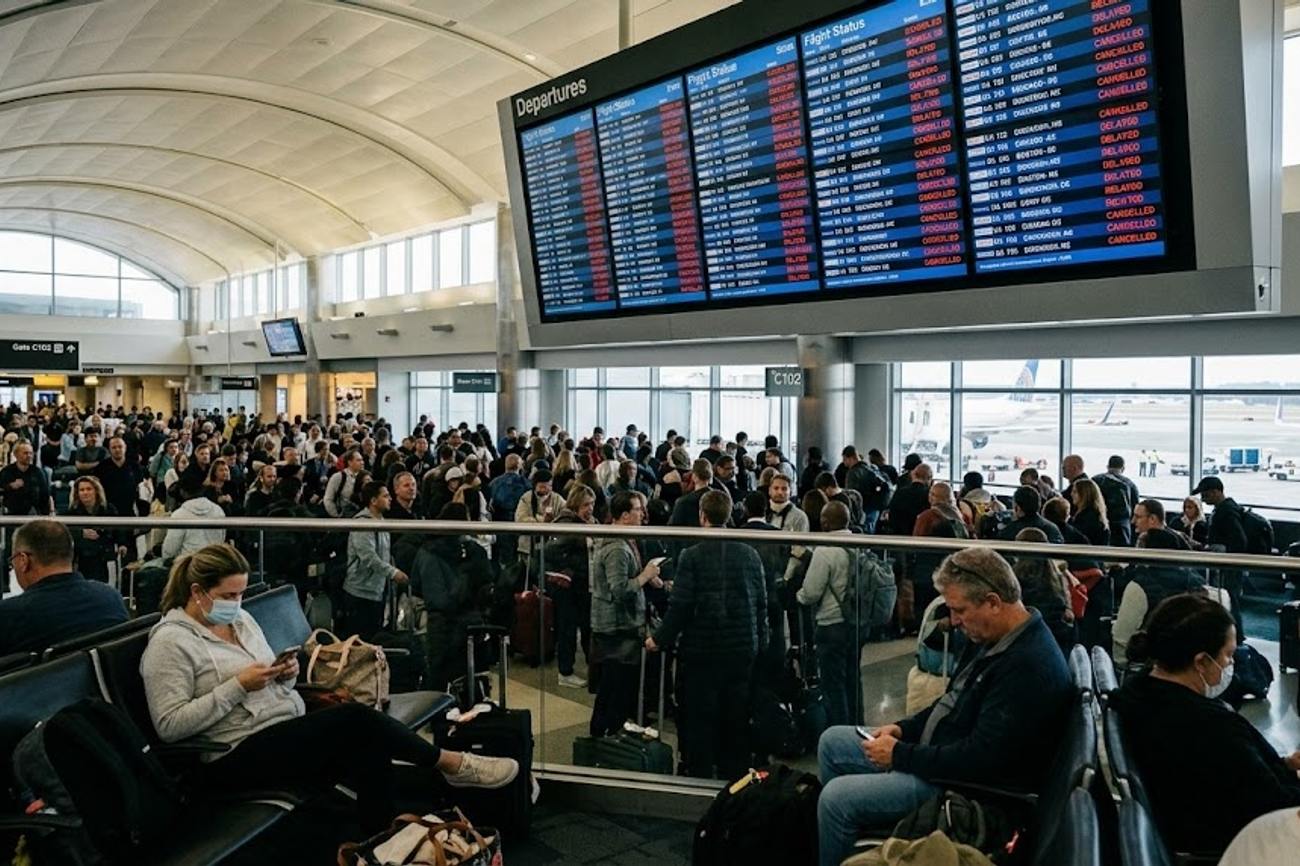
Image generated by AI
Thousands of travelers faced systemic delays, diversions, and cancellations on a single Monday after a critical communication failure paralyzed air traffic control (ATC) operations across the American Northeast. This operational collapse centered on a primary failure at a Federal Aviation Administration (FAA) facility in Philadelphia, which serves as the nerve center for one of the most congested aviation corridors on the planet. The failure was not a simple glitch but a catastrophic redundancy collapse; while the primary communication circuit failed, a backup fiber optic connection—designed specifically to prevent this scenario—had been severed by construction crews operating between Newark and New Brunswick, New Jersey.
The Philadelphia Nerve Center and the Redundancy Gap
The Northeast corridor operates as a tightly woven web of airspace where a disruption in one node creates an immediate ripple effect across the entire region. The Philadelphia ATC facility is the primary coordinator for flight movements across several states, meaning its operational health dictates the flow of traffic for the entire East Coast. When the primary circuit went dark, the system should have seamlessly transitioned to the backup fiber optic line. However, the physical destruction of that backup line during New Jersey construction projects left controllers with severely limited communication capacity.
This lack of redundancy forced the FAA to implement temporary flight restrictions. In an environment where aircraft are separated by narrow margins of time and space, the loss of reliable communication necessitates an immediate reduction in "throughput"—the number of planes allowed in the air. This resulted in a mandatory slowdown of arrivals and departures, effectively choking the flow of traffic into the New York City metropolitan area and beyond.
Regional Operational Breakdown and Data Impact
While the failure originated in Philadelphia, the operational weight fell most heavily on Newark Liberty International Airport (EWR). As a primary hub for United Airlines, Newark’s high volume of connecting flights meant that a single hour of restriction created a compounding backlog of aircraft and passengers. Flight tracking data indicated that average delays at Newark exceeded 60 minutes, a figure that often underestimates the true impact on passengers facing missed connections and overnight stays.
The disruption radiated outward to other critical nodes in the aviation network. Philadelphia International Airport (PHL), the hub for American Airlines, faced direct instability due to its proximity to the failing facility. Meanwhile, the "tri-state" airports of New York—John F. Kennedy International (JFK) and LaGuardia (LGA)—saw their international and regional schedules derailed. Even Boston Logan International (BOS) in Massachusetts and the general aviation hub of Teterboro Airport (TEB) in New Jersey suffered knock-on effects, proving that the Northeast airspace is a single, integrated organism.
| Affected Airport | IATA Code | Primary Impact Level | Key Carrier Affected |
|---|---|---|---|
| Newark Liberty International | EWR | Severe | United Airlines |
| Philadelphia International | PHL | High | American Airlines |
| John F. Kennedy International | JFK | Moderate/High | Various International |
| LaGuardia Airport | LGA | Moderate | Various Domestic |
| Boston Logan International | BOS | Moderate | Various Regional |
| Teterboro Airport | TEB | Moderate | Private/General Aviation |
Expert Analysis: The Fragility of Legacy Infrastructure
For the frequent traveler or the corporate nomad, this incident is a warning sign regarding the "technical debt" embedded in US aviation. The cause-and-effect chain here is clear: an aging primary system failed, and a poorly managed physical infrastructure project destroyed the safety net. This is not an isolated technical glitch; it is a symptom of a systemic reliance on legacy hardware that is increasingly unable to support the volume of modern air travel.
The direct consequence for travelers booking routes through the Northeast is an increased risk of "cascading delays." Because the US ATC system is so centralized, a failure in Philadelphia doesn't just affect Philadelphia; it creates a vacuum of coordination that forces airports as far away as Boston to throttle their operations. When the FAA reduces the flow of traffic to maintain safety, planes are held on the tarmac or diverted to secondary airports, which then become congested, creating a secondary wave of delays.
The air traffic control failure has caused significant disruptions to flights across America's Northeast Aviation Network, with major airports such as Newark, John F. Kennedy, and LaGuardia affected. For the latest updates on flight schedules and travel advisories, passengers can visit the Federal Aviation Administration website for official information. The FAA is working closely with airlines and airports to minimize the impact of the disruptions on travelers.
Furthermore, the pricing pressure created by such disruptions often falls on the passenger. While airlines may offer to adjust travel plans without fees during a "force majeure" event, the logistical cost of re-routing thousands of passengers through an already stressed system leads to higher operational costs for carriers, which are inevitably passed down through ticket pricing. The shift toward AI-based air traffic management, currently being tested by the FAA, is an admission that human-managed legacy systems have reached their breaking point. Until these digital upgrades are fully implemented, the Northeast corridor remains a high-risk zone for systemic failure.
Key Takeaways
- Single Point of Failure: The disruption was caused by the simultaneous loss of a primary communication circuit and a backup fiber optic line severed by construction in New Jersey.
- Hub Vulnerability: Newark (EWR) and Philadelphia (PHL) suffered the most due to their roles as major hubs for United and American Airlines, respectively.
- Regional Contagion: The outage proved that ATC failures in Philadelphia immediately impact JFK, LGA, BOS, and TEB, regardless of their distance from the source.
- Infrastructure Crisis: The event underscores the urgent need for the multi-billion dollar modernization of the International Air Transport Association (IATA) standards and FAA-managed systems.
- Recovery Lag: Even after technical repairs are completed, the "recovery phase" for airlines can take several hours or days as crews and aircraft are repositioned.
FAQ: Northeast Air Traffic Disruptions 2024
What should I do if my flight is diverted due to an FAA communication failure? Immediately contact your airline via their mobile app rather than waiting in line at the airport. Request a re-booking on the next available flight and keep all receipts for meals and hotels, as these may be reimbursable depending on the airline's policy regarding ATC failures.
Why does a problem in Philadelphia affect flights in Boston or New York? The FAA manages airspace in large sectors. The Philadelphia facility controls the "flow" of aircraft moving through the Northeast. If that facility cannot communicate, the FAA must reduce the number of planes in the entire region to ensure safety, creating a bottleneck for all nearby airports.
Will the new AI air traffic systems prevent these types of outages? AI systems aim to optimize routing and predict congestion, but they still rely on physical communication hardware. While AI can help recover from a crash faster by optimizing new routes, it cannot replace the need for physically secure and redundant fiber optic cables.
Are my passenger rights protected during a technical FAA outage? Since ATC failures are generally considered "outside the airline's control," carriers are often not legally required to provide cash compensation. However, most will provide re-booking services or travel vouchers to maintain customer loyalty.
When the invisible wires of aviation snap, the world's busiest airspace becomes a parking lot in the sky.
Tags: FAA, Newark Liberty International Airport, Philadelphia ATC, United Airlines, American Airlines, US Aviation Infrastructure 2024
Related Travel Guides
- Philippines and More Asian Countries Transform Tourism Codes to Protect Local Markets and Reshape Sustainable Overtourism Management
- Norway Travel Unveils Hidden Arctic Beach With Untouched Beauty Among World’s Best Coastal Wonders
- Travellers Celebrate Southeast Asia’s Record Aviation Surge With 9 Airlines Among World’s Top 100
This article is for informational purposes. Flight routes, passenger regulations, visa rules, and transit advisories are subject to change by airlines and aviation authorities. Readers are advised to verify schedules and travel documentation with relevant carriers and border agencies before departure.
Related Stories

European Mass Protests Disrupt Travel Across France, Italy, Belgium, and Turkey in 2026
The Best Things to Do in Vero Beach with Family: A Local Parent & Traveler's Guide