
Japan Expands Nishi Kyushu Shinkansen and Geothermal Onsen Transit as Health Travel Market Hits 65.5 Billion USD
Kyushu leverages Nishi Kyushu Shinkansen rail links and 279,000 L/min thermal springs as Japan's health travel market hits $65.5B.

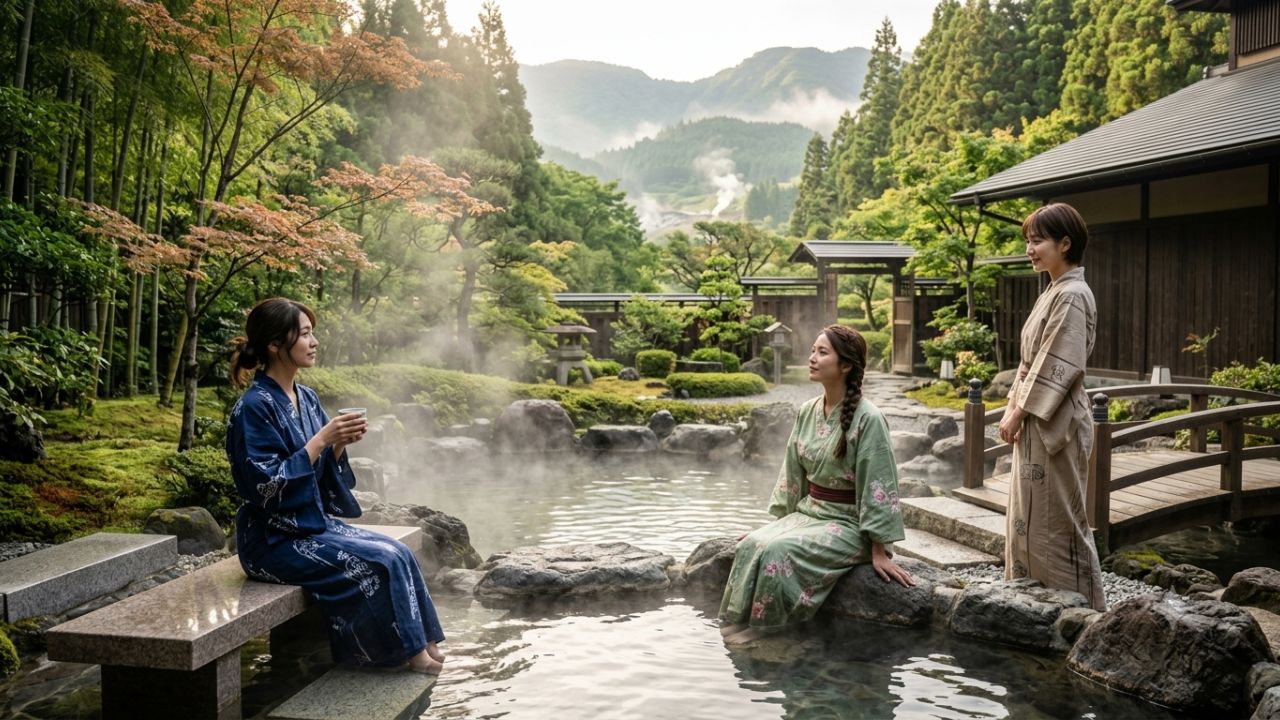
Image generated by AI
Japan's health and preventative travel industry has expanded to reach USD 65.5 billion in 2026, driving a major expansion of high-speed rail transit across Kyushu's seven prefectures. Powered by the Nishi Kyushu Shinkansen network and regional rail operator JR Kyushu, national tourism strategies developed with the Japan National Tourism Organization (JNTO) aim to redirect 20% to 30% of Japan's 42.7 million international arrivals away from urban corridors into rural geothermal sanctuaries.
National economic indicators highlight the growing financial scale of restorative travel, projecting Japan's health tourism ecosystem to reach a USD 97.9 billion valuation by 2034. Simultaneously, total foreign expenditure throughout Japan set a record high of ¥9.5 trillion (USD 63.3 billion). Custom, narrative-driven itineraries and nature-focused health excursions now represent 52% to 68% of total experiential travel sales nationwide.
High-Speed Rail Logistics and Regional Over-Tourism Redirection
The expansion of high-speed rail corridors across Kyushu addresses severe visitor saturation along Japan's central Golden Route (Tokyo, Kyoto, and Osaka). The Nishi Kyushu Shinkansen corridor, operating alongside an extensive network of express trains, enables travelers to journey from Fukuoka's JR Hakata transport hub to Saga, Nagasaki, and Oita within 60 to 90 minutes.
Japan Health Tourism & Kyushu Transit Indicators (2026)
├── National Health Travel Industry Valuation : USD 65.5 Billion (Targeting USD 97.9B by 2034)
├── Total Foreign Visitor Expenditure        : ¥9.5 Trillion (USD 63.3 Billion)
├── Total International Inbound Arrivals      : 42.7 Million Visitors Nationwide
├── Urban Redirection Target to Regions       : 20% to 30% of Overseas Visitors
└── Fukuoka to Nagasaki/Oita Shinkansen Time  : 60 to 90 Minutes via JR Kyushu
Demographic travel data reveals that health-focused itineraries traversing rural prefectures extend average visitor stay durations to 11 to 14 days, compared to 5 to 7 days for conventional city visits. Long-haul travelers originating from high-growth markets—including Australia, the United States, and Western Europe—display daily spending levels 35% to 50% higher than standard budget travelers, channeling funds directly into rural lodging, regional gastronomy, and artisan crafts.
Hydrothermal Output and Prefectural Thermal Infrastructure
Geothermal capacity forms the physical foundation for Kyushu's wellness positioning, supported by natural discharge volumes across subterranean volcanic basins. Oita Prefecture ranks first nationwide in total thermal discharge, yielding over 279,000 liters of hot spring water per minute across thousands of active vents in Beppu and Yufuin.
Kyushu Hydrothermal & Sustainability Benchmarks
├── Oita Thermal Discharge Capacity  : >279,000 Liters Per Minute (#1 Nationwide)
├── Closed-Loop Geothermal Heating   : 60% to 75% Carbon Intensity Reduction
├── Farm-to-Table Gastronomy Radius  : 85% to 90% Sourced Within 30 km (Kumamoto & Saga)
└── Dwell Time Extension Benchmark   : 11 to 14 Days (vs 5 to 7 Days for City Tours)
In Kumamoto, resorts utilize the volcanic caldera of Mount Aso to supply mineral springs across Kurokawa Onsen, including a new 17-room sanctuary set to open in November 2026. Environmental audits demonstrate that direct-use closed-loop geothermal heating systems deployed across Nagasaki, Kumamoto, and Kagoshima lower facility carbon intensity by 60% to 75% compared to fossil fuel heating. Furthermore, retreats situated near sensitive ecological areas—such as the UNESCO World Heritage protected forests of Yakushima—adhere to strict zero-single-use-plastic operational mandates.
Kyushu Prefectural Transit and Onsen Specifications Matrix
The table below details key transit links, geothermal flow parameters, stay durations, and ESG standards across Kyushu's seven prefectures.
| Prefecture / Regional Hub | Key Transit Link & Travel Time | Geothermal Capacity & Thermal Metrics | Stay Duration & Spending Benchmark | Environmental & ESG Standard |
|---|---|---|---|---|
| Fukuoka (JR Hakata Gate) | Primary Air/Rail Gateway; Sanyo & Kyushu Shinkansen | Transit hub; Yanagawa canal boat connections | Gateway hub for 11–14 day multi-prefecture itineraries | Regional passenger flow redirection center |
| Oita (Beppu & Yufuin) | JR Kyudai Main Line Express (60–90 min from Hakata) | #1 Nationwide Thermal Discharge (>279,000 L/min) | High-end wellness demand; 35%–50% higher daily spend | Natural subterranean vent management |
| Kumamoto (Aso & Kurokawa) | Kyushu Shinkansen to Kumamoto Station + Highway Coach | Mount Aso Volcanic Caldera; 17-room sanctuary (Nov 2026) | Historic Kurokawa multi-bath pass ecosystem | 85%–90% farm-to-table sourcing within 30 km |
| Nagasaki & Saga | Nishi Kyushu Shinkansen Corridor (60–90 min from Hakata) | Mineral-rich Ureshino & Takeo thermal springs | Custom narrative itineraries (52%–68% market share) | Closed-loop geothermal heating (60%–75% CO₂ cut) |
| Kagoshima (Yakushima/Ibusuki) | Kyushu Shinkansen Terminus (Kagoshima-Chuo) + Ferry | Ibusuki Geothermal Sand Baths & Yakushima Springs | Extended eco-retreat stays; high long-haul retention | UNESCO World Heritage zero-plastic mandates |
| Miyazaki (Nichinan Coast) | JR Nippo Main Line Express & Coastal Transit | Nichinan Coastline Thermal Springs & Aoshima Surf | Coastal restorative activities paired with ocean baths | Marine & coastal habitat conservation |
Farm-to-Table Gastronomy and Longevity Hydrotherapy Integration
Nutritional wellness operates alongside thermal hydrotherapy across Kyushu's hospitality sector. In prefectures such as Kumamoto and Saga, luxury retreats source 85% to 90% of their daily ingredients within a 30-kilometer radius. Guests participate in guided seasonal foraging walks harvesting edible wild plants (sansai), mushrooms, and native medicinal herbs, which are incorporated into multi-course Kaiseki meals.
Modern preventative medicine is also merging with traditional Japanese Toji practices (prolonged thermal bathing for physical recovery). Ryokan operators pair mineral bathing with circadian sleep alignment protocols, plant-based Kampo herbal medicine, and bio-centric nutrition, catering to international travelers seeking measurable health outcomes.
The expansion of the Nishi Kyushu Shinkansen enhances connectivity between Takeo-Onsen and Nagasaki, streamlining access to the region's renowned geothermal springs. Travelers can coordinate their journeys and purchase tickets through the JR Kyushu official portal, ensuring seamless transit between high-speed rail hubs and wellness retreats.
Traveler Logistics Guide: Navigating Kyushu's Rail and Onsen Corridor
International visitors planning multi-prefecture health journeys across Kyushu can streamline transit logistics by taking advantage of high-speed rail passes and local bathhouse passes.
1. High-Speed Rail Rail Passes & Shinkansen Booking
- JR Kyushu Rail Passes: Travelers can utilize the JR All Kyushu or Northern Kyushu Area Rail Pass to access the Nishi Kyushu Shinkansen and limited express trains connecting Fukuoka, Saga, Nagasaki, Kumamoto, and Oita.
- Luggage Transit Logistics: Utilize Japan's hands-free luggage forwarding services (Takuhaibin) between major stations (such as JR Hakata or Kagoshima-Chuo) to travel unencumbered on regional feeder lines.
2. Onsen Etiquette & Multi-Bath Pass Systems
- Kurokawa Onsen Wooden Pass (Nyuto Tegata): Visitors to Kurokawa Onsen in Kumamoto can purchase a wooden bath pass allowing access to three outdoor baths (rotenburo) across participating historic ryokans.
- Beppu Thermal Circuit (Jigoku Meguri): In Oita, municipal bus routes connect JR Beppu Station to the famous geothermal "Hells" and public bathhouses in Kannawa and Myoban.
3. Coastal Sand Bathing & Island Access
- Ibusuki Shoreline Sand Baths: Take the JR Ibusuki no Tamatebako limited express from Kagoshima-Chuo to Ibusuki to experience geothermally heated beach sand bathing (Snamushi).
- Yakushima Hydrofoil Transit: To visit Yakushima's UNESCO World Heritage forest springs, take the Toppy or Rocket high-speed hydrofoil ferry from Kagoshima Port (approx. 2 to 3 hours).
4. Peak Season Booking & Ryokan Reservations
- Advance Booking Windows: Popular thermal villages like Kurokawa Onsen and Yufuin have limited room capacity. Reserve ryokan accommodations at least 60 to 90 days in advance, especially during autumn foliage season (October–November) and cherry blossom period (March–April).
Infrastructure Impact Assessment and Regional Sustainability
The expansion of high-speed rail infrastructure and geothermal wellness facilities across Kyushu demonstrates how regional Japan can capture high-value international tourism while mitigating urban overcrowding. Connecting Fukuoka to rural prefectures via the Nishi Kyushu Shinkansen reduces travel friction, allowing long-haul travelers to extend stay durations to 14 days.
By deploying closed-loop geothermal heating systems that reduce facility carbon intensity by 60% to 75%, preserving Oita's 279,000 L/min thermal output, and maintaining 85%–90% local food sourcing radii, Kyushu establishes a sustainable, low-emission model for international health tourism.
Frequently Asked Questions: Japan Kyushu Wellness & Transit 2026
How does the Nishi Kyushu Shinkansen facilitate wellness travel across Kyushu?
The Nishi Kyushu Shinkansen and express train network connect Fukuoka's JR Hakata hub to Saga, Nagasaki, and Oita in 60 to 90 minutes, allowing international travelers to access rural hot spring retreats quickly without driving.
What is the thermal discharge capacity of Oita's hot springs?
Oita Prefecture ranks first nationwide in Japan for hot spring output, discharging over 279,000 liters of geothermal water per minute across subterranean vents in Beppu and Yufuin.
How do direct-use geothermal heating systems reduce carbon emissions in Kyushu retreats?
Closed-loop direct-use geothermal heating systems utilize natural subterranean heat to warm suites, floors, and outdoor pools, lowering facility carbon intensity by 60% to 75% compared to fossil fuel combustion.
How long do foreign visitors stay on health-focused travel itineraries in Kyushu?
Health-oriented journeys traversing rural prefectures extend average stay durations to 11 to 14 days (compared to 5 to 7 days for urban city tours), with long-haul travelers spending 35% to 50% more per day.
Related Travel Guides
Phu Quoc Advances 18 Million Passenger Airport Expansion and Marine Master Plan Ahead of APEC 2027
Disclaimer
This article is for informational and educational purposes only. It does not constitute legal, financial, or professional advice. While we strive to provide accurate and up-to-date information, travel policies, regulations, and conditions change rapidly. Always verify information with official sources before making travel decisions. Nomad Lawyer makes no representations about the accuracy, reliability, completeness, or suitability of the information provided. Readers should consult qualified professionals for advice specific to their circumstances. The views expressed in this article are those of the author and do not necessarily reflect the views of Nomad Lawyer.
Kunal K Choudhary
Co-Founder & Contributor
A passionate traveller and tech enthusiast. Kunal contributes to the vision and growth of Nomad Lawyer, bringing fresh perspectives and driving the community forward.
Learn more about our team →