
Poland Business Travel Surges as MICE Industry Hits 54.6 Billion PLN with High-Speed Rail and CPK Airport Expansion
Poland's MICE sector hits PLN 54.6B as PKP Pendolino rail and Central Communication Port (CPK) expand transit connectivity.

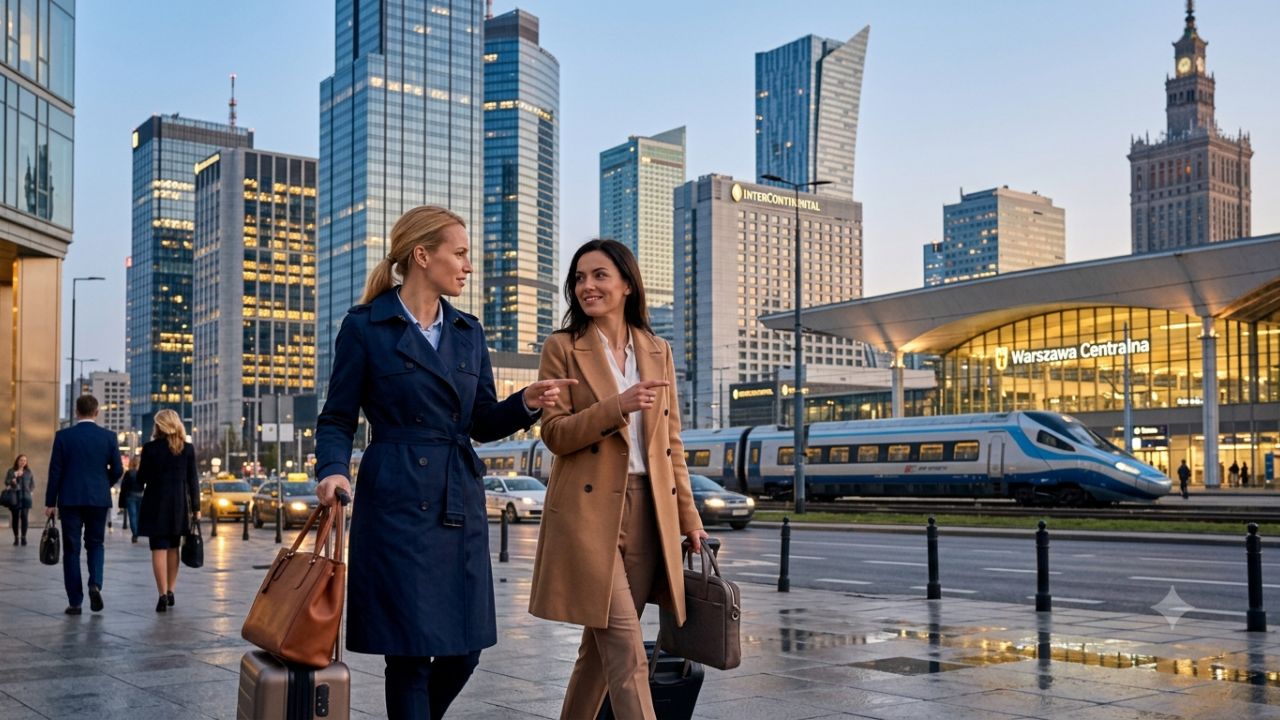
Image generated by AI
Poland's business travel sector is driving major economic mobility across Central Europe, supported by a Meetings, Incentives, Conferences, and Exhibitions (MICE) industry that generates over PLN 54.6 billion (exceeding $13.5 billion USD) annually in total economic output. Powered by high-speed PKP Intercity Pendolino rail connections and strategic infrastructure expansions like the Central Communication Port (CPK), Poland is solidifying its position among the top 20 nations worldwide in the International Congress and Convention Association (ICCA) rankings.
National economic metrics indicate that the meetings and events industry accounts for approximately 1.0% of the overall Gross Domestic Product (GDP) of Poland. This sustained economic performance is paired with foreign arrivals reaching upwards of 8.85 million visitors, creating heightened demand across primary aviation gateways, electrified intercity rail lines, and executive lodging hubs.
Poland MICE Economic Impact and National Transit Growth
The expansion of cross-border corporate travel across Poland is backed by significant public and private investments in transit infrastructure. At the core of the national air transit system, Warsaw Chopin Airport operates as Central Europe's primary international corporate gateway, processing between 18 million and 20 million passengers annually.
To accommodate projected long-term traffic growth, the development of the Central Communication Port (Centralny Port Komunikacyjny or CPK) represents a major national infrastructure megaproject. Designed to handle up to 40 million passengers annually in its initial phase, the CPK facility will fully integrate high-speed rail corridors with air transit hubs, facilitating seamless intercity transfers for international delegations.
Poland Corporate Aviation & Transit Corridor (2026 Metrics)
├── Warsaw Chopin Airport (WAW) : 18M – 20M Annual Passengers
├── Central Communication Port (CPK) : 40M Initial Phase Passenger Capacity
└── International Visitor Inflow    : 8.85M Foreign Arrivals Nationwide
The economic contribution of incoming business delegates extends across multiple service sectors. Comparative financial data indicates that an international business delegate exhibits a 3x expenditure multiplier, spending between 300% and 400% more per day on hotel accommodations, dining, private ground transport, and venue rentals compared to a traditional leisure traveler. While standard corporate conventions yield an average stay duration of 3.2 days, delegates incorporating "bleisure" (business combined with leisure) extensions lengthen their stays to an average of 4.5 days.
Intercity Pendolino Rail Operations and Urban Hub Specialization
Intercity transit across Poland relies on a highly electrified railway network that connects primary financial centers with specialized industrial hubs. The flagship Pendolino service, operated by national rail provider PKP Intercity, operates at commercial speeds reaching up to 200 km/h (124 mph). This high-speed link reduces transit time between Warsaw and Kraków to under 2 hours and 20 minutes.
From an environmental standpoint, electrified intercity rail reduces corporate travel carbon emissions by up to 80% compared to equivalent short-haul domestic flights or private vehicle travel. This efficiency allows commercial enterprises to maintain rapid nationwide mobility while meeting corporate sustainability benchmarks.
Poland's business mobility model relies on distinct economic specializations across major metropolitan corridors:
- Warsaw: Serves as the primary center for international corporate operations, financial markets, diplomatic delegations, and large-scale conventions.
- Katowice & Upper Silesia: Functions as an industrial network for heavy manufacturing, energy grid management, civil engineering, and supply chains, driving multi-night hotel bookings and utility vehicle rentals for technical contractors.
- Gdańsk: Acts as a strategic Baltic maritime hub, supporting international shipping lines, offshore energy projects, and waterfront conference facilities.
- Poznań: Dominates regional trade expositions and commercial fairs, creating dramatic temporary demand spikes during major international expos.
- Wrocław: Operates as a major technology hub for enterprise software, business service centers, and high-tech manufacturing plants.
- Kraków: Combines historical culture with tech innovation, specializing in software engineering, shared service centers, global outsourcing, and scientific research institutions.
Polish Corporate Transit Hubs and Infrastructure Specifications
The table below outlines key operational parameters, infrastructure metrics, and economic characteristics across Poland's primary corporate transit hubs.
| City / Region | Primary Economic Specialization | Key Transit Infrastructure & Speed | Accommodation & Yield Dynamics | Environmental & Infrastructure Metrics |
|---|---|---|---|---|
| Warsaw | Corporate HQs, Global Finance, Policy | Warsaw Chopin Airport (18M–20M pax), CPK Megaproject (40M pax capacity) | 3x delegate spend multiplier (300%–400% vs leisure baseline) | >85% BREEAM/LEED Grade-A venue rating |
| Katowice & Upper Silesia | Heavy Manufacturing, Energy Grid, Logistics | Regional rail freight corridors, electrified highway network | Multi-night engineering contractor bookings & utility vehicle demand | Integrated industrial supply chain management |
| Gdańsk | Baltic Shipping, Maritime Trade, Offshore Energy | Commercial seaport access, coastal rail links, international air links | High demand for waterfront venues & executive marine suites | Specialized maritime itinerary & harbor inspection logistics |
| Poznań | International Trade Fairs, Commercial Expos | High-speed railway junctions, regional transit hubs | Occupancy surges from 65% baseline to 92%–98% during trade expos | ADR and RevPAR increases of 150%–200% during peak events |
| Wrocław | High-Tech Manufacturing, Software, Shared Services | Direct intercity rail lines, international airport infrastructure | High occupancy in corporate extended-stay apartments & co-working hubs | Concentrates >30% of national R&D FDI allocation |
| Kraków | Enterprise Software, R&D, Shared Service Centers | PKP Pendolino high-speed rail (<2h 20m from Warsaw at 200 km/h) | Average stay: 3.2 days (conventions) to 4.5 days (bleisure extensions) | 80% rail carbon reduction vs short-haul flights |
Business Delegate Expenditure Patterns and ESG Sustainability Benchmarks
Sustainability standards play a growing role in venue selection and commercial real estate development across Polish urban hubs. Currently, over 85% of newly constructed Grade-A commercial office buildings and conference facilities in Warsaw and Kraków hold BREEAM and LEED green building accreditations rated at "Excellent" or "Outstanding" levels. Additionally, major convention centers have adopted zero-waste catering protocols, reducing single-use carbon footprints by up to 30% through localized organic supply chains.
Polish Corporate Travel & Investment Indicators
├── Annual Foreign Direct Investment (FDI) Inflows : Exceeding $20 Billion
├── Concentrated R&D Investment Share              : >30% in Wrocław and Kraków
├── Co-Working Office Space Expansion              : >150,000 m² Added Over 3 Years
└── High-Speed Digital Network Infrastructure      : >95% 5G Coverage & Gigabit Fiber
These environmental and digital enhancements parallel strong Foreign Direct Investment (FDI) inflows, which exceed $20 billion annually across advanced manufacturing, automotive tech, renewable energy, and R&D. Over 30% of total national R&D investment is concentrated in Wrocław and Kraków, where technical site inspections directly precede multi-million dollar capital allocations.
Hospitality yield metrics exhibit substantial dynamic shifts during major trade events. In cities like Poznań, hotel occupancy rates routinely rise from a baseline of 65% to peak levels between 92% and 98% during international expos. Concurrently, Average Daily Rates (ADR) and Revenue Per Available Room (RevPAR) jump by 150% to 200% during high-density convention weeks. To support visiting remote executives, developers have added over 150,000 square meters of flexible co-working space over the past three years, supported by over 95% high-speed 5G network coverage nationwide.
Traveler Logistics Guide: Navigating Polish Corporate Transit
International delegates traveling across Poland can streamline intercity transit and lodging by following targeted logistics recommendations.
1. High-Speed Rail Reservations & PKP Pendolino Ticketing
- Mandatory Seat Reservations: PKP Intercity Pendolino (Express InterCity Premium - EIP) services require mandatory seat reservations prior to boarding. Tickets can be purchased up to 30 days in advance via the official PKP Intercity digital app or website.
- First-Class Amenities: First-class Pendolino tickets include complimentary seat-side meal service, quiet zone access, and electrical outlets at every seat, offering an efficient mobile working environment during the 2-hour 20-minute Warsaw–Kraków transit.
2. Airport-to-Train Station Transfers & CPK Connections
- Warsaw Chopin Transfer: From Warsaw Chopin Airport (WAW), fast suburban trains (SKM Lines S2/S3 and Koleje Mazowieckie) run directly to Warsaw Centralna (Central Station) every 15 minutes, with a travel time of approximately 20 minutes.
- Intermodal Luggage Guidance: When connecting from international flights to regional PKP rail links, allow a minimum layover window of 90 minutes between flight arrival and train departure to clear border controls and transfer platforms comfortably.
3. European Union Border & Digital Entry Rules (ETIAS)
- ETIAS Compliance: Non-EU visa-exempt travelers entering Poland must obtain an approved ETIAS (European Travel Information and Authorization System) authorization prior to departure for Schengen Area entries.
- Automated Biometric e-Gates: Major entry gateways, including Warsaw Chopin Airport, operate automated biometric e-Gates for eligible passport holders, reducing passport control wait times to under 30 seconds during peak international arrivals.
4. Trade Fair Hotel Booking Strategy
- Advance Booking Windows: For major industry events in trade-centric cities like Poznań or Katowice, secure executive hotel reservations at least 60 to 90 days in advance to avoid 150%–200% ADR rate surges.
- Extended-Stay Apartments: Visiting technical teams and software consultants operating on multi-week assignments can utilize flexible corporate apartments in Wrocław or Kraków, which provide gigabit fiber internet and lower long-term daily rates.
Infrastructure Impact Assessment and Regional Connectivity
The expansion of Poland's corporate travel infrastructure reflects a structural evolution in Central European mobility. Electrified rail corridors, anchored by PKP Intercity Pendolino services running at 200 km/h, provide a low-emission transit alternative that reduces travel emissions by 80% compared to domestic air options.
Simultaneously, the development of the Central Communication Port (CPK) megaproject addresses future capacity bottlenecks at Warsaw Chopin Airport by establishing a multi-modal hub capable of processing 40 million passengers annually. Combined with green building accreditations across 85% of prime venues and a solidifying MICE contribution of PLN 54.6 billion, Poland's transit network continues to optimize cross-border commerce and executive travel efficiency.
Frequently Asked Questions: Poland Business Travel & Transit 2026
What is the economic scale of Poland's MICE and corporate travel industry?
Poland's MICE sector generates over PLN 54.6 billion (exceeding $13.5 billion USD) annually in economic output, representing approximately 1.0% of the national Gross Domestic Product (GDP) and placing Poland among the top 20 nations worldwide in ICCA rankings.
How fast is the PKP Intercity Pendolino train between Warsaw and Kraków?
The PKP Intercity Pendolino train operates at speeds up to 200 km/h (124 mph), connecting Warsaw Centralna to Kraków Główny in under 2 hours and 20 minutes while reducing carbon emissions by up to 80% compared to short-haul domestic flights.
What is the Central Communication Port (CPK) project in Poland?
The Central Communication Port (CPK) is a national infrastructure megaproject designed to handle up to 40 million passengers annually in its initial phase, unifying high-speed rail corridors with air transit hubs to streamline intercity transit across Central Europe.
How do hotel rates change in Poznań during major international trade fairs?
During peak international trade expos in Poznań, hotel occupancy surges from a 65% baseline to 92%–98%, causing Average Daily Rates (ADR) and Revenue Per Available Room (RevPAR) to increase by 150% to 200%.
Related Travel Guides
Europe Flight Delays and Cancellations Analysis September 2026
Germany and Belgium Upgrade ICE Cologne to Antwerp Rail Link
The 10 Best Intercity High-Speed Rail Journeys in Europe, According To Reddit
Disclaimer
This article is for informational and educational purposes only. It does not constitute legal, financial, or professional advice. While we strive to provide accurate and up-to-date information, travel policies, regulations, and conditions change rapidly. Always verify information with official sources before making travel decisions. Nomad Lawyer makes no representations about the accuracy, reliability, completeness, or suitability of the information provided. Readers should consult qualified professionals for advice specific to their circumstances. The views expressed in this article are those of the author and do not necessarily reflect the views of Nomad Lawyer.
Kunal K Choudhary
Co-Founder & Contributor
A passionate traveller and tech enthusiast. Kunal contributes to the vision and growth of Nomad Lawyer, bringing fresh perspectives and driving the community forward.
Learn more about our team →