
Transit Alerts: M5.9 Ibaraki Earthquake Disrupts Tokyo Rail Lines
A magnitude 5.9 earthquake in southern Ibaraki has triggered safety checks, causing delays and cancellations across Greater Tokyo rail lines.

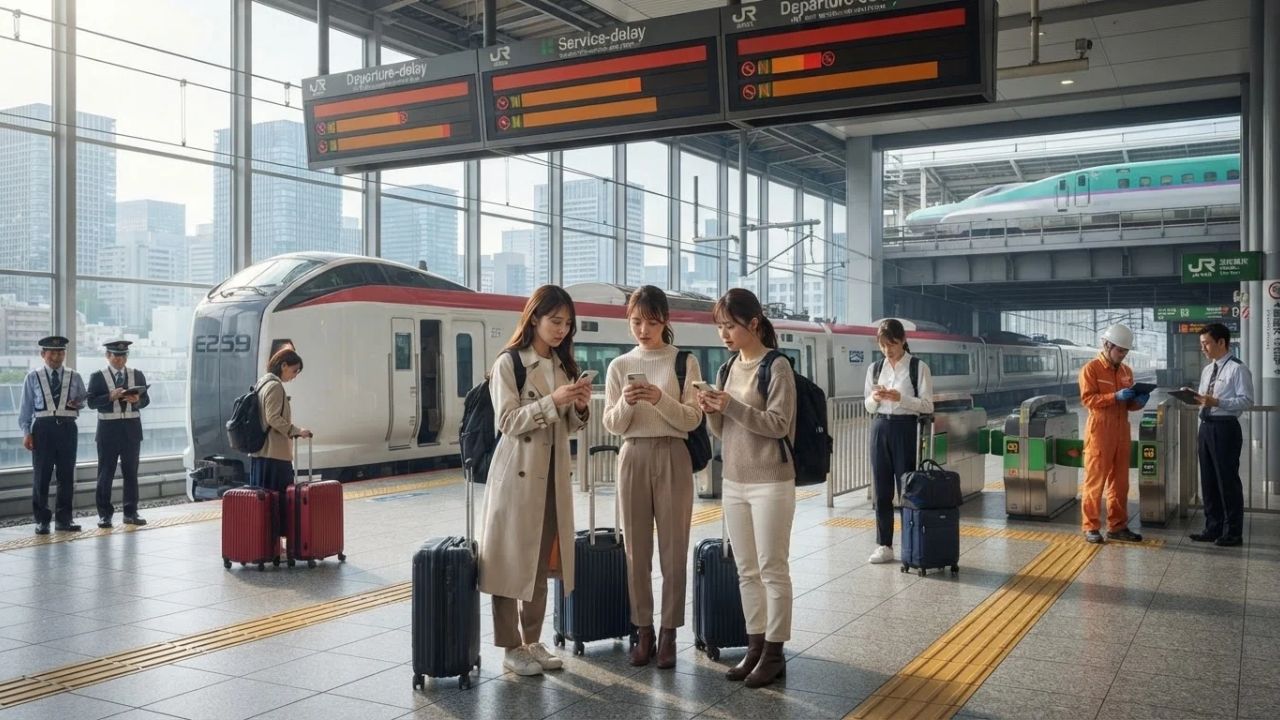
Image generated by AI
A magnitude 5.9 earthquake in southern Ibaraki has triggered safety checks, causing delays and cancellations across Greater Tokyo rail lines. The Japan Meteorological Agency reports shaking reached Shindo 5-lower in 17 municipalities.
Earthquakes and Transit System Resilience in Japan
A major challenge in urban transit planning is maintaining regional rail operations after tectonic events. Historically, safety checks were conducted manually on foot by track inspectors, leading to extended suspensions across entire rail systems. In 2026, automated sensor networks and real-time transit telemetry allow operators to focus inspections on strongly shaken corridors.
While high-speed Shinkansen networks remain resilient due to early-warning deceleration systems, conventional regional and commuter lines face delays as teams check track alignments, bridge structures, and overhead power cables. Coordinating these safety reviews is essential for protecting commuter travel safety in dense corridors.
Earthquake Details and Regional Ground Motion
The early-morning event recorded the following geological parameters:
- Magnitude & Depth: The M5.9 (magnitude 5.9) earthquake struck at 02:00 Japan Standard Time (JST) at a depth of 68 kilometres.
- Epicenter Coordinate: Centered in southern Ibaraki, operating as a reverse-fault event at the boundary between the Pacific Plate and the Philippine Sea Plate.
- Intensity Ratings: Shindo 5-lower shaking was recorded in 17 municipalities across Ibaraki, Saitama, Chiba, and Tokyo.
- Ground Motion: Long-period ground motion reached Class 2 in southern Saitama, north-western Chiba, and Tokyo's 23 wards, felt inside high-rise buildings.
- Tsunami Status: The Japan Meteorological Agency (JMA) confirmed no tsunami threat was generated.
These tremors triggered automatic safety shutdowns across several regional rail networks.
Commuter Corridor Disruptions and Suspensions
JR East reported delays, cancellations, and through-running suspensions across several key commuter routes:
- Utsunomiya & Takasaki Lines: Faced delays and cancellations, with through-running to the Tokaido Line stopped. Shonan-Shinjuku services north of Shinjuku were suspended until around 11:00 JST.
- Musashino Line: Suspended between Higashi-Tokorozawa and Yoshikawa-Minami until around 10:00 JST, with delays on other segments.
- Joban Line: Experienced delays between Shinagawa and Tsuchiura, and between Tsuchiura and Katsuta. Joban Rapid trains between Shinagawa and Toride were disrupted, and through-running to the Narita Line was stopped.
- Narita Airport Rail Access: Delays were recorded on the Narita Line between Chiba and Narita, and between Narita and Narita Airport. Services between Abiko and Narita were delayed, with Narita Express No. 4 running late by 09:31 JST.
- Shinkansen Services: High-speed rail networks (Tohoku, Yamagata, Akita, Hokuriku, and Joetsu Shinkansen) remained stable, operating normally without cancellations.
These conventional line suspensions caused commuter delays across the Kantō region.
Airport Operations and Road Inspections
Aviation and highway infrastructure remained stable after early assessments:
- Airport Facilities: Narita and Haneda airports remained open without infrastructure damage. The Tokyo Monorail to Haneda operated normally.
- Hyakuri Airfield: Recorded Shindo 5-lower shaking, but the event occurred outside standard operating hours.
- Road Checks: The Ministry of Land, Infrastructure, Transport and Tourism (MLIT) conducted safety checks on national routes 4, 6, 17, 50, 298, and 357, without initiating closures.
- Emergency Response: The Fire and Disaster Management Agency (FDMA) reported injuries in Ibaraki, Chiba, and Saitama. No intensity 1 or stronger aftershocks were recorded by 03:30 JST.
These reports indicate that core terminal infrastructure avoided structural damage.
Tokyo Earthquake Transit Impact Coordinates
The table below breaks down the affected rail lines, transit delays, restoration targets, and coordinating transport bodies recorded on August 23, 2026:
| Rail Corridor Line | Primary Route Segment | Reported Service Status | Target Restoration Time | Primary Operator | Coordinating Authority |
|---|---|---|---|---|---|
| Utsunomiya & Takasaki | Shinjuku north routes | Shonan-Shinjuku suspended | Reopened around 11:00 JST | East Japan Railway Co | Ministry of Land & Transport |
| Musashino Line | Higashi-Tokorozawa | Section suspended | Reopened around 10:00 JST | East Japan Railway Co | Ministry of Land & Transport |
| Joban Line | Shinagawa – Tsuchiura | Delays & cancellations | Section safety checks | East Japan Railway Co | Ministry of Land & Transport |
| Narita Line | Chiba – Narita Airport | Delays & cancellations | Narita Express No. 4 late | East Japan Railway Co | Ministry of Land & Transport |
| Tohoku Shinkansen | Long-distance lines | Operating normally | No cancellations | East Japan Railway Co | Ministry of Land & Transport |
| Tokyo Monorail | Haneda Airport link | Operating normally | Standard service schedule | Tokyo Monorail Co | Ministry of Land & Transport |
These coordinates outline the lines, segments, statuses, restoration times, operators, and authorities established for the transit network.
Resource Stewardship and Commuter Safety
For the traveler, the benefit of choosing high-speed Shinkansen routes is the stability of transit during regional conventional line holds. Utilizing electronic transit apps with live updates avoids waiting on platforms during safety checks.
Additionally, following JMA safety guidelines and avoiding travel to shaken areas during active aftershock windows protects passengers. Supporting municipal transit networks that invest in seismic automated warning systems ensures long-term infrastructure safety.
For comparison, you can explore the changing dynamics of Stimulus Launch: Taiwan Unveils Billion-Dollar Repeat Visitor Rewards to see how destinations promote visitor spend. For transit updates, comparing travel scheduling matches other networks, such as Transit Scheduling: Fukuoka-Miyazaki Phoenix Express Bus Restores Full Timetable updates. This trend is similar to the tourism growth seen in other destinations, as detailed in our guide on how Utica, New York Emerges as an Affordable Northeast Tourism Hub.
Visitor Insider Tips: Navigating Earthquake Delays
If you are traveling through Greater Tokyo during transit checks, keep these practical tips in mind:
- Check Live Operator Feeds: Monitor JR East's official website for real-time conventional line updates before leaving your hotel.
- Allow Extra Time for Narita Express: Narita airport transit lines experienced delays; plan to depart for the airport 90 minutes earlier than normal.
- Utilize Tokyo Monorail for Haneda: If flying out of Haneda, use the Tokyo Monorail, which operated normally.
- Check JMA Seismic Intensity Logs: Review safety bulletins from the Japan Meteorological Agency; stay alert for potential aftershocks for the next 2 to 3 days.
- Use Shinkansen for Long Distance: Trust the high-speed rail network for travel between cities, as Shinkansen lines operated without cancellations.
Long-Term Outlook for Seismic Transit Safety
The long-term outlook for transit in Greater Tokyo is focused on upgrading automated seismic sensors along conventional tracks, reinforcing bridge structures, and expanding real-time passenger warning apps. As urban rail passenger volumes remain high, transit boards and safety bureaus will cooperate to coordinate emergency response guidelines.
By investing in safety technology and protecting traveler rights, the transit sector aims to build a sustainable transport network.
FAQ
What magnitude was the Ibaraki earthquake?
The earthquake was recorded at magnitude 5.9 (M5.9) with an epicenter in southern Ibaraki, striking at 02:00 JST on August 23, 2026.
Were Narita Airport trains affected?
Yes, delays and cancellations occurred on the Narita Line between Chiba and Narita Airport, delaying Narita Express No. 4.
Did the Shinkansen lines close?
No. Shinkansen services (Tohoku, Yamagata, Akita, Hokuriku, and Joetsu) operated normally without cancellations.
Where did shaking reach Shindo 5-lower?
Shindo 5-lower shaking was recorded in 17 municipalities across Ibaraki, Saitama, Chiba, and Tokyo.
Stay updated on the regional travel regulations and seismic safety bulletins shaping Kantō transit.
Related Travel Guides
Disclaimer
This article is for informational and educational purposes only. It does not constitute legal, financial, or professional advice. While we strive to provide accurate and up-to-date information, travel policies, regulations, and conditions change rapidly. Always verify information with official sources before making travel decisions. Nomad Lawyer makes no representations about the accuracy, reliability, completeness, or suitability of the information provided. Readers should consult qualified professionals for advice specific to their circumstances. The views expressed in this article are those of the author and do not necessarily reflect the views of Nomad Lawyer.
Raushan Kumar
Founder & Lead Developer
Full-stack developer with 11+ years of experience and a passionate traveller. Raushan built Nomad Lawyer from the ground up with a vision to create the best travel and law experience on the web.
Learn more about our team →