
Jaisalmer and More India’s Stunning Dark Sky Destinations Turning Nights Into Extraordinary Adventures
Jaisalmer and More India’s Stunning Dark Sky Destinations Turning Nights Into Extraordinary Adventures

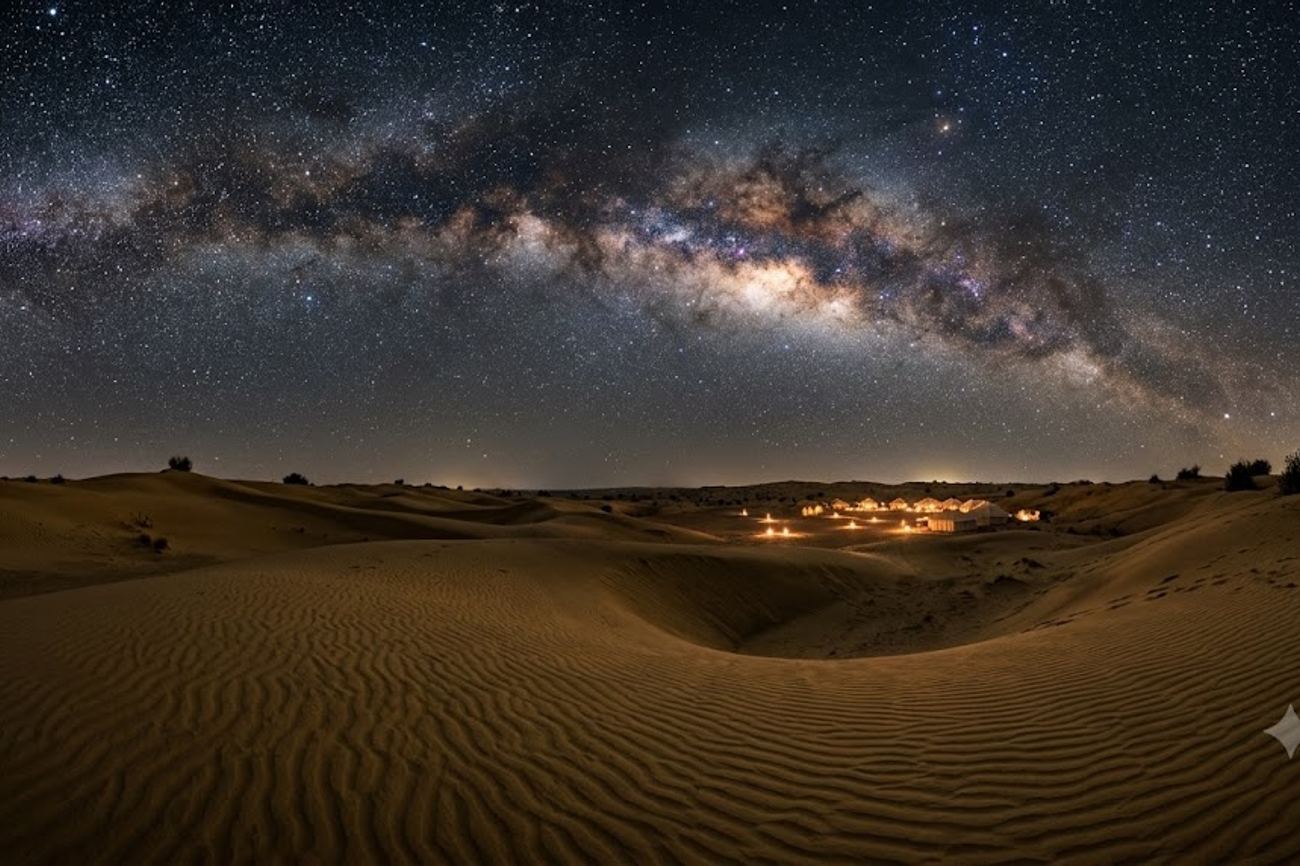
Image generated by AI
[New Delhi, October 2023] — The Indian government is aggressively expanding the protection of "dark sky" wilderness areas to combat urban light pollution and catalyze a new sector of astronomy-based tourism.
Federal authorities are now prioritizing the preservation of natural darkness as a critical environmental resource, identifying specific remote zones across the Himalayas, the Thar Desert, and the Western Ghats where the Milky Way remains visible to the naked eye. This shift comes as urban haze and artificial lighting increasingly erase the night sky for city dwellers, driving a surge in demand for "astro-tourism" in regions where celestial patterns and galactic bands remain unspoiled.
The Drive for Dark Sky Preservation
The initiative is triggered by the recognition that natural darkness is a finite resource. By limiting artificial light encroachment in high-altitude and remote desert regions, India aims to protect biodiversity and provide scientific infrastructure for astronomical research. Central to this effort is the integration of professional observatories with public tourism, turning remote villages into gateways for galactic observation.
The movement is anchored by the establishment of formal reserves, such as the Hanle Dark Sky Reserve, which provides a regulatory framework to prevent the installation of high-intensity lighting that would otherwise bleach the night sky. This strategy aligns with global efforts to reduce light pollution, ensuring that the atmospheric clarity of India's highest peaks and deepest deserts remains intact for future generations of researchers and travelers.
Prime Stargazing Hubs and Regional Impact
The current push for dark sky tourism is concentrated in several key geographic clusters, each offering distinct atmospheric conditions:
| Region | Primary Location | Key Feature | Environmental Advantage |
|---|---|---|---|
| Ladakh | Hanle | Indian Astronomical Observatory | 4,500m altitude; extreme low light pollution |
| Ladakh | Pangong Tso | High-altitude lake | Mirror reflections of celestial bodies |
| Ladakh | Nubra Valley | High-altitude desert | Unobstructed horizons over sand dunes |
| Himachal Pradesh | Spiti Valley | Kibber & Langza villages | Low population density; arid Himalayan air |
| Gujarat | Rann of Kutch | White salt desert | Flat terrain; zero urban haze |
| Rajasthan | Jaisalmer | Thar Desert | Low humidity; wide-open vistas |
| Karnataka | Coorg | Western Ghats/Balyabane | Southern India's primary dark sky corridor |
What This Means for Travelers
For the modern traveler, this shift transforms traditional sightseeing trips into specialized astronomical expeditions. The transition from "sightseeing" to "stargazing" requires a change in how itineraries are planned and how accommodations are selected.
Booking and Logistics Travelers should now look for "Dark Sky" certified camps or eco-lodges, particularly in Jaisalmer and Ladakh. Traditional luxury hotels in city centers will not provide these views; instead, the value has shifted to remote desert camps and high-altitude homestays in villages like Kibber or Langza.
Gear and Timing Because these locations—specifically Hanle and Spiti—are situated at extreme altitudes (up to 4,500 meters), travelers must account for hypoxia and extreme cold. The "window" for the best Milky Way visibility is typically tied to the lunar cycle; travelers are advised to book trips during the New Moon phase to ensure maximum contrast and clarity.
Photography Impacts The rise of these zones makes India a primary destination for astrophotography. The Indian Astronomical Observatory and similar sites provide the atmospheric stability required for long-exposure photography of the galactic core, which is nearly impossible in India's metropolitan hubs.
The Future of Indian Astro-Tourism
The trajectory of this movement suggests a move toward more formal "Dark Sky Parks," similar to those managed by the International Dark-Sky Association. As the government continues to protect these zones, expect a rise in specialized tour operators offering guided astronomy treks.
In the short term, the focus remains on the North. Ladakh continues to lead due to its unique combination of altitude and isolation. However, the emergence of Coorg in Karnataka indicates a strategic push to bring dark sky experiences to South India, diversifying the market beyond the Himalayas.
The long-term goal is to create a sustainable tourism model where the "product" is the absence of human interference. This requires strict zoning laws to prevent the over-development of resorts in areas like the Rann of Kutch, where the flat, white landscape provides a unique natural observatory that could be easily ruined by a few misplaced streetlights.
FAQ: India Dark Sky Travel 2023
What is the best time of year to see the Milky Way in India? The best visibility occurs during the dry winter months in the Himalayas (Ladakh/Spiti) and the cooler winter months in the deserts of Rajasthan and Gujarat to avoid monsoon cloud cover and high humidity.
Do I need special equipment to see the stars in Hanle or Jaisalmer? No. In these designated dark sky areas, the Milky Way is visible to the naked eye. However, binoculars or a telescope will enhance the experience for those wanting to see specific planets or nebulae.
Are there health risks associated with stargazing in Ladakh? Yes. Locations like Hanle sit at 4,500 meters. Travelers must acclimatize to the altitude to avoid Acute Mountain Sickness (AMS). Consult a doctor and maintain hydration before ascending.
How do I find "dark sky" accommodations? Search for remote desert camps in Jaisalmer or village homestays in Spiti Valley. Avoid large hotels near town centers, as their perimeter lighting interferes with the night sky view.
The stars are returning to India, provided we keep the lights off.
#HanleDarkSky #LadakhAstronomy #JaisalmerStargazing #SpitiValley2023 #RannOfKutchTourism #IndiaAstroTourism
Related Travel Guides
Disclaimer
This article is for informational and educational purposes only. It does not constitute legal, financial, or professional advice. While we strive to provide accurate and up-to-date information, travel policies, regulations, and conditions change rapidly. Always verify information with official sources before making travel decisions. Nomad Lawyer makes no representations about the accuracy, reliability, completeness, or suitability of the information provided. Readers should consult qualified professionals for advice specific to their circumstances. The views expressed in this article are those of the author and do not necessarily reflect the views of Nomad Lawyer.
Kunal K Choudhary
Co-Founder & Contributor
A passionate traveller and tech enthusiast. Kunal contributes to the vision and growth of Nomad Lawyer, bringing fresh perspectives and driving the community forward.
Learn more about our team →