
Italy, Spain, Germany, and France Lead European Slow Tourism Boom With Longer Stays and Cross-Border Rail Travel in 2027
European travelers are adopting slow tourism in 2027 across Italy, Spain, Germany, and France, prioritizing longer stays, regional gastronomy, and cross-border rail connections.

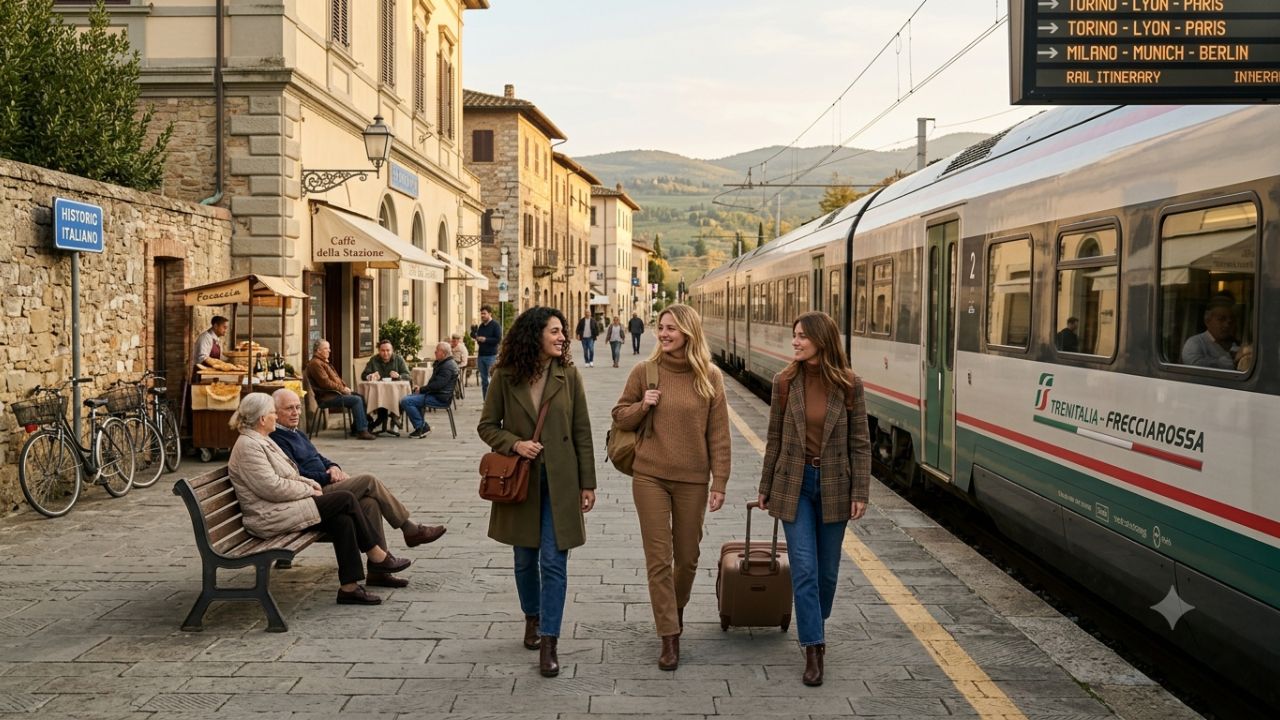
European travelers prioritize longer regional stays and cross-border rail connections across Italy, Spain, Germany, and France.
European travelers are shifting toward slow tourism for 2027, replacing multi-city itineraries with longer regional stays, cross-border rail journeys, and immersive cultural experiences across Italy, Spain, Germany, and France.
[Rome, Oct 6, 2026] — Tourism performance data across Western Europe indicates a fundamental shift in how international and domestic travelers plan European holidays. Ahead of the 2027 season, visitors are moving away from fast-paced, multi-country destination checklists in favor of longer stays focused on a single country or regional rail corridor.
Official statistics from Italy, Spain, Germany, and France show that while gross arrival numbers are stabilizing, total overnight stays, average stay durations, and per-visitor spending are reaching historic highs. Supported by European Commission policies promoting off-season travel and simplified cross-border rail ticketing, slow tourism is redirecting visitor expenditure into regional economies.
Four-Nation Macroeconomic Tourism Indicators and Stay Metrics
| Country / Destination | Overnight Stay Performance | Arrival Trajectory vs. Nights | Key Duration & Expenditure Findings |
|---|---|---|---|
| Italy (ISTAT Q2 2026) | 148 Million Overnight Stays (+3.9%) | Arrivals -0.8% (47M) / Nights +3.9% | Foreign nights grew +4.6%, representing 61.6% of total stays |
| Spain (INE Jan–Jul 2026) | 58.1 Million International Tourists (+4.6%) | July Arrivals +4.6% (11.5M) | Stays exceeding 15 nights jumped +12.8% YoY |
| Germany (Destatis Jan–Jul) | 282.1 Million Visitor Nights (+0.9%) | Exceeds 2019 Record (+0.4%) | Domestic market generated 235M nights (47.1M international) |
| France (INSEE Q2 2026) | Collective Accommodation Nights +1.0% | Hotel Nights +1.4% / Business +6.0% | Resident travel generated 847.5 million domestic nights in 2025 |
Italy: Overnight Growth Outpaces Arrival Volumes
Italian tourism data demonstrates the shift toward longer-duration stays. In Q2 2026, ISTAT recorded nearly 47 million arrivals and almost 148 million overnight stays. While total arrivals dropped slightly by 0.8% compared to Q2 2025, total overnight stays grew by 3.9%. International travelers generated 61.6% of all overnight stays, with foreign visitor nights increasing by 4.6%.
| Performance Period (Italy ISTAT) | Total Arrivals | Total Overnight Stays | Foreign Overnight Growth | Foreign Share of Total Nights |
|---|---|---|---|---|
| First Quarter 2026 (Q1) | 23.0 Million (+4.2%) | 71.6 Million (+7.5%) | +12.3% YoY Growth | 54.6% Share of Nights |
| Second Quarter 2026 (Q2) | 47.0 Million (-0.8%) | 148.0 Million (+3.9%) | +4.6% YoY Growth | 61.6% Share of Nights |
Italy Visitor Behavior Shift (2026 Data):
[Arrival Volume: Stable / Slightly Contracting (-0.8% Q2)]
                         │
                         ▼
[Total Overnight Stays: Expanding (+3.9% Q2 / +7.5% Q1)]
                         │
                         ▼
[Commercial Outcome: Higher Accommodation, Dining & Regional Rail Revenue]
This divergence confirms that visitors are spending more nights per trip. Extended stays allow travelers to combine major art capitals like Rome and Florence with secondary regional stops along the Italian rail network, including Umbria, Emilia-Romagna, and Puglia.
Spain: High Visitor Expenditure and Extended Stay Categories
In Spain, National Statistics Institute (INE) data for January through July 2026 recorded over 58.1 million international tourists, an increase of 4.6% year-on-year. During July 2026 alone, Spain received 11.5 million international visitors who spent €18.218 billion (+10.9% YoY).
| Duration & Spend Metric (Spain INE) | Statistical Value (July 2026) | Seven-Month Cumulative Value (Jan–Jul) | Commercial Significance |
|---|---|---|---|
| Long-Stay Trips (>15 Nights) | +12.8% YoY Increase | Substantial Growth Category | High-yield visitors dispersing into regional areas |
| Average Spend per Tourist | €1,579 per Visitor | Up from 2025 baselines | Higher expenditure on regional food & culture |
| Average Daily Expenditure | €218 per Day | Direct daily economic capture | Sustains local hospitality businesses |
| Gross International Spend | €18.218 Billion (July) | €82.054 Billion (Jan–Jul) | +7.8% overall expenditure growth |
Spain Visitor Expenditure vs. Duration:
├── Gross Jan–Jul Expenditures: €82.054 Billion (+7.8% YoY)
├── July Average Spend per Visitor: €1,579 (€218/Day)
└── Long-Stay Duration Growth: >15-Night Trips Rose +12.8% YoY
While 4-to-7-night visits remain the largest single duration group, trips exceeding 15 nights increased by 12.8% year-on-year. Spending grew at more than double the rate of arrivals (+10.9% spend vs. +4.6% arrivals in July), showing that long-stay visitors drive significant economic returns without requiring higher arrival volumes.
Germany: Domestic Near-Tourism and Integrated Rail Infrastructure
Germany set an all-time overnight record between January and July 2026, recording 282.1 million visitor nights—0.4% above its pre-pandemic 2019 record. Domestic guests accounted for 235 million nights, demonstrating the strength of near-destination travel.
| German Infrastructure & Tourism Metric | Physical Scale & Network Data | Tourism Application & Advantage |
|---|---|---|
| Total National Rail Network | ~40,000 Kilometers | High-density nationwide coverage |
| Connected Passenger Stations | ~5,700 Stations | Connects rural towns to major urban hubs |
| Daily Train Connections | 800+ Daily Long-Distance Flights/Trains | Hourly frequencies on main intercity corridors |
| Jan–Jul Total Overnight Nights | 282.1 Million Nights (+0.4% vs. 2019) | 235M domestic / 47.1M international nights |
German Rail-Centered Tourism Model:
[~40,000 km Rail Network / ~5,700 Connected Stations]
                        │
                        ▼ (800+ Daily Connections & Hourly City Frequency)
[Seamless City-to-Region Itineraries (235M Domestic Nights)]
Germany's 40,000-kilometer rail network and 5,700 stations enable travelers to move between major cities and regional countryside without relying on short-haul flights or car rentals, making simpler, single-region itineraries practical.
France: Regional Tourism Depth and Domestic Travel Volume
In France, INSEE reported a 1.0% increase in collective tourist accommodation nights for Q2 2026, led by a 1.4% rise in hotel nights and a 6.0% increase in business travel.
| Travel Origin Category (France INSEE 2025) | Total Registered Trips | Total Registered Overnight Nights | Average Duration & Significance |
|---|---|---|---|
| Metropolitan & Overseas Territories | 195.9 Million Trips | 847.5 Million Nights | Core domestic near-tourism baseline |
| EU and EFTA European Outbound | 24.1 Million Trips | 141.8 Million Nights | Short-haul intra-European travel |
| Non-European Long-Haul Outbound | 11.5 Million Trips | 113.3 Million Nights | High-duration international journeys |
| Total Resident Travel Portfolio | 231.4 Million Trips | 1.103 Billion Nights | Domestic trips account for 76.8% of nights |
French resident travel data shows that domestic trips within France generated 847.5 million nights in 2025, compared to 141.8 million nights for trips elsewhere in Europe. This confirms that local and regional trips dominate travel patterns, providing a base for regional gastronomy, coastal recreation, and heritage tourism.
European Commission Cross-Border Rail Ticketing Framework
To support slow tourism, the European Commission introduced a regulatory framework in May 2026 designed to simplify cross-border rail travel across member states:
EU Cross-Border Rail Framework Objectives:
├── Unified Booking Access: Search & compare multi-operator rail journeys on one portal
├── Integrated Ticketing: Combine distinct national rail lines into single digital tickets
└── Passenger Protections: Guaranteed re-routing & coverage across complete rail journeys
The directive enables travelers to search, compare, and purchase multi-operator rail journeys across borders within a single booking, strengthening passenger protections and making two- or three-base European rail itineraries easier to arrange.
Frequently Asked Questions
What is driving the slow tourism trend across Europe for 2027?
Slow tourism is driven by travelers choosing longer stays in single regions, utilizing high-speed rail networks, and seeking regional cultural, culinary, and nature experiences rather than visiting multiple cities on short trips.
How are overnight stays performing compared to arrivals in Italy and Spain?
In Italy, Q2 2026 overnight stays grew by 3.9% while arrivals fell 0.8%. In Spain, stays exceeding 15 nights jumped 12.8% in July 2026, with total international spending rising 10.9% to reach €18.218 billion.
How does the EU's 2026 rail proposal support simpler travel planning?
The European Commission's May 2026 proposal simplifies cross-border rail travel by enabling single-ticket bookings across multiple national rail operators while extending passenger rights across complete journeys.
Related Travel Guides
Disclaimer
This article is for informational and educational purposes only. It does not constitute legal, financial, or professional advice. While we strive to provide accurate and up-to-date information, travel policies, regulations, and conditions change rapidly. Always verify information with official sources before making travel decisions. Nomad Lawyer makes no representations about the accuracy, reliability, completeness, or suitability of the information provided. Readers should consult qualified professionals for advice specific to their circumstances. The views expressed in this article are those of the author and do not necessarily reflect the views of Nomad Lawyer.
Raushan Kumar
Founder & Lead Developer
Full-stack developer with 11+ years of experience and a passionate traveller. Raushan built Nomad Lawyer from the ground up with a vision to create the best travel and law experience on the web.
Learn more about our team →