Italy Issues Poland Travel Advisory Highlighting Eastern Border Security Alerts and Urban Tourist Scams

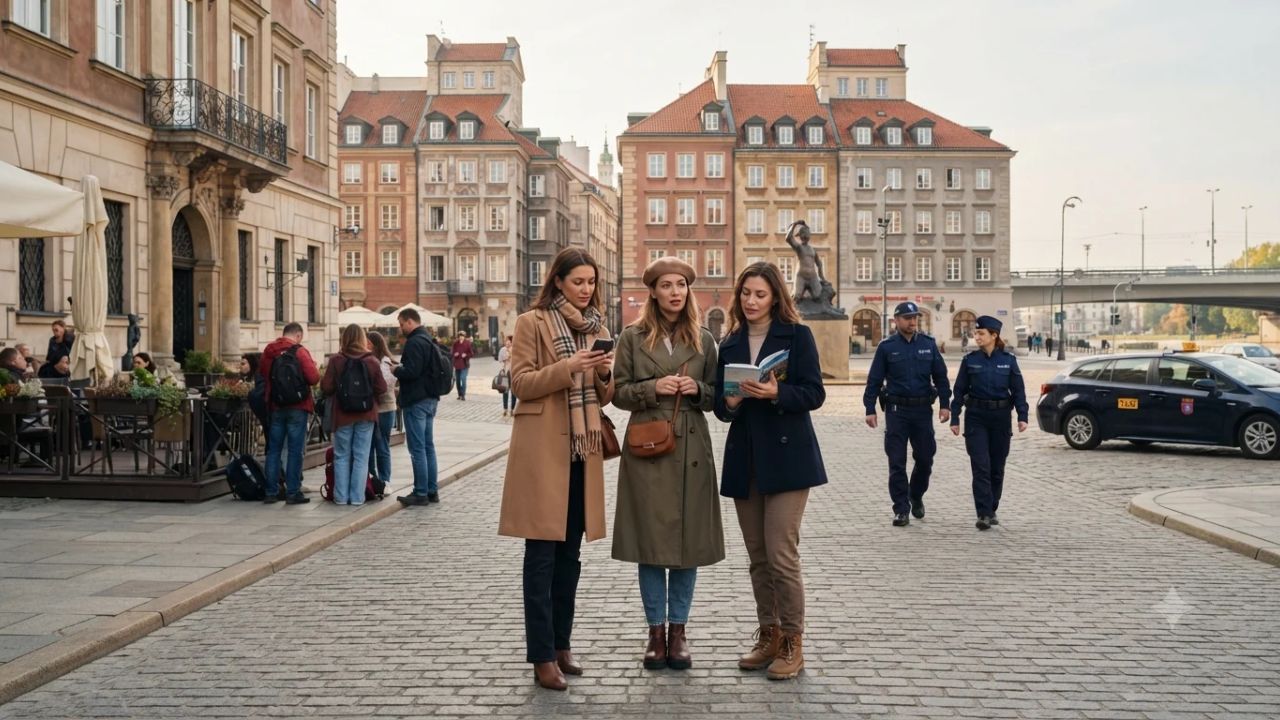
The Italian Ministry of Foreign Affairs and International Cooperation has issued a comprehensive security advisory for citizens traveling to Poland, urging heightened caution regarding eastern border security alerts, sophisticated nightlife scams, and roadside criminal ploys. Published through the official Viaggiare Sicuri consular portal, the updated guidance provides detailed risk assessments for Italian holidaymakers, business travelers, cross-border motorists, and long-term expatriates. Although Poland remains an accessible European Union and Schengen partner where daily life operates normally across major urban centers, escalating geopolitical friction along its eastern frontier and persistent financial traps targeting foreign tourists in major cities have prompted Italian diplomats to codify specific safety recommendations.
The advisory reflects a proactive approach by Italian consular authorities to protect travelers amidst evolving security realities in Central and Eastern Europe. From temporary airspace defenses activated in response to nearby cross-border military strikes to calculated extortion schemes operating in Warsaw and Kraków entertainment districts, the document outlines both systemic geopolitical hazards and localized street-level vulnerabilities. By understanding these specific threat profiles, verifying documentation protocols, and observing defensive travel habits, visitors can travel across Poland securely while steering clear of avoidable administrative, legal, and financial pitfalls.
Geopolitical Context and Eastern Border Security Protocols
The primary catalyst for Italy’s updated travel advisory is the heightened military vigilance along Poland’s eastern frontier, which borders Ukraine, Belarus, and the Russian exclave of Kaliningrad. Recent Russian missile and drone bombardments targeting critical energy infrastructure and logistical nodes in western Ukrainian cities—including Lviv and Volyn—have taken place in dangerous proximity to Polish sovereign territory. In response to these cross-border kinetic events, the Polish Armed Forces Operational Command (Dowództwo Operacyjne Rodzajów Sił Zbrojnych) repeatedly scrambled Polish and allied NATO quick-reaction combat aircraft, activated advanced ground-based radar surveillance systems, and placed air defense units on maximum readiness.
POLAND EASTERN BORDER MONITORING & REGIONAL PROFILE
| Entity / Facility | Delays | Cancellations | Details |
|---|---|---|---|
| Border Sector | Neighboring State | Border Length (km) | Current Security Posture |
| Lubelskie Voivodeship | Ukraine | ~296 km | Heightened radar & air defense |
| Podkarpackie Voivod. | Ukraine | ~239 km | Transit corridor / logistics hub |
| Podlaskie Voivodeship | Belarus | ~418 km | Physical barrier / buffer zones |
| Warmińsko-Mazurskie | Russia (Kaliningrad | ~210 km | Electronic fence / border watch |
During these peak defensive activations, regional voivodeship authorities in eastern administrative districts temporarily issued localized precautionary alerts advising residents and travelers to remain vigilant and heed siren tests or public safety instructions. While those immediate regional air alerts and elevated airspace closures were subsequently normalized once the imminent threat receded, Italian consular officials emphasize that the underlying geographic exposure remains unchanged.
Italian authorities advise travelers whose itineraries approach the eastern borders—particularly within the Podkarpackie, Lubelskie, and Podlaskie Voivodeships—to exercise elevated situational awareness. Travelers should avoid photographing military installations, troop movements, logistical convoys, or border guard checkpoints. Access to designated restricted border security zones along the Belarusian frontier remains strictly forbidden without authorized government permits. Visitors are urged to monitor updates from the Polish Ministry of the Interior and Administration (Ministerstwo Spraw Wewnętrznych i Administracji - MSWiA) and heed any localized instructions issued by the Polish Border Guard (Straż Graniczna).
KEY ADVISORY RISK DOMAINS & DIRECTIVE ACTIONS
| Entity / Route | Metrics | Operational Status |
|---|---|---|
| Threat Category | Primary Geographic Focal | Recommended Preventive Action |
| Eastern Border Alerts | Lublin, Rzeszów, Przemyśl | Avoid border buffer zones; monitor MSWiA |
| Nightlife Extortion | Warsaw, Kraków, Wrocław | Refuse street promoters; inspect all bills |
| Public Transit Theft | Centralna, Główny, Trams | Separate cash/cards; secure zipper pockets |
| Roadside Traps | Highway rest stops, Rural A4 | Never exit idling cars; lock cabin doors |
| Unlicensed Taxis | Train stations, Night venues | Use licensed radio taxis or app e-hailing |
| Stolen Antiques | Open-air flea markets | Request certified export documentation |
Entry Requirements, Schengen Rules, and Long-Term Residencies
Because Poland and Italy are both integrated members of the European Union and the Schengen Agreement, passport control checkpoints have been abolished along internal borders. Italian citizens enjoy the fundamental right to free movement, allowing entry without the requirement of an entry visa for tourism, business visits, or transit. However, this absence of systematic border controls does not eliminate the legal obligation to carry valid national identification at all times while present on Polish territory.
Mandatory Identification Documents
Italian travelers must be in possession of one of the following valid documents:
- Biometric Italian Passport: Valid for the entire duration of the planned stay.
- Electronic Identity Card (Carta d'Identità Elettronica - CIE): Valid for international travel, with validity extending through the full departure date.
- Emergency Paper Identity Documents: In documented cases of extreme urgency, Polish authorities recognize temporary paper identity documents issued by Italian municipal authorities, provided they are explicitly designated as valid for foreign travel.
Under Polish law, police officers, Border Guard officials, and customs inspectors possess the legal authority to request proof of identity during routine spot-checks on public highways, inside international rail terminals, or within urban transit hubs. Failure to produce a valid original identification document can result in administrative detention, official questioning, and substantial fines.
DOCUMENTATION & RESIDENCY REQUIREMENTS IN POLAND
| Status / Parameter | Duration / Classification | Legal Requirement / Authority |
|---|---|---|
| Short-Stay Tourism | Up to 90 Days | Valid Passport or CIE; no visa required |
| Long-Stay Residency | Exceeding 90 Days | Mandatory registration at Urząd Wojewódzki |
| Proof of Identity | Universal at all times | Original physical ID document mandatory |
| Loss/Theft Protocol | Immediate occurrence | Police report (Policja) + Consular ETD |
| Driving License | EU Category A / B / C | Valid Italian license fully recognized |
Extended Stays Beyond 90 Days
Italian nationals intending to reside, work, study, or conduct long-term business in Poland for a period exceeding 90 consecutive days must comply with mandatory Polish immigration procedures. Within three months of arrival, individuals must formally register their residence with the competent regional Voivode’s Office (Urząd Wojewódzki). Applicants must demonstrate valid comprehensive health insurance, proof of sufficient financial resources to sustain their stay, and evidence of local accommodation (such as a registered residential lease agreement). The applicant’s Italian passport or CIE must remain valid across the entire authorized period of residence.
Protecting Against Document Theft and Loss
The Italian Foreign Ministry highlights a troubling incidence of document loss and pickpocketing affecting Italian citizens in Poland, particularly during peak summer travel periods and winter holiday market seasons. To mitigate the disruptive impact of document theft, the advisory provides specific administrative instructions:
- Duplicate Records: Travelers should carry high-resolution color photocopies of their passport or CIE kept physically separate from original documents. Additionally, digital copies should be saved in encrypted, cloud-accessible storage.
- Reporting Procedures: In the event of theft or loss, victims must immediately lodge a formal report at the nearest local police precinct (Komisariat Policji). The resulting official police report (zaświadczenie o zgłoszeniu utraty dokumentu) is legally required by the Italian Embassy Consular Chancellery in Warsaw to issue an Emergency Travel Document (ETD) for returning to Italy.
Traveling to Poland with Companion Animals
For travelers journeying with pets, Poland enforces strict European Union veterinary health standards designed to prevent the cross-border transmission of infectious animal diseases, particularly rabies. Italian citizens transporting dogs, cats, or ferrets must satisfy three mandatory statutory requirements prior to departure:
- Official European Pet Passport: Companion animals must travel with an authentic EU Pet Passport (Passaporto Europeo per Animali da Compagnia) issued by an authorized veterinary official within the traveler’s Italian Local Health Authority (Azienda Sanitaria Locale - ASL). The passport must contain verified records of identification and medical interventions.
- Permanent Electronic Identification: Every animal must be identifiable via an implanted electronic microchip complying with ISO Standard 11784 or 11785. A clearly readable tattoo applied prior to July 3, 2011, is also accepted provided it corresponds exactly to the alphanumeric code recorded in the pet passport.
- Certified Anti-Rabies Vaccination: Animals must possess an up-to-date rabies vaccination administered by an accredited veterinarian. If the pet is receiving its primary rabies vaccination, the injection must be administered at least 21 days prior to entering Polish territory to ensure immunological efficacy. Revaccinations (booster shots) performed within the validity window established by the vaccine manufacturer are recognized immediately upon entry.
PET TRAVEL REGULATIONS FOR POLAND ENTRY (EU STANDARD)
| Entity / Route | Metrics | Operational Status |
|---|---|---|
| Requirement | Technical Specification | Verification Entity |
| Documentation | Standardized EU Pet Passport | Authorized Italian ASL Veterinary Service |
| Microchip Implant | ISO 11784/11785 Standard | Veterinary Clinic / Border Inspection |
| Rabies Vaccination | Inactivated or Recombinant | Minimum 21 days prior for primary dose |
| Minimum Age | Typically 12-16 weeks | Proof of age recorded in passport |
| Non-Commercial Limit | Maximum 5 animals per person | Polish Customs and Border Guard |
Travelers should also note that Polish municipal regulations mandate the use of leashes in public parks, urban streets, and transit stations, with muzzles required for specific designated guard breeds or when boarding public trams and regional trains.
Nightlife Extortion and Urban Entertainment Schemes
A major component of Italy’s travel advisory focuses on personal safety within urban nightlife centers, where criminal syndicates target unsuspecting foreign visitors through calculated entertainment scams. While violent street muggings remain comparatively rare across Poland's major cities, sophisticated financial extortion operating within unlicensed or predatory nightlife venues has proliferated.
The Anatomy of the Nightclub Extortion Trap
The scam typically unfolds in major tourist centers, notably surrounding Kraków’s Main Market Square (Rynek Główny), Floriańska Street, Warsaw’s Nowy Świat and Krakowskie Przedmieście corridors, Wrocław’s Rynek, and Gdańsk’s Długi Targ. Foreign male tourists walking alone or in small groups are approached on the street by charismatic promoters, often young women posing as friendly students or club hostesses. These recruiters invite tourists to join them for a "free shot," discounted drinks, or private entertainment in a nearby lounge or gentleman's club.
STAGES OF THE URBAN NIGHTCLUB EXTORTION SCHEME
| Category / Entity | Details / Impact |
|---|---|
| Stage 1: Approach | Charming street promoters approach foreign travelers in popular nightlife zones. |
| Stage 2: Lure | Victims are led to unmarked or basement venues promising inexpensive drinks. |
| Stage 3: Isolation | Patrons are separated from companions or introduced to high-priced hostesses. |
| Stage 4: Spiking | Drinks are frequently spiked with intoxicating or disorienting substances. |
| Stage 5: Billing | Outrageous bills (thousands of PLN or Euros) presented for routine beverages. |
| Stage 6: Coercion | Security staff block exits; victims forced to swipe cards or escorted to ATMs. |
Once inside the venue, the environment changes dramatically. Patrons are encouraged to order specialty cocktails or purchase champagne for hostesses. In numerous documented cases investigated by the Polish Central Bureau of Police Investigation (Centralne Biuro Śledcze Policji - CBŚP), drinks are deliberately spiked with sedative agents, incapacitating the victim's judgment and memory.
When the bill is presented, the charges are astronomical—frequently totaling thousands or tens of thousands of Polish Złoty (often equivalent to €2,000 to €15,000) for a handful of ordinary drinks. If the patron disputes the charge, aggressive security personnel block physical exits, confiscate personal identification, and subject the individual to psychological coercion or physical intimidation. Victims are forced to enter payment card PIN codes multiple times on point-of-sale terminals or are marched under physical duress to nearby ATM machines to withdraw maximum cash limits.
Advisory Protective Measures for Nightlife
To avoid falling prey to these organized rackets, the Italian advisory recommends strict defensive protocols:
- Reject Unsolicited Street Invitations: Politely decline any overtures from street promoters, hostesses, or touts inviting you to enter unfamiliar bars, strip clubs, or cellar lounges.
- Select Established Venues: Patronize only well-reviewed, reputable establishments recommended by official tourist information centers, certified hotel concierges, or established international travel guides.
- Monitor Beverage Preparation: Never accept unsealed drinks from strangers, and keep your beverage in sight at all times to guard against tampering or spiking.
- Review Price Lists Upfront: Request and inspect printed menu price lists with clear currency denominations before ordering any food, beverage, or service.
- Card Security: Maintain physical control over payment cards; never allow a waiter or bartender to carry your credit card away from your table or outside your line of sight.
Street Crime, Pickpocketing Hotspots, and Public Safety
Beyond nightlife risks, the advisory underscores everyday urban situational awareness. Poland ranks as one of the safer countries in Europe regarding general violent crime, but opportunistic theft, distraction scams, and pickpocketing remain active threats in congested public spaces.
High-Risk Theft Zones
Pickpocketing networks operate with high frequency across specific transit hubs and cultural landmarks:
- Central Railway Stations: Warsaw Central Station (Warszawa Centralna), Kraków Main Station (Kraków Główny), and Wrocław Main Station (Wrocław Główny). Gangs take advantage of passengers boarding or disembarking with heavy luggage, creating artificial bottlenecks on narrow platform escalators.
- Public Transport Corridors: Crowded municipal trams, metro lines (particularly the M1 line in Warsaw), and airport bus routes (such as the Bus 175 connecting Chopin Airport to central Warsaw).
- Historic Tourist Plazas: The Old Town Market Place (Rynek Starego Miasta) in Warsaw, the Royal Route (Trakt Królewski), Kraków’s Cloth Hall (Sukiennice), and Wawel Castle approaches.
COMMON DISTRACTION TACTICS & DEFENSIVE COUNTERMEASURES
| Entity / Route | Metrics | Operational Status |
|---|---|---|
| Criminal Technique | Modus Operandi | Protective Reaction |
| The Spill / Stain | Dropping ice cream or fluid | Step away; reject help cleaning garments |
| The False Bump | Jostling on crowded stairs | Secure bags forward; check wallet pockets |
| The Petition Racket | Asking for deaf/charity sign | Never sign clipboards; walk away briskly |
| Street Shell Games | Three-cup gambling tricks | Never stop to watch; spotters pick onlookers |
| Bag Slashing | Cutting backpack fabric | Wear backpacks frontward in packed metro |
Public Demonstrations and Cultural Property Rules
The advisory advises Italian travelers to steer clear of public political demonstrations, counter-protests, and large-scale spontaneous street gatherings. While demonstrations in Poland are generally peaceful, sudden confrontations between ideological factions or clashes with police crowd-control units can expose bystanders to tear gas, physical injury, or administrative detention. Foreign nationals should immediately leave any area where unauthorized rallies are assembling.
Travelers are also explicitly warned against purchasing antiquities, historic military memorabilia, religious icons, or vintage cultural artifacts from informal open-air flea markets (jarmarki) or street peddlers. Poland enforces stringent cultural heritage protection laws. Items created before 1945 or classified as national cultural property require explicit export permits from the Ministry of Culture and National Heritage (Ministerstwo Kultury i Dziedzictwa Narodowego). Attempting to take unauthorized historical artifacts out of Poland across airport customs borders constitutes a serious criminal offense punishable by confiscation, substantial fines, and potential imprisonment.
Safe Urban Transit and Taxi Regulations
Navigating Polish cities safely requires selecting legitimate, accredited transport providers. The Italian Foreign Ministry cautions travelers against patronizing unlicensed private vehicles or rogue taxi operators who frequently solicit fares inside arrivals terminals and outside nightlife venues.
Unregulated drivers operate vehicles devoid of official municipal licensing insignia, functioning without calibrated taximeters or established rate schedules. Passengers entering these vehicles risk extreme overcharging, with drivers demanding exorbitant sums at journey's end or taking circuitous routes to inflate fares artificially.
IDENTIFYING ACCREDITED MUNICIPAL TAXIS IN POLAND
| Category / Entity | Details / Impact |
|---|---|
| Visual Identifier | Accredited Municipal Taxi Standard |
| Roof Signage | Illuminated rooftop light bearing the word "TAXI" and company phone |
| Side Door Decals | Official city crest (e.g., Warsaw Mermaid) and vehicle registration number |
| Fare Chart Decal | Passenger window sticker displaying transparent day/night mileage tariffs |
| Interior Equipment | Certified, sealed taximeter and electronic fiscal cash register in dash |
| Driver Credentials | Official taxi driver identification card displayed visibly on dashboard |
To guarantee personal safety and avoid transit fraud, travelers are instructed to adhere to the following transit practices:
- Order by Phone or Hotel: Request licensed radio taxis through established dispatch companies (such as MPT, Ele Taxi, or iTaxi in Warsaw; Radio Taxi Wawel or Mega Taxi in Kraków) booked directly or via hotel reception desks.
- Utilize Verified E-Hailing Platforms: Smartphone ride-hailing applications—specifically Uber, Bolt, and FreeNow—operate legally across Poland under national transport regulations. These platforms provide upfront price locks, satellite journey tracking, digital receipts, and verified driver registration.
- Avoid Street Solicitations: Never accept rides from individuals walking through airport arrivals lounges or train concourses asking "Need a taxi?" Proceed directly to official exterior taxi ranks managed by airport marshals.
Roadside Traps, Vehicle Security, and Driving Guidelines
For Italian tourists exploring Poland by passenger car, camper van, or motorcycle, the advisory highlights distinct highway safety risks and criminal schemes targeting foreign-registered vehicles. Poland has invested heavily in modern toll highway corridors (Autostrady A1, A2, and A4 and Expressways Drogi Ekspresowe S-series), but secondary rural roads present unique challenges.
Staged Roadside Ploys and Highway Robbery
Criminal networks occasionally target foreign motorists on intercity highway rest stops or secondary provincial corridors. Drivers must remain vigilant against staged roadside ruses designed to induce motorists to stop and exit their running vehicles:
- The Flat Tire Ruse: Criminals discreetly puncture a victim's tire while parked at a highway gas station or rest stop. Once the car departs, accomplices follow and signal frantically that the wheel is smoking or deflated, encouraging the driver to pull over onto an isolated shoulder where accomplices quickly snatch cabin valuables.
- The Staged Collision: Perpetrators in an older vehicle initiate a minor low-speed rear-end bump at a roundabout or junction. When the victim steps out to inspect damage, an accomplice opens the unlocked passenger door to steal purses, navigation electronics, and coats.
- The Bogus Mechanical Warning: Passing motorists gesture frantically toward the front grille or exhaust of the traveler's car, simulating a catastrophic mechanical failure.
HIGHWAY DRIVING RULES & MOTORIST CHECKLIST IN POLAND
| Category / Entity | Details / Impact |
|---|---|
| Regulation | Mandatory Standard in Poland |
| Headlight Use | Dipped headlights (światła mijania) mandatory 24/7 year-round |
| Blood Alcohol Limit | 0.2 per mille (0.02% BAC); strictly enforced zero-tolerance policy |
| Winter Equipment | Winter tires strongly recommended; snow chains allowed in mountain zones |
| Mandatory In-Car Gear | Warning triangle, certified fire extinguisher (gaśnica), reflective vest |
| Toll Payment System | e-TOLL electronic satellite system or toll booths on private concessions |
Motorist Protective Rules
- Lock Doors While Driving: Keep all car doors locked from the inside at all times while driving through urban traffic and along highways.
- Secure Valuables Out of Sight: Never leave suitcases, backpacks, mobile phones, or high-value items visible on passenger seats or footwells. Place all belongings inside the locked trunk prior to arriving at your parking destination.
- Never Leave Vehicle Papers in the Glove Box: The advisory explicitly commands motorists never to store the vehicle’s original registration certificate (carta di circolazione), proof of insurance, or personal identity papers inside the vehicle. If the car is stolen, having the registration documents in your personal possession is essential for filing a valid police report and coordinating insurance and border recovery protocols.
- Caution on Rural Roads: Outside major urban centers and primary autoroutes, provincial roads often suffer from narrow lanes, lack of paved shoulders, insufficient street lighting, and deep ruts. Motorists must exercise caution during nocturnal travel, watching for unlit agricultural machinery, pedestrians without reflective vests, and wildlife crossings (particularly wild boars and deer).
Digital Safety Registration and Consular Protocols
To ensure that Italian diplomatic personnel can provide rapid, coordinated assistance during unexpected crises, natural disasters, or personal emergencies, Italy’s Ministry of Foreign Affairs strongly urges every traveler to observe digital safety protocols prior to arriving in Poland.
Consular Registration Platforms
- DOVESIAMONELMONDO Portal: Travelers should record their travel itineraries, hotel locations, accompanying family details, and contact numbers on the official government website www.dovesiamonelmondo.it. This centralized consular registry enables the Crisis Unit of the Farnesina (Unità di Crisi) to locate and contact Italian nationals quickly during major security incidents or geopolitical escalations.
- Viaggiare Sicuri Mobile Application: Available for iOS and Android, this official app delivers real-time push notifications regarding regional security alerts, health advisories, and border updates. Travelers are encouraged to activate geolocation services within the app to receive automated warnings relevant to their specific geographical coordinates.
POLAND EMERGENCY SERVICES & CONSULAR DIRECTORY
| Entity / Route | Metrics | Operational Status |
|---|---|---|
| Service / Office | Contact Number | Operational Scope & Location |
| General Emergency | 112 | Universal European emergency dispatch (free) |
| Polish Police | 997 / 112 | Immediate law enforcement assistance |
| Medical Ambulance | 999 / 112 | Emergency medical dispatch (Pogotowie) |
| Fire Service | 998 / 112 | Rescue and fire services (Straż Pożarna) |
| Italian Embassy Warsaw | +48 22 826 3471 | Plac Dąbrowskiego 6, 00-055 Warszawa |
| Consular Emergency | +48 606 754 017 | Dedicated 24/7 line for Italian citizens in peril |
| Honorary Consulates | Kraków, Poznań, Gdynia | Regional consular assistance and document routing |
Emergency Contacts in Poland
In the event of an immediate life-threatening emergency, criminal assault, or highway breakdown, travelers can dial the universal European emergency telephone number 112 free of charge from any mobile phone, even without local roaming credit. Polish emergency dispatch operators are trained to coordinate police, medical, and fire rescue services and frequently provide English-language assistance.
For specialized consular protection—including the arrest or detention of an Italian national, severe hospitalizations, victim support following violent crime, or the issuance of emergency travel documents—citizens should contact the Consular Chancellery of the Italian Embassy in Warsaw or its regional honorary consular offices.
Frequently Asked Questions (FAQ)
Is it safe for tourists to travel to Poland in 2026?
Yes. Poland remains one of the safest nations in Europe with low violent crime rates. The Italian advisory does not discourage travel to Poland but urges heightened caution regarding eastern border security alerts, nightclub extortion schemes, and roadside scams.
Why did Italy issue a travel advisory for Poland?
The advisory was updated due to two key developments: temporary security alerts and airspace defense measures triggered by military strikes near Poland's eastern border with Ukraine, and an increase in predatory nightlife extortion and roadside property crimes targeting foreign visitors.
What should I do if approached by nightclub promoters in Kraków or Warsaw?
Politely but firmly decline all invitations from street touts or promoters offering free drinks or recommending unfamiliar clubs. These venues frequently use spiked drinks and intimidation to charge victims thousands of euros for basic beverages.
Are Italian identity cards accepted for entry into Poland?
Yes. Italian citizens can enter Poland with a valid biometric passport or a valid Electronic Identity Card (Carta d'Identità Elettronica - CIE) recognized for foreign travel. Stays under 90 days do not require a visa.
What precautions should motorists take when driving through Poland?
Keep all vehicle doors locked while driving, never pull over for strangers signaling alleged mechanical faults in isolated areas, keep all valuables out of sight, and always keep vehicle registration documents on your person rather than in the glove compartment.
What is the emergency telephone number in Poland?
The universal emergency number across Poland is 112. It is free to call from any mobile phone and connects directly to integrated police, ambulance, and fire rescue services.
Related Travel Guides
- France Leads European Source Markets as Tunisia Tourism Reaches 9 Million Arrivals
- Thailand Foreign Tourist Arrivals Analysis and Winter Season Outlook
- Hong Kong WinterFest 2026: Central Winter Wonderland and Holiday Guide
- Panama Luxury Travel Guide: Exclusive Resorts, Historic Charm, and Gastronomy
This article is for informational purposes. Flight routes, passenger regulations, visa rules, and transit advisories are subject to change by airlines and aviation authorities. Readers are advised to verify schedules and travel documentation with relevant carriers and border agencies before departure.
Related Stories

Saudi Arabia Travel Warnings Renew Focus on Middle East Stopover Refunds and Passenger Rights in 2026
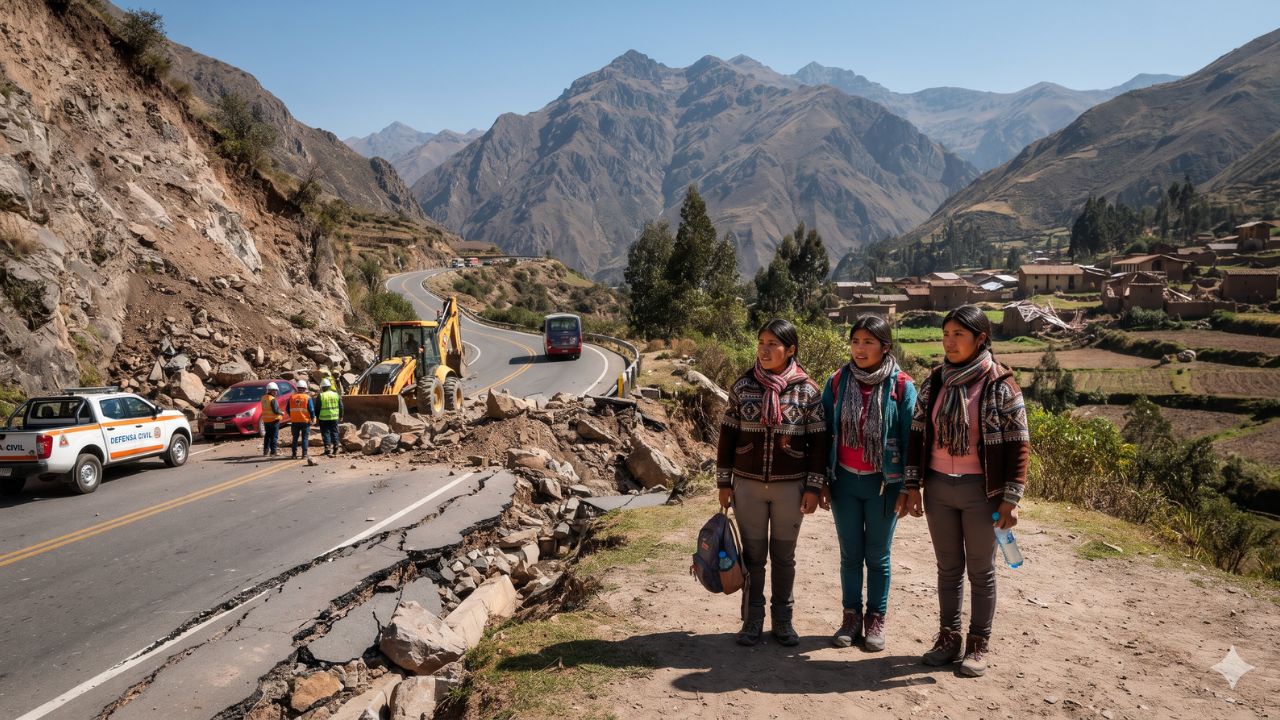
Magnitude 6.7 Earthquake Strikes Central Peru: Andes Road Corridors Cleared as Airports Maintain Normal Flights