
Iran Travel Network Hit By Fresh Shock As Turkish Airlines Extends Flight Suspension Until 2027
Iran Travel Network Hit By Fresh Shock As Turkish Airlines Extends Flight Suspension Until 2027

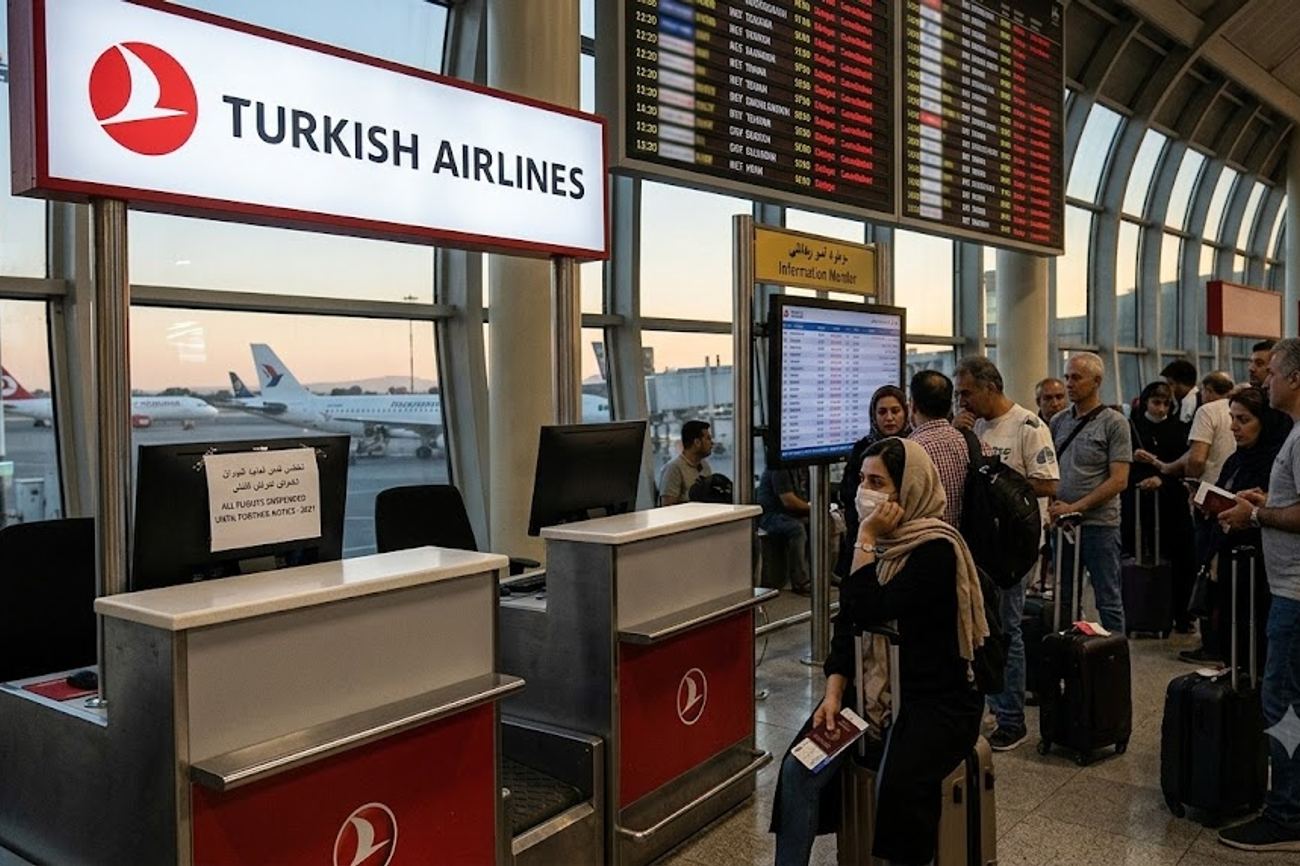
Image generated by AI
March 2027 is the earliest possible date that Turkish Airlines will consider resuming its flight operations to Iran, marking a prolonged isolation of one of the region's most critical aviation corridors. This suspension does not exist in a vacuum; it is the centerpiece of a systemic collapse in Iranian air connectivity, compounded by Iraq blocking Iranian carriers and Georgia imposing sanctions-based restrictions on the same. For a nation that relies on Türkiye as its primary gateway to the West, the removal of this capacity creates a logistical vacuum that will likely drive up ticket prices and increase transit times for millions of passengers.
The Erosion of the Turkish Transit Hub
For decades, the flight path between Iran and Türkiye has served as more than just a bilateral link; it functioned as a primary artery for Iranian citizens accessing Europe and North America. The decision by Turkish Airlines to halt services until March 2027 effectively severs a high-capacity bridge, forcing travelers to seek less efficient alternatives.
This disruption is not merely a commercial disagreement but a reflection of the tightening regulatory environment. The aviation sector in Iran is currently grappling with expanded United States sanctions that target not only the airlines themselves but the underlying entities that support aviation infrastructure. When a global carrier like Turkish Airlines pauses operations for a period exceeding two years, it signals a risk-assessment shift where the operational and legal costs of maintaining the route outweigh the potential revenue.
Regional Contraction: Iraq and Georgia
The crisis extends beyond the Turkish border, as neighboring states align their aviation policies with international sanctions regimes. The impact is most visible in the following regional shifts:
| Affected Country | Action Taken | Primary Impact |
|---|---|---|
| Türkiye | Turkish Airlines suspension until March 2027 | Loss of primary global transit hub for Iranian travelers |
| Iraq | Total suspension of Iranian airline operations | Disruption of religious tourism to Najaf and Karbala |
| Georgia | Restrictions on sanctioned Iranian carriers | Termination of direct leisure and business links |
| Türkiye (Local) | Mahan Air halted Istanbul/Ankara flights (Sept 20) | Reduction in Iranian-operated capacity to Türkiye |
The suspension of flights to Iraq is particularly volatile due to the nature of the traffic. The Iran-Iraq corridor is heavily utilized for religious pilgrimage, specifically during the Arbaeen period when millions of passengers move toward holy sites. By blocking Iranian carriers, Iraq has created a bottleneck that will likely necessitate a surge in charter flights or indirect routing through third-party nations, adding significant cost to the pilgrims.
Similarly, Georgia's decision to bar sanctioned Iranian carriers has ended a period of growing tourism and business exchange. This move reflects a broader trend where regional neighbors are prioritizing compliance with International Air Transport Association (IATA) standards and global sanctions over bilateral trade.
Expert Analysis: The Logistics of Isolation
For the nomadic professional or the business traveler, the direct consequence of these suspensions is the death of the "convenient connection." When Turkish Airlines—a carrier known for its massive hub-and-spoke efficiency—exits a market, the remaining capacity is typically absorbed by smaller, less reliable carriers or requires multi-stop itineraries.
The pricing pressure created by this contraction is inevitable. In aviation economics, when capacity drops while demand remains constant (especially for essential family and religious travel), fares spike. We are seeing a transition from a competitive market to a "survivalist" market where Iranian travelers must pay a premium for the few remaining seats on non-sanctioned carriers.
Furthermore, the exit of Mahan Air from the Istanbul and Ankara routes on September 20 removes the Iranian side of the operational equation. This creates a bidirectional collapse: the foreign carrier (Turkish Airlines) has left, and the domestic carrier (Mahan Air) has been forced out or has withdrawn. This leaves the Iranian aviation sector in a state of "forced localization," where they are unable to secure the parts, software updates, and landing rights necessary to maintain a modern international fleet. For the passenger, this translates to older aircraft, higher safety risks, and a total lack of flexibility in scheduling.
The recent extension of Turkish Airlines' flight suspension to Iran until 2027 has sent shockwaves through the travel network, with passengers facing uncertainty and disruption to their travel plans. For the latest updates and information on flight schedules, passengers can visit the Turkish Airlines official website for the most up-to-date information. This move is likely to impact tourism in Iran, with travelers seeking alternative routes and airlines.
Key Takeaways
- Extended Blackout: Turkish Airlines will not resume Iranian services until at least March 2027, removing a primary link to global destinations.
- Religious Tourism Crisis: The block on Iranian airlines in Iraq threatens the movement of millions of pilgrims, particularly during the Arbaeen peak.
- Systemic Sanctions: U.S. aviation sanctions are the primary driver, forcing Georgia and other regional partners to terminate agreements with Iranian carriers.
- Capacity Collapse: The September 20 termination of Mahan Air flights to Istanbul and Ankara signifies the end of major Iranian-operated capacity into Türkiye.
- Increased Costs: Travelers should expect significantly higher fares and longer transit times due to the loss of direct regional hubs.
FAQ: Iran Aviation Restrictions 2024-2027
Can I still fly from Iran to Europe? Yes, but direct options are nearly non-existent. You will likely need to book through alternative regional hubs or use carriers that are not currently under the same sanctions as Mahan Air, though costs and travel times will be higher.
Why did Turkish Airlines stop flying to Iran? The suspension is linked to the broader pressure of international sanctions and operational challenges affecting the Iranian aviation sector, making the routes legally or financially untenable until March 2027.
How does the Iraq flight ban affect pilgrims? Iranian airlines are blocked from operating in Iraq. Travelers heading to Najaf or Karbala must now find alternative airlines or indirect routes, which will be particularly difficult during high-demand periods like Arbaeen.
What happened to Mahan Air's flights to Türkiye? Mahan Air officially ceased its operations to Istanbul and Ankara on September 20, further reducing the number of available flights between the two countries.
The sky is closing over Tehran, turning a once-fluid regional hub into a series of disconnected islands.
Related Travel Guides
- Musafir Unlocks Bigger Travel Growth Opportunity With FLYCT MEA Acquisition in Middle East
- Japan Leads South Korea and Other Countries in Asia’s Humanoid Robotics Revolution, Transforming Smart Airports and Tourism Cities
- Newark Stands Alongside John F. Kennedy and Others as Air Traffic Control Failure Creates Widespread Flight Disruptions Across America’s Northeast Aviation Network
Disclaimer
This article is for informational and educational purposes only. It does not constitute legal, financial, or professional advice. While we strive to provide accurate and up-to-date information, travel policies, regulations, and conditions change rapidly. Always verify information with official sources before making travel decisions. Nomad Lawyer makes no representations about the accuracy, reliability, completeness, or suitability of the information provided. Readers should consult qualified professionals for advice specific to their circumstances. The views expressed in this article are those of the author and do not necessarily reflect the views of Nomad Lawyer.
Raushan Kumar
Founder & Lead Developer
Full-stack developer with 11+ years of experience and a passionate traveller. Raushan built Nomad Lawyer from the ground up with a vision to create the best travel and law experience on the web.
Learn more about our team →