
Indian Railways Deploys Rath Yatra Special Trains Between Gondia and Puri in 2026 to Manage Pilgrim Surge
Indian Railways launches dedicated Rath Yatra express services on the Gondia–Puri route to handle millions of devotees traveling to Odisha's annual festival in July 2026.

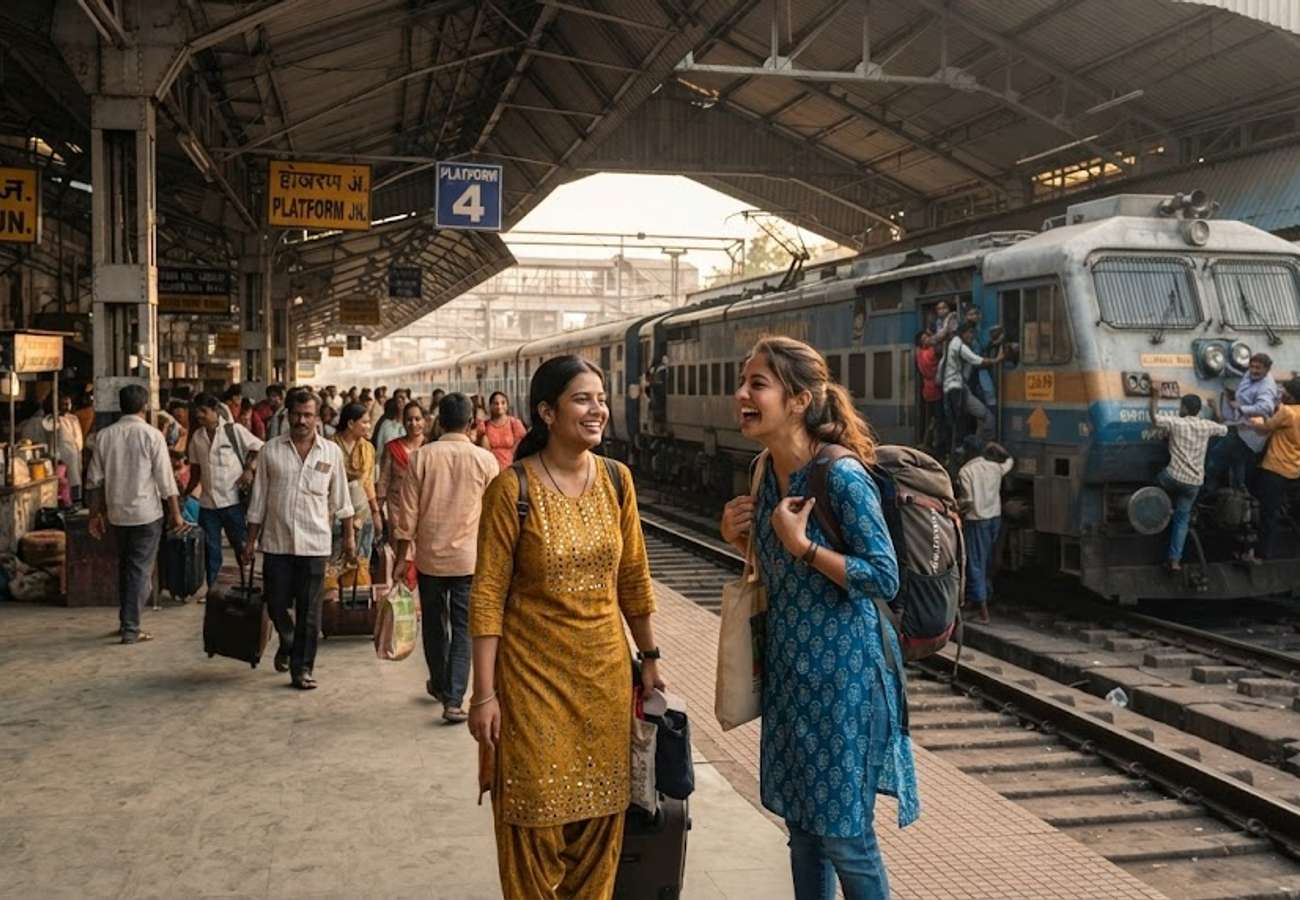
Image generated by AI
India's Railway System Braces for Millions: The Rath Yatra Express Challenge
Every July, Indian Railways faces one of its most demanding operational tests. Millions of devotees converge on Puri, Odisha for the annual Rath Yatra festival—a centuries-old religious celebration where pilgrims from across the nation board trains bound for the coastal temple town. This year, the railway ministry isn't leaving capacity to chance.
On July 2, 2026, Indian Railways officially rolled out dedicated Rath Yatra Special Express trains connecting Gondia Junction in Maharashtra to Puri in Odisha. The move signals a direct response to anticipated overcrowding on conventional rail services and represents a strategic infrastructure play to smoothen one of Asia's largest seasonal passenger movements.
Reddit: "The Rath Yatra trains sell out within hours. Booking early isn't just smart—it's essential if you want sleeper class tickets." — r/IndianRailways
The Special Trains: Schedule and Route Structure
The special service operates in two directions with alternating departures designed to balance passenger flow across the festival period.
Train No. 08801 departs from Gondia Junction at 1:30 PM on July 2, 9, 16, and 29, reaching Puri at 10:00 AM the following day. This overnight express cuts travel time and aligns perfectly with peak festival demand windows.
In reverse, Train No. 08802 leaves Puri at 1:00 PM on July 3, 10, 17, and 30, arriving at Gondia Junction at 7:00 AM the next morning. The staggered schedule ensures balanced bidirectional capacity rather than creating bottlenecks in one direction.
This isn't just a single-route solution. The trains traverse a sprawling multistate corridor spanning Maharashtra, Chhattisgarh, and Odisha—critical regions where pilgrimage demand concentrates during the festival window.
The Sprawling Route: 19 Major Stops Across Three States
The Gondia–Puri corridor is no express corridor in the conventional sense. The train makes strategic stops at 19 stations, each serving as critical access points for regional and inter-state travellers seeking Puri connectivity.
Major urban centres like Cuttack and Bhubaneswar—located near the final destination—experience peak boarding activity. The route also threads through inland industrial hubs including Durg, Raipur, Sambalpur, and Angul, strengthening mobility links between central India's economic zones and Odisha's spiritual epicentre.
According to official Indian Railways scheduling documentation, this corridor plays a foundational role during religious gatherings, when passenger traffic multiplies exponentially compared to regular operations.
Coach Configuration: Capacity Designed for Diverse Demand
Each special rake composition reveals Indian Railways' deep understanding of festival-season passenger segmentation.
The train consists of:
- Two luggage-cum-divyang-friendly coaches (accessible design for passengers with reduced mobility)
- Four general second-class coaches (unreserved seating for budget-conscious travellers)
- Ten sleeper-class coaches (the dominant category reflecting strong affordable long-distance demand)
- Three AC 3-tier coaches (mid-range comfort for overnight journeys)
- One AC 2-tier coach (premium reserved seating)
The heavy weighting toward sleeper-class coaches isn't arbitrary. It reflects ground-level demand data: most Rath Yatra pilgrims are middle-income devotees seeking affordable, comfortable overnight travel rather than premium amenities.
Crucially, accessible coaches are included—a requirement under India's disability inclusion framework, ensuring no pilgrim is left behind due to mobility constraints.
Why This Year? The Pilgrimage Pressure Cooker
Puri's Rath Yatra isn't a niche religious event. This festival draws millions of devotees annually, creating one of the world's highest-density pilgrimage movements. During peak days, conventional train services experience full occupancy, overflow waiting lists stretching months, and dangerous congestion at major junctions.
The Gondia–Puri route is particularly critical because it serves passengers from central India—a region with limited direct coastal connectivity. Without special trains, these pilgrims face multi-leg journeys involving transfers, extended travel times, and logistical complexity that amplifies during peak festival windows.
This seasonal railway augmentation reflects a broader operational strategy. As documented by India's Ministry of Railways Planning Division, Indian Railways strategically deploys additional capacity during cultural and religious peaks rather than maintaining surplus capacity year-round.
Passenger Advisory: Early Booking Is Non-Negotiable
For anyone planning to board these special services, the guidance is unambiguous: book early.
Given the expected high demand, seats—particularly in sleeper and AC classes—will vanish within hours of booking windows opening. The National Train Enquiry System (NTES) remains the authoritative source for real-time seat availability, platform details, and timing confirmations.
Travellers are advised to reach stations well in advance of departure times. The combination of festival crowds and overnight service timing creates predictable bottlenecks at major stations like Cuttack and Bhubaneswar, where boarding pressure peaks.
Minor operational adjustments may occur based on real-time crowd management data and demand fluctuations across the four-week festival window.
The Broader Picture: Regional Integration and Strategic Mobility
Beyond festival management, these special trains strengthen permanent multistate connectivity. The Gondia–Puri corridor now links industrial zones, semi-urban centres, and pilgrimage hubs—making the service beneficial not just for devotees but for regular passengers during the operation window and beyond.
This type of targeted seasonal deployment demonstrates Indian Railways' evolution from static infrastructure to dynamic capacity management. Rather than building permanent excess capacity, the system now leverages data-driven scheduling to match supply with predictable demand spikes.
The introduction of Rath Yatra Special Express trains between Gondia Junction and Puri represents more than operational crisis management—it's a deliberate choice to prioritize inclusive, affordable access to one of humanity's largest annual religious gatherings.
With expanded capacity, structured scheduling, and a strategically designed multistate route spanning three states and 19 stations, Indian Railways has positioned itself to significantly ease travel pressure during the 2026 Rath Yatra season while maintaining operational efficiency across national rail corridors.
Managing millions with meticulous scheduling—that's Indian Railways in festival season.
Related Travel Guides
Disclaimer
This article is for informational and educational purposes only. It does not constitute legal, financial, or professional advice. While we strive to provide accurate and up-to-date information, travel policies, regulations, and conditions change rapidly. Always verify information with official sources before making travel decisions. Nomad Lawyer makes no representations about the accuracy, reliability, completeness, or suitability of the information provided. Readers should consult qualified professionals for advice specific to their circumstances. The views expressed in this article are those of the author and do not necessarily reflect the views of Nomad Lawyer.
Preeti Gunjan
Contributor & Community Manager
A passionate traveller and community builder. Preeti helps grow the Nomad Lawyer community, fostering engagement and bringing the reader experience to life.
Learn more about our team →