
India and Uzbekistan Link UPI with UZQR for Cashless Tourist Payments

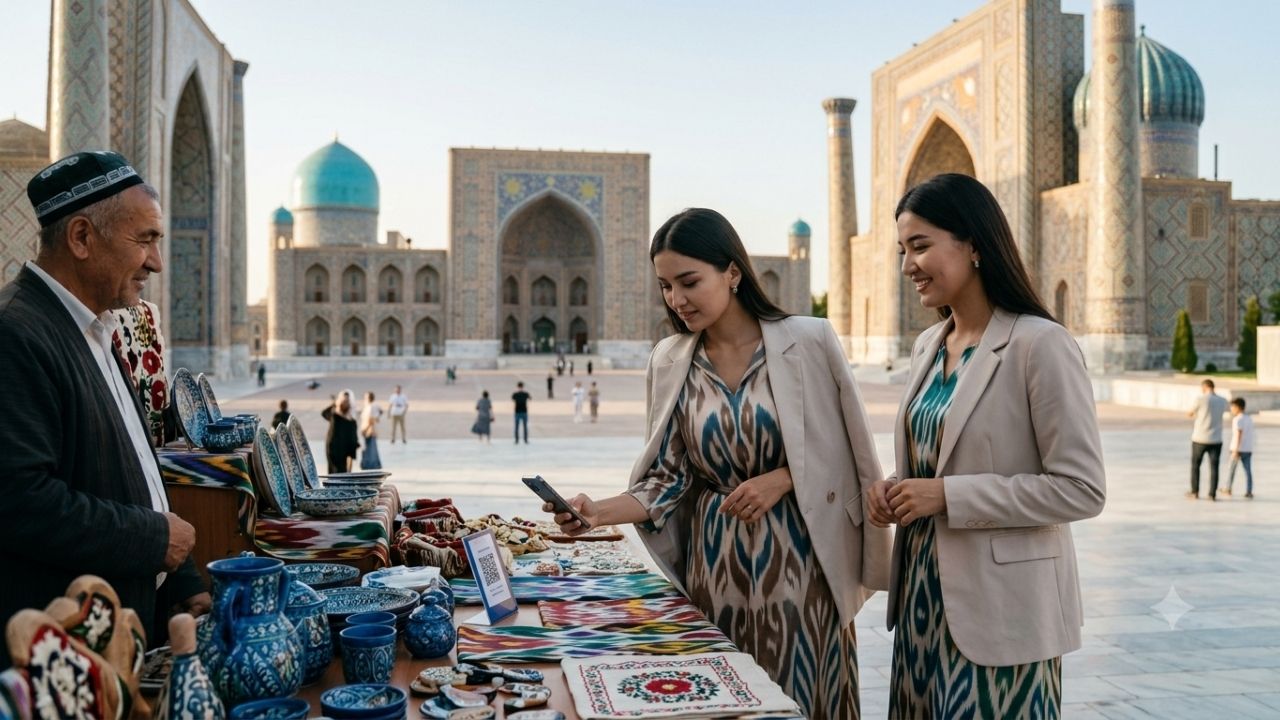
Image generated by AI
Financial technology institutions in India and Uzbekistan have finalized a cross-border payments agreement connecting India's Unified Payments Interface (UPI) with Uzbekistan's UZQR merchant network.
[TASHKENT, Uzbekistan, Aug. 31, 2026] — Indian travelers visiting Central Asia will soon be able to complete instant cashless payments across Uzbekistan following a landmark financial technology partnership between NPCI International Payments Limited (NIPL) and Uzbekistan's National Interbank Processing Centre (NIPC). The initiative integrates India’s Unified Payments Interface (UPI) with Uzbekistan’s domestic UZQR merchant payment system, enabling tourists to scan local QR codes using their home mobile banking applications.
The agreement comes as outbound travel from India to Central Asian destinations reaches record volumes. By eliminating foreign currency exchange fees and reliance on international credit cards, the digital payment bridge will allow Indian visitors to pay for hotels, dining, local handicrafts, and transport across historic Silk Road cities including Samarkand, Bukhara, Khiva, and Tashkent.
Bilateral Agreement Links NIPL with Uzbekistan’s NIPC Payment Gateway
The technical integration connects NIPL, the international arm of the National Payments Corporation of India, with NIPC, which manages Uzbekistan's central interbank card and QR processing infrastructure. Under the operational framework, merchants across Uzbekistan displaying the official UZQR code will accept instant payments from Indian UPI-enabled mobile apps.
Key elements of the cross-border digital payment framework include:
- Direct QR Interoperability: Indian travelers scan standard UZQR codes at Uzbek merchant locations using established UPI applications on their smartphones.
- Real-Time Currency Conversion: Foreign exchange conversions between Indian Rupees (INR) and Uzbekistani Som (UZS) are calculated instantly at the point of sale without credit card foreign transaction markups.
- Widespread Merchant Adoption: Payment access covers hotels, restaurants, local bazaar artisans, taxi services, museum entry gates, and regional transport hubs.
The system provides small and medium-sized tourism enterprises across Uzbekistan with instant digital settlement, encouraging independent travel beyond organized tour groups.
Silk Road Destinations Benefit from Cashless Indian Outbound Travel
Uzbekistan has emerged as a top cultural destination for Indian travelers due to short flight times, affordable accommodation, and simplified visa access, including 30-day visa-free entry for Indian passport holders. The introduction of instant UPI payments removes financial friction for visitors exploring the country's ancient architecture.
Target tourist services and retail sectors benefiting from the UPI expansion include:
- Historic Tourism Corridors: Seamless entry ticket purchases and guided tour payments at UNESCO sites such as Registan Square in Samarkand, the Ark of Bukhara, and Ichan-Kala in Khiva.
- Gastronomy & Local Dining: Direct QR payments at traditional chaihona teahouses and restaurants serving regional specialties like Samarkand plov.
- Artisan Bazaars & Retail: Cashless purchases for traditional Uzbek silk ceramics, Suzani embroideries, and hand-woven carpets in local handicraft markets.
By making everyday transactions as easy in Tashkent as in New Delhi, the partnership expects to drive higher per-tourist spending across local municipal economies.
Comprehensive Data Breakdown: Payment Integration Metrics and Tourist Services
The table below outlines the core institutional partners, payment mechanics, and operational features of the India-Uzbekistan digital payment link:
| Integration Metric Category | Official System Parameter | Operational & Traveler Context |
|---|---|---|
| Indian Partner Entity | NPCI International Payments Limited (NIPL) | Manages international UPI deployment |
| Uzbekistan Partner Entity | National Interbank Processing Centre (NIPC) | Governs central UZQR payment processing |
| Interoperable Standard | UPI scanning UZQR merchant codes | Instant smartphone QR code payment settlement |
| Primary Settlement Currency | Direct INR to Uzbekistani Som (UZS) | Real-time exchange rate calculation at POS |
| Target Traveler Audience | Indian tourists & business visitors | Replaces cash exchange & card markup fees |
The table below details key Silk Road destination hubs and merchant sectors accepting UZQR payments:
| Silk Road Destination Hub | Signature Heritage Attractions | Key UZQR Merchant Sectors |
|---|---|---|
| Samarkand | Registan Square, Shah-i-Zinda, Gur-e-Amir | Boutique hotels, silk ceramic shops, plov dining |
| Bukhara | Ark of Bukhara, Po-i-Kalyan Complex, Trading Domes | Carpet bazaars, historic teahouses, guest houses |
| Khiva | Ichan-Kala Walled Inner City, Kalta Minor Minaret | Woodcarving workshops, museum ticket counters |
| Tashkent (Capital City) | Chorsu Bazaar, Amir Timur Square, Metro Network | Urban transit, luxury hotels, modern shopping malls |
Digital Infrastructure Emerges as Core Driver of Central Asian Tourism
The expansion of UPI into Uzbekistan reflects a broader shift in international tourism, where digital payment connectivity directly influences destination competitiveness. Modern travelers increasingly prioritize destinations offering secure, familiar, and cashless payment methods.
For Uzbekistan, establishing digital payment links with India positions the nation as a forward-thinking gateway for Central Asian travel. Financial analysts project that seamless payment access will encourage travelers to extend trip durations, explore regional towns outside major cities, and increase discretionary retail spending.
The partnership also builds on expanding aviation connectivity, with direct flights operating between Delhi and Tashkent, further cementing economic and cultural ties between South Asia and Central Asia.
Why This Matters: Essential Guidance for Indian Travelers to Uzbekistan
For Indian tourists planning a trip to Uzbekistan under the new digital payment framework, this development offers practical advantages:
- Reduced Foreign Exchange Hassles: Travelers no longer need to carry large sums of physical US Dollars or Uzbekistani Som for currency conversion at airport exchange counters.
- Lower Transaction Fees: Scanning UZQR codes via UPI avoids the 3% to 5% foreign transaction surcharges typically levied by international credit card issuers.
- Enhanced Financial Security: Cashless transactions protect travelers against theft or loss of physical currency while exploring busy markets and public transit networks.
- Independent Travel Flexibility: Seamless digital payments empower independent travelers to explore local cafes, hire local guides, and purchase regional crafts outside fixed tour packages.
Frequently Asked Questions
How will Indian tourists use UPI to make payments in Uzbekistan?
Indian tourists can scan local UZQR merchant codes displayed at stores, hotels, and restaurants in Uzbekistan using compatible UPI banking applications on their mobile phones.
Which institutions are implementing the UPI link in Uzbekistan?
The cross-border payment link is developed through a bilateral partnership between NPCI International Payments Limited (NIPL) of India and the National Interbank Processing Centre (NIPC) of Uzbekistan.
Do Indian travelers need credit cards or physical cash in Uzbekistan with UPI active?
While carrying a backup payment method is recommended during system rollout, active UPI integration allows tourists to complete most daily transactions cashlessly in Uzbekistani Som.
Which Uzbek cities support the UZQR digital payment network?
The UZQR payment network operates nationwide across major cities, including Tashkent, Samarkand, Bukhara, and Khiva.
Related Travel Guides
Disclaimer
This article is for informational and educational purposes only. It does not constitute legal, financial, or professional advice. While we strive to provide accurate and up-to-date information, travel policies, regulations, and conditions change rapidly. Always verify information with official sources before making travel decisions. Nomad Lawyer makes no representations about the accuracy, reliability, completeness, or suitability of the information provided. Readers should consult qualified professionals for advice specific to their circumstances. The views expressed in this article are those of the author and do not necessarily reflect the views of Nomad Lawyer.
Raushan Kumar
Founder & Lead Developer
Full-stack developer with 11+ years of experience and a passionate traveller. Raushan built Nomad Lawyer from the ground up with a vision to create the best travel and law experience on the web.
Learn more about our team →