
India Travel Gets Faster as New Six-Lane Expressway Brings Delhi and Chitrakoot Within 6 Hours
India Travel Gets Faster as New Six-Lane Expressway Brings Delhi and Chitrakoot Within 6 Hours

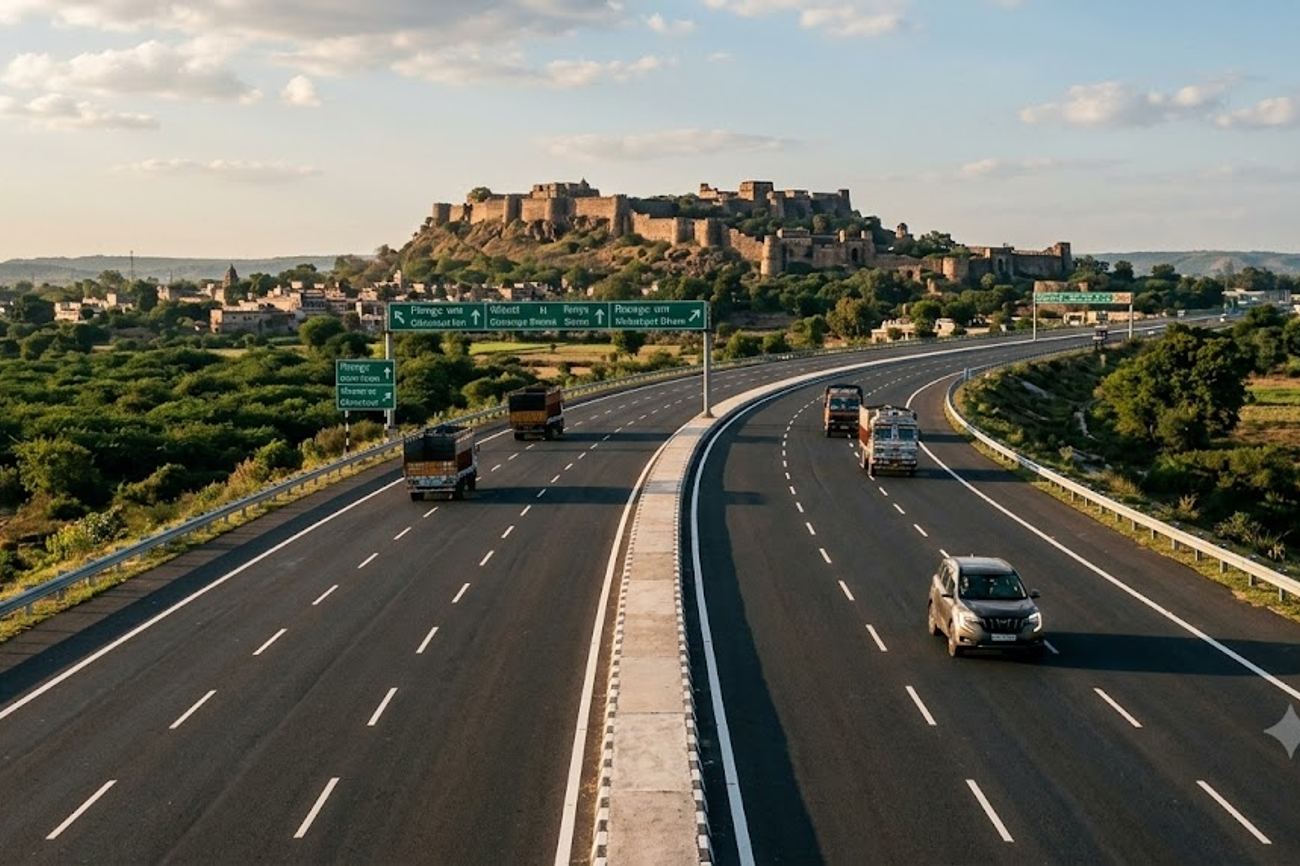
Image generated by AI
A 33% reduction in travel time between Delhi and Chitrakoot is the primary objective of the newly upgraded Chitrakoot Link Expressway. By expanding the project from a four-lane to a six-lane access-controlled corridor, the Uttar Pradesh government aims to slash the journey from approximately nine hours to nearly six hours. This infrastructure shift is not merely a road widening project but a strategic recalibration of the Bundelkhand region's accessibility, designed to support vehicle speeds of up to 120 kmph across a critical 15.172-kilometre stretch.
The Bundelkhand Connectivity Pivot
The decision to upgrade the Chitrakoot Link Expressway represents a shift in the Uttar Pradesh government's approach to regional transit. Originally envisioned as a four-lane road, the project has been redesigned as a six-lane greenfield corridor with a total width of 110 metres. This expansion is a response to projected traffic volumes that the original design could not sustain, particularly given the intersection of religious pilgrimage and interstate commercial freight.
The expressway functions as the final high-speed link connecting Chitrakoot Dham to the broader Bundelkhand Expressway, which in turn integrates with the Yamuna Expressway. This creates a seamless, high-velocity artery stretching across 655 kilometres from the national capital of Delhi to the spiritual hub of Chitrakoot. By utilizing the Engineering, Procurement, and Construction (EPC) model, the state ensures that a single contractor manages the lifecycle of the build under strict government oversight, minimizing the fragmented delays common in multi-vendor infrastructure projects.
Financial and Structural Specifications
The transition to a six-lane design has necessitated a budget increase, reflecting the higher material and engineering costs associated with a wider, more durable corridor. The total project funding is being provided entirely by the Uttar Pradesh government.
| Specification | Detail |
|---|---|
| Total Length | 15.172 Kilometres |
| Road Width | 110 Metres |
| Design Speed | 120 kmph |
| Original Budget | Rs 940 Crore |
| Revised Budget | Rs 1,008.67 Crore |
| Lane Configuration | 6-Lane Access-Controlled |
| Funding Source | Uttar Pradesh Government |
To maintain the 120 kmph design speed and ensure safety, the project incorporates a complex array of engineering structures. The plan includes one major bridge, four minor bridges, and one flyover to eliminate at-grade intersections. To facilitate local movement without compromising the expressway's speed, 17 underpasses and 23 culverts are being integrated. The corridor will be regulated by a single toll plaza, ensuring a controlled entry and exit system that prevents the haphazard congestion typically found on non-access-controlled Indian highways.
Expert Analysis: The Logistics of Spiritual Tourism
For the modern traveler, the direct consequence of this project is the transformation of Chitrakoot from a "destination of endurance" to a "destination of convenience." Historically, the final leg of journeys into the Bundelkhand region has been plagued by bottlenecks and slower local roads. By creating a high-speed link to the Bundelkhand Expressway, the government is applying a "hub-and-spoke" logistics model to religious tourism.
The pricing pressure this creates is twofold. First, the reduction in travel time will likely increase the volume of "weekend pilgrims" from Delhi and the National Capital Region (NCR), who previously found a nine-hour one-way trip prohibitive. This surge in short-term visitors typically drives up local hospitality rates while increasing the demand for premium rental vehicles and private tour operators. Second, the access-controlled nature of the road—where entry and exit are limited to designated points—will streamline the flow of traffic but may marginalize smaller, off-expressway businesses that relied on haphazard highway stops.
Beyond tourism, the geopolitical impact on interstate trade is significant. This corridor serves as a gateway to Madhya Pradesh, specifically targeting freight movement toward Satna, Rewa, and Jabalpur. By reducing the friction of transport between Uttar Pradesh and Madhya Pradesh, the state is lowering the "cost of distance" for commercial logistics. When combined with the Ministry of Road Transport and Highways (MoRTH) initiatives to modernize national corridors, this project signals a broader trend of treating spiritual hubs as economic engines rather than just cultural sites.
Key Takeaways
- Time Efficiency: The journey from Delhi to Chitrakoot is expected to drop from nine hours to six hours due to the 120 kmph design speed.
- Capacity Upgrade: The project was expanded from four to six lanes, increasing the total investment to Rs 1,008.67 crore.
- Infrastructure Scale: The 15.172-km stretch includes 17 underpasses, 23 culverts, and one flyover to ensure uninterrupted traffic flow.
- Interstate Impact: The road creates a high-speed commercial conduit between Uttar Pradesh and major Madhya Pradesh cities like Jabalpur and Satna.
- Strategic Context: This project is part of a wider 23-proposal cabinet approval, including the Uttar Pradesh Toy Manufacturing Promotion Policy-2025.
FAQ: Chitrakoot Link Expressway 2025
How much will the travel time decrease between Delhi and Chitrakoot? The travel time is expected to decrease by approximately three hours, dropping from the current nine-hour average to nearly six hours.
What is the maximum speed allowed on the new expressway? The Chitrakoot Link Expressway is designed as an access-controlled corridor that supports vehicle speeds of up to 120 kmph.
Who is funding the construction of the six-lane expressway? The project is being fully funded by the Uttar Pradesh government, with a revised total cost of Rs 1,008.67 crore.
Which cities in Madhya Pradesh will benefit from this road? Commercial transport and freight movement toward Satna, Rewa, and Jabalpur are expected to see significant improvements in connectivity.
The shift from four to six lanes is more than a capacity increase; it is a signal that the Bundelkhand region is being integrated into the high-speed economic grid of Northern India.
Tags: Chitrakoot Link Expressway, Bundelkhand Expressway, Uttar Pradesh Infrastructure 2025, Delhi-Chitrakoot Route, Yogi Adityanath Cabinet, Madhya Pradesh Freight Logistics
Related Travel Guides
Disclaimer
This article is for informational and educational purposes only. It does not constitute legal, financial, or professional advice. While we strive to provide accurate and up-to-date information, travel policies, regulations, and conditions change rapidly. Always verify information with official sources before making travel decisions. Nomad Lawyer makes no representations about the accuracy, reliability, completeness, or suitability of the information provided. Readers should consult qualified professionals for advice specific to their circumstances. The views expressed in this article are those of the author and do not necessarily reflect the views of Nomad Lawyer.
Raushan Kumar
Founder & Lead Developer
Full-stack developer with 11+ years of experience and a passionate traveller. Raushan built Nomad Lawyer from the ground up with a vision to create the best travel and law experience on the web.
Learn more about our team →