
India Extends Free e-Tourist Visa for Thai Travellers Until 2027 in Major Tourism Boost Move
India Extends Free e-Tourist Visa for Thai Travellers Until 2027 in Major Tourism Boost Move

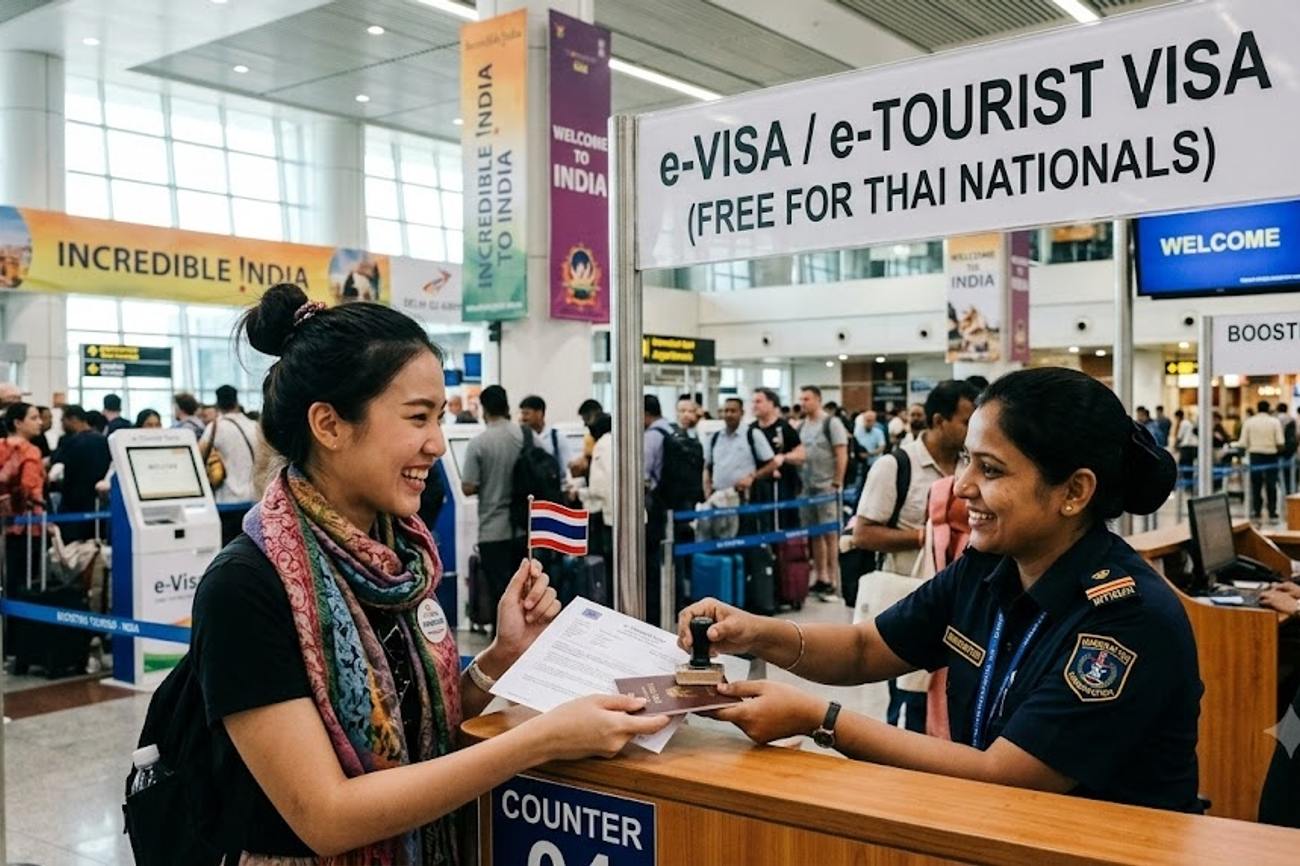
Image generated by AI
Thai arrivals to India shifted from 140,489 in 2024 to approximately 130,000 in 2025, a slight contraction that has prompted New Delhi to aggressively pivot its entry strategy. By extending the visa fee waiver for Thai nationals through December 31, 2027, India is transitioning from a passive recovery phase to an active market-capture phase, utilizing zero-cost entry as a primary lever to reverse the downward trend in passenger volume from one of its most critical Southeast Asian partners.
The India-Thailand Corridor in Numbers
The current policy shift is not merely a diplomatic gesture but a data-driven response to fluctuating arrival numbers. According to official records, the volume of Thai travelers entering India stood at 140,489 in 2024. By 2025, this figure adjusted to 130,000. While this represents a decrease, the strategic decision to remove the e-Tourist visa fee through the end of 2027 suggests that the Indian government views the cost of entry as a significant friction point for the Thai middle-class traveler.
The new arrangement introduces a 30-day e-Tourist visa with a double-entry facility. This specific structural change—allowing two entries—is a calculated move to encourage "hub-and-spoke" travel patterns, where Thai visitors might enter India, exit briefly to a neighboring territory, and return, thereby increasing the overall utility of a single visa application. This aligns with broader trends tracked by the World Tourism Organization (UNWTO), where flexible entry requirements are directly correlated with higher repeat-visit rates in emerging markets.
Furthermore, the physical infrastructure supporting this policy is robust. Thailand currently maintains regular flight services connecting to more than 15 Indian cities. This high level of point-to-point connectivity reduces the reliance on a single gateway like Delhi or Mumbai, distributing Thai tourist spend across a wider array of Indian states and provinces.
Comparative Market Dynamics: 2024 vs. 2025
When analyzing the trajectory of Thai outbound travel to India, the data reveals a market that is sensitive to cost and accessibility. The shift from 2024 to 2025 indicates that air connectivity alone is insufficient to maintain growth; financial incentives are now required to sustain momentum.
| Metric | 2024 Data | 2025 Data | Trend Direction |
|---|---|---|---|
| Thai Tourist Arrivals | 140,489 | 130,000 | $\downarrow$ 7.4% |
| Visa Fee Cost | Standard Fee | 0 (Waiver) | $\downarrow$ 100% |
| Visa Entry Limit | Standard | Double-Entry | $\uparrow$ Flexibility |
| City Connectivity | 15+ Cities | 15+ Cities | $\leftrightarrow$ Stable |
| Policy Duration | Short-term | Until Dec 31, 2027 | $\uparrow$ Long-term |
This data suggests a strategic realignment. By locking in a zero-fee structure for nearly three years, India is attempting to create a behavioral habit among Thai travelers, positioning India as a "frictionless" destination compared to other regional competitors. This mirrors a larger pattern seen in IATA's global mobility reports, where the removal of visa barriers is often the most effective catalyst for stimulating demand in corridors with existing high-frequency flight paths.
What This Means for Travelers
For Thai nationals and travel planners specializing in the Southeast Asian market, this policy change transforms the cost-benefit analysis of visiting India. The removal of the visa fee, combined with the double-entry facility, allows for more complex itinerary planning without the financial penalty of multiple visa applications.
If you are planning a trip to India between now and late 2027, the following data-backed advice applies:
- Optimize for Multi-City Itineraries: Because the visa now allows for double entry, travelers should consider combining their India visit with a stop in a neighboring country (such as Nepal or Sri Lanka) without needing to re-apply for a new Indian visa upon return.
- Digital-First Application: Despite the fee waiver, the application process remains strictly digital. Travelers must use the official e-Tourist visa platform. Failure to complete the digital process before departure will result in boarding denials, as the waiver applies to the cost, not the requirement.
- Leverage Regional Hubs: With connectivity to over 15 cities, travelers should avoid the "Delhi-only" trap. Data indicates that diversifying entry points can reduce overall transit costs and provide more direct access to spiritual and heritage sites.
- Budget Reallocation: The elimination of the visa fee allows for a reallocation of travel funds toward higher-tier accommodations or extended stays, which typically increases the overall quality of the travel experience.
Projection: The 2026-2027 Growth Trajectory
Based on the current trajectory, the period between 2026 and 2027 will likely see a recovery in Thai arrival numbers, potentially surpassing the 140,489 peak of 2024. The long-term nature of this waiver (expiring December 31, 2027) provides a stable environment for travel agencies to build multi-year packages and loyalty programs.
We expect to see a shift in the type of traveler. While 2024 was characterized by traditional tourism, the double-entry facility and zero-cost barrier will likely attract a higher volume of "digital nomads" and short-term business consultants who require flexibility. This shift is consistent with data from Statista regarding the rise of flexible work arrangements in the APAC region.
The synergy between the 15+ city flight network and the fee waiver creates a "flywheel effect": easier entry leads to more passengers, which justifies the maintenance or expansion of flight frequencies, which in turn makes the destination more attractive. If India continues this trend, we can expect the 130,000 arrival floor of 2025 to become the new baseline, with a projected growth rate of 5-8% year-over-year through 2027.
FAQ: India-Thailand Travel Trends 2025-2027
Will flight prices decrease because of the visa waiver? Not directly. Visa fees and airfares are decoupled. However, increased demand from Thai travelers may encourage airlines to introduce more competitive pricing or promotional fares to fill the 15+ connected city routes.
Is it a good time to book a trip to India? Yes. With the visa fee eliminated and a double-entry facility now available, the financial barrier to entry is at a historical low. Booking now allows travelers to take advantage of the current connectivity stability.
Which airlines are expanding on these routes? While specific carriers weren't named in the latest update, the presence of services to 15+ Indian cities indicates a diversified market. Travelers should compare low-cost carriers (LCCs) against full-service airlines for the best rates.
Do I still need to apply for a visa if it is free? Yes. The waiver applies only to the fee. All Thai nationals must still complete the standard online application process through the official Indian digital visa platform before traveling.
The shift from fee-based entry to a zero-cost model signals India's intent to dominate the Southeast Asian inbound market through strategic accessibility.
Tags: India-Thailand-Tourism-2027, e-Tourist-Visa-Waiver, Thai-Outbound-Travel-Data, India-Inbound-Recovery-Metrics, APAC-Visa-Trends-2025
Related Travel Guides
Disclaimer
This article is for informational and educational purposes only. It does not constitute legal, financial, or professional advice. While we strive to provide accurate and up-to-date information, travel policies, regulations, and conditions change rapidly. Always verify information with official sources before making travel decisions. Nomad Lawyer makes no representations about the accuracy, reliability, completeness, or suitability of the information provided. Readers should consult qualified professionals for advice specific to their circumstances. The views expressed in this article are those of the author and do not necessarily reflect the views of Nomad Lawyer.
Preeti Gunjan
Contributor & Community Manager
A passionate traveller and community builder. Preeti helps grow the Nomad Lawyer community, fostering engagement and bringing the reader experience to life.
Learn more about our team →