CM Airlines Launches Copán Flights to Río Amarillo Aerodrome in December 2026: Maya Ruins Travel Guide

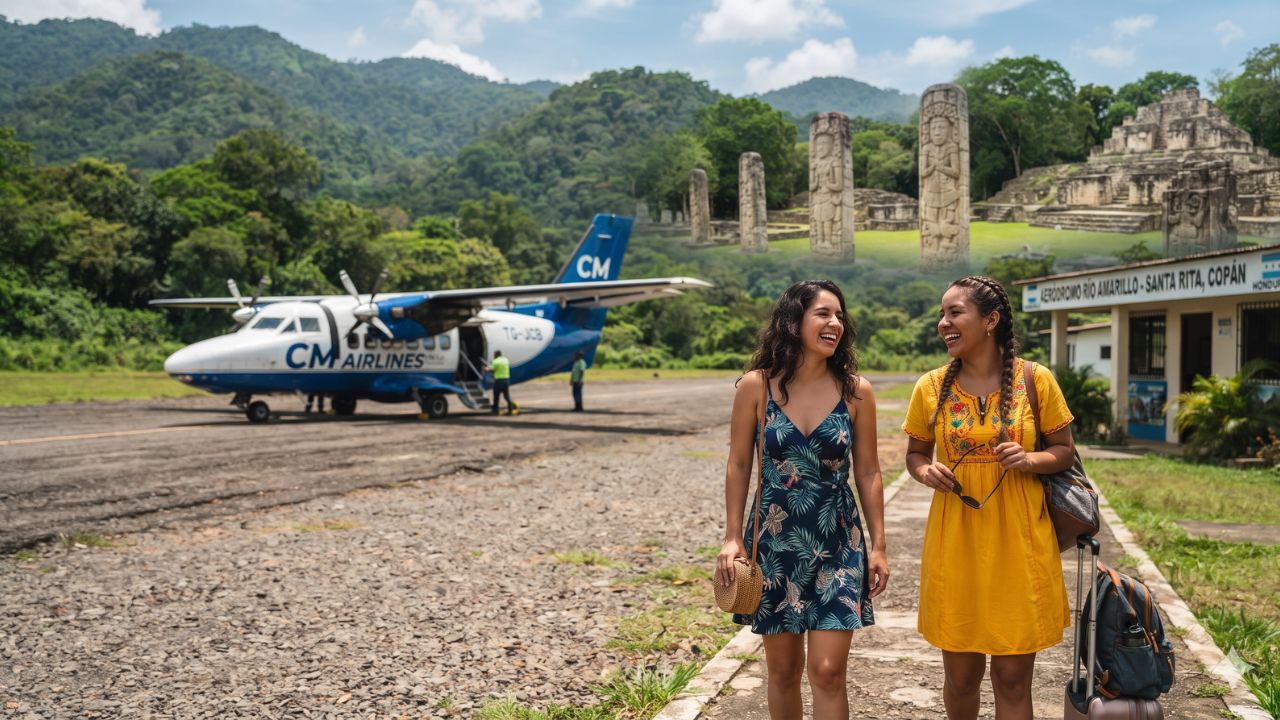
For generations of independent travelers, standing before the monumental stone stelae of Copán required enduring an arduous four- to five-hour overland transit over winding mountain switchbacks from San Pedro Sula or negotiating slow border crossings from Guatemala. Starting 4 December 2026, that taxing overland journey collapses into a quick 15-minute road drive as CM Airlines prepares to initiate scheduled commercial flights directly into western Honduras at the refurbished Río Amarillo Aerodrome in Santa Rita. The regulatory green light arrived on 29 October 2026 when the Agencia Hondureña de Aeronáutica Civil (AHAC) confirmed that comprehensive modernization work at the regional airfield reached 90 percent completion. Positioned amid the green hills of Copán department, this revived air corridor links the nation's commercial centers and coastal gateways directly to the threshold of Central America's most sculpturally intricate Maya kingdom.
CM Airlines Restores Western Wings: Río Amarillo Aerodrome Flight Details
The scheduled flight launch represents a critical operational step forward for western Honduras, providing direct air access to Santa Rita and surrounding communities. Infrastructure upgrades overseen by the Secretariat of Infrastructure and Transport (SIT) and civil aviation authorities focus on runway rehabilitation, aircraft apron preparation, operational area clearing, and fresh airfield ground markings. The remaining 10 percent of preparation focuses on final ground certifications and facility inspections ahead of the announced December deadline.
To ensure flight reliability across the mountainous terrain of the Copán valley, civil aviation regulators introduced Required Navigation Performance (RNP) satellite-guided flight procedures. These advanced navigation pathways allow approaching aircraft to follow precise, computer-verified corridors through surrounding ridges without depending exclusively on ground-based radio transmitters. Ground support features automated meteorological observation stations alongside conventional weather tracking systems, coordinated by certified air traffic controllers and specialized aviation technicians.
Inter-agency coordination unites AHAC, the Secretariat of Infrastructure and Transport, the Honduran Airport Infrastructure and Services Company, and the Instituto Hondureño de Turismo. While the government confirms the airline, destination, and the 4 December 2026 launch date, specific flight timetables, ticket prices, and operating aircraft models have not yet been released.
| Project Metric | Official Status / Detail | Managing Agency | Strategic Regional Significance |
|---|---|---|---|
| Operating Airline | CM Airlines | Private Commercial Carrier | Establishes scheduled commercial passenger service to western Honduras. |
| Aerodrome Facility | Río Amarillo Aerodrome | AHAC & SIT Oversight | Regional airfield situated in Santa Rita, Copán department. |
| Official Announcement | 29 October 2026 | Honduran Civil Aviation Agency (AHAC) | Confirms regulatory approval and operational readiness phase. |
| Planned Launch Date | 4 December 2026 | CM Airlines & AHAC | Connects western Honduras ahead of peak dry season travel. |
| Airfield Progress | 90% completed as of 29 October 2026 | Secretariat of Infrastructure and Transport | Final phase delivers runway markings and apron clearing. |
| Distance to Heritage Site | Approximately 15 minutes by road | Copán Archaeological Park | Replaces four-hour highland highway driving from San Pedro Sula. |
| Aviation Navigation | Required Navigation Performance (RNP) | AHAC Flight Safety Directorate | Satellite navigation corridors designed for mountain valley terrain. |
| Weather Monitoring | Automated stations & conventional equipment | National Aviation Meteorology | Delivers real-time barometric, wind, and visibility data. |
| Commercial Details | Frequencies, fares, and aircraft unannounced | CM Airlines Commercial Office | Detailed schedules and ticket tiers pending regulatory publication. |
The Río Amarillo initiative forms part of an expansive national aerodrome rehabilitation programme modernising regional air links across remote, coastal, and island destinations throughout Honduras:
| Aerodrome Location | Department / Region | Government Development Scope | Strategic Travel Focus |
|---|---|---|---|
| Río Amarillo | Santa Rita, Copán | Airfield rehabilitation & commercial flight launch | Maya archaeological tourism & highland cultural routes. |
| Útila | Bay Islands | Runway resurfacing & infrastructure improvements | Caribbean coral reef diving & marine conservation. |
| Guanaja | Bay Islands | Runway resurfacing & infrastructure improvements | Low-density eco-tourism, bonefishing, and hiking. |
| Tela | Atlántida | Aerodrome rehabilitation & ground upgrades | Coastal Garífuna heritage, beaches, and national parks. |
| Puerto Lempira | Gracias a Dios | Infrastructure rehabilitation & public investment | Mosquitia rainforest conservation & isolated community access. |
As of 31 October 2026, official authorities have not published specific visitor arrival projections, hotel occupancy targets, or regional revenue forecasts. Realized economic returns will depend on passenger demand, flight schedules, and ticket affordability once CM Airlines inaugurates regular services.
What Makes Copán Ruinas Experientially Different
Recognized among archaeologists as the premier artistic center of pre-Columbian Mesoamerica, Copán preserves stone sculpture of extraordinary complexity. Inscribed on the UNESCO World Heritage list in 1980, the ancient ceremonial capital flourished along the fertile Copán River valley between the 5th and 9th centuries AD under the guidance of 16 dynastic kings. While ancient architects in Tikal and Calakmul built soaring limestone pyramids, Copán’s sculptors worked with volcanic green and yellowish tuff stone, carving three-dimensional portraits of rulers draped in royal jade, jaguar pelts, quetzal feathers, and serpent iconography.
The crowning architectural achievement of the main acropolis is the Hieroglyphic Stairway on Structure 26. Rising across 63 massive stone steps and inscribed with more than 2,000 individual glyphs, it stands as the longest continuous pre-Columbian written text in the Americas, detailing two centuries of dynastic wars, sacred alliances, and royal rituals. Deep beneath the main temple platforms lies an underground archaeological labyrinth spanning over four kilometers of carved exploration tunnels. Within these quiet passages rests the Rosalila Temple—a preserved 6th-century sanctuary discovered intact with its original polychrome red, yellow, and green stucco masks, safely sheltered when later Maya rulers constructed larger stone pyramids directly above it.
Beyond the archaeological acropolis, the natural atmosphere makes Copán memorable. Free-flying scarlet macaws (Ara macao)—the sacred solar bird of Maya kings—glide across ceiba trees and stone plazas, their brilliant red and gold plumage flashing against grey sandstone. Just two kilometers west of the ruins, the town of Copán Ruinas welcomes travelers with steep cobblestone alleys, whitewashed facades, and neighborhood coffee shops roasting highland beans sourced directly from surrounding shade-grown plantations.
Visitor Insider Tips: Timing, Etiquette, and Western Highlands Practicalities
Visiting Copán with the new 15-minute airport transfer allows travelers to optimize their schedule and avoid regional travel friction:
- Arrive at Morning Gate Opening: Purchase tickets right when the archaeological park opens at 8:00 AM. Between 8:00 AM and 10:00 AM, early morning fog weaves through the giant ceiba trees, scarlet macaws feed along the great plaza, and temperature levels remain comfortable before midday heat and regional tour buses arrive.
- Underground Tunnel Access: If you wish to visit the subterranean Rosalila or Jaguar tunnels beneath the Acropolis, purchase dedicated tunnel tickets at the visitor center entrance. Tunnel entries are strictly regulated with daily visitor limits to protect the delicate underground microclimate and stucco carvings.
- Respect Sacred Ground and Heritage Artifacts: Copán remains culturally sacred to indigenous Ch'orti' Maya communities. Do not touch carved stone hieroglyphs or climb cordoned structures. When walking through local craft markets in Santa Rita and Copán Ruinas, ask politely before photographing artisans weaving traditional textiles or carving stone replicas.
- Regional Culinary Flavors to Savor: Sample ticucos—steamed corn parcels wrapped in fresh bijao leaves, filled with refried red beans and aromatic chipilín greens. Pair them with artisanal copaneco dark chocolate and locally grown single-estate coffee cultivated on high-altitude volcanic soils.
- Where to Base Yourself: Reserve accommodation in the historic center of Copán Ruinas near the central plaza for easy walking access to restaurants, museums, and bookstores. Travelers seeking tranquil rural stays can base themselves near Santa Rita, closer to Río Amarillo, where eco-lodges sit alongside organic coffee farms.
- Local Transport Connections: Tuk-tuks (mototaxis) operate efficiently between Copán Ruinas town, the archaeological site, and nearby rural villages. Keep small denominations of Honduran lempiras on hand, as local drivers and street food vendors rarely accept foreign credit cards or large banknotes.
Cultural and Environmental Context: Community Heritage and Regional Conservation
The debut of commercial aviation at Río Amarillo brings new economic potential alongside important heritage responsibilities. Western Honduras is home to the Ch'orti' Maya, direct descendants of the ancient civilization whose ancestors built Copán. Supporting locally owned guide cooperatives, family-run guest houses, and community-operated artisan markets ensures tourism revenue directly benefits indigenous families who have safeguarded the valley's cultural traditions across centuries.
Environmental preservation represents another cornerstone of western Honduras travel. Ancient Maya civilization in Copán faced environmental stresses caused by widespread deforestation, soil depletion, and watershed erosion prior to its historical collapse in the 9th century. Today, regional conservation initiatives emphasize cloud forest preservation across the surrounding Celaque and Montecristo highlands to protect the Copán River watershed. The Macaw Mountain Bird Park and Nature Reserve has spent years rehabilitating rescued macaws and reintroducing them into the archaeological valley, demonstrating how responsible wildlife stewardship and historical tourism can thrive together.
As commercial flights begin landing at Río Amarillo, maintaining strict environmental monitoring along the flight corridor will help protect the surrounding pine-oak forests and ensure aircraft noise does not disturb indigenous bird populations or fragile archaeological stone architecture.
FAQ: Visiting Copán and Río Amarillo 2026
When do CM Airlines flights to Río Amarillo begin operating?
CM Airlines is scheduled to commence commercial operations at Río Amarillo Aerodrome on 4 December 2026, following the official 29 October announcement by the Honduran Civil Aviation Agency.
How far is Río Amarillo Aerodrome from the Copán Maya ruins?
The aerodrome is located in Santa Rita, Copán, approximately 15 minutes by road from the entrance gates of Copán Archaeological Park.
Have airfares, flight schedules, and aircraft types been released?
No. As of 31 October 2026, official authorities and CM Airlines have not publicly released flight frequencies, ticket prices, or specific operating aircraft variants.
What other Honduran airfields are receiving infrastructure upgrades?
The government aviation modernisation programme includes improvements at aerodromes in Útila and Guanaja in the Bay Islands, Tela in Atlántida, and Puerto Lempira in Gracias a Dios.
[As morning mist drifts over the towering Hieroglyphic Stairway and macaws take flight across ancient stone plazas, the arrival of wings at Río Amarillo opens an unforgettable portal into the heart of the Maya world.]
Related Travel Guides
Delta Prepares Airbus A350-1000 Deliveries for Early 2027: US International Travel Guide
Solomon Airlines Launches South Pacific Airfare Sale: Melanesia Island Travel Guide 2026–2027
The Insider Guide to Copán Ruinas, Maya Sculptures, and Western Honduras Transit Hacks, According To Reddit (Coming Soon)
This article is for informational purposes. Flight routes, passenger regulations, visa rules, and transit advisories are subject to change by airlines and aviation authorities. Readers are advised to verify schedules and travel documentation with relevant carriers and border agencies before departure.
Related Stories
Honduras Launches CM Airlines Flights to Copán's Río Amarillo Aerodrome: Maya Ruins Travel Guide and Western Route Network

Florida Launches Electric Air Taxi Flights Across Tampa Bay: Joby and BETA Advance Future US Travel in 2026