Barcelona Leads European Overtourism Clampdown with Heavy Tourist Tax Hikes Across Short-Stay Lodging

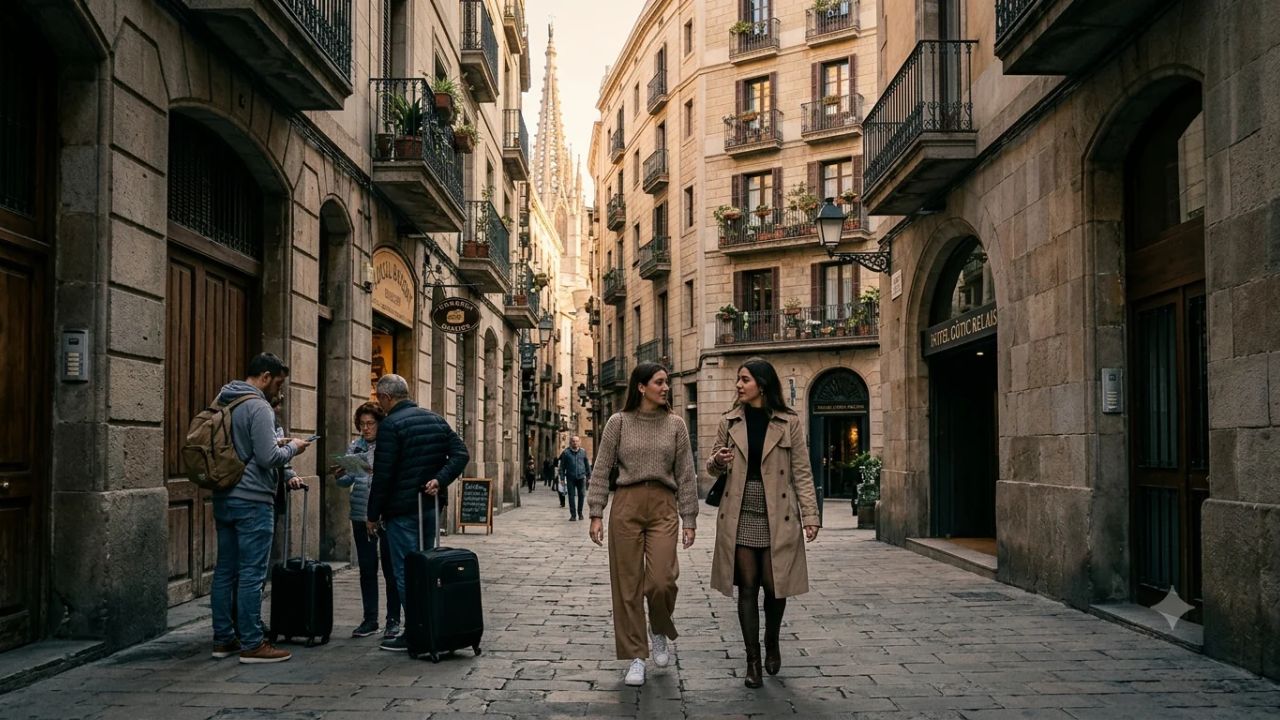
Barcelona's aggressive tourist tax increases combine Catalonia's regional accommodation fee with a five-euro city surcharge to curb overtourism and fund affordable housing.
BARCELONA, Oct 31 (Nomad Lawyer) — Municipal and regional authorities in Catalonia have enacted unprecedented tourist tax increases, establishing Barcelona as one of the most heavily taxed visitor destinations in Europe as part of an aggressive legislative clampdown on mass overtourism and escalating residential housing shortages. Pairing Catalonia's established regional accommodation tax (Impost sobre les estades en establiments turístics or IEET) with a substantial municipal surcharge (Recargo BCN) enacted by Barcelona City Council, the new fiscal regime elevates combined nightly levies to as much as €12.00 per person for five-star stays and €9.50 for vacation rentals, directly dismantling the era of cheap budget city breaks.
[!NOTE] Regulatory Architecture Summary: Effective throughout 2026, every overnight visitor within Barcelona's municipal boundaries pays both the regional Catalan IEET base fee and the uniform €5.00 municipal surcharge per night. Standard Spanish Value Added Tax (10% IVA) applies to the itemized charge, while a statutory seven-consecutive-night liability cap protects extended stays. Funds generated are ring-fenced to finance affordable municipal housing developments and neighborhood infrastructure repairs.
BARCELONA DUAL-TIER TOURIST TAX FISCAL ARCHITECTURE
| Column 1 |
|---|
| [Guest Lodging Invoice] ---------> Mandatory Statutory Itemization |
| +------------------------------------------------+------------------------+ |
| v v |
| [Tier 1: Regional Base (IEET)] [Tier 2: Municipal Surcharge (BCN)] |
| Generalitat de Catalunya Ajuntament de Barcelona |
| Scaled by property classification: Flat rate across all categories: |
| - 5-Star & Grand Luxe: €7.00 - Uniform Current Fee: €5.00 |
| - Tourist Apartments: €4.50 - Escalating to €6.00 in 2027 |
| - 4-Star Hotels: €3.40 - Escalating to €7.00 in 2028 |
| - 1- to 3-Star Hotels: €2.00 - Escalating to €8.00 in 2029 |
| - Hostels & Dorms: €1.00 |
| \ / |
| \ / |
| v v |
| [COMBINED STATUTORY LIABILITY PER NIGHT] |
| €6.00 (Hostel) to €12.00 (5-Star Luxury) |
| Subject to 10% National Value Added Tax (IVA) |
| Statutory 7-Night Consecutive Liability Cap |
| v |
| [TARGETED MUNICIPAL REINVESTMENT CHANNELS] |
| Ring-fenced financing for affordable social housing construction, |
| public transit line expansion, and neighborhood street sanitation |
The Dual-Tier Fiscal Architecture: Decoding Catalonia's IEET and the Recargo BCN
The operational mechanics of Barcelona's tourism levy represent a sophisticated dual-tier regulatory structure that distinguishes the Catalan capital from other European metropolitan areas operating flat hotel taxes. Rather than relying on a single uniform fee, every traveler checking into an accommodation establishment within the municipal borders of Barcelona encounters two separate statutory charges clearly displayed on their final invoice.
The foundational tier is the regional accommodation tax, known formally in Catalan as the Impost sobre les estades en establiments turístics (IEET). Promulgated by the regional government (Generalitat de Catalunya), this baseline fee varies depending on the official star rating, luxury classification, and operational format of the lodging provider. The regional government designed this sliding scale to extract higher proportional contributions from affluent visitors residing in high-tariff resorts and boutique heritage properties, while moderating the base fee on budget-conscious travelers using modest pensions and hostels.
Stacked directly on top of the regional base is the municipal surcharge, known locally as the Recargo BCN. Enacted by the municipal administration of Barcelona City Council (Ajuntament de Barcelona), this local levy applies as a uniform flat-rate addition across all categories of commercial tourist lodging. Currently set at €5.00 per person, per night, the surcharge represents the sharpest municipal tax increase in modern Spanish travel history, reflecting the city government's determination to ensure that visitors directly offset the civic and infrastructural strains caused by dense urban tourism.
Under standard Spanish fiscal regulations, these tourist levies constitute an integral part of the taxable base for commercial hospitality services. As a consequence, Spain's national 10% Value Added Tax (Impuesto sobre el Valor Añadido or IVA) is applied to the final calculated tourist tax amount. In addition, regional tax statutes expressly forbid accommodation operators from absorbing, concealing, or bundling the tourist tax into baseline room rates. Every hotelier, short-term rental host, and hostel operator is legally mandated to itemize the regional base fee, the municipal surcharge, and the corresponding IVA as distinct line items on the guest's check-in receipt or final folio.
To prevent extended-stay travelers and digital nomads from bearing an unreasonable cumulative tax burden, Catalan legislation establishes an explicit seven-consecutive-night liability ceiling. Under this statutory cap, guests residing in a single accommodation establishment are liable for tourist taxes exclusively during their first seven continuous nights. From the eighth consecutive night onward, all daily tourist tax obligations—both regional and municipal—drop to zero, provided the guest remains continuously registered at the same property.
Full Tariff Matrix: Granular Breakdown Across All Lodging and Cruise Categories
To evaluate the exact financial impact on incoming travelers, municipal and regional statutes codify the tourist tax through an exhaustive classification matrix. While the regional IEET component fluctuates based on official commercial grading, the €5.00 municipal surcharge applies universally, ensuring that even entry-level dormitory beds contribute meaningful municipal revenue.
For guests booking premium accommodations in five-star hotels, five-star Grand Luxe properties, or luxury glamping campsites, the total nightly tax liability reaches €12.00 per person. This total combines the €7.00 regional base fee with the €5.00 city surcharge. Over the course of a full seven-night stay, a single luxury guest accumulates €84.00 in statutory tourist taxes, resulting in a €168.00 levy for a traveling couple before lodging room charges are calculated.
| Accommodation Category & Luxury Grade | Regional Tax (IEET) | Municipal Surcharge (Recargo BCN) | Combined Daily Rate (Per Person) | 7-Night Maximum Liability |
|---|---|---|---|---|
| 5-Star, Grand Luxe & Luxury Campsites | €7.00 | €5.00 | €12.00 | €84.00 |
| 4-Star & 4-Star Superior Hotels | €3.40 | €5.00 | €8.40 | €58.80 |
| Tourist Apartments / Vacation Rentals (HUT) | €4.50 | €5.00 | €9.50 | €66.50 |
| 1- to 3-Star Hotels, Inns & Pensions | €2.00 | €5.00 | €7.00 | €49.00 |
| Youth Hostels & Collective Dormitories | €1.00 | €5.00 | €6.00 | €42.00 |
| Cruise Passengers: Extended Call (>12 Hours) | €4.00 | €5.00 | €9.00 | Single Port Charge |
| Cruise Passengers: Day Excursionists (≤12 Hours) | €6.00 | €5.00 | €11.00 | Single Port Charge |
Four-star and four-star superior hotels, which accommodate the largest volume of corporate delegates and mid-market leisure vacationers, carry a combined fee of €8.40 per person per night (€3.40 regional plus €5.00 municipal). Over seven consecutive nights, this represents an additional €58.80 per guest.
Vacation apartments and short-stay residential flats (Habitatges d'Ús Turístic or HUTs) occupy a central position in the municipal clampdown. Regulated under a specific regional tier, vacation rentals incur a regional fee of €4.50 alongside the €5.00 municipal surcharge, yielding a combined nightly rate of €9.50 per person. For a family of four staying a week in a licensed holiday apartment, the mandatory tourist tax totals €266.00, intentionally raising the financial barrier for budget group travelers who previously favored residential apartment sharing over traditional hotels.
Even entry-level accommodations face substantial adjustments. Standard one- to three-star hotels, modest inns, and traditional guesthouses carry a combined levy of €7.00 per night (€2.00 regional plus €5.00 municipal). Youth hostels, collective dormitories, and backpacker lodges—historically shielded from heavy municipal taxation—incur a combined charge of €6.00 per person per night (€1.00 regional plus €5.00 municipal). This flat application of the city surcharge means that a traveler paying €25.00 for a shared bunk bed sees their effective nightly lodging cost increase by nearly twenty-five percent purely through statutory taxation.
Maritime visitors arriving via passenger cruise vessels face dedicated single-charge port levies. Cruise passengers whose ships dock for extended port calls exceeding twelve hours pay a combined fee of €9.00 (€4.00 regional plus €5.00 municipal). In contrast, day-tripper cruise excursionists aboard vessels calling for twelve hours or fewer face a higher charge of €11.00 (€6.00 regional plus €5.00 municipal). By taxing short-stop day excursionists at a higher rate than overnight passengers, municipal authorities specifically target transient cruise traffic that crowds central tourist districts without contributing meaningfully to overnight hospitality receipts.
Neighborhood Impact: How the Clampdown Reshapes Barcelona's Historic Districts
The spatial distribution of Barcelona's tourism footprint means that the economic consequences of the tax hikes are felt unevenly across the urban grid. In dense historical quarters where residential displacement and neighborhood friction have reached critical levels, the tax acts as a deliberate economic disincentive.
In the central district of Ciutat Vella—encompassing the Gothic Quarter (El Gòtic), El Raval, Sant Pere, Santa Caterina, and La Barceloneta—the dense concentration of youth hostels, boutique pensions, and historical vacation rentals has generated intense neighborhood resistance. For decades, residents in this medieval labyrinth endured overcrowded pedestrian thoroughfares, late-night noise pollution, and the loss of traditional retail shops to tourist souvenir outlets. Under the current tax structure, a group of four adult travelers renting an apartment in El Gòtic faces €38.00 in nightly municipal taxes, adding €266.00 to a seven-day holiday. Municipal planners designed this pricing mechanism specifically to discourage casual, high-impact group tourism in sensitive historic zones around Plaça Reial, Carrer del Bisbe, and the Ramblas.
BARCELONA DISTRICT-BY-DISTRICT URBAN TAX IMPACT
| Column 1 |
|---|
| [Ciutat Vella / El Gòtic] --------> Highest density of hostels & vacation flats |
| Targets casual budget groups & street congestion |
| [L'Eixample & Passeig de Gràcia] -> High-end boulevards & modernist landmark hotels |
| 5-star luxury guests absorb €12.00 nightly levy |
| Extracts maximum municipal revenue from luxury |
| [Gràcia Village Enclave] ---------> Compact squares, independent community character |
| Intensive municipal audits on illegal holiday lets |
| [Poblenou & Front Marítim] -------> Modern business towers, convention apart-hotels |
| Corporate congress travelers pay €8.40 - €12.00 |
| Zero exemptions granted for commercial travel |
| [Sants-Montjuïc & Moll Adossat] --> Principal rail terminal & deep-water cruise docks |
| €11.00 flat tariff on short-stop cruise visitors |
| Deters fleeting day-tripper pedestrian surges |
Across the wide boulevards of L'Eixample, particularly along the prestigious corridor of Passeig de Gràcia, the tax operates differently. As the heartland of Antoni Gaudí's modernist masterpieces and five-star luxury grand hotels, L'Eixample accommodates high-spending international travelers. Guests staying at landmark luxury establishments—such as the Majestic Hotel, the Mandarin Oriental, or the Alma Barcelona—absorb the maximum €12.00 nightly rate without significant booking resistance. For the city council, L'Eixample serves as the primary revenue generator, extracting substantial fiscal contributions from affluent leisure and business visitors to subsidize municipal services.
In Gràcia, an enclave that functioned as an independent agricultural village until its annexation by Barcelona in the late nineteenth century, the tax forms part of a defensive community campaign. Gràcia's narrow streets, pedestrian alleys, and intimate civic squares (such as Plaça del Sol and Plaça de la Virreina) have experienced aggressive residential gentrification. The €9.50 nightly tariff on tourist apartments is paired with aggressive municipal inspections aimed at identifying unlicensed holiday flats, protecting the neighborhood's family housing stock from speculative tourism conversions.
The modern seaside district of Poblenou and the Front Marítim corridor host contemporary beachfront towers, converted industrial lofts, and large-scale convention hotels catering to major international trade gatherings, including the Mobile World Congress. In this district, corporate travelers staying at modern business hotels pay standard €8.40 to €12.00 nightly fees. Because Catalan tax legislation recognizes no corporate exemptions, global enterprises funding business travel must absorb the identical tax burden applied to vacationers.
Finally, the southern district of Sants-Montjuïc functions as the logistical gateway for transit travelers and maritime arrivals. Montjuïc overlooks the extensive Moll Adossat cruise docks, where international cruise liners berth. The cruise terminal serves as ground zero for the short-stay clampdown, enforcing the €11.00 flat fee on day excursionists stepping off mega-ships for brief shore excursions through the historic core.
Statutory Exemptions, Enforcement Protocols, and Commercial Property Levies
While Barcelona's tourist tax architecture is among the most comprehensive on the European continent, Catalan regulatory statutes define precise categories of travelers who are legally exempt from fiscal liabilities.
A primary statutory exemption protects young travelers. Minors aged sixteen and under are completely exempt from both the regional IEET and the municipal Recargo BCN. To claim this exemption, accommodation providers must visually inspect and record the official passport or national identity document of each qualifying minor during mandatory guest registration at check-in. Front-desk personnel retain responsibility for maintaining these verification records for audit inspections conducted by regional tax authorities.
| Statutory Exemption / Category | Legal Basis & Regulatory Scope | Verification & Compliance Requirements |
|---|---|---|
| Youth Exemption (Age $\le 16$) | Complete statutory exemption from regional and municipal levies | Mandatory passport or national identity verification at check-in |
| Subsidized Social Tourism | Exemption for state-approved welfare programs (e.g., Spain's Imserso) | Official program accreditation documents registered upon arrival |
| Humanitarian Force Majeure | Emergency housing for environmental disasters, war, or crisis | Certified municipal emergency declaration and government housing referral |
| Corporate & Business Travel | Zero Exemption Granted: Commercial travelers taxed at standard rates | Full invoice itemization required; deductible as legitimate business expense |
| Extended Stays (>7 Nights) | Daily levies drop to zero from night eight onward in a single property | Continuous registration log maintained within property property management system |
Exemptions also extend to state-subsidized social travel programs designed to provide affordable recreation for senior citizens and low-income demographics. Participants traveling under approved domestic social initiatives, such as Spain's celebrated Imserso program, carry zero tourist tax liability. Similarly, individuals housed temporarily under certified humanitarian force majeure—including refugees fleeing international conflicts or local residents displaced by major structural fires or natural catastrophes—are legally immune from taxation.
Equally important, commercial and corporate travelers receive zero dispensations under the law. Corporate executives, conference delegates, exhibitors, and business consultants pay the exact same statutory rates applied to leisure vacationers. While businesses can typically claim the 10% IVA component as an input tax deduction under corporate accounting rules, the underlying tourist levies remain non-negotiable operational expenses.
In parallel with guest-facing tariffs, the Barcelona City Council has targeted commercial hospitality real estate by proposing modifications to the municipal property tax (Impuesto sobre Bienes Inmuebles or IBI). The city council has advanced measures to increase the specialized commercial IBI rate applied to large hotel properties from 1.17% toward 1.30% of assessed cadastral value. This dual approach ensures that institutional real estate owners and incoming tourists contribute simultaneously toward the city's public finances.
The 2026–2030 Escalation Roadmap: The Pathway to Europe's Steepest Surcharges
The current tax rates represent only the initial phase of a structured, multi-year fiscal escalation program codified in municipal policy resolutions. Barcelona City Council has mapped out a defined trajectory of statutory increases designed to incrementally raise the cost of visiting the city through the end of the decade.
Under the municipal escalation roadmap, the city surcharge (Recargo BCN) is scheduled to increase by €1.00 each year. The flat municipal fee will climb from its current level of €5.00 to €6.00 in 2027, advance to €7.00 in 2028, and reach a statutory peak of €8.00 per person per night by 2029.
BARCELONA MULTI-YEAR TOURIST TAX ESCALATION (2026–2030)
| Category / Entity | Details / Impact |
|---|---|
| [2026 Baseline] --------> Municipal Surcharge: €5.00 | 5-Star Total: €12.00 |
| Day Cruise Fee: €11.00 | Weekly Luxury Couple: €168 |
| [2027 Escalation] ------> Municipal Surcharge: €6.00 | 5-Star Total: €13.00 |
| Day Cruise Fee: €18.00 | Weekly Luxury Couple: €182 |
| [2028 Escalation] ------> Municipal Surcharge: €7.00 | 5-Star Total: €14.00 |
| Day Cruise Fee: €24.00 | Weekly Luxury Couple: €196 |
| [2029 Peak Phase] ------> Municipal Surcharge: €8.00 | 5-Star Total: €15.00 |
| Day Cruise Fee: €28.00 | Weekly Luxury Couple: €210 |
When this escalating municipal surcharge is combined with the regional base rate of €7.00 for five-star and Grand Luxe accommodations, the total nightly tax liability for luxury guests will reach €15.00 per person by 2029. For a couple enjoying a seven-night luxury holiday, mandatory municipal and regional taxes alone will total €210.00, placing Barcelona on an equal fiscal footing with Amsterdam and Venice as the most expensive European cities for tourist taxation.
The most aggressive long-term increases are aimed directly at day-tripper cruise passengers. City planners project increasing the short-stop cruise excursion fee from its current €11.00 level to €18.00 in 2027, with incremental adjustments pushing the tariff toward €30.00 per passenger by 2030 (€24.00 city surcharge plus €6.00 regional base). The explicit policy intention behind this dramatic increase is to discourage brief port calls by massive cruise vessels that discharge thousands of passengers simultaneously into the Gothic Quarter for four-hour walking tours, generating heavy pedestrian congestion without providing proportional spending in local restaurants, cultural institutions, or independent retail establishments.
Digital Audits and Capital Reinvestment: Funding Affordable Housing and Civic Infrastructure
The enforcement of Barcelona's tourist tax depends on a highly automated digital auditing apparatus managed jointly by the Catalan Tax Agency (Agència Tributària de Catalunya or ATC) and the municipal treasury of Barcelona.
Accommodation operators act as official fiscal retention agents. Every registered lodging provider is legally obligated to collect statutory levies from guests upon check-in or checkout and remit the proceeds to the state. Regional revenues are reported quarterly through formal submissions of Form 950 to the ATC, while the municipal surcharge is settled directly through the city council's electronic tax portal. Failure to accurately collect, itemize, or remit these funds results in severe financial penalties, license suspensions, and potential criminal charges under Spanish commercial tax law.
DIGITAL AUDIT & CIVIC REINVESTMENT ECOSYSTEM
| Column 1 |
|---|
| [Online Booking Portals] --------> Airbnb, Vrbo, Booking.com Data-Sharing Mandate |
| v |
| [Automated Cross-Check] ---------> Algorithmic matching of municipal HUT licenses |
| against quarterly Form 950 tax declarations |
| v |
| [Revenue Collection] ------------> Municipal Treasury & Catalan Tax Agency (ATC) |
| +------------------------------------------------+------------------------+ |
| v v |
| [Affordable Housing Construction] [Civic Infrastructure Upgrades] |
| Capital subsidies for municipal land trusts; High-frequency metro expansion; |
| Acquisition of distressed private buildings Intensified street sweeping in |
| for permanent social rental housing historic Ciutat Vella squares |
To eliminate tax evasion within the private residential sector, municipal authorities enforce formal data-sharing protocols with major global vacation rental platforms, including Airbnb, Vrbo, and Booking.com. These digital platforms are legally mandated to require property hosts to display their verified municipal registry license number (Número d'Habitatge d'Ús Turístic or HUT) on all public listings. Municipal automated algorithms cross-reference active online advertisements against submitted tax filings, immediately flagging unpermitted properties for physical inspection and administrative closure.
Unlike general taxation receipts, revenues generated through Barcelona's municipal surcharge do not disappear into general municipal accounts. Under strict municipal ordinances, surcharge proceeds are ring-fenced specifically to address the negative externalities generated by mass tourism.
The primary beneficiary of these funds is the city's affordable social housing program. Revenue from the surcharge is channeled directly into municipal land trusts and public housing construction initiatives aimed at expanding the availability of long-term rental apartments for local residents, countering the displacement caused by decades of tourist apartment conversions. Secondary allocations finance public transportation improvements—including the electrification of municipal bus fleets and the expansion of high-frequency metro lines—and fund intensive street cleaning and waste management services in heavily trafficked historical neighborhoods.
Comparative European Context: Barcelona Alongside Amsterdam, Venice, and Rome
Barcelona's aggressive fiscal intervention reflects a broader continent-wide transformation as historic European capitals re-evaluate the true societal cost of unfettered mass tourism. Across Southern and Western Europe, municipal governments are utilizing taxation as a regulatory tool to discourage volume-based budget tourism in favor of high-yield, low-impact travel.
| European Metropolitan Destination | Current Tourist Tax Mechanism | Standard Nightly Cost (Per Person) | Primary Strategic Policy Focus | | :--- | :--- | :--- | :--- | :--- | | Barcelona, Spain | Dual-tier: Scaled regional IEET base plus uniform €5.00 municipal surcharge | €6.00 to €12.00 (Escalating to €15.00 by 2029) | Curbing vacation rentals; funding social housing; discouraging short cruise visits | | Amsterdam, Netherlands | Percentage-based levy: 12.5% of total nightly room rate plus day-visitor taxes | €15.00 to €25.00 (Average mid-to-luxury rate) | Highest percentage tax in Europe; curbing budget party tourism and hotel growth | | Venice, Italy | Scaled hotel fee (€1.00 to €5.00) plus pilot €5.00 day-tripper access fee (Contributo di Accesso) | €3.00 to €5.00 (Overnight) / €5.00 (Day ticket) | Limiting day-tripper pedestrian surges; protecting fragile lagoon ecology | | Rome, Italy | Flat hotel tax scaled by star classification (Contributo di Soggiorno) | €4.00 to €10.00 (Luxury hotels: €10.00/night) | Funding historical heritage maintenance and municipal transport infrastructure | | Paris, France | Regional and municipal tariffs scaled by luxury category (Elevated during major events) | €2.60 to €15.00 (Palace hotels: €14.95/night) | General civic maintenance; transport infrastructure; regional heritage upkeep |
As shown in the comparative matrix, Barcelona's combined rates now place the Catalan capital near the very top of European visitor taxation. While Amsterdam continues to extract higher absolute sums from luxury guests due to its 12.5% percentage-based room tax, Barcelona's flat €5.00 municipal surcharge creates an extraordinarily heavy proportional burden on budget accommodations, hostels, and vacation rentals.
In Venice, municipal authorities have focused on testing a controversial €5.00 entry ticket for day-trippers visiting without hotel bookings, while maintaining moderate overnight hotel taxes. Barcelona has taken a more aggressive dual approach: targeting both overnight vacation rentals through high daily tariffs and penalizing day-tripper cruise passengers with steep, escalating port fees.
Rome similarly utilizes scaled hotel fees that reach €10.00 per night for five-star properties, but the Italian capital does not impose additional flat city surcharges on budget hostels. By combining regional sliding-scale fees with a flat municipal surcharge, Barcelona has constructed the most pervasive urban fiscal net in Europe, ensuring that every category of visitor contributes substantially to the civic treasury.
Traveler Advisory and Budgeting Guide: Managing Travel Expenses in Modern Barcelona
For international visitors, travel advisors, and corporate meeting planners organizing upcoming itineraries to Barcelona, understanding the practical financial implications of the city's tax policies is essential for accurate trip budgeting.
Upfront Invoice Budgeting
Travelers must recognize that quotes provided on international booking portals frequently display base room rates excluding local statutory taxes. Because Catalan law forbids hotels from bundling tourist taxes into room rates, visitors must be prepared to settle their tourist tax liabilities upon arrival or checkout. For a family of four planning a seven-night stay in a four-star hotel or vacation flat, setting aside €235.00 to €266.00 for mandatory taxes prevents unexpected checkout surprises.
Document Preparation for Minor Exemptions
Families traveling with children aged sixteen and under should ensure that all minors' passports or official identification cards are readily accessible during the check-in process. Front-desk agents cannot apply youth exemptions without physically inspecting and recording official proof of age; failing to produce documentation may result in standard adult surcharges being applied.
Exploring Regional Catalonia Outside Municipal Borders
Travelers seeking to reduce their overall tax burden while still enjoying Catalonia's cultural attractions can consider basing themselves in neighboring municipalities located just outside Barcelona's administrative boundaries. Communities such as Badalona, Castelldefels, Sitges, or Sant Cugat del Vallès are connected to central Barcelona via high-frequency Rodalies commuter rail networks. While these municipalities apply the regional Catalan IEET tax, they do not impose Barcelona's €5.00 municipal surcharge, offering a practical alternative for budget-conscious independent travelers.
Respecting Local Communities and Cultural Norms
Beyond financial considerations, visitors to Barcelona should approach the city with heightened cultural awareness. The public frustration driving these tax increases stems from tangible pressures on housing affordability and neighborhood livability. Travelers can practice responsible tourism by observing residential quiet hours in apartment buildings, supporting neighborhood family-owned restaurants rather than multinational franchises, respecting dress codes away from the beach, and exploring lesser-known cultural attractions beyond the congested central corridors of the Gothic Quarter and the Sagrada Família.
By planning ahead, budgeting accurately for statutory levies, and engaging respectfully with local neighborhoods, travelers can continue to experience Barcelona's world-class architecture, rich culinary traditions, and Mediterranean warmth while supporting a more sustainable and balanced urban future.
Related Travel Guides
- Azerbaijan Partners with PATA to Accelerate Asia-Pacific Tourism Growth
- Canada Transforms October Travel into High-Yield Halloween Tourism
- US Bipartisan Coalition Advances Film Tourism and Federal Tax Credits
- Mandarin Oriental, Canouan Appoints Jonathan Payne as New General Manager
- Greece Elevates Patmos Tourism Visibility in France Through UNESCO Heritage and Slow Food
This article is for informational purposes. Flight routes, passenger regulations, visa rules, and transit advisories are subject to change by airlines and aviation authorities. Readers are advised to verify schedules and travel documentation with relevant carriers and border agencies before departure.
Related Stories

Europe’s Premier Destinations Reshape Tourism: Barcelona, Venice, and Canary Islands Impose New Caps, Fees, and Housing Rules
Spain Off-Peak Tourism Surges to 47% of Total Activity as Germany, US, and Latin America Drive Luxury and Wellness Shifts