
Boeing C-17 Globemaster's Advanced Radar Warning System Emerges as Critical Defense Layer in Modern Combat Operations
Breaking airline news and aviation industry updates for 2026.

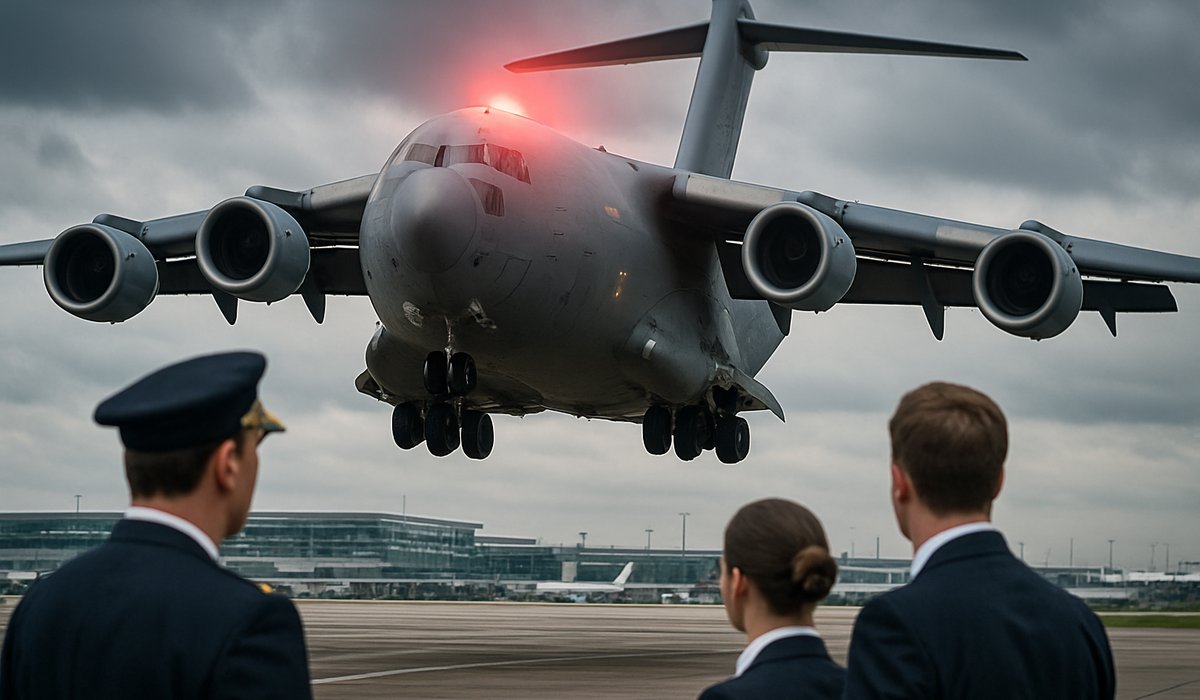
Image generated by AI
Boeing C-17 Globemaster's Advanced Radar Warning System Emerges as Critical Defense Layer in Modern Combat Operations
Military airlift platform's integrated threat detection suite provides unprecedented crew protection in hostile airspace
Sophisticated Defense Architecture Shields Strategic Transport Aircraft
The Boeing C-17 Globemaster III continues to serve as the backbone of global military airlift operations, but its operational resilience increasingly depends on cutting-edge defensive avionics rather than speed or maneuverability alone. As conflict zones persist across multiple regions, the aircraft's integrated threat detection and countermeasures suite has proven essential for crew survival during high-risk approach and departure sequences in contested airspace.
The platform integrates four critical defensive systems working in coordinated sequence: the AN/ALR-69A radar warning receiver identifies and tracks incoming radar signals, the AN/AAR-47 missile approach warning system detects launch events from surface-to-air threats, the AN/ALE-47 countermeasures dispenser deploys chaff and flares, and the Large Aircraft Infrared Countermeasures (LAIRCM) system provides active defense against heat-seeking missiles. Together, these systems enable the aircraft to identify, classify, and neutralize both radar-guided and infrared threats within seconds—a capability that has become indispensable for maintaining operational tempo in volatile regions.
Real-Time Integration Transforms Crew Survivability
The C-17's defensive advantage stems not from individual system sophistication but from their seamless integration into a unified architectural framework. Upon detecting a threat signature, the aircraft's processors instantaneously correlate data across multiple sensors, classify the threat type, and execute appropriate countermeasures—whether deploying chaff patterns for radar threats or infrared flares for missile launches. This automation reduces crew workload during the most critical phases of flight and eliminates response delays that could prove fatal.
According to U.S. Air Force operational doctrine and system specifications, the integrated approach provides layered protection aligned with modern air defense proliferation. As adversaries deploy increasingly sophisticated air defense networks, the C-17's sensor fusion capability allows crews to maintain awareness across the electromagnetic spectrum while executing transport missions that cannot be delayed or rerouted without strategic consequence.
Strategic Implications for Global Operations
The C-17 remains deployed across multiple theaters where surface-to-air threats continue to evolve. The aircraft's defensive systems represent the current standard for protecting high-value airlifters operating in non-permissive environments, setting benchmarks for next-generation military transport platforms under development worldwide.
Frequently Asked Questions
What defensive systems does the C-17 Globemaster use against missile threats? The aircraft employs the AN/ALR-69A radar warning receiver, AN/AAR-47 missile approach warning system, AN/ALE-47 countermeasures dispenser, and LAIRCM (Large Aircraft Infrared Countermeasures) for comprehensive threat detection and defeat.
How quickly can the C-17 detect and respond to incoming threats? The integrated defensive architecture processes threat detection, classification, and countermeasure deployment within seconds through automated sensor fusion, significantly reducing crew reaction time.
Is the C-17's defensive suite effective against modern air defense systems? The system is designed to counter both radar-guided and infrared threats, though effectiveness depends on specific threat characteristics and operational tactics employed.
Why is integrated defense architecture important for military transport aircraft? Sensor integration eliminates processing delays and enables coordinated countermeasures that exceed the capability of individual systems operating independently, critical during rapid approach and departure phases.
Are these defensive systems used on other military aircraft? Similar defensive suites appear on other strategic and tactical airlifters, though integration specifics vary by platform and operational requirements.
Related Travel Guides
Flight Delay Compensation Guide 2026
Understanding Airline Route Changes
Airport Security Process Updated (2026)
External Resources
Disclaimer
This article is for informational and educational purposes only. It does not constitute legal, financial, or professional advice. While we strive to provide accurate and up-to-date information, travel policies, regulations, and conditions change rapidly. Always verify information with official sources before making travel decisions. Nomad Lawyer makes no representations about the accuracy, reliability, completeness, or suitability of the information provided. Readers should consult qualified professionals for advice specific to their circumstances. The views expressed in this article are those of the author and do not necessarily reflect the views of Nomad Lawyer.
Preeti Gunjan
Contributor & Community Manager
A passionate traveller and community builder. Preeti helps grow the Nomad Lawyer community, fostering engagement and bringing the reader experience to life.
Learn more about our team →