
Military Fighter Pilot Compensation in 2026: F-35 vs F-22 Pilot Earnings Compared
Breaking airline news and aviation industry updates for 2026.

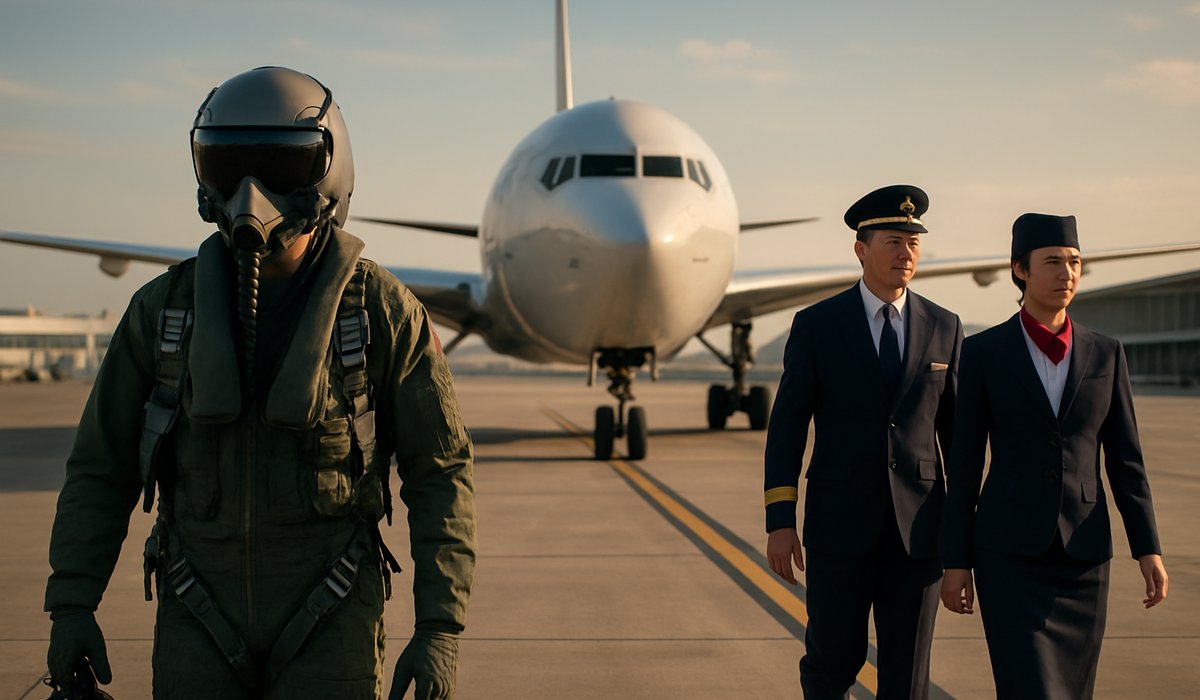
Image generated by AI
Military Fighter Pilot Compensation in 2026: F-35 vs F-22 Pilot Earnings Compared
As advanced fighter aircraft dominate modern air combat, compensation structures for elite military aviators reflect evolving operational demands
Commissioned Officer Requirements Shape Fighter Pilot Earnings
Fighter pilots across the United States military establishment—including the Air Force, Navy, and Marine Corps—must hold commissioned officer rank, a structural requirement that fundamentally differentiates their compensation from other military personnel. This mandate underscores the strategic importance and operational complexity assigned to pilots operating cutting-edge combat aircraft like the F-35 Lightning II and F-22 Raptor.
The commissioning requirement reflects the elevated decision-making authority these aviators exercise in real-time combat scenarios. Operating sophisticated multirole fighters demands instantaneous judgment calls with potentially far-reaching geopolitical and strategic ramifications. Similar officer-only pilot standards apply across allied nations, including the Royal Air Force and other NATO partners, establishing a global benchmark for fighter pilot qualification.
Structural Differences in Military Aviation Roles
A notable exception to the commissioned officer requirement exists within the United States Army, where helicopter pilots may serve as warrant officers rather than commissioned officers. This distinction illustrates how different branches tailor personnel structures to match operational requirements and aircraft complexity levels.
The gap between fighter jet operations and rotary-wing aviation reflects differences in tactical deployment, decision-making authority, and combat responsibilities. While helicopter pilots execute critical missions, the autonomous nature of fixed-wing fighter operations—particularly in contested airspace—necessitates the full commissioning structure that accompanies officer rank.
Compensation Implications for Advanced Aviators
Pilot compensation packages in 2026 continue to reflect base officer salaries supplemented by flight pay, hazard bonuses, and specialized aviation incentives. F-22 and F-35 pilots, operating distinctly different platforms with varying operational doctrines, may experience nuanced compensation variations based on flight hour requirements, combat readiness posture, and deployment frequency.
The F-22 Raptor remains the Air Force's premier air superiority platform, while the F-35 represents a multirole solution across services. These differing mission profiles can influence specialty pay structures and career advancement trajectories.
Strategic Context for Modern Pilot Compensation
As military aviation continues evolving toward net-centric warfare and AI-integration, the value placed on experienced fighter pilots remains paramount. Retaining qualified aviators amid competitive civilian aerospace recruitment directly impacts force readiness and technological advantage maintenance.
FAQ: Military Fighter Pilot Earnings and Qualifications
Q1: Must all U.S. fighter pilots hold commissioned officer rank? Yes, across the Air Force, Navy, and Marine Corps, commissioned officer status is mandatory for fighter jet operations, reflecting the high-level decision-making required in combat environments.
Q2: Are there exceptions to the commissioned officer requirement in U.S. military aviation? The Army permits warrant officers to serve as helicopter pilots, though fixed-wing combat aviation remains officer-only across all service branches.
Q3: How do F-35 and F-22 pilot compensation packages differ? While both receive officer base pay plus flight incentives, variations may emerge based on platform-specific requirements, deployment cycles, and operational tempo differences.
Q4: What international standards govern fighter pilot commissioning? Allied air forces including the RAF maintain similar officer-only requirements, establishing consistent global standards for elite combat aviation roles.
Q5: How does pilot compensation reflect modern military needs? Competitive compensation packages serve critical retention functions as the military competes with civilian aerospace industries for experienced aviation talent.
Related Travel Guides
External Resources
Disclaimer
This article is for informational and educational purposes only. It does not constitute legal, financial, or professional advice. While we strive to provide accurate and up-to-date information, travel policies, regulations, and conditions change rapidly. Always verify information with official sources before making travel decisions. Nomad Lawyer makes no representations about the accuracy, reliability, completeness, or suitability of the information provided. Readers should consult qualified professionals for advice specific to their circumstances. The views expressed in this article are those of the author and do not necessarily reflect the views of Nomad Lawyer.
Preeti Gunjan
Contributor & Community Manager
A passionate traveller and community builder. Preeti helps grow the Nomad Lawyer community, fostering engagement and bringing the reader experience to life.
Learn more about our team →