
Hong Kong Tai Hang Fire Dragon Dance 2026: Guide, History & Visitor Tips
Hong Kong Tai Hang Fire Dragon Dance 2026: Guide, History & Visitor Tips

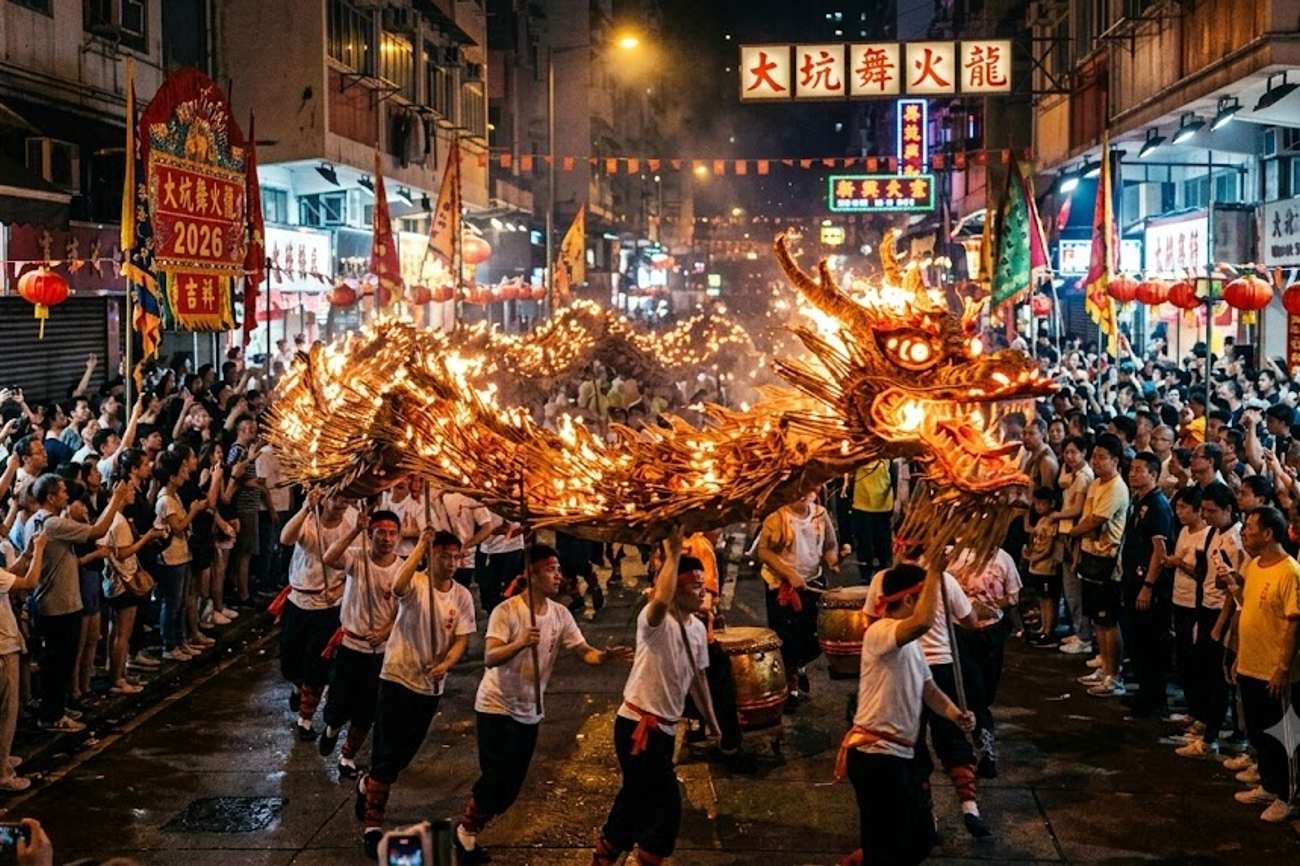
Image generated by AI
title: The Burning Streets of Tai Hang: Hong Kong's Fire Dragon Ritual date: 2024-05-20 category: Cultural Tourism location: Hong Kong
The dragon that stalks the streets of Tai Hang is not a costume, but a 67-metre living torch fueled by 12,000 burning incense sticks. While most visitors to Hong Kong congregate at the Peak or the Star Ferry, the residents of this Causeway Bay enclave prepare for a ritual that transforms their neighborhood into a corridor of smoke and ember every September.
The Ritual of the Fire Dragon 2026
From 24 – 26 September 2026, the quiet residential pockets of Tai Hang will surrender to one of the most visceral displays of community identity in Asia. This is not a staged performance for tourists; it is a National Intangible Cultural Heritage event managed by the Tai Hang Residents’ Welfare Association. The ceremony takes place specifically along Wun Sha Street and Tung Lo Wan Road, where the air becomes thick with the scent of sandalwood and the roar of traditional drumming.
The scale of the operation is immense. Over 300 participants work in synchronized harmony to propel the massive incense-laden dragon through the streets. To ensure the tradition survives into the next generation, a secondary, children-operated LED dragon often accompanies the main event, blending ancient superstition with modern technology. For those who cannot navigate the crowds, the Hong Kong Tourism Board provides updates on the festivities, though the true experience remains rooted in the physical grit of the street level.
What Makes Tai Hang Different
To understand the Fire Dragon, you have to understand the trauma that birthed it. This is not a celebration of prosperity, but a ritual of survival. The dance originated in the 19th century as a desperate response to a plague that devastated the local community. The fire was believed to purge the air of disease and ward off evil spirits, turning a moment of environmental adversity into a permanent cultural anchor.
The construction of the dragon is a masterclass in folk engineering. There are no plastics or synthetic fabrics here. The body is crafted from pearl-grass and bound tightly with hemp rope. The head, perhaps the most distinct element, is fashioned from pomelos, which are meticulously secured with metal skewers. This organic composition means the dragon is ephemeral—built, burned, and vanished within a few days.
Geographically, Tai Hang offers a stark contrast to the surrounding skyscrapers of Causeway Bay. Once a modest Hakka village, it has been swallowed by the urban expansion of Hong Kong Island. However, the community has fought to keep the ritual routes intact. Walking through Tai Hang during the festival feels like stepping into a village that refuses to be erased by the city. For a deeper look at how such traditions are preserved globally, the UNESCO Intangible Cultural Heritage archives offer context on why these localized responses to crisis become permanent cultural markers.
Visitor Insider Tips
Navigating Tai Hang during the festival requires a strategy, as the narrow streets of Wun Sha Street and Tung Lo Wan Road can become claustrophobic.
Timing and Positioning The peak intensity occurs during the evening ignition sequences. If you arrive after late afternoon, expect significant road closures. I recommend arriving by 4:00 PM to secure a spot in the designated viewing corridors. If you are sensitive to smoke or loud percussion, stay toward the periphery of the route; the center of the procession is an assault on the senses.
Transport Hacks Do not attempt to take a taxi or ride-share directly into Tai Hang on the event dates. Use the MTR and exit at either Tin Hau or Causeway Bay stations. From there, it is a short pedestrian walk. The walk from Tin Hau is generally less congested than the route from Causeway Bay.
Local Etiquette Remember that this is a community-led prayer for safety and well-being. While photography is welcomed, avoid blocking the path of the 300+ participants carrying the dragon. Be mindful of falling ash and burning embers—wear closed-toe shoes and avoid loose, flammable clothing.
Digital Layering To avoid the "tourist bubble," download the City in Time mobile application. The neighborhood is embedded with augmented reality markers that allow you to see 360-degree historical illustrations of what Tai Hang looked like before the high-rises arrived, providing a spatial-historical layer to the physical event.
Cultural and Environmental Context
The Fire Dragon Dance exists at a delicate intersection of heritage and urban management. In the post-war era, the ceremony was an informal neighborhood affair with almost no crowd control. Today, it is a co-managed operation. The transition from unmanaged community observance to a codified risk-mitigation framework reflects the broader tensions of living in one of the world's densest cities.
There is a constant struggle to balance "mass-spectacle scaling" with authentic representation. The Tai Hang Residents’ Welfare Association and local civic associations actively monitor the economic trickle-down to ensure that food and beverage vendors do not commercialize the ritual space to the point of degradation. The goal is to prevent volunteer burnout; the dragon is carried by neighbors, not paid performers.
Furthermore, the integration of the Tai Hang Fire Dragon Heritage Centre has shifted the event from a three-day occurrence to a year-round educational effort. By moving archival materials and historical context into a permanent exhibition space, the community reduces the pressure on the street-level event to act as the sole carrier of history. This allows the festival to remain a spiritual act of community bonding rather than a mere tourist attraction.
FAQ: Visiting Tai Hang 2026
What are the exact dates for the 2026 festival? The Fire Dragon Dance is scheduled for 24 – 26 September 2026. The primary activities take place in the evenings along Wun Sha Street and Tung Lo Wan Road.
How do I get to the event site? The most efficient way is via the MTR to Tin Hau or Causeway Bay stations. Walk from the station to the Tai Hang neighborhood, as road closures are enforced in the late afternoon.
Is the event safe for families with children? Yes, but be cautious of dense incense smoke and falling embers. There is a children-operated LED dragon that is safer to observe closely than the main incense dragon.
Do I need a ticket to watch the dance? No, the event is a community street procession and is free to the public. However, space is limited and viewing corridors are managed by local authorities.
When the incense ignites and the drums begin, the skyscrapers of Hong Kong seem to vanish, leaving only the heat, the smoke, and a village's refusal to forget its past.
#TaiHangFireDragon #HongKongCulture2026 #CausewayBayHeritage #MidAutumnHongKong #HakkaTraditions
Related Travel Guides
Disclaimer
This article is for informational and educational purposes only. It does not constitute legal, financial, or professional advice. While we strive to provide accurate and up-to-date information, travel policies, regulations, and conditions change rapidly. Always verify information with official sources before making travel decisions. Nomad Lawyer makes no representations about the accuracy, reliability, completeness, or suitability of the information provided. Readers should consult qualified professionals for advice specific to their circumstances. The views expressed in this article are those of the author and do not necessarily reflect the views of Nomad Lawyer.
Raushan Kumar
Founder & Lead Developer
Full-stack developer with 11+ years of experience and a passionate traveller. Raushan built Nomad Lawyer from the ground up with a vision to create the best travel and law experience on the web.
Learn more about our team →