Hong Kong and Macao Follow a Wider Wave of Entertainment Cities Expanding Tourism Beyond Casinos

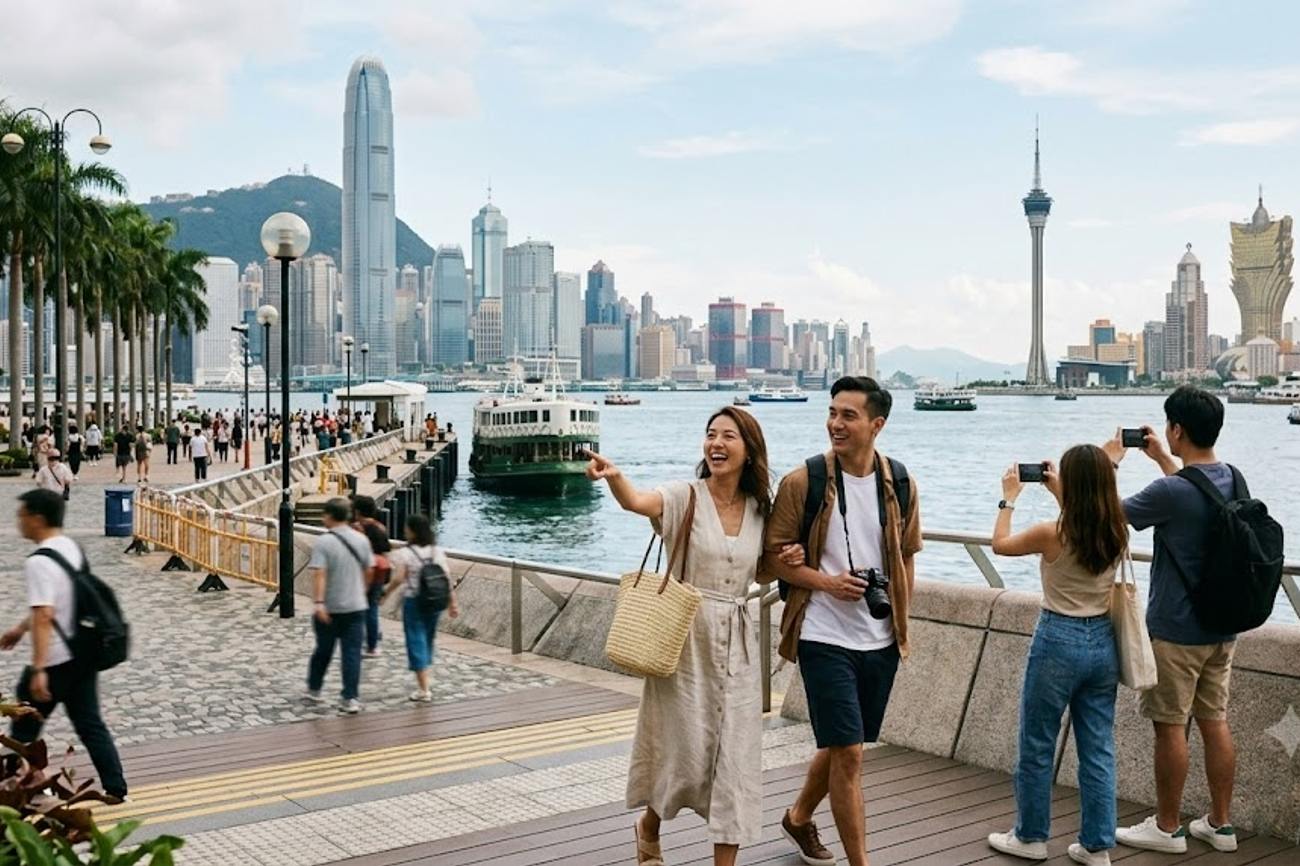
Image generated by AI
Non-gaming expenditure in Macao hit MOP80.12 billion in 2025, yet the average visitor spent only MOP2,000 on non-gaming activities. This stark gap reveals a city in the midst of a profound identity crisis, attempting to pivot from a gambling monolith into a diversified leisure hub where MICE (Meetings, Incentives, Conferences, and Exhibitions) travelers are now spending more than double the amount of the average tourist.
The Pivot of the Entertainment Capitals
The traditional boundaries between the "gambling city" and the "business hub" are evaporating. For years, travelers viewed Las Vegas and Macao through the lens of the casino floor, while Singapore and Hong Kong were seen as the sophisticated gateways for finance and retail. However, a new economic blueprint is emerging across these four titans. They are no longer competing solely on the strength of their gaming licenses, but on their ability to create "multi-layered" ecosystems where a single trip serves three or four different purposes.
In 2025, the scale of these operations remained staggering. Hong Kong led the pack with 49.9 million arrivals, followed by Macao at 40.07 million, Las Vegas at 38.55 million, and Singapore at 16.9 million. While the volume is impressive, the real story lies in the diversification levers. Singapore is leveraging integrated resorts to drive record receipts of S$32.8 billion, while Las Vegas is utilizing its massive 14.5 million square feet of meeting space to turn corporate delegates into high-spending tourists.
This shift is a strategic necessity. When a city relies on a single draw—like gaming—it is vulnerable to regulatory shifts and market volatility. By integrating luxury retail, gastronomy, and mega-events, these cities are effectively "hedging" their tourism bets. A convention doesn't just fill a conference hall; it fills the surrounding bistros and hotels, extending the average length of stay and spreading wealth across the local economy.
What Makes These Hubs Different
While the goal of diversification is universal, the execution varies wildly based on local geography and political will.
Macao is currently the most aggressive experiment in diversification. It is fighting a battle against its own reputation. With 23.52 million same-day visitors compared to 16.54 million overnight guests, the city struggles with a short average stay of just 1.1 days. To counter this, Macao is leaning heavily into MICE tourism. In 2025, the city hosted 1,861 MICE events—a 22.1% increase—and these business travelers are the new gold mine, spending an average of MOP4,572 on non-gaming activities.
Singapore operates on a model of "Integrated Visitor Economies." Unlike other cities where casinos were added to the city, Singapore built its resorts—Marina Bay Sands and Resorts World Sentosa—as comprehensive districts. The state is now doubling down with a S$10 billion expansion, including a 15,000-seat arena and the upcoming Super Nintendo World. Their strategy is the "connected district," exemplified by the proposed Downtown MICE Hub slated for tender in 2027, which aims to blend work and play into a single walkable footprint.
Hong Kong is utilizing its cultural capital to deepen spending. With a 12% growth in arrivals to 49.9 million in 2025, the city is focusing on "high-value" visitors. This is evident in their MICE sector, where 2.51 million visitors (including 1.43 million overnight stays) generated HK$10.7 billion. By blending gastronomy with mega-events, Hong Kong is moving away from being a mere transit point toward becoming a primary destination.
Las Vegas has mastered the art of the "hybrid trip." It doesn't seek to replace its gaming identity but to use it as a foundation for everything else. In 2025, the city saw 38.55 million visitors and a massive 5.99 million convention delegates. With 150,300 hotel rooms and an 80.3% occupancy rate, Vegas has turned the corporate meeting into a fuel source for its entertainment sector, resulting in a total tourism economic impact of US$80.9 billion.
Visitor Insider Tips
Navigating these mega-hubs requires a strategy to avoid the "tourist traps" and experience the city's actual rhythm.
For Macao: Stop treating it as a day trip from Hong Kong. To see the real city, stay overnight in the historic center rather than the Cotai Strip. Visit the ruins of St. Paul's and the Senado Square at dawn to avoid the crowds. Focus on the local "Macanese" cuisine—a unique blend of Portuguese and Chinese flavors—found in the small alleys of the peninsula, not the luxury hotel buffets.
For Singapore: Base yourself near the Downtown Core but spend your evenings in the Hawker Centers of Tiong Bahru or Old Airport Road. To avoid the midday heat and crowds at the integrated resorts, visit the Singapore Tourism Board recommended gardens and museums between 8:00 AM and 10:00 AM. Use the MRT for everything; it is one of the most efficient systems globally.
For Hong Kong: Beyond the Peak and the shopping malls, head to the outlying islands like Lamma or Lantau for a complete change of pace. If you are visiting for a MICE event, utilize the Star Ferry to cross the harbor—it remains the most authentic and affordable way to experience the skyline. Explore the UNESCO World Heritage sites in the region to understand the colonial and indigenous layering of the city.
For Las Vegas: The "Strip" is a spectacle, but the "Arts District" is where the locals actually hang out. If you are visiting for a convention, book your dining reservations weeks in advance; the high-end gastronomy scene is now as competitive as the gaming floors. Use the Monorail to bypass the notorious Strip traffic.
Cultural and Environmental Context
The rapid expansion of these entertainment capitals brings significant tension between economic growth and local preservation. In Macao, the push for non-gaming spending often clashes with the preservation of its Portuguese colonial heritage. The influx of millions of same-day visitors puts immense pressure on the narrow streets of the old city, leading to a struggle between "touristification" and authentic community life.
Singapore faces a different challenge: the environmental cost of constant expansion. Building massive oceanariums and theme parks in a land-scarce city-state requires meticulous urban planning and a commitment to "green" architecture. The government's push for integrated hubs is an attempt to reduce urban sprawl and minimize the carbon footprint of visitor transport.
Hong Kong and Macao are expanding their tourism offerings to include a wider range of entertainment options, moving beyond their traditional casino-focused industries. According to the Hong Kong Tourism Board, the city is investing in new theme parks, museums, and cultural attractions to appeal to a broader range of visitors. This shift is expected to drive growth in the region's tourism sector, with a focus on family-friendly and culturally-oriented experiences.
In Las Vegas, the environmental narrative is dominated by water scarcity. Maintaining massive luxury resorts and fountains in the middle of the Mojave Desert is a constant ecological gamble. The shift toward conventions and sports is partly an effort to diversify the economy away from the resource-heavy "mega-casino" model toward a more sustainable, service-oriented professional economy.
FAQ: Visiting the Entertainment Capitals 2026
What is the best time to visit these cities? For Singapore and Hong Kong, avoid the peak humidity of July and August; October to December offers the best weather. For Las Vegas, spring and fall are ideal to avoid the extreme desert heat. Macao is best visited during the autumn months.
Do I need a visa for these destinations? Requirements vary by nationality. Most Western travelers enter Singapore and Hong Kong visa-free for short stays. Macao often allows visa-free entry for many nationalities, but always check the official government portals for the most current regulations.
How do I get between Hong Kong and Macao? The fastest way is via the Hong Kong-Zhuhai-Macao Bridge or the high-speed ferry. The bridge is an engineering marvel, while the ferry delivers you directly into the heart of the city.
Is it safe for solo travelers? Yes, all four destinations are among the safest in the world for solo travelers. Singapore and Hong Kong have exceptionally low crime rates, and the tourist zones of Las Vegas and Macao are heavily monitored and well-lit.
The era of the casino-only trip is dead; the future belongs to the destination that can make you work, shop, and dine in a single, seamless experience.
Related Travel Guides
- US Launches High Impact Visa Fraud Prevention Portal As Authorities Tighten Screening Of Travellers Businesses And Institutions
- Greece Leads Global Shipping as Island Travellers Face a Different Ferry Reality Beyond Summer Travel
- Australia Cruise Sector Boosts Future Travel Opportunities As ACA Reveals New Leadership
This article is for informational purposes. Flight routes, passenger regulations, visa rules, and transit advisories are subject to change by airlines and aviation authorities. Readers are advised to verify schedules and travel documentation with relevant carriers and border agencies before departure.
Related Stories
The Hidden Economics of Ultra-Luxury World Cruises: Inside the Six-Figure Voyages Dominating High-Net-Worth Travel
European Waterways Expands 2027 Luxury Barge Cruises Across Europe: New Brittany Route, Castle Falconry, and 10% Early Booking Savings