
Heathrow Airport Terminal 2 and 3 Road Access Restricted Following Severe Flooding in 2026
Severe rainfall has triggered road closures at Heathrow Airport, forcing passengers at Terminals 2 and 3 to pivot to rail networks to avoid massive delays.

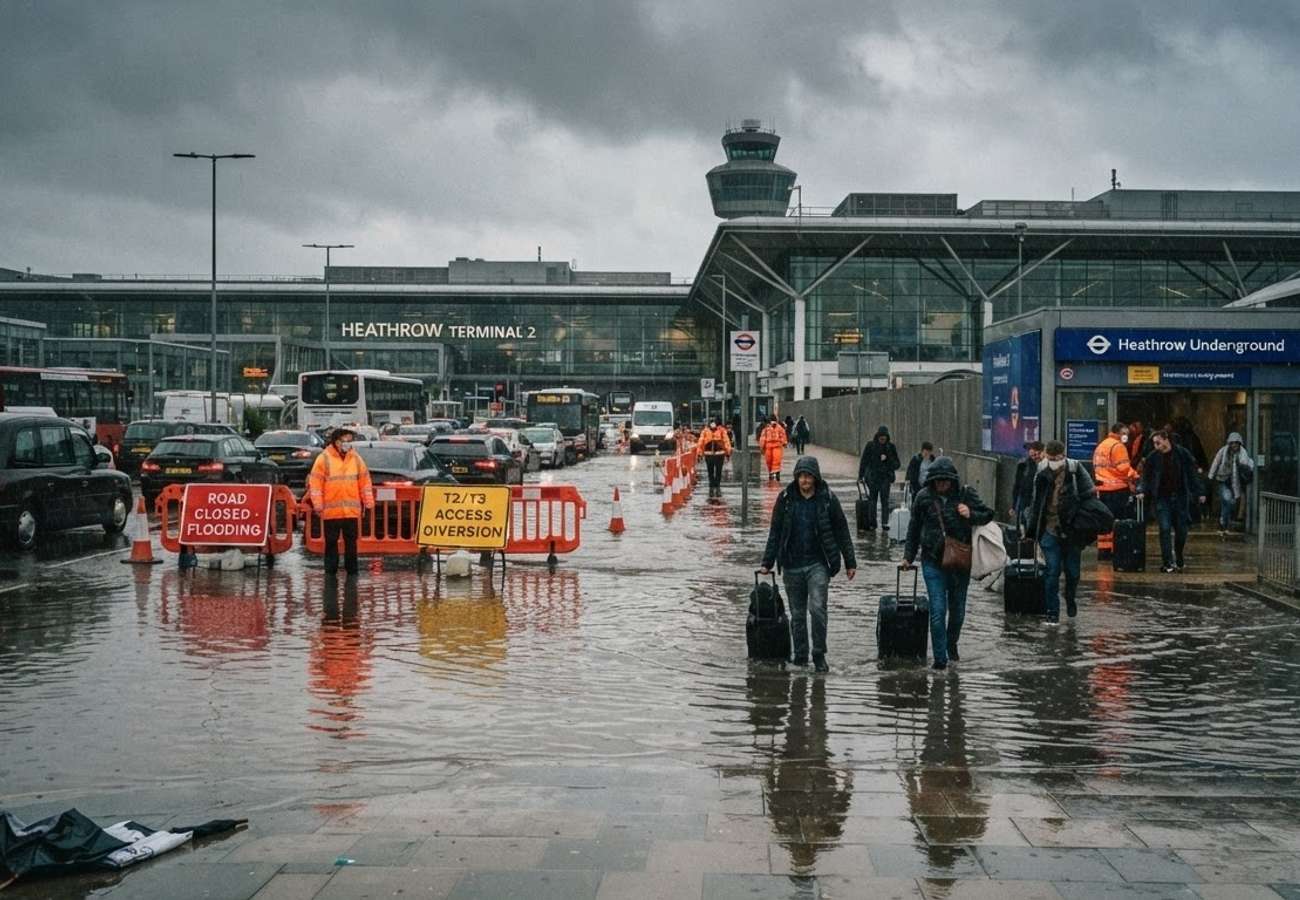
Image generated by AI
Severe rainfall has triggered massive road closures at Heathrow’s central terminal area, effectively cutting off direct vehicle access to Terminals 2 and 3. Travelers are now being diverted to rail networks to prevent total gridlock during this peak travel window.
The Logistics Shift: Road Closures and Rail Reliance
A sudden weather event has placed Heathrow Airport in a high-pressure management phase. Heavy rainfall led to significant flooding across the central terminal zone, rendering primary road routes impassable for private cars, taxis, and airport transfer services. While flight operations continue, the "last mile" of the passenger journey has been severed for those heading to Terminals 2 and 3.
The airport has moved into a crisis mitigation mode, enforcing strict restrictions on road access. For the visitor, the real impact is a total shift in transit logic; the convenience of a door-to-door taxi or private car is currently non-existent for the central hub. To maintain the flow of thousands of daily passengers, Heathrow is pivoting all traffic toward its integrated rail infrastructure.
Navigating the Disruption: Recommended Transit Routes
To avoid being stranded in traffic or facing missed departures, the airport has designated three primary rail arteries as the only reliable means of entry:
- Heathrow Express: The fastest link for those coming from central London.
- Elizabeth Line: The primary high-capacity alternative for cross-city transit.
- Piccadilly Line: The most accessible underground option for budget-conscious travelers.
For those who have already committed to road travel or are arriving via private vehicle, the airport has implemented a "divert and transfer" strategy. Drivers are instructed to bypass the flooded central zone entirely and head toward Terminals 4 or 5. From there, passengers must utilize the airport's free internal rail transfer system to reach Terminals 2 or 3.
Cultural and Environmental Value: The Infrastructure Lesson
This incident underscores a growing trend in global aviation hubs: the necessity of "multi-modal resilience." As extreme weather events become more frequent, the reliance on asphalt roads creates a single point of failure. The current crisis highlights why the UK’s investment in the Elizabeth Line and expanded rail connectivity is no longer just about convenience, but about operational survival.
From a sustainability perspective, this forced shift toward public transport aligns with regional goals to reduce carbon emissions from short-haul vehicle trips to the airport. However, the immediate priority remains the safe movement of people. Local authorities and airport teams are currently working to clear drainage systems and restore road integrity to prevent long-term structural damage to the terminal access points.
Visitor Insider Tips: Surviving Heathrow Disruptions
Navigating a major airport during a weather crisis requires more than just checking a flight board. Here is how to handle the current situation:
- The "Buffer Hour" Rule: In conditions like these, add a minimum of 90 minutes to your usual transit time. The transfer from Terminal 4/5 to Terminal 2/3 via the free rail link can become congested during peak hours.
- Avoid "Ride-Share" Traps: During flooding events, apps like Uber or Bolt may still show availability, but drivers often get stuck in diverted traffic loops. Stick to the rail lines until official road reopenings are confirmed by the Heathrow Press Office.
- Check the "Live Map": Use official Heathrow digital signage or the airport app rather than third-party GPS apps, which may not update road closures in real-time.
- Hydration and Patience: Expect longer queues at rail ticket kiosks and security checkpoints as passengers from multiple terminals converge on the same rail exits.
Tourism Outlook: Future-Proofing the Hub
The long-term impact of this event will likely accelerate Heathrow's investment in climate-resilient infrastructure. This includes upgraded sustainable drainage systems (SuDS) to handle higher volumes of rainfall and further integration of autonomous rail shuttles to reduce dependence on road-based transfers.
For the global traveler, this serves as a reminder that the journey to the gate is as critical as the flight itself. The ability of a destination to maintain movement during a crisis is a key metric of its tourism maturity.
Stay agile, prioritize rail, and allow for the unexpected when navigating London's gateway.
Related Travel Guides
Disclaimer
This article is for informational and educational purposes only. It does not constitute legal, financial, or professional advice. While we strive to provide accurate and up-to-date information, travel policies, regulations, and conditions change rapidly. Always verify information with official sources before making travel decisions. Nomad Lawyer makes no representations about the accuracy, reliability, completeness, or suitability of the information provided. Readers should consult qualified professionals for advice specific to their circumstances. The views expressed in this article are those of the author and do not necessarily reflect the views of Nomad Lawyer.
Preeti Gunjan
Contributor & Community Manager
A passionate traveller and community builder. Preeti helps grow the Nomad Lawyer community, fostering engagement and bringing the reader experience to life.
Learn more about our team →