
Hawaiian Airlines Cancels 77+ Flights as Hurricane Lala Disrupts Pacific Aviation 2026
Hawaiian Airlines has scrubbed over 77 interisland and transpacific flights as Hurricane Lala passes south of the islands, forcing widespread travel disruptions.

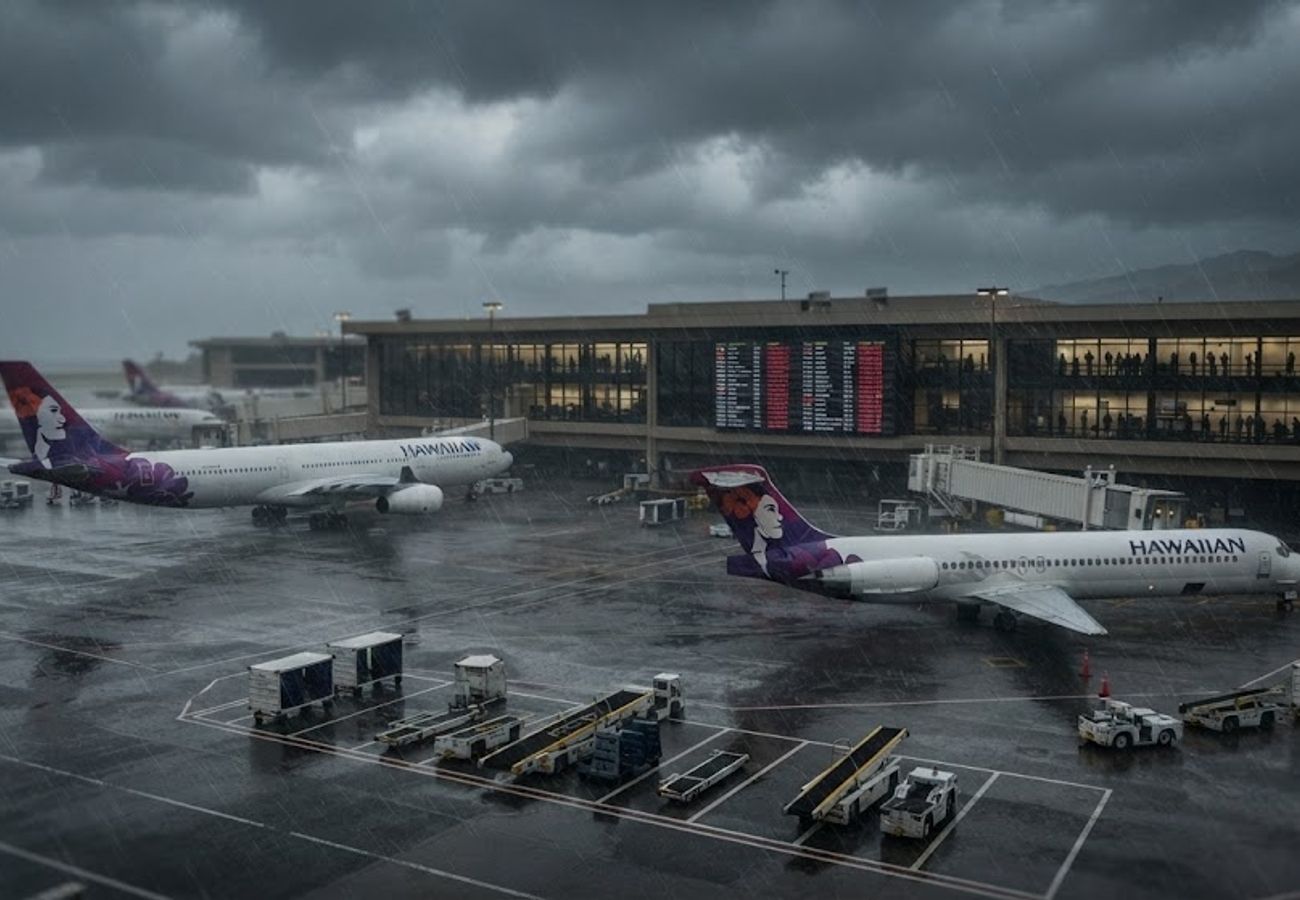
Image generated by AI
Hurricane Lala has forced Hawaiian Airlines to scrap at least 77 flights, paralyzing essential interisland connectivity and transpacific corridors. The storm's trajectory south of the archipelago has triggered a strategic shutdown of high-risk airports to prevent aircraft from being stranded in hazardous conditions.
Strategic Flight Reductions and Route Impact
Hawaiian Airlines implemented a tiered cancellation strategy starting Saturday, August 15, to mitigate the risks posed by Hurricane Lala. The airline completely suspended all operations to Hilo and the majority of services to Kona on Hawaiʻi Island, where the storm's impact—characterized by heavy rainfall and severe wind gusts—was most acute.
While the neighbor islands faced the brunt of the disruptions, the airline maintained a skeletal operation at Kahului (Maui) and Līhuʻe (Kauaʻi). Most flights operating in and out of Honolulu continued, though they were plagued by significant delays and shifting schedules.
The operational breakdown for August 15 is detailed below:
| Flight Category | Number of Cancellations | Impact Area |
|---|---|---|
| Interisland Flights | 59 | Hilo, Kona, Kahului, Līhuʻe |
| Transpacific Services | 18 | Mainland US / West Coast Gateways |
| Total Minimum Cancellations | 77 | Hawaii Statewide Network |
Further preemptive cancellations were issued for Sunday, August 16, as the storm tracked northwest. This proactive approach was designed to avoid the chaos of same-day diversions and the danger of operating aircraft in conditions exceeding safe crosswind limits.
Operational Logic: Safety and Recovery Positioning
The decision to prioritize the suspension of Hilo and Kona services was not merely a reaction to weather, but a calculated move to protect assets. By clearing aircraft from smaller coastal airports, Hawaiian Airlines avoided the risk of planes being trapped by storm surges or localized flooding.
By concentrating remaining resources in Honolulu, the airline preserved a "connectivity backbone." This allows for a more rapid recovery phase, as aircraft and crews are centrally positioned to resume service as weather windows open.
Aviation analysts note that this pattern is standard for Pacific storm responses, where long overwater sectors and limited airfield infrastructure make unplanned diversions exceptionally risky. Even as Lala weakened, its outer bands created volatile conditions that made guaranteed arrival windows impossible at secondary fields.
Passenger Disruptions and Rebooking Logistics
The sudden removal of 77+ flights created immediate friction for both residents and tourists. Reports indicate a surge in overnight stays on Oʻahu and the neighbor islands as passengers became stranded.
Key passenger impacts included:
- Logistical Failures: Multiple reports of luggage being separated from owners during rerouting through alternate hubs.
- Connection Collapses: Travelers transitioning from interisland hops to mainland flights experienced missed connections due to shifting departure banks.
- Airport Congestion: Heavy crowding at ticket counters on Saturday afternoon, particularly at Hilo, Kona, and Kahului.
To manage the backlog, Hawaiian Airlines activated flexible travel policies. Affected passengers were encouraged to use digital channels for rebooking, with many reporting that change-fee waivers were applied to itineraries within a specific date range, pending seat availability.
Meteorological Context of Hurricane Lala
Meteorological data confirms that Hurricane Lala reached peak intensity near South Point on Hawaiʻi Island before beginning a slight weakening trend. Although the core of the storm remained offshore to the south, its outer rain bands triggered localized flooding and downed debris across windward coastal areas.
The storm's proximity to Honolulu created a fluctuating operational environment. While the center did not make direct landfall on Oʻahu or Maui, the atmospheric instability was sufficient to push airport conditions to their operational limits, justifying the wave of preemptive scrubbed flights.
Recovery Outlook and Future Travel
As Hurricane Lala moves away from the archipelago, Hawaiian Airlines is expected to restore services incrementally. The priority will be the restoration of core routes into Honolulu and Maui.
However, travelers should remain cautious. The "recovery tail"—the period following a storm—often involves residual delays caused by:
- Crew Displacement: Staff being out of position due to previous cancellations.
- Aircraft Repositioning: The time required to fly planes back to their scheduled hubs.
- Infrastructure Checks: Necessary runway inspections following heavy rain and wind.
Residents relying on these routes for medical or professional obligations are advised to verify flight statuses in real-time before departing for the airport.
The speed of the network's return to normalcy will serve as a benchmark for the airline's crisis management capabilities in the face of increasing Pacific volatility.
Key Takeaways
- Total Impact: At least 77 flights canceled on August 15, including 59 interisland and 18 transpacific routes.
- Hardest Hit: Hilo and Kona airports saw the most severe service suspensions.
- Safety First: Aircraft were moved from coastal airports to avoid storm surge and wind damage.
- Passenger Relief: Change-fee waivers were implemented to assist with rebooking.
FAQ
Which airports were most affected by Hurricane Lala? Hilo and Kona on Hawaiʻi Island experienced the most significant disruptions, with Hilo seeing a total suspension of service.
Are there fee waivers for canceled flights? Yes, reports indicate that Hawaiian Airlines provided change-fee waivers for affected passengers to adjust their itineraries.
Will flights return to normal immediately? While service is being restored, residual delays are expected due to aircraft and crew displacement.
Related Travel Guides
Disclaimer
This article is for informational and educational purposes only. It does not constitute legal, financial, or professional advice. While we strive to provide accurate and up-to-date information, travel policies, regulations, and conditions change rapidly. Always verify information with official sources before making travel decisions. Nomad Lawyer makes no representations about the accuracy, reliability, completeness, or suitability of the information provided. Readers should consult qualified professionals for advice specific to their circumstances. The views expressed in this article are those of the author and do not necessarily reflect the views of Nomad Lawyer.
Kunal K Choudhary
Co-Founder & Contributor
A passionate traveller and tech enthusiast. Kunal contributes to the vision and growth of Nomad Lawyer, bringing fresh perspectives and driving the community forward.
Learn more about our team →