
Havana Follows San Juan and Other Leading Countries as St. Lucia Wellness Travel Expands in Soufrière
Havana Follows San Juan and Other Leading Countries as St. Lucia Wellness Travel Expands in Soufrière

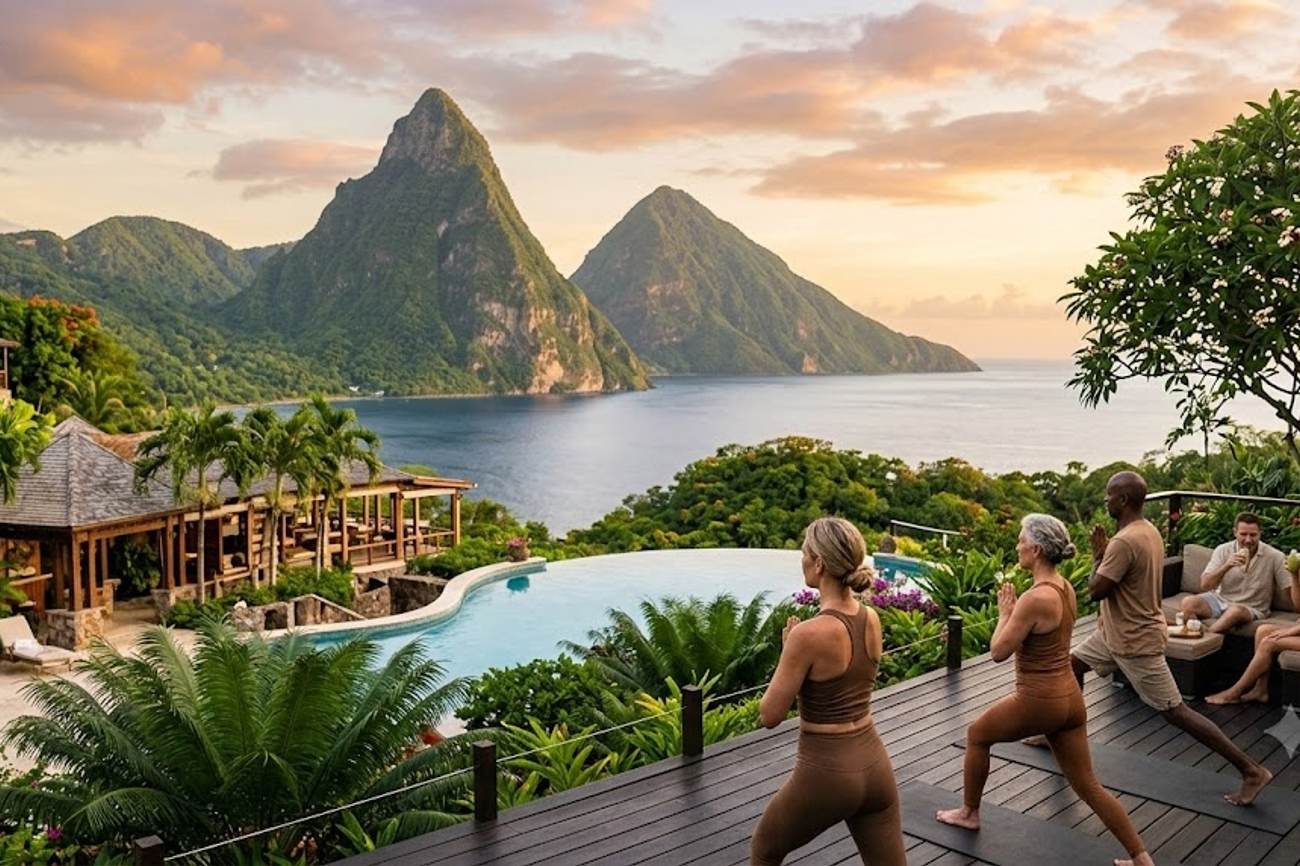
Image generated by AI
$1.06 trillion is the current valuation of the international wellness tourism market as of September 2026, marking a significant climb from the $974.57 billion recorded in 2025. This growth represents a compound annual growth rate (CAGR) of 9.6%, signaling that health-centric travel has transitioned from a niche preference to a dominant global economic engine. Within this broader framework, the overarching wellness economy is estimated at $6.8 trillion, according to data from the Global Wellness Institute. While North America maintains the highest volume of travelers, the Caribbean is carving out a high-yield territory by leveraging volcanic geography and indigenous healing practices to attract a demographic that spends more and stays longer than the average tourist.
The Caribbean Pivot: From Leisure to Restoration
The post-pandemic era has triggered a fundamental shift in traveler psychology. The modern voyager is no longer satisfied with passive leisure; there is a systemic demand for restorative experiences that provide measurable physical and mental improvements. In the Caribbean, this has manifested as a strategic pivot by national governments to attract "wellness-oriented" visitors. Data indicates these travelers stay an average of three days longer than standard vacationers and maintain a higher per capita daily expenditure.
This economic incentive has sparked a developmental race across the West Indies. The goal is to move beyond the "sun, sand, and sea" trope toward "transformative travel." By integrating bespoke nutritional consulting, holistic spa retreats, and outdoor mindfulness, island nations are insulating their economies against the volatility of mass tourism. The strategy is clear: target high-net-worth individuals seeking psychological decompression and physical optimization.
Regional Benchmarks: The Havana and San Juan Models
To understand the current trajectory of St. Lucia, one must analyze the precedents set by Havana and San Juan. These two hubs provided the blueprint for how different existing infrastructures can be retooled for the wellness economy.
Havana has historically been a powerhouse in clinical medical tourism, known for specialized surgeries and pharmacological expertise. However, as global health trends shifted toward prevention, Havana diversified. The city now offers hybrid models that blend rigorous medical diagnostics with Afro-Cuban therapeutic practices and organic diets. This transition proved that travelers would cross borders specifically for health restoration, validating the market for the rest of the region.
San Juan took a different approach, utilizing its luxury hospitality sector. The Puerto Rican model focuses on the integration of urban luxury and eco-therapy. By pairing 24-hour state-of-the-art fitness centers and "Zen & Fit" retreats with the rugged terrain of the El Yunque National Forest, San Juan demonstrated that wellness does not require total isolation. Their success in blending high-end resort amenities with rainforest cold plunges and permaculture retreats provided a scalable model for luxury wellness.
The Ascent of Soufrière and St. Lucian Wellness
St. Lucia has not merely followed these models but has synthesized them into a concentrated national strategy. The focal point of this expansion is Soufrière, a southwestern coastal town that has recently been recognized as the second happiest city in the world. This designation has acted as a powerful catalyst for the town's development as the epicenter of St. Lucia wellness travel.
The government of St. Lucia has aggressively pursued direct investments in eco-wellness resorts, moving the country toward a position where it may be the only destination globally to fully integrate transformative travel into its national identity. The result is a concentrated hub of wellness facilities that leverage the island's volcanic landscape for therapeutic purposes.
| Metric | 2025 Value | 2026 Value | Growth Rate (CAGR) |
|---|---|---|---|
| Global Wellness Tourism Market | $974.57 Billion | $1.06 Trillion | 9.6% |
| Overarching Wellness Economy | N/A | $6.8 Trillion | N/A |
| Avg. Wellness Stay Extension | +3 Days | +3 Days | Stable |
Expert Analysis: The Economics of "Happiness" as a Commodity
For travelers booking routes into St. Lucia, the direct consequence of Soufrière's "happiest city" status is a projected increase in premium pricing for eco-resorts and wellness retreats. When a destination is branded not just as "beautiful" but as "the happiest," it shifts the value proposition from the physical environment to a psychological outcome. This allows operators to command a price premium based on the perceived emotional ROI of the trip.
The pricing pressure created by this trend means that "entry-level" wellness is disappearing in favor of high-barrier, all-inclusive transformative packages. For the nomad lawyer or the high-earning professional, this means that the logistical cost of visiting St. Lucia will likely rise, but the quality of integrated services—combining medical, luxury, and ecological elements—will increase.
Furthermore, the shift toward "transformative travel" suggests a regulatory move toward certifying wellness practitioners. As St. Lucia positions itself as a global leader, we can expect the Saint Lucia Tourism Authority to implement stricter standards for "eco-wellness" certifications to prevent "wellness-washing" and maintain the prestige of the Soufrière brand. The strategic move here is the creation of a "wellness moat"—a level of specialized infrastructure and certification that is difficult for other Caribbean islands to replicate quickly.
Key Takeaways
- Market Explosion: The wellness tourism sector has crossed the trillion-dollar threshold, reaching $1.06 trillion in 2026.
- High-Value Demographics: Wellness travelers are more lucrative than standard tourists, staying an average of three days longer per trip.
- Strategic Diversification: Havana has pivoted from clinical medical tourism to holistic healing, while San Juan has merged luxury urban resorts with eco-therapy.
- The Soufrière Effect: St. Lucia is leveraging Soufrière's status as the world's second happiest city to attract direct investment in eco-wellness resorts.
- Economic Shift: The region is moving away from passive leisure toward "transformative travel," prioritizing mental and physical health outcomes.
FAQ: St. Lucia Wellness Travel 2026
What makes Soufrière a top wellness destination? Soufrière is recognized as the second happiest city in the world and possesses a unique concentration of eco-wellness resorts and volcanic landscapes, making it the primary hub for transformative health travel in St. Lucia.
How does wellness tourism differ from medical tourism in the Caribbean? Medical tourism, like Havana's original model, focuses on clinical treatments and surgeries. Wellness tourism focuses on preventative health, mindfulness, nutrition, and holistic restoration to improve overall quality of life.
Will wellness travel in St. Lucia be more expensive than standard vacations? Yes. Because wellness travelers typically stay longer and utilize specialized services like nutritional consulting and holistic retreats, these packages generally carry a higher per capita cost than traditional leisure trips.
What are "transformative travel" experiences? These are journeys designed to produce a tangible change in the traveler's physical or mental state, often combining mindfulness, ecological immersion, and health-enhancing activities rather than simple sightseeing.
The transition from sun-seeking to soul-seeking has turned the Caribbean into a trillion-dollar laboratory for human optimization.
Tags: Soufrière 2026, St. Lucia Wellness Tourism, Global Wellness Institute, Caribbean Eco-Resorts, Transformative Travel Trends
Related Travel Guides
- Brazil Creates a New Adventure Tourism Wave With Iconic Kitesurfing Destinations Across Its Coast
- Kenya Unveils New Accessible Tourism Push as Kenya Beyond Sight Opens Coast and Eastern Regions to All Travellers
- Taiwan Travel Philippines Campaign Unveils Major Manila Expo With Exclusive Deals and Visitor Incentives
Disclaimer
This article is for informational and educational purposes only. It does not constitute legal, financial, or professional advice. While we strive to provide accurate and up-to-date information, travel policies, regulations, and conditions change rapidly. Always verify information with official sources before making travel decisions. Nomad Lawyer makes no representations about the accuracy, reliability, completeness, or suitability of the information provided. Readers should consult qualified professionals for advice specific to their circumstances. The views expressed in this article are those of the author and do not necessarily reflect the views of Nomad Lawyer.
Kunal K Choudhary
Co-Founder & Contributor
A passionate traveller and tech enthusiast. Kunal contributes to the vision and growth of Nomad Lawyer, bringing fresh perspectives and driving the community forward.
Learn more about our team →