
Hankyu Railway Introduces Free 20-Minute Contactless Station Access for Easier Passenger Travel
Hankyu Railway Introduces Free 20-Minute Contactless Station Access for Easier Passenger Travel

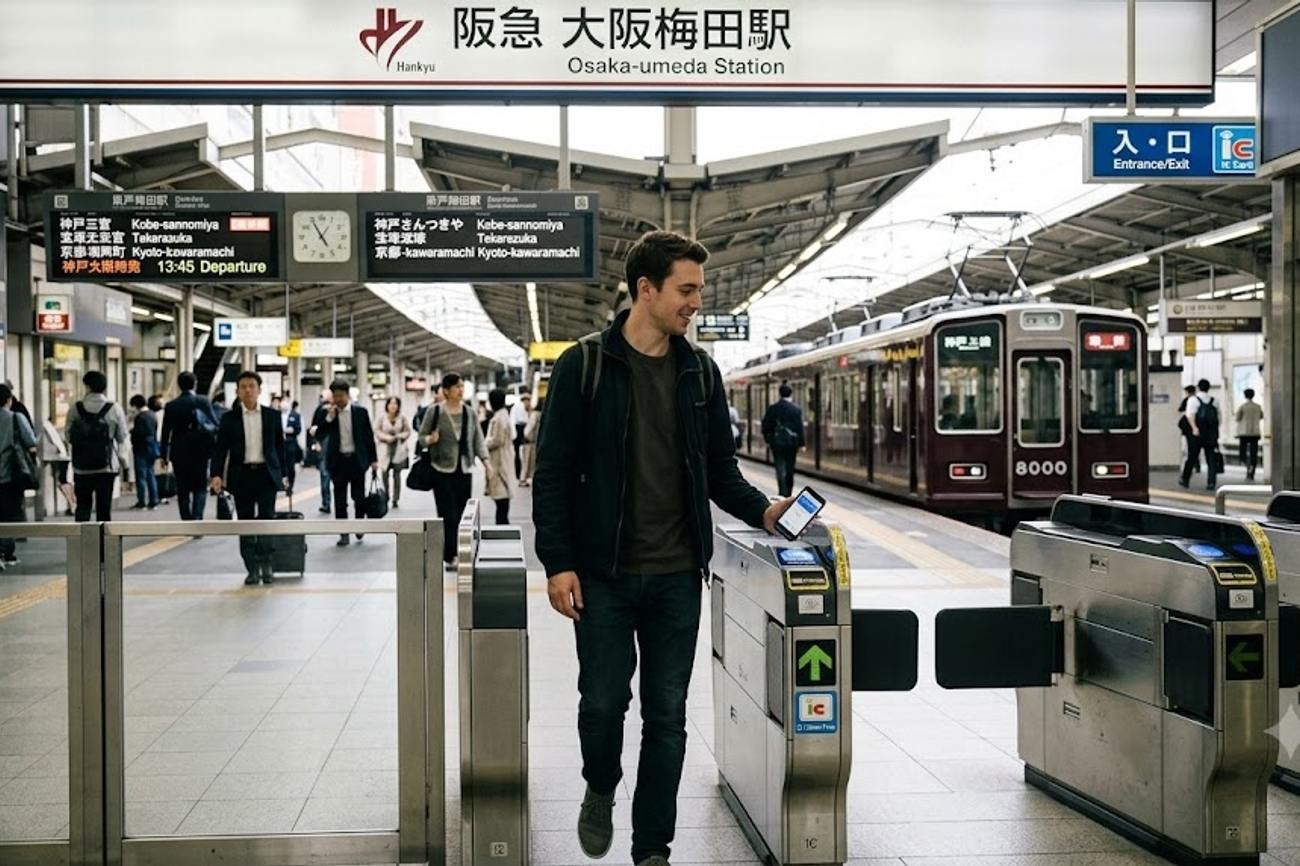
Image generated by AI
While traditional IC cards like ICOCA and PiTaPa have offered short-stay entry/exit privileges since March 18, 2026, the expansion of this feature to global contactless payment methods on September 1, 2026, marks a critical shift in Japan's approach to international mobility. This transition represents more than a simple fare waiver; it is a strategic alignment of Japanese transit infrastructure with global payment standards to reduce friction for the millions of overseas visitors navigating the Kansai region.
The Frictionless Station: Hankyu’s 20-Minute Metric
The operational shift implemented by Hankyu Railway focuses on a specific temporal window: 20 minutes. By allowing passengers to enter and exit the same station within this timeframe without incurring a fare, the carrier is effectively redefining the station from a mere transit node into a functional public utility space.
From a data perspective, this move addresses a specific pain point in the passenger journey—the "accidental entry" or "utility visit." For international travelers, the psychological barrier of paying a minimum fare just to access a coin locker or a station shop can be a deterrent. By removing this cost, Hankyu is optimizing the "last hundred feet" of the travel experience. According to data from the International Air Transport Association (IATA), the seamless integration of payment systems across borders is a primary driver in increasing tourist confidence and spending within destination cities.
The technical requirement for this feature is absolute: the passenger must use the exact same contactless payment method for both the entry and exit taps. The system utilizes unique tokenized identifiers to match the entry and exit records. If a traveler taps in with a physical Visa card and attempts to tap out with a digital wallet version of the same card, the system will likely fail to recognize the pair, resulting in a standard fare charge.
Comparative Context: IC Cards vs. Contactless Integration
Historically, Japan's transit dominance was built on proprietary IC card ecosystems. While these systems are hyper-efficient, they created a "barrier to entry" for short-term visitors who found the process of purchasing and topping up physical cards cumbersome. The rollout of this feature follows a tiered implementation strategy, where native IC cards received the update first, followed by global contactless options.
The following table illustrates the evolution of short-entry/exit support within the Hankyu network:
| Payment Method | Feature Availability Date | Access Window | Requirement |
|---|---|---|---|
| PiTaPa (Native IC) | March 18, 2026 | 20 Minutes | Same Card |
| ICOCA (Native IC) | March 18, 2026 | 20 Minutes | Same Card |
| Global Contactless (Visa/MC/etc.) | September 1, 2026 | 20 Minutes | Same Card/Device |
This progression mirrors a wider regional trend across Asia. As noted by Statista, the adoption of contactless payments in transit has seen a double-digit year-over-year increase across major metropolitan hubs. By bridging the gap between the March 2026 IC card update and the September 2026 contactless update, Hankyu is eliminating the "convenience gap" that previously existed between local residents and foreign tourists.
Practical Traveler Advisory and Strategic Insights
For the individual traveler, this data shift transforms how they interact with the urban environment of Osaka, Kyoto, and Kobe. The 20-minute window converts the ticket gate from a financial checkpoint into a flexible portal.
If you are planning a trip to the Kansai region in late 2026, the following actionable strategies apply:
- Prioritize Digital Wallets: Since the September 1, 2026 update, there is less incentive to purchase a physical IC card for short-term stays. Using a smartphone-based contactless payment method allows you to utilize the 20-minute free window for station utilities without managing a separate balance.
- Strategic Station Use: You can now use Hankyu stations as "service hubs." If you need to drop luggage in a coin locker or meet a companion arriving on a platform, you can enter the gates, complete the task, and exit within 20 minutes without any financial penalty.
- Error Mitigation: The "wrong gate" anxiety is effectively removed. If you accidentally enter the wrong ticket gate, you have a 20-minute window to exit the same station for free, provided you use the same payment method.
- Booking Window: While this update doesn't affect flight or hotel booking lead times, it suggests a shift toward "spontaneous mobility." Travelers can now navigate station interiors with the same fluidity as they do in cities like London or New York.
Projection: The Station as a Lifestyle Hub
The trajectory of Hankyu's policy suggests a move toward "Station-as-a-Service" (SaaS). When a railway operator removes the cost of entry for short durations, they are signaling that they value the foot traffic within their retail and service ecosystems more than the minimum fare revenue from a non-traveling passenger.
We can project that this model will likely expand to other major Japanese carriers. As the World Tourism Organization (UNWTO) emphasizes the importance of "smart tourism" destinations, we expect to see the 20-minute window become a standardized benchmark across the Japanese rail industry. This will likely lead to an increase in "station-centric" commerce, where the ticket gate is no longer a wall, but a permeable membrane.
Furthermore, the integration of global contactless payments indicates a move away from the "walled garden" of Japanese transit cards. In the next 24-36 months, we anticipate a total convergence where the distinction between a local IC card and a global credit card disappears entirely at the gate.
FAQ: Hankyu Contactless Access 2026
Will my fare increase if I stay longer than 20 minutes? Yes. If the time between your entry tap and exit tap exceeds 20 minutes at the same station, the system will process a standard fare for the minimum travel distance.
Can I use a different card to exit than I used to enter? No. The system requires the exact same contactless payment method or card to match the entry and exit records; otherwise, you will be charged.
Is this feature available at all Japanese stations? Currently, this specific update applies to Hankyu Railway. While other carriers have similar IC card rules, check specific operator guidelines for global contactless payment support.
Do I need to notify the staff if I am just entering for a shop? No. The process is automated. Simply tap in and tap out within the 20-minute window using your contactless device or card.
The transition from rigid fare gates to flexible access windows marks the end of the 'payment penalty' for the modern global nomad.
Tags: Hankyu-Railway-2026, Kansai-Transit-Digitalization, Contactless-Payment-Adoption, Japan-Smart-Tourism-Metrics, Rail-Fare-Optimization-2026
Related Travel Guides
- Italy Rail Tourism Under Spotlight as US Travel Advisory Warns of Petty Crime on Trains
- Saudi Arabia Teams Up with UAE and More as Most Captivating Cities of Middle East Come Alive for the Ultimate Train Travel Escape in Q4
- California High-Speed Rail Enters New Oversight Phase After Travel Expense Audit
Disclaimer
This article is for informational and educational purposes only. It does not constitute legal, financial, or professional advice. While we strive to provide accurate and up-to-date information, travel policies, regulations, and conditions change rapidly. Always verify information with official sources before making travel decisions. Nomad Lawyer makes no representations about the accuracy, reliability, completeness, or suitability of the information provided. Readers should consult qualified professionals for advice specific to their circumstances. The views expressed in this article are those of the author and do not necessarily reflect the views of Nomad Lawyer.
Raushan Kumar
Founder & Lead Developer
Full-stack developer with 11+ years of experience and a passionate traveller. Raushan built Nomad Lawyer from the ground up with a vision to create the best travel and law experience on the web.
Learn more about our team →