
California High-Speed Rail Enters New Oversight Phase After Travel Expense Audit

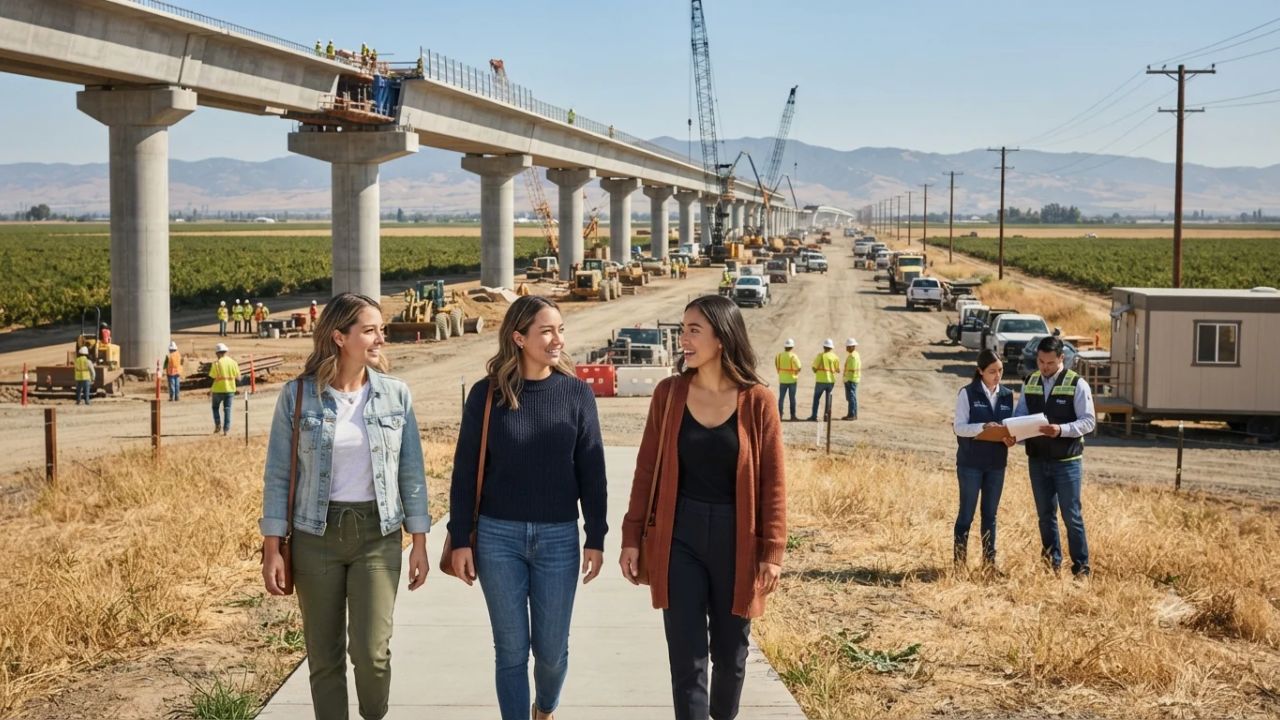
Image generated by AI
Revealing that approximately $680,500—representing nearly 60 percent of $1.15 million in audited consultant travel expenditures—lacked mandatory pre-authorization, a watchdog inquiry by the California High-Speed Rail Authority’s Office of the Inspector General has triggered an immediate administrative restructuring. Examining billing records from fiscal years 2024-25 and 2025-26 drawn from approximately $2 million in overall reviewed travel claims, the audit exposes procedural breakdowns across prime international contractors including KPMG, AECOM-Fluor, Nossaman LLP, and SYSTRA/TYPSA. The revelations arrive at a delicate juncture as civil engineering crews push to complete the foundational 171-mile Central Valley passenger spine between Merced and Bakersfield.
Procedural Failure at Scale: How Unvetted Consultant Claims Bypassed Internal Checks
The findings released by the Office of the Inspector General do not signal structural flaws in civil engineering or halt ongoing guideway construction; rather, they illuminate the administrative vulnerabilities that plague multi-billion-dollar transit projects. As the largest and most ambitious publicly funded infrastructure initiative in the United States, the California High-Speed Rail Authority (CHSRA) relies on specialized private engineering, financial, and legal consortia to deliver specialized project phases.
However, the watchdog’s sampling of fiscal year 2024-25 and 2025-26 expenditures revealed a systemic breakdown in contract enforcement. Nearly $680,500 in travel claims was reimbursed without verifiable prior written authorization. Auditors identified systemic irregularities: consultants purchased premium-class airfares without demonstrating business necessity, logged high-cost private car services where standard transit was required, and filed international travel invoices without adequate prior contractual clearance.
Most concerning for public integrity, the investigation highlighted multiple instances where local ground transportation was billed to taxpayers for journeys to commercial dining venues, private fitness centers, and entertainment complexes without supporting documentation establishing an official business purpose. In an era where public transit megaprojects face intense legislative skepticism, these lapses provide ammunition to political detractors who argue that private consulting syndicates have operated with insufficient agency oversight.
Contractor Exposure and Expense Breakdown: The Audit Across Four Prime Consultancies
To understand the institutional scope of the audit, the Inspector General examined travel invoices linked to four major private contracts that manage core strategic functions of the high-speed rail program. These multi-million-dollar agreements govern program delivery, legal defense, financial structuring, and civil engineering verification.
The investigation demonstrated that questionable billing practices were not confined to a single isolated vendor, but permeated multiple corporate partnerships across the state.
| Prime Contractor & Partner | Core Program Responsibility | Primary Billing Irregularities Identified | Corrective Enforcement Directive |
|---|---|---|---|
| AECOM-Fluor Consortium | Program delivery, construction management & field integration | Unapproved high-cost ground travel, missing pre-trip authorizations | Formal invoice clawbacks & mandatory pre-authorization gating |
| KPMG Advisory | Financial modeling, risk assessment & cybersecurity protocols | Premium airfare upgrades, unverified travel schedules | Reconciliation of financial advisory expense accounts |
| Nossaman LLP | Complex legal counsel, right-of-way acquisition & statutory compliance | Inadequately documented local transit, missing trip justifications | Tightened legal billing compliance under State Bar guidelines |
| SYSTRA / TYPSA | International rail engineering, systems verification & track design | International travel lacking contract approval, unvetted transit legs | Strict verification of foreign engineering deployment claims |
In response to the Inspector General’s report, executive leadership at the Authority confirmed that it has enacted corrective operational controls. The agency is overhauling its digital expense portals to block invoice payouts unless verified digital pre-authorizations are attached. In addition, the Authority is pursuing the legal recovery of all ineligible or improper reimbursements, establishing independent audit teams to ensure private vendors strictly comply with state travel caps.
The Merced-to-Bakersfield Reality: Delivering Infrastructure Amid Political Scrutiny
The political sensitivity surrounding these expense irregularities is directly magnified by the geographic and financial realities of the Central Valley segment. The Authority has concentrated its current capital allocations on the 171-mile dual-track alignment connecting Merced, Fresno, and Bakersfield, designed to demonstrate 220-mile-per-hour revenue service before expanding outward toward San Francisco and Los Angeles.
With over 14,000 construction jobs created and major viaducts, river crossings, and overpasses already completed through the San Joaquin Valley, the project has achieved tangible physical momentum. Federal grant distributions coordinated through the Federal Railroad Administration (FRA) have supplied billions in supplemental funding to electrify the Central Valley right-of-way and procure cutting-edge trainsets capable of operating in extreme summer heat.
Yet, public patience remains tightly bound to financial discipline. When private consultants charge unvetted luxury travel expenses to a program whose baseline budget has expanded significantly since its initial voter approval in 2008, the damage extends beyond the $680,500 in question. It erodes civic confidence in public transportation as a whole, providing political leverage to critics who seek to divert federal capital allocations away from passenger rail into highway expansions.
Expert Analysis: Federal Capital Allocation, Taxpayer Trust, and the Risk to Passenger Fare Models
For transit advocates, regional commuters, and industry analysts, the direct consequence of this travel expense audit is an immediate hardening of federal oversight that could slow administrative approvals across subsequent project phases. When the U.S. Department of Transportation (USDOT) evaluates competitive grant applications for future tunneling through the Pacheco and Tehachapi mountain passes, the Authority’s internal governance metrics will face unprecedented forensic examination.
The pricing pressure this creates means that future operational margins could be negatively impacted before passenger service even commences. When public infrastructure authorities fail to enforce aggressive internal cost controls on external contractors, indirect administrative overhead balloons. If programmatic management costs remain unchecked, state transit planners inevitably face pressure to elevate eventual ticket pricing or depend on larger public operating subsidies to balance balance sheets.
To preserve the future of American high-speed rail, the Authority must demonstrate that it can hold global engineering giants to the same fiscal accountability demanded of any state agency. Restoring full public trust requires transparent, quarterly disclosures of all third-party consultant expenses, rigorous enforcement of economy-class travel rules, and the prompt clawback of public funds.
Only by establishing an unyielding standard of fiscal integrity can California complete its transformational transit corridor, proving that the United States can build world-class, zero-emission passenger rail that delivers both operational speed and administrative accountability.
Key Takeaways
- Significant Audit Findings: The Inspector General revealed that roughly $680,500 of $1.15 million in reviewed consultant travel claims lacked documented prior approval during fiscal years 2024-25 and 2025-26.
- Major Contractors Named: The inquiry examined travel billing practices across four primary private partnerships: KPMG, AECOM-Fluor, Nossaman LLP, and SYSTRA/TYPSA.
- Categories of Concern: Unjustified premium airfare upgrades, unverified local transit to dining and recreational venues, and unapproved international journeys constituted the bulk of improper expenses.
- Immediate Corrective Actions: The California High-Speed Rail Authority is overhauling expense pre-approvals, tightening documentation standards, and initiating recovery processes for improper payments.
- Active Construction Continues: The administrative review focuses strictly on consultant travel oversight and does not halt active civil construction on the Merced-to-Bakersfield Central Valley segment.
FAQ: California High-Speed Rail Oversight 2026
What specific travel expense violations were discovered in the audit?
The Inspector General identified roughly $680,500 in consultant travel expenses that lacked required pre-authorization, including unapproved premium airfares, undocumented local transit to recreational sites, and international travel without contractual clearance.
Does the travel expense investigation affect train construction?
No. The inquiry is an administrative review focused strictly on consultant invoicing and internal approval protocols; civil construction across the 171-mile Central Valley segment continues without interruption.
Which private companies were included in the travel expense review?
The investigation examined travel reimbursements linked to four key consulting contracts: KPMG (financial advisory), AECOM-Fluor (program delivery), Nossaman LLP (legal counsel), and SYSTRA/TYPSA (rail engineering).
How is the California High-Speed Rail Authority responding to the findings?
The Authority is enforcing strict digital pre-authorizations for all travel, tightening invoice verification rules, increasing oversight of third-party vendors, and actively pursuing the financial recovery of improper reimbursements.
As high-speed rails reach across the Central Valley earth, California’s grandest infrastructure ambition demonstrates that true engineering mastery demands total administrative discipline.
Related Travel Guides
Minnesota MSP Airport Airline Cost Battle & Winter Hub Travel Guide
US Airports Operating Fee Hikes & Autumn Travel Logistics Guide
Disclaimer
This article is for informational and educational purposes only. It does not constitute legal, financial, or professional advice. While we strive to provide accurate and up-to-date information, travel policies, regulations, and conditions change rapidly. Always verify information with official sources before making travel decisions. Nomad Lawyer makes no representations about the accuracy, reliability, completeness, or suitability of the information provided. Readers should consult qualified professionals for advice specific to their circumstances. The views expressed in this article are those of the author and do not necessarily reflect the views of Nomad Lawyer.
Raushan Kumar
Founder & Lead Developer
Full-stack developer with 11+ years of experience and a passionate traveller. Raushan built Nomad Lawyer from the ground up with a vision to create the best travel and law experience on the web.
Learn more about our team →