Italy Rail Tourism Under Spotlight as US Travel Advisory Warns of Petty Crime on Trains

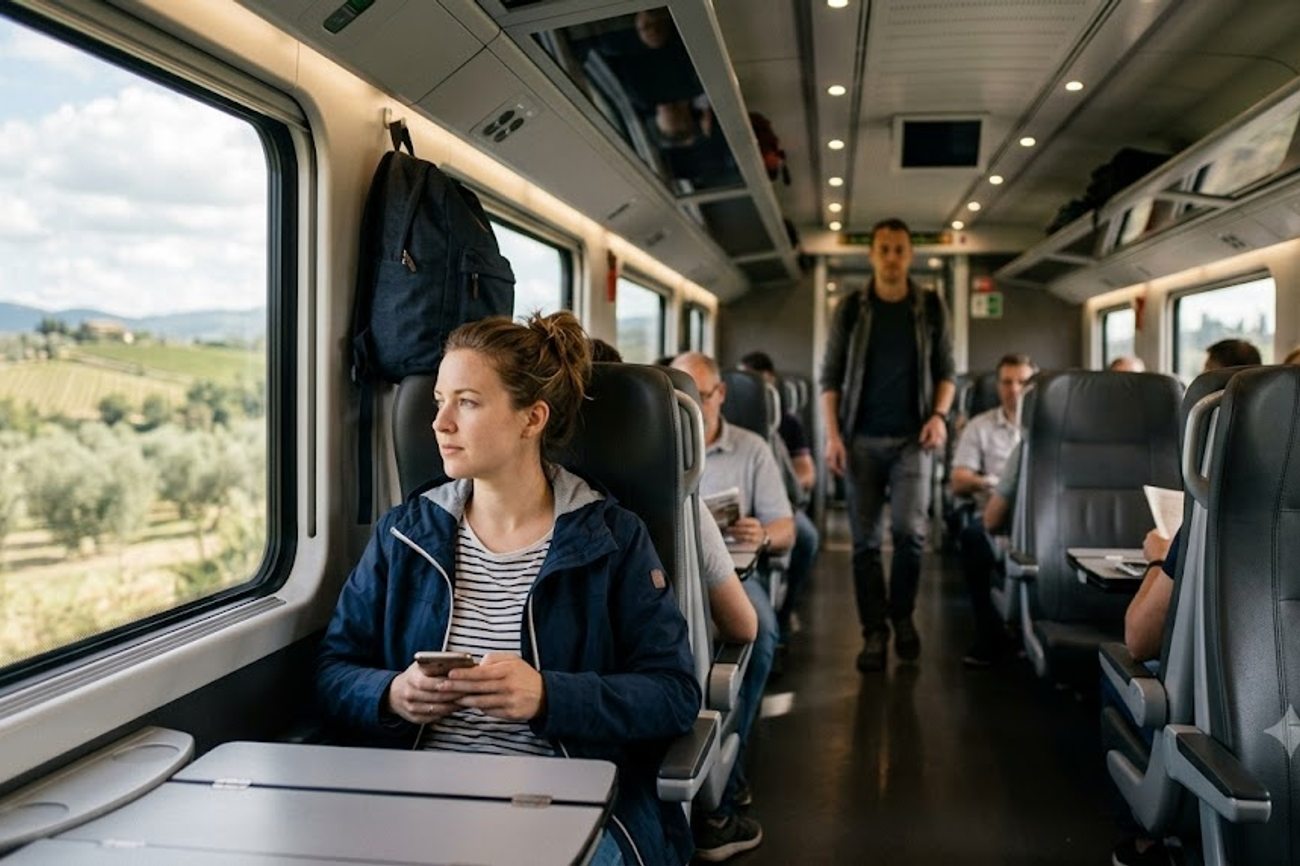
Image generated by AI
A Level 2 travel advisory remains in effect for Italy as of September 10, 2026, reflecting a persistent risk environment characterized by terrorism threats and opportunistic petty crime. While the U.S. Department of State has not escalated the alert level, the updated guidance specifically underscores the vulnerability of foreign nationals within the country's massive rail infrastructure. For the American traveler, this designation signifies a requirement for "Increased Caution," positioning Italy below the more severe "Reconsider Travel" or "Do Not Travel" classifications.
The Mechanics of the September Advisory Update
The update issued on September 10, 2026, functions less as a warning of new dangers and more as a reaffirmation of existing risks. By maintaining the Level 2 status—the same designation held during the previous advisory dated May 23, 2025—Washington is signaling that the security environment in Italy has reached a plateau of predictable risk. The primary driver for this rating remains the formal risk indicator of terrorism, a systemic concern that affects high-visibility Western targets.
However, the operational focus of the update shifts toward the daily logistical realities of tourism: petty crime. The State Department explicitly identifies public transportation, specifically the rail network, as a primary zone for purse snatching, pickpocketing, and vehicle break-ins. This is not an indictment of the safety of the trains themselves, but rather a warning about the "crimes of opportunity" that flourish in crowded transit hubs. When millions of tourists converge on a few key nodes, the density creates an ideal environment for professional theft rings.
Rail Infrastructure and the Scale of Exposure
The tension between safety warnings and traveler behavior is highlighted by the sheer volume of passengers utilizing the Italian rail system. The network is the circulatory system of Italian tourism, managed primarily by Trenitalia and the private operator Italo. The efficiency of these services—such as the three-hour transit between Milan and Rome—encourages a high-density travel pattern that inherently increases the risk of petty theft.
According to data from FS Italiane reported on August 1, the summer 2026 season saw a massive surge in demand, with more than 33 million passengers opting for Trenitalia. This volume is distributed across a complex hierarchy of services, from the elite high-speed Frecciarossa lines to regional trains serving the periphery.
Italian Rail Capacity and Reach (Summer 2026)
| Rail Indicator | Official 2026 Figure |
|---|---|
| Total Summer Trenitalia Travellers | > 33 Million |
| Daily Frecciarossa Connections | > 270 |
| Frecciarossa Destinations | > 150 |
| Intercity/Intercity Notte Connections | 126 |
| Total Regional Destinations | > 1,800 |
| Specific Regional Tourism Destinations | > 500 |
The demand was not limited to the "Big Six" cities (Rome, Milan, Naples, Florence, Bologna, and Venice). Significant flows were recorded toward Adriatic hubs such as Rimini, Riccione, Pescara, Foggia, Brindisi, Lecce, and Taranto, as well as mountain destinations like Bolzano and coastal regions in Campania and Calabria.
Macro-Tourism Trends and Economic Pressure
The security concerns are unfolding against a backdrop of aggressive growth in Italy's visitor economy. Data from ISTAT (Istituto Nazionale di Statistica) reveals a market that is becoming increasingly dependent on international arrivals, which in turn increases the profile of the "foreign target" for petty criminals.
In the second quarter of 2026, Italy recorded nearly 47 million arrivals and nearly 148 million overnight stays. While total arrivals dipped slightly by 0.8%, the duration of stays increased, with overnight stays rising 3.9% compared to the same period in 2025. The international component is the primary engine of this growth; foreign visitors accounted for 61.6% of all overnight stays in Q2, with foreign tourist nights growing 4.6% year-on-year.
The momentum began in the first quarter of 2026, where arrivals hit 23 million (up 4.2%) and overnight stays reached 71.6 million (up 7.5%). Most strikingly, foreign overnight stays surged by 12.3% compared to the first quarter of 2025. This trend culminated in the peak summer months of June, July, and August, where the Ministry of Tourism reported 72.4 million arrivals and over 276 million overnight stays—a 2% overall increase in tourism flows.
Expert Analysis: The "Density Trap" of High-Speed Rail
From a logistical and security perspective, the U.S. State Department's focus on rail is a response to the "Density Trap." High-speed rail, while a miracle of efficiency, concentrates thousands of high-value targets (tourists with passports and electronics) into confined spaces—train carriages and station platforms—at predictable intervals.
Travelers are encouraged to remain vigilant and secure their belongings while navigating Italy's extensive rail network. For the most current safety guidelines and travel alerts, passengers should consult the official U.S. Department of State travel advisories.
For travelers booking these routes, the direct consequence is a heightened risk profile during the "transition phase" of the journey. The risk is highest not during the transit itself, but during boarding and disembarking at major hubs. When 33 million people utilize a system, the sheer statistical probability of theft increases, regardless of the overall safety of the country.
The pricing pressure and demand for these tickets mean that trains are often operating at maximum capacity. Overcrowded carriages limit a traveler's ability to monitor their luggage or maintain personal space, which is exactly what opportunistic thieves exploit. The shift toward regional tourism (serving over 500 specific tourism locations) also means that travelers are moving from high-security high-speed hubs to smaller, less-monitored regional stations, creating a fragmented security experience.
Key Takeaways
- Stable Alert Level: Italy remains at Level 2 (Exercise Increased Caution) as of September 10, 2026, with no escalation from the May 2025 advisory.
- Targeted Risks: The primary security concerns are terrorism and opportunistic petty crime, specifically pickpocketing and purse snatching on public transit.
- Massive Volume: Over 33 million passengers used Trenitalia in Summer 2026, creating high-density environments in hubs like Rome, Milan, and Venice.
- International Growth: Foreign visitors now drive the majority of the market, accounting for 61.6% of overnight stays in Q2 2026.
- Infrastructure Reach: The rail network is vast, with over 1,800 regional destinations, meaning security vigilance must extend beyond major city centers.
FAQ: Italy Rail Safety 2026
Is it safe for Americans to use trains in Italy in 2026? Yes. The U.S. Department of State considers train travel safe and recommends no travel restrictions, though it advises "Increased Caution" (Level 2) due to petty crime and terrorism risks.
Which Italian cities have the highest rail traffic? The highest demand is concentrated in Rome, Milan, Naples, Florence, Bologna, and Venice, though Adriatic coastal towns and Bolzano are also major hubs.
How can I prevent pickpocketing on Trenitalia or Italo trains? Stay alert in crowded stations and carriages. Avoid placing valuables in outer pockets and maintain a firm grip on luggage during boarding and disembarking.
Are regional trains as safe as high-speed trains? Both are considered safe for travel, but regional trains serve over 1,800 destinations with varying levels of crowd control, making situational awareness essential.
The intersection of record-breaking tourism volumes and static security warnings suggests that while Italy is safe, the burden of vigilance has shifted entirely to the passenger.
Tags: Trenitalia, U.S. Department of State, Italy Travel Advisory 2026, ISTAT, Italian Rail Security, Frecciarossa
Related Travel Guides
- Saudi Arabia Teams Up with UAE and More as Most Captivating Cities of Middle East Come Alive for the Ultimate Train Travel Escape in Q4
- California High-Speed Rail Enters New Oversight Phase After Travel Expense Audit
- Indian Railways Prepares Second Sleeper Vande Bharat Express on Delhi-Varanasi Corridor for Overnight High-Speed Travel
This article is for informational purposes. Flight routes, passenger regulations, visa rules, and transit advisories are subject to change by airlines and aviation authorities. Readers are advised to verify schedules and travel documentation with relevant carriers and border agencies before departure.
Related Stories
Amtrak Expands Loyalty Reach With Bilt Partnership Bringing Housing-Based Rewards to Rail Travellers
The World’s Most Beautiful Train Journeys Revealed: Australia’s Ghan Takes Top Spot in 2026 Index