
Guinea-Bissau's Bijagós Archipelago Expands Marine Turtle and Saltwater Hippo Expedition Tourism
Guinea-Bissau's UNESCO-listed 88-island Bijagós Archipelago is pioneering expedition eco-tourism, featuring Orango's saltwater hippos and Poilão's green turtles.

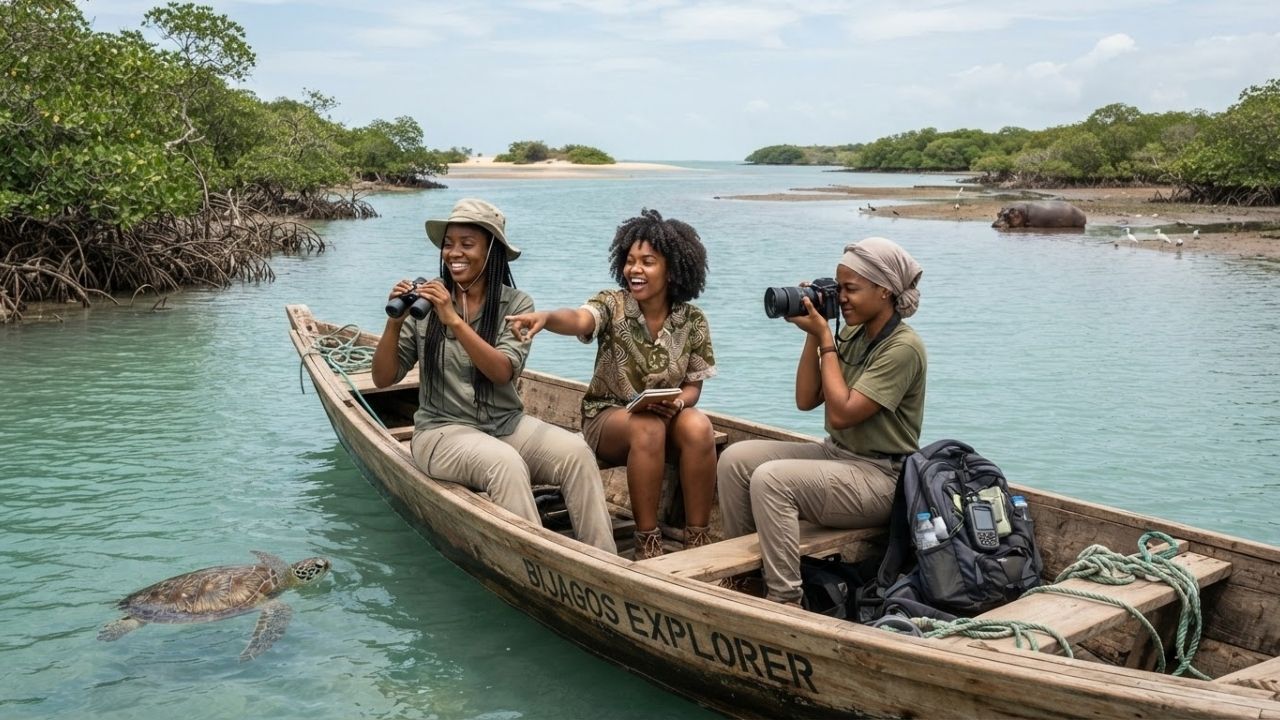
Image generated by AI
Guinea-Bissau’s Bijagós Archipelago is attracting global attention from eco-travelers and marine researchers. Comprising 88 islands inscribed as a UNESCO World Heritage property, the region is developing boutique expedition circuits centered around saltwater-adapted hippopotamuses in Orango National Park and green sea turtle nesting on Poilão Island.
UNESCO World Heritage Recognition and Orango's Marine Hippopotamuses
[BISSAU, Guinea-Bissau] — Located off the Atlantic coast of West Africa, the Bijagós Archipelago is recognized by UNESCO as the only active deltaic archipelago on Africa’s Atlantic coastline. Designated as the "Coastal and Marine Ecosystems of the Bijagós Archipelago – Omatí Minhô" World Heritage property and the broader Bolama-Bijagós Biosphere Reserve, the 88-island cluster features extensive mangroves, intertidal mudflats, and shallow sea channels.
A major highlight for expedition travelers is Orango National Park. Encompassing five main islands and surrounding islets, the park protects the world's only herd of saltwater-adapted hippopotamuses.
According to UNESCO wildlife documentation, these hippos have adapted to spend long periods swimming and foraging in ocean saltwater and coastal mangrove channels. Guided boat excursions allow small groups of expedition travelers to observe these marine hippos alongside West African manatees, crocodiles, sea turtles, and migratory shorebirds.
Poilão Island: Africa's Premier Green Sea Turtle Nesting Ground
The southern sector of the archipelago features another major ecological landmark within the João Vieira and Poilão Marine National Park.
Poilão Island is internationally recognized as one of Africa's most significant nesting sites for green sea turtles (Chelonia mydas). Scientific surveys indicate that Poilão accounts for approximately 90 percent of all green turtle nests recorded within the marine national park:
- Breeding Seasonality: Green sea turtles lay eggs throughout the rainy season, with nesting activity continuing into the dry months.
- Peak Hatching Window: Peak turtle hatching occurs around October and November at Poilão Island, attracting specialized conservation expeditions between October and January.
- Threatened Species Protection: Beyond green turtles, the surrounding marine protected area supports leatherback turtles, manatees, humpback dolphins, sharks, and sawfish.
Community Conservation and Boutique Expedition Logistics
Unlike traditional mass resort travel destinations elsewhere in West Africa, tourism across the Bijagós Archipelago is structured around low-impact, boat-based expedition circuits.
The destination incorporates indigenous community management into its conservation model. For example, the Urok Islands Community Marine Protected Area relies on local islander governance and traditional ecological knowledge to regulate fishing zones and protect mangrove estuaries.
Tour operators utilize small expedition vessels, boutique eco-lodges, and guided Zodiac trips to transport visitors between islands, ensuring that tourism revenues directly support island communities and park ranger patrols.
The table below summarizes the key marine protected areas, featured wildlife, and conservation travel highlights across the Bijagós Archipelago:
| Marine Protected Area | Island Coverage & Status | Featured Wildlife & Ecosystem | Expedition Travel Highlights |
|---|---|---|---|
| Orango National Park | 5 Main Islands & Islets / Core Reserve | World's only saltwater-adapted hippos, manatees | Guided boat safaris through mangrove estuaries |
| João Vieira & Poilão Park | Poilão Island & Southern Islets | Green sea turtles (90% of park nests), leatherbacks | October–November peak turtle hatching expeditions |
| Urok Islands Community MPA | Urok Island Cluster / Community Managed | Intertidal mudflats, migratory birds, manatees | Indigenous eco-tours & community conservation |
| Bolama-Bijagós Reserve | 88 Islands / UNESCO World Heritage | Sharks, rays, dolphins, mangroves & sandbanks | Multi-island expedition cruises & nature photography |
Why This Matters for Passengers and Eco-Expedition Travelers
For wildlife enthusiasts and expedition travelers, the Bijagós Archipelago provides an authentic eco-tourism destination in West Africa. Instead of crowded beach resorts, visitors experience remote island biodiversity—watching saltwater hippos swim through coastal mangroves in Orango or observing green sea turtle hatching on Poilão Island under strict conservation guidance. By supporting community-managed marine parks and expedition eco-lodges, travelers actively contribute to protecting West Africa’s only active deltaic archipelago.
Frequently Asked Questions
What makes the hippopotamuses in Orango National Park unique?
The hippopotamuses in Orango National Park are unique because they are the only hippos in the world adapted to living, swimming, and foraging almost permanently in ocean saltwater and coastal mangrove channels.
When is the best time to witness green sea turtle hatching on Poilão Island?
Peak green sea turtle hatching on Poilão Island occurs in October and November, with conservation-focused expedition tours operating primarily between October and January.
How many islands make up the UNESCO-inscribed Bijagós Archipelago?
The Bijagós Archipelago consists of 88 islands off the Atlantic coast of Guinea-Bissau, recognized as a UNESCO World Heritage property and Biosphere Reserve.
Related Travel Guides
Guinea-Bissau Travel Advisory and Bijagós Ferry Guide
West Africa Expedition Cruises and Wildlife Safari Guide
10 Best UNESCO Marine Biosphere Reserves in Africa, According to Reddit
Disclaimer
This article is for informational and educational purposes only. It does not constitute legal, financial, or professional advice. While we strive to provide accurate and up-to-date information, travel policies, regulations, and conditions change rapidly. Always verify information with official sources before making travel decisions. Nomad Lawyer makes no representations about the accuracy, reliability, completeness, or suitability of the information provided. Readers should consult qualified professionals for advice specific to their circumstances. The views expressed in this article are those of the author and do not necessarily reflect the views of Nomad Lawyer.
Raushan Kumar
Founder & Lead Developer
Full-stack developer with 11+ years of experience and a passionate traveller. Raushan built Nomad Lawyer from the ground up with a vision to create the best travel and law experience on the web.
Learn more about our team →