Bolivia Emerges as a Global Corporate Incentive Powerhouse: Inside the Shift from Sterile Ballrooms to Andean Singularity

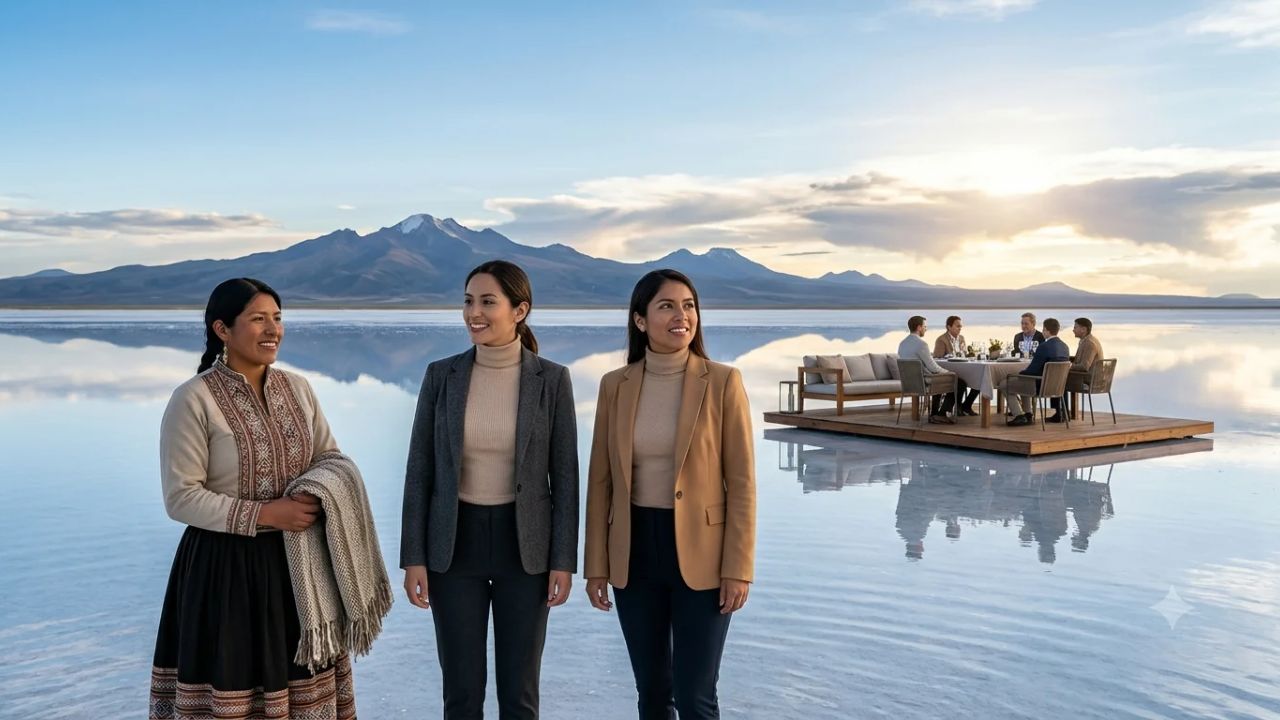
LA PAZ, November 4, 2026 — Prompted by a global corporate rebellion against sterile hotel ballrooms, generic executive gift boxes, and homogenized urban retreats, multinational enterprises are staging an unprecedented pivot toward the high-altitude wilderness and indigenous civilizations of Bolivia. In the evolving international meetings, incentives, conferences, and exhibitions (MICE) sector, corporate leadership teams are discarding predictable metropolitan gatherings in favor of extraordinary geographic sectors that foster authentic human connection, intellectual humility, and profound personal inspiration. Rather than calculating executive rewards through the lens of imported luxury goods or identical five-star chain amenities, modern organizations are actively seeking unfiltered environments capable of leaving permanent impressions on top-performing personnel.
Bolivia has emerged as the premier frontier for this corporate travel evolution. Positioned at the geographic center of South America, the landlocked Andean republic offers a landscape where ancient pre-Columbian history converges with stark natural grandeur. From private banquets staged across the infinite mirror of the Salar de Uyuni to strategic leadership symposiums in the historic white-walled city of Sucre and biodiversity expeditions deep within Madidi National Park, the country provides corporate planners with a unique canvas. By pairing competitive daily expenditure rates with extraordinary purchasing power, Bolivia demonstrates that high-impact corporate retreats do not require manufactured exclusivity, but flourish when anchored in genuine cultural authenticity and environmental stewardship.
========================================================================================
BOLIVIA CORPORATE & INCENTIVE TRAVEL MACROECONOMIC BENCHMARKS (2026)
========================================================================================
  [ANNUAL INBOUND ARRIVALS]  --> 1.15 Million International Visitors (+16% YoY Growth)
  [GDP CONTRIBUTION]         --> 5.5% Direct and Indirect Share of National Economy
  [EMPLOYMENT FOOTPRINT]     --> 300,000+ Sustainable Jobs across Urban & Rural Sectors
  [TOTAL TOURISM RECEIPTS]   --> $739.9 Million Annual Foreign Exchange Revenue
  [PER-TRAVELER SPEND]       --> $50–$70 Average Daily Spend | $645 Average Trip Total
  [PRIMARY FEEDER MARKETS]   --> Peru (351K), Argentina (286K), Brazil, Chile, US (60K)
========================================================================================
Strategic Key Indicators for Bolivia's Corporate Travel Emergence
- Macroeconomic Growth Engine: Tourism activities generate 5.5% of national GDP, sustaining more than 300,000 jobs and generating $739.9 million in annual foreign exchange receipts.
- Competitive Budget Deployment: With average daily visitor expenditures ranging from $50 to $70, corporate event budgets achieve unmatched purchasing power, allowing planners to commission bespoke private expeditions without exceeding fiscal limits.
- The Salar de Uyuni Visual Climax: Spanning over 10,000 square kilometers, the salt flat commands peak seasonal visitation during the southern summer wet season (December to February), when the famous "mirror effect" transforms the landscape into an extraordinary open-air amphitheater.
- Rigorous ESG Alignment: Over 72% of multinational corporations mandate certified carbon tracking for corporate retreats, driving corporate partnerships with community-managed conservation reserves like Madidi National Park.
- Bleisure Travel Expansion: Approximately 58% of corporate visitors extend their business trips by an additional three to five days to independently explore pre-Inca monuments, high-altitude vineyards, and Amazonian tributaries.
The Macroeconomic Transformation of Bolivian Tourism: GDP, Receipts, and Jobs
The ascension of Bolivia onto the global corporate travel stage is supported by solid macroeconomic recovery indicators. According to official data from the Vice Ministry of Tourism, the nation recorded 1.15 million international arrivals over the past twelve months, representing a 16% annual increase that confirms steady progress toward pre-pandemic operational baselines. This revitalization has translated into $739.9 million in international tourism receipts, providing vital foreign exchange and reinforcing national balance-of-payments stability.
The sector's economic footprint is deeply woven into the domestic economy. Accounting for 5.5% of national gross domestic product, tourism directly and indirectly supports more than 300,000 livelihoods across diverse urban centers, transport cooperatives, and indigenous rural hamlets. For international corporate travel planners, this broad economic base provides operational stability. Corporate expenditures directed into local hotel networks, licensed four-wheel-drive transport fleets, and indigenous artisan associations support municipal infrastructure and community health, ensuring that executive delegations receive dependable, high-quality service throughout their itineraries.
INBOUND SOURCE MARKET DISTRIBUTION & ARRIVAL DYNAMICS (BOLIVIA 2026)
| Entity / Facility | Delays | Cancellations | Details |
|---|---|---|---|
| Feeder Market | Annual Arrivals (Pax) | Market Share (%) | Primary Transit Mode |
| Peru | 351,190 | 30.5% | Overland & Aviation |
| Argentina | 286,776 | 24.9% | Overland & Rail |
| Brazil | 98,400 | 8.6% | Direct Aviation |
| Chile | 82,150 | 7.1% | Overland Altiplano |
| United States | 60,493 | 5.3% | Long-Haul Aviation |
| Rest of World | 271,991 | 23.6% | Connecting Flights |
Geographic source market analysis highlights strong regional integration alongside expanding long-haul interest. Neighboring Peru leads national arrivals with 351,190 visitors, followed closely by Argentina with 286,776 travelers. Brazil and Chile represent significant regional contributors, while the United States accounts for 60,493 arrivals, serving as the primary source of high-spending corporate incentive groups and scientific delegations.
The expenditure economics of visiting Bolivia are exceptionally favorable for corporate budgets. While mid-range travelers record daily expenditures between $50 and $70, and average total trip spending hovers around $645, corporate event planners operate with substantial financial flexibility. A budget that would barely cover basic hotel banquet rooms in Chicago, London, or Frankfurt can secure private chartered domestic flights, exclusive buyout privileges at salt-brick architectural lodges, private traditional music ensembles, and bespoke fine dining crafted by top culinary artists on the open Altiplano. This favorable cost structure allows companies to achieve maximum motivational and emotional impact while maintaining responsible fiscal discipline.
The Philosophy of Executive Novelty: Trading Material Perks for Shared Transcendence
The shift toward unconventional destinations reflects an intellectual evolution within corporate human capital management. Over recent decades, the incentive travel industry suffered from creeping predictability. Top-performing sales leaders, executive committees, and high-value corporate clients were routinely rewarded with identical perks: luxury beach resorts, generic gift bags filled with branded electronic gadgets, and standard steakhouse banquets. Organizational psychologists noted that these material rewards generated diminishing motivational returns; participants quickly forgot the objects, while the retreats failed to foster genuine strategic alignment or team cohesion.
========================================================================================
THE PARADIGM SHIFT IN GLOBAL INCENTIVE RETREAT ARCHITECTURE
========================================================================================
  [LEGACY CORPORATE MODEL]   --> Predictable Luxury Resorts & Branded Consumer Gifts
  [MODERN ANDEAN PARADIGM]   --> Shared Wilderness Transcendence & Authentic Storytelling
  [MOTIVATIONAL IMPACT]      --> Temporary Material Novelty vs. Permanent Personal Growth
  [LEADERSHIP COHESION]      --> Superficial Small Talk vs. Deep Experiential Bonding
  [CULTURAL IMMERSION]       --> Segregated Resort Enclaves vs. Direct Community Engagement
========================================================================================
Modern workforce demographics prioritize authentic narratives, personal growth, and emotional resonance. Professionals increasingly measure the value of a corporate journey by its capacity to surprise, challenge, and inspire them. When an enterprise brings its leadership cohort out of comfortable urban routines and places them beneath the starry night skies of the Bolivian Altiplano, the traditional corporate hierarchy softens. Standing together across vast, ancient landscapes, executives converse with greater vulnerability and honesty, cultivating interpersonal trust that cannot be manufactured within standard corporate environments.
This philosophical transition has altered how corporate programs are designed. Event planners are deliberately replacing rigid, slide-heavy agendas with unhurried experiential modules. Activities focus on cultural learning, shared physical milestones, and meaningful dialogue with local communities. By aligning corporate objectives with the raw majesty and cultural dignity of Bolivia, organizations create lasting memories that inspire long-term loyalty and creative problem-solving long after employees return to their home offices.
Salar de Uyuni: Staging High-Level Summits on the World’s Greatest Mirror
The centerpiece of Bolivia’s corporate incentive appeal is the Salar de Uyuni. Spanning more than 10,000 square kilometers at an elevation of 3,656 meters above sea level in the department of Potosí, this vast salt flat represents the largest geological formation of its kind on earth. Formed through the prehistoric transformation of several giant lakes, the salar contains an estimated ten billion tons of mineral salt, set beneath an endless expanse of clear blue Andean sky.
SALAR DE UYUNI: SEASONAL DYNAMICS FOR CORPORATE INCENTIVE PROGRAMMING
| Entity / Route | Metrics | Operational Status |
|---|---|---|
| Meteorological Season | Environmental Characteristics | Specialized Corporate Use |
| Wet Season | Thin layer of standing water | Spectacular "mirror effect" |
| (December–February) | transforms flats into giant glass | photography; sunset banquets; |
| reflecting sky and clouds | private acoustic performances | |
| Dry Season | Brilliant white salt surface | Overland 4WD expeditions; |
| (May–November) | forms geometric octagonal crust; | mountain biking; accessing |
| unrestricted vehicle navigation | Isla Incahuasi giant cacti |
The seasonal rhythms of the salar dictate unique corporate event possibilities. During the southern summer wet season—which registers peak arrivals in December (112,634 visitors), February (111,652 visitors), and January (110,027 visitors)—nearby mountain rainfall covers the salt crust with a thin layer of calm water. This creates the world-famous "mirror effect," where the distinction between earth and sky completely dissolves, producing a surreal visual landscape where clouds appear beneath one’s feet.
Corporate event designers utilize this natural environment to craft remarkable experiences. Private dining pavilions constructed from temporary timber platforms and geodesic glass domes are erected directly on the salt flats. Executive delegations, dressed in tailored alpaca wool outerwear, sit down to candlelit dinners featuring native Andean cuisine as the sun sets over the horizon, painting the landscape in vibrant pink, violet, and gold hues. Away from light pollution, the nighttime sky reveals the Milky Way in vivid detail, providing an extraordinary backdrop for strategic alignment sessions and milestone celebrations.
During the dry winter months, the hardened salt crust forms geometric octagonal patterns, allowing four-wheel-drive convoys to travel freely across the expanse. Corporate groups journey to Isla Incahuasi, an ancient volcanic outcrop rising out of the salt flats covered in giant cacti (Echinopsis atacamensis) that have stood for centuries. Accommodations near the salt flats have evolved to offer high levels of comfort. Pioneer properties like the Palacio de Sal and Luna Salada are constructed entirely from blocks of compressed mineral salt—including walls, dining tables, and bed platforms—paired with radiant heating, panoramic viewing lounges, and luxury spas utilizing native mineral salts for therapeutic treatments.
Urban Sophistication and High-Altitude Engineering: La Paz and Sucre
Beyond the wilderness of Uyuni, Bolivia’s urban centers provide corporate groups with a striking study in contrasts, where colonial architecture and ancient indigenous traditions sit alongside modern urban engineering.
========================================================================================
URBAN CONTRASTS: LA PAZ & SUCRE CORPORATE EVENT ENVIRONMENTS
========================================================================================
  [LA PAZ: ADMINISTRATIVE HUB] --> 3,640m Elevation | Mi Teleférico Urban Transit
                                  High-Altitude Fine Dining (Gustu) & Witches' Market
  [SUCRE: CONSTITUTIONAL CORE] --> 2,810m Elevation | UNESCO White Colonial Architecture
                                  Tranquil Monastic Courtyards for High-Level Think-Tanks
  [TRANSIT INTEGRATION]        --> Scheduled commercial flights linking El Alto to Sucre
========================================================================================
La Paz, the world’s highest administrative capital, sits within a dramatic mountain canyon framed by the snow-capped peak of Mount Illimani, which rises to 6,438 meters. The city’s geography has inspired innovative transportation solutions, most notably the Mi Teleférico urban transit network. Comprising ten interconnected cable car lines spanning over thirty kilometers, the system is the longest and highest urban cable car network on the planet. For corporate delegations, traveling in smooth, silent electric cabins high above the rooftops offers both a lesson in clean urban mobility and panoramic views of the city below.
In historical neighborhoods like the historic center and the Bohemian district of Sopocachi, corporate travelers explore the Witches' Market (Mercado de las Brujas), where indigenous Aymara herbalists and healers (yatiris) sell medicinal botanicals, protective amulets, and dried herbs used in ancient blessing rituals. These encounters offer genuine insight into a society that honors ancestral wisdom while participating fully in the modern economy.
In contrast to the energetic pace of La Paz, the constitutional capital of Sucre provides an atmosphere of tranquility and classical elegance. Inscribed as a UNESCO World Heritage Site in 1991, Sucre is celebrated as the "White City" (La Ciudad Blanca) due to its well-preserved whitewashed colonial facades, red-tiled roofs, and tranquil monastic courtyards. Situated at a comfortable elevation of 2,810 meters, Sucre enjoys a pleasant, sunny climate year-round.
Venues like the historic Casa de la Libertad—where Bolivia’s declaration of independence was signed in 1825—and the cloistered courtyards of the San Felipe Neri monastery provide serene settings for high-level executive roundtables, academic symposiums, and board retreats. The city's walkable historical center allows participants to stroll safely between meeting venues, boutique heritage hotels, and artisan chocolate shops, creating a relaxed, contemplative environment that encourages strategic reflection.
Pre-Columbian Wisdom and Archaeological Leadership: Tiwanaku and Lake Titicaca
Modern executive development programs increasingly emphasize long-term vision, organizational adaptability, and civilizational legacy. Within Bolivia, corporate groups can examine these concepts firsthand at landmark archaeological and cultural sites that predate the Inca Empire.
ARCHAEOLOGICAL PILLARS: CIVILIZATIONAL LESSONS FOR CORPORATE LEADERSHIP
| Entity / Route | Metrics | Operational Status |
|---|---|---|
| Monument / Site | Historical & Structural Context | Executive Leadership Themes |
| Tiwanaku Ruins | Monumental spiritual and civic | Architectural durability, |
| (Altiplano Plateau) | center flourishing 500–1000 AD; | astronomical alignment, and |
| Akapana pyramid, Sun Gate | long-term civilizational scope | |
| Isla del Sol | Sacred island on Lake Titicaca; | Mythological origins, human |
| (Lake Titicaca) | birthplace of Inca creation lore; | renewal, community-managed |
| ancient agricultural terraces | heritage conservation |
Located seventy kilometers west of La Paz on the Altiplano, the archaeological ruins of Tiwanaku attract between 80,000 and 100,000 annual visitors. Serving as the ceremonial and political capital of a powerful empire that flourished between 500 and 1000 AD, Tiwanaku represents an extraordinary achievement in megalithic stonework and astronomical engineering. Guided by expert archaeological historians, corporate leadership teams explore the Kalasasaya temple enclosure, the semi-subterranean temple adorned with carved stone heads, and the famous Gate of the Sun (Puerta del Sol), carved from a single massive block of volcanic andesite weighing over ten tons.
Corporate educators use the sophisticated stone joinery and hydraulic drainage systems of Tiwanaku to spark executive discussions on organizational durability, systemic planning, and resilience in the face of environmental change. Walking among monuments that have stood for more than a millennium encourages business leaders to look beyond quarterly financial reports and consider the long-term impact of their decisions.
A short drive north brings travelers to the shores of Lake Titicaca, the highest navigable lake in the world at 3,812 meters. Covering over 8,300 square kilometers across the border between Bolivia and Peru, the deep blue waters of the lake have nurtured Andean civilizations for millennia. Corporate groups board private catamarans in the lakeside town of Copacabana to reach Isla del Sol (Island of the Sun), an island drawing approximately 25,000 annual visitors that holds deep significance in Andean mythology as the birthplace of the sun and the founding Inca rulers, Manco Cápac and Mama Ocllo.
On Isla del Sol, motorized vehicles are absent. Visitors walk along ancient stone pathways that climb past terraced hillsides farmed continuously since pre-Columbian times. Engaging with indigenous Aymara village elders, participants learn about the traditional Ayni system of mutual communal reciprocity—an ancestral economic philosophy built on the principle that individual prosperity depends on the shared well-being of the entire community. This indigenous worldview provides a fresh perspective for modern business leaders seeking to cultivate collaborative, supportive team cultures.
Regenerative ESG Frameworks: Madidi National Park and Amazonian Conservation
Environmental, Social, and Governance (ESG) compliance has become a central consideration in modern corporate event planning. Recent industry studies indicate that 72% of multinational enterprises mandate strict carbon tracking, waste mitigation, and community-benefit standards for corporate travel programs. In Bolivia, companies can meet these requirements through partnerships with certified regenerative ecotourism initiatives across the Amazon basin.
The primary showcase for this ecological commitment is Madidi National Park, located in the upper Amazon river basin of the department of La Paz. Recognized previously as South America’s Leading Green Destination, Madidi is one of the most biologically diverse protected areas on the planet. Spanning nearly 19,000 square kilometers, the park encompasses an extraordinary elevation gradient that extends from snow-capped Andean peaks at nearly 6,000 meters down to lowland Amazonian tropical rainforests at 180 meters above sea level. This unique topography supports over 1,000 species of birds, 300 species of mammals (including jaguars, giant otters, and spectacled bears), and thousands of rare plant species.
========================================================================================
MADIDI NATIONAL PARK & CHALALÁN: THE REGENERATIVE ESG BLUEPRINT
========================================================================================
  [PROTECTED BIOME]      --> 1.9 Million Hectares spanning Andes to Lowland Amazon
  [BIODIVERSITY METRIC]  --> 11% of All Bird Species on Earth present in one reserve
  [CHALALÁN ECOLODGE]    --> 100% Owned by Indigenous San José de Uchupiamonas
  [COMMUNITY REVENUE]    --> Tourism fees finance village healthcare, solar power & schools
  [CORPORATE ALIGNMENT]  --> Verifiable carbon offsetting and habitat protection credits
========================================================================================
The gateway to Madidi is the riverside town of Rurrenabaque, reachable via a forty-minute flight from La Paz over the glaciated peaks of the Cordillera Real. From Rurrenabaque, corporate groups travel up the Tuichi and Beni rivers in motorized wooden canoes to reach pioneer community-owned eco-lodges, most notably Chalalán Ecolodge.
Constructed on the shores of Lake Chalalán by the indigenous San José de Uchupiamonas community, the lodge was built using traditional Tacana architectural techniques, incorporating sustainably harvested forest timber, bamboo, and woven palm-thatch roofs. The facility operates on solar power, utilizes bio-digestor wastewater treatment systems, and is 100% owned and operated by the indigenous community.
When multinational corporations host executive leadership seminars or small-scale strategy retreats at Chalalán, their travel spending generates direct, measurable conservation outcomes. Tourism revenues fund indigenous forest ranger patrols that protect the surrounding rainforest from illegal timber poachers and gold miners, finance community healthcare clinics, and fund bilingual environmental education for local youth. By integrating Madidi into corporate travel programs, organizations satisfy their institutional ESG mandates while offering executives a profound connection to primary tropical nature.
The High-Altitude Wellness Frontier: Mental Recharge and Altitude Protocols
In demanding corporate environments, senior executives frequently experience prolonged stress, digital fatigue, and professional burnout. Consequently, workforce wellness projections indicate that over 70% of high-end corporate incentive programs now incorporate structured mental wellness and physical restoration elements. In parallel, wellness and burnout recovery drive roughly 45% of specialized corporate incentive bookings globally.
EXECUTIVE WELLNESS & ACCLIMATIZATION PROTOCOLS FOR HIGH-ALTITUDE RETREATS
| Entity / Route | Metrics | Operational Status |
|---|---|---|
| Protocol Dimension | Operational Procedure | Physiological Outcome |
| Gradual Ascent | Land first in Sucre (2,810m) | Allows respiratory and blood |
| Staging | before ascending to La Paz/Uyuni | pressure adaptation to altitude |
| Traditional Herbal | Drinking freshly brewed coca leaf | Mild natural vasodilatation; |
| Infusions | tea (mate de coca) and muña | alleviates headache and nausea |
| Oxygenated Lodging | Utilizing hotel suites equipped | Promotes restful deep sleep |
| Systems | with enriched oxygen systems | and accelerates bodily recovery |
| Hydration & Diet | High electrolyte fluid intake; | Eases digestive metabolic load |
| Planning | light carbohydrate meals initially | during early high-altitude days |
The serene, expansive landscapes of the Altiplano and the tranquil valleys of Sucre provide an ideal setting for executive rejuvenation. Immersed in vast, uncrowded landscapes under crystalline skies, executives find relief from constant digital interruptions. Cognitive psychologists emphasize that exposure to natural, wide-open horizons reduces cortisol levels, improves sleep quality, and restores strategic perspective.
Managing high-altitude travel effectively requires thoughtful planning. Operating at elevations exceeding 3,500 meters in La Paz and Uyuni requires adherence to sensible acclimatization protocols. Experienced corporate travel planners frequently schedule itineraries with a gradual elevation profile, beginning in the lower, temperate city of Sucre (2,810 meters) or the valley city of Cochabamba (2,570 meters) for initial orientation sessions, before ascending to La Paz (3,640 meters) and Uyuni (3,656 meters).
Throughout their journey, guests are introduced to traditional Andean wellness remedies, particularly freshly brewed mate de coca (coca leaf tea) and mate de muña (Andean mint tea). These natural herbal infusions have been used for thousands of years by indigenous mountain travelers to expand bronchial pathways, aid digestion, and prevent altitude sickness (soroche). Leading high-altitude hotels in La Paz and Uyuni also offer oxygen-enriched guest suites and maintain on-call medical professionals, ensuring that all participants remain comfortable and focused throughout their retreat.
Culinary Renaissance: From Gustu to High-Altitude Native Agro-Gastronomy
Culinary experiences have become an influential driver of corporate event success. Contemporary travel research indicates that high-end experiential dining and traditional food culture account for nearly 35% of total leisure and incentive visitor spending across emerging destination markets. In Bolivia, corporate travelers encounter one of the most exciting, biodiversity-driven culinary movements in the Americas.
The catalyst for this gastronomic revolution was the establishment of Gustu in La Paz. Founded in 2013 by Danish culinary entrepreneur Claus Meyer—co-founder of the world-renowned Copenhagen restaurant Noma—Gustu operates under a strict philosophy: 100% of the ingredients utilized in its kitchen must be grown, harvested, or produced within Bolivia.
========================================================================================
ANDEAN AGRO-GASTRONOMY: INDIGENOUS SUPERFOODS IN CONTEMPORARY DINING
========================================================================================
  [ROYAL QUINOA]     --> High-protein grain cultivated exclusively near southern salt flats
  [CHUÑO & TUNTA]    --> Ancestral freeze-dried Andean potatoes preserved via night frosts
  [AMAZONIAN PAICHE] --> Giant predatory river fish sustainably managed by forest tribes
  [HIGH-VALLEY WINE] --> Tarija single-estate Tannat & Singani distilled at 2,000m+
  [WILD HARVESTS]    --> Native Amazonian cacao, wild forest honey, and native tubers
========================================================================================
For corporate delegations, private tasting menus at Gustu provide a culinary journey across the nation's diverse microclimates. Dishes highlight native ingredients that remain unfamiliar to international palates: delicate preparations of Amazonian Paiche (one of the largest freshwater fish in the world), heirloom varieties of Royal Quinoa grown in the mineral-rich soils around Salar de Uyuni, and chuño—native potatoes preserved through a millennia-old freeze-drying process using the freezing night temperatures and intense daytime sun of the Altiplano.
This culinary revival extends into private event dining. On the Salar de Uyuni, event planners work with Bolivian master chefs to orchestrate multi-course field dinners cooked over open flames. Meals are paired with high-altitude wines from the sunlit valleys of Tarija, where vineyards planted above 1,800 meters produce complex, award-winning Tannat and Cabernet Sauvignon, as well as Singani—the national spirit of Bolivia, distilled exclusively from white Muscat of Alexandria grapes grown at high elevations. Sharing these exceptional, place-based meals beneath the stars fosters authentic connection and collaborative energy among corporate teams.
The Digital Spine: AI Logistics and Bleisure Expansion Across Commercial Hubs
Managing complex corporate itineraries across remote Andean terrains requires dependable modern technology. Recent market surveys show that over 65% of international corporate event organizers now use artificial intelligence-driven platforms for predictive venue management, attendee tracking, and itinerary optimization.
As Bolivia modernizes its hospitality and convention infrastructure across urban hubs like La Paz and Santa Cruz de la Sierra, the adoption of intelligent digital platforms has smoothed logistical coordination. Event management software integrates real-time meteorological data to predict cloud cover and optimal photography conditions on the Salar de Uyuni, schedules chartered internal flights with national carriers like BoA (Boliviana de Aviación), and manages dietary preferences across diverse delegations. This digital infrastructure allows corporate planners to deliver complex itineraries with confidence.
THE BLEISURE PHENOMENON IN HIGH-ALTITUDE CORPORATE TRAVEL
| Behavioral Metric | Industry Baseline Standard | Impact Across Bolivia |
|---|---|---|
| Trip Extension Rate | 58% of business travelers extend | Drives off-peak occupancy in |
| journeys for leisure purposes | secondary heritage towns | |
| Average Added Stay | 3 to 5 additional days dedicated | Spreads corporate spending |
| to independent personal travel | into artisan craft markets | |
| Top Extension Hubs | Lake Titicaca, Sucre, Tarija, | Fosters authentic connection |
| Madidi Amazonian eco-lodges | between travelers and locals |
At the same time, the global rise of "bleisure" travel—the practice of extending a professional business trip into personal vacation time—is creating significant economic opportunities across the country. Approximately 58% of business visitors in the region now choose to extend their professional journeys, adding an average of three to five days to explore independently.
Executives attending a strategic conference in La Paz or an incentive retreat in Uyuni frequently book extended stays to hike the scenic trails of the Cordillera Real, sample wines in the sunny Tarija valley, or visit the historic silver mines of Potosí. By accommodating flexible departure schedules, corporate travel managers enhance employee satisfaction while channeling valuable foreign exchange into family-owned guesthouses, neighborhood restaurants, and rural guiding cooperatives.
Comparative Benchmark Table: South American Corporate Incentive Destinations
To illustrate Bolivia’s unique market positioning, the following comparative matrix examines the key operational, experiential, and financial dynamics across leading South American corporate incentive destinations:
SOUTH AMERICAN CORPORATE INCENTIVE BENCHMARKING MATRIX (2026 METRICS)
| Country Metric | Bolivia | Peru | Chile | Colombia |
|---|---|---|---|---|
| Core Signature | Salar de Uyuni & | Machu Picchu & | Atacama Desert & | Cartagena Colonial |
| Setting | Altiplano Mirrors | Sacred Valley | Patagonian Fjords | & Coffee Triangle |
| Primary Appeal | Raw wilderness, | Established luxury | Ultra-luxury design | Vibrant urban |
| Archetype | authentic heritage | trains and resorts | lodges, wine trails | nightlife, history |
| Average Daily | $50 – $70 USD | $140 – $180 USD | $190 – $240 USD | $110 – $140 USD |
| Spend (Baseline) | (High value ROI) | (Mature market) | (Premium price) | (Mid-range yield) |
| Inbound Growth | +16% YoY Rebound | +12% Recovery Rate | +9% Mature Growth | +14% Strong Influx |
| Rate (2025–2026) | (1.15M Arrivals) | (3.2M Arrivals) | (2.4M Arrivals) | (4.1M Arrivals) |
| Environmental & | Community-owned | Concession-based | Private eco-resort | Carbon-neutral |
| ESG Integration | Madidi eco-lodges | trail regulations | conservation models | certified hotels |
| Key Logistical | Altitude acclimati- | Trail permit | Long internal | Urban traffic |
| Consideration | zation required | quotas & advance | flight connections | congestion |
This benchmark data illustrates Bolivia's distinct competitive edge. While Peru and Chile boast well-established luxury infrastructure, they often come with higher price points and crowded iconic attractions. In contrast, Bolivia offers corporate groups genuine seclusion, pristine landscapes, and profound cultural immersion at an exceptional value. The nation provides organizations with the opportunity to host world-class executive experiences that feel rare, authentic, and purposeful.
Practical Field Guide for Corporate Event Planners in Bolivia
For corporate event coordinators and executive assistants planning an incentive program or leadership summit in Bolivia, careful preparation is essential. The following field protocols provide operational guidance for orchestrating a flawless journey:
PRACTICAL FIELD PROTOCOL: PLANNING CORPORATE GATHERINGS IN BOLIVIA
| Category / Entity | Details / Impact |
|---|---|
| Planning Factor | Operational Guidance |
| Optimal Season | Target December through February for the Uyuni "mirror effect"; |
| choose May through September for dry, crisp hiking conditions. | |
| Altitude Staging | Schedule Day 1 and 2 at lower elevations (Sucre or Cochabamba) |
| before ascending to high-altitude sessions in La Paz or Uyuni. | |
| Ground Transport | Partner exclusively with certified four-wheel-drive operators |
| equipped with satellite communications and emergency oxygen kits. | |
| Culinary Planning | Reserve private dining rooms at Gustu or arrange bespoke field |
| catering well in advance; highlight local Andean superfoods. | |
| Community Respect | Obtain customary community permissions before holding group |
| gatherings or filming near sacred indigenous monuments or lakes. |
When contracting ground operators in Uyuni, planners should confirm that vehicles are modern Toyota Land Cruisers or equivalent four-wheel-drive platforms, driven by experienced local guides who understand the shifting terrain of the salt flats. For multi-day retreats, booking private charter flights between La Paz and the Joya Andina Airport in Uyuni minimizes travel time and provides delegates with sweeping aerial views of the Andean mountain spine.
Corporate planners should also incorporate community engagement into their program design. Arranging for local Aymara or Quechua textile weavers to host private workshops—or organizing group participation in local reforestation projects around Lake Titicaca—ensures that the corporate presence delivers meaningful economic benefits to host communities.
The Strategic Roadmap: Defining the Future of Purpose-Driven Business Travel
As Bolivia completes its post-pandemic tourism resurgence, the nation is establishing a new benchmark for the global corporate travel industry. By refusing to compromise its cultural integrity or pave over its natural wonders for mass-market resort developments, the country offers global enterprises something far more valuable: authenticity, inspiration, and genuine human connection.
The path forward requires continued investment in sustainable infrastructure, expanded regional flight connectivity, and dedicated training for local hospitality professionals. By combining ancient Andean heritage with modern corporate requirements, the Commonwealth of Bolivia demonstrates that the ultimate executive journey is not about isolating leaders in sterile luxury, but about placing them within extraordinary landscapes that expand their vision and inspire their work.
Related Travel Guides and Analysis
- Indonesia Pioneers the Global Regenerative Tourism Revolution
- Cambodia Travel Industry Slowdown and Sustainable Recovery Push
- Spain, France, Austria, and Thailand Top Global Winter Tourist Rankings
- Dominica 48th Independence and Creole Heritage Tourism Resilience
- Ultra-Luxury World Cruises Economics and Land Travel Cost Comparison
- Thailand Tourism Slowdown and High-Value Community Travel Strategy
- Tunisia Asian Tourism Expansion and UNESCO Heritage Strategy (2026)
This article is for informational purposes. Flight routes, passenger regulations, visa rules, and transit advisories are subject to change by airlines and aviation authorities. Readers are advised to verify schedules and travel documentation with relevant carriers and border agencies before departure.
Related Stories
Bolivia Emerges as Top Corporate Incentive Destination for High-Impact Executive Retreats in 2026
Indonesia Pioneers the Global Regenerative Tourism Revolution: Inside the High-Yield Shift from Mass Footprint to Ecological Restoration