Guatemala Faces Travel Pressure as Cruise Changes and Flight Disruptions Reshape Tourism Access

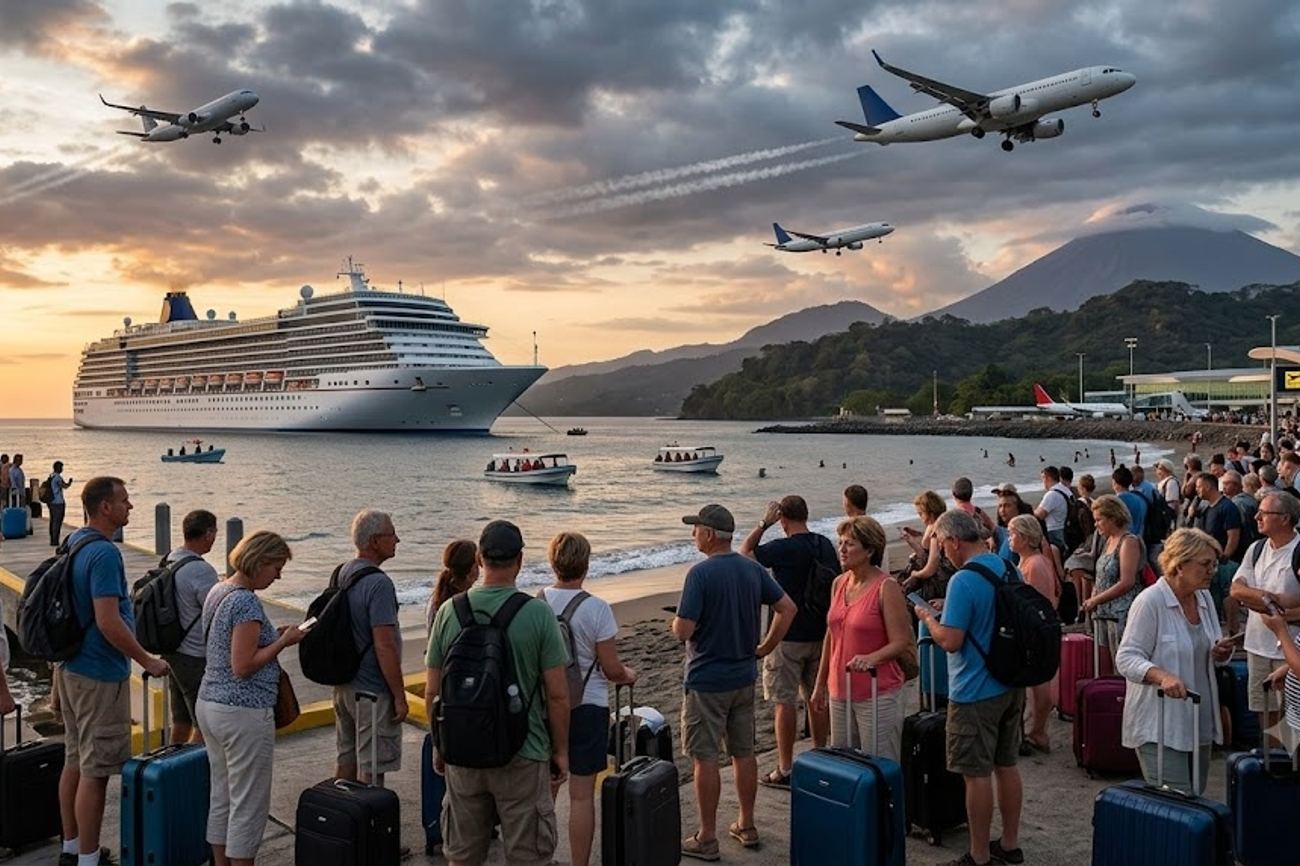
Image generated by AI
Fuel price volatility in the maritime sector has triggered a shift in port call frequency across Central America, with Guatemala now seeing a strategic consolidation of cruise itineraries that favors high-volume hubs over secondary ports. This movement mirrors a broader global trend where cruise operators are prioritizing operational efficiency over destination variety to offset rising marine fuel expenses. When compared to the aggressive expansion seen in the Caribbean basin between 2019 and 2022, the current trajectory in Guatemala signals a transition from "growth at any cost" to "margin-focused routing."
The Guatemala Access Gap in Numbers
The current volatility in Guatemala's tourism arrivals is not a localized failure but a symptom of systemic pressures in the global transport chain. The cruise sector is currently grappling with a direct correlation between marine fuel costs and port selection. As operating expenses climb, cruise lines are implementing route consolidation, which systematically removes smaller or secondary ports from their itineraries to reduce fuel burn and turnaround times.
In the aviation sector, the pressure is equally quantifiable. International airspace restrictions—specifically those affecting corridors between European hubs and Central America—have forced long-haul carriers to adopt diverted flight paths. These longer trajectories result in a measurable increase in fuel consumption per seat-kilometer. For the traveler, this translates into a "distance tax," where the increased cost of fuel and crew hours is passed directly to the consumer via higher ticket prices for flights landing in Guatemala City.
Data from the International Air Transport Association (IATA) indicates that airspace inefficiencies can add significant costs to long-haul operations, a trend that is currently impacting the viability of direct or traditional routing into the Northern Triangle of Central America.
Maritime and Aviation Comparative Context
To understand the shift, we must compare the current operational environment against the benchmarks of the previous recovery cycle. The industry is moving away from the "exploration phase" of the post-pandemic era and into a "cost-optimization phase."
The following table illustrates the shift in operational priorities affecting Guatemala’s connectivity:
| Metric | Pre-Volatility Benchmark | Current Trend (2024-2025) | Impact on Guatemala |
|---|---|---|---|
| Cruise Routing | Diversified; high frequency of secondary port calls | Consolidated; focus on high-demand hubs | Reduced arrivals at smaller coastal sites |
| Flight Trajectories | Optimized via traditional air corridors | Diverted due to airspace restrictions | Increased flight duration & fuel burn |
| Pricing Model | Competitive recovery pricing | Cost-plus pricing (fuel surcharges) | Higher airfares to Guatemala City |
| Visitor Profile | High volume of short-stay cruise guests | Shift toward independent, long-stay travelers | Increased demand for boutique lodging |
This shift is part of a regional pattern. According to UN Tourism (formerly UNWTO), destinations that rely heavily on a single transit mode—such as cruise-dependent coastal towns—are seeing higher volatility in their GDP contributions compared to those with diversified entry points. Guatemala is currently attempting to pivot its market share from the "transit passenger" (cruise/short-stay) to the "destination traveler" (independent/long-stay).
Practical Traveler Advisory and Strategic Insights
For the individual traveler, the data suggests that the era of "easy access" via budget-friendly long-haul flights and frequent cruise stops in Guatemala is temporarily suspended. The increased operating costs for airlines and cruise lines mean that spontaneity is now a financial liability.
Booking Strategy for Q3 and Q4: If you are planning a visit to Guatemala City or the highlands, booking 12-16 weeks in advance is now a necessity. Because airlines are adjusting schedules to account for longer flight paths and airspace restrictions, seat capacity on optimized routes is tightening. Waiting until the 4-8 week window will likely result in a 15-25% price premium due to the reduced availability of fuel-efficient routing.
Cruise Planning Advice: Travelers relying on cruise ships to visit Guatemala should verify their specific port of call. With the trend toward route consolidation, "secondary ports" are being cut. If your primary goal is to visit Maya archaeological sites or volcanic landscapes, do not rely on a cruise itinerary. Instead, pivot to an independent land-based trip. The data shows that while cruise arrivals are fluctuating, the demand for nature and adventure tourism remains stable, meaning hotel availability in the interior may tighten as travelers shift away from ships.
Projections for Central American Connectivity
Looking toward 2026, the trajectory suggests a permanent decoupling of "luxury transit" from "cultural exploration." We expect to see a further decline in the number of cruise ships visiting secondary Guatemalan ports as operators move toward larger, more efficient vessels that require deeper harbors and higher passenger volumes to justify the fuel cost.
Guatemala's tourism industry is facing significant challenges due to changes in cruise ship itineraries and flight disruptions, prompting the Guatemalan Tourism Institute to reassess its marketing strategies and promote alternative destinations. The institute is working closely with local stakeholders to develop new packages and offers that cater to the evolving needs of travelers. As a result, tourists can expect a more diverse range of experiences and activities to choose from.
In aviation, the reliance on European hubs will likely shift. We anticipate an increase in "triangular routing," where travelers fly into larger regional hubs (such as Panama City or Mexico City) and utilize regional carriers for the final leg into Guatemala City. This strategy allows long-haul carriers to optimize their fuel burn over the Atlantic while pushing the "last-mile" cost onto shorter, more efficient regional flights.
The resilience of Guatemala's tourism will depend on its ability to attract the "High-Value, Low-Impact" traveler. By focusing on sustainable travel initiatives and diversifying its product offering—moving from mass-market cruise tourism to specialized adventure and cultural segments—the country can hedge against the volatility of global fuel markets.
FAQ: Guatemala Travel Trends 2025
Will flight prices to Guatemala City continue to rise? Yes, as long as international airspace restrictions remain in place and fuel costs stay volatile. The longer flight paths required to avoid restricted zones increase operational costs, which are typically passed to the passenger through higher fares.
Is it still a good time to book a cruise to Guatemala? It depends on your goal. If you seek a general overview, cruises are fine. However, because operators are consolidating routes and skipping secondary ports, you may miss key cultural sites. Independent travel is currently more reliable for specific sightseeing.
Which airlines are best for avoiding these disruptions? Look for carriers with strong regional hubs in Central America. Utilizing a hub-and-spoke model (flying into a major regional center and then taking a short-haul flight) is currently more cost-effective than seeking direct long-haul routes.
Are the Maya sites and volcanic regions still accessible? Absolutely. While the method of arriving in the country is changing due to transport costs, the internal infrastructure for cultural and adventure tourism remains strong and is actually seeing a shift toward longer-stay independent visitors.
The data is clear: the path to Guatemala is narrowing, but the destination remains a high-value asset for the strategic traveler.
Related Travel Guides
- Malawi Follows Chad and Others as New $4.6M Conservation Drive Protects Africa’s Wildlife Tourism Assets
- Bahrain Joins Qatar and Other Gulf Destinations as Airlines Rebuild Capacity After 2026 Travel Disruption
- Peru’s Los Órganos Offers Idyllic Beaches, Whale Watching And A Peaceful Alternative To Hawaii
This article is for informational purposes. Flight routes, passenger regulations, visa rules, and transit advisories are subject to change by airlines and aviation authorities. Readers are advised to verify schedules and travel documentation with relevant carriers and border agencies before departure.
Related Stories

Phuket Luxury Tourism Surge 2026: High-Net-Worth Arrivals and New Aviation Routes

Mexico Ecotourism Market Projected to Hit USD 9.29 Billion by 2034 as Green Travel Surges