
Greece Projects Extended 2026 Tourism Season with 19 Percent October Flight Capacity Surge
Greece's scheduled international flight capacity grows in March-October 2026, driven by a 19 percent surge in October seats and strong UK and German markets.

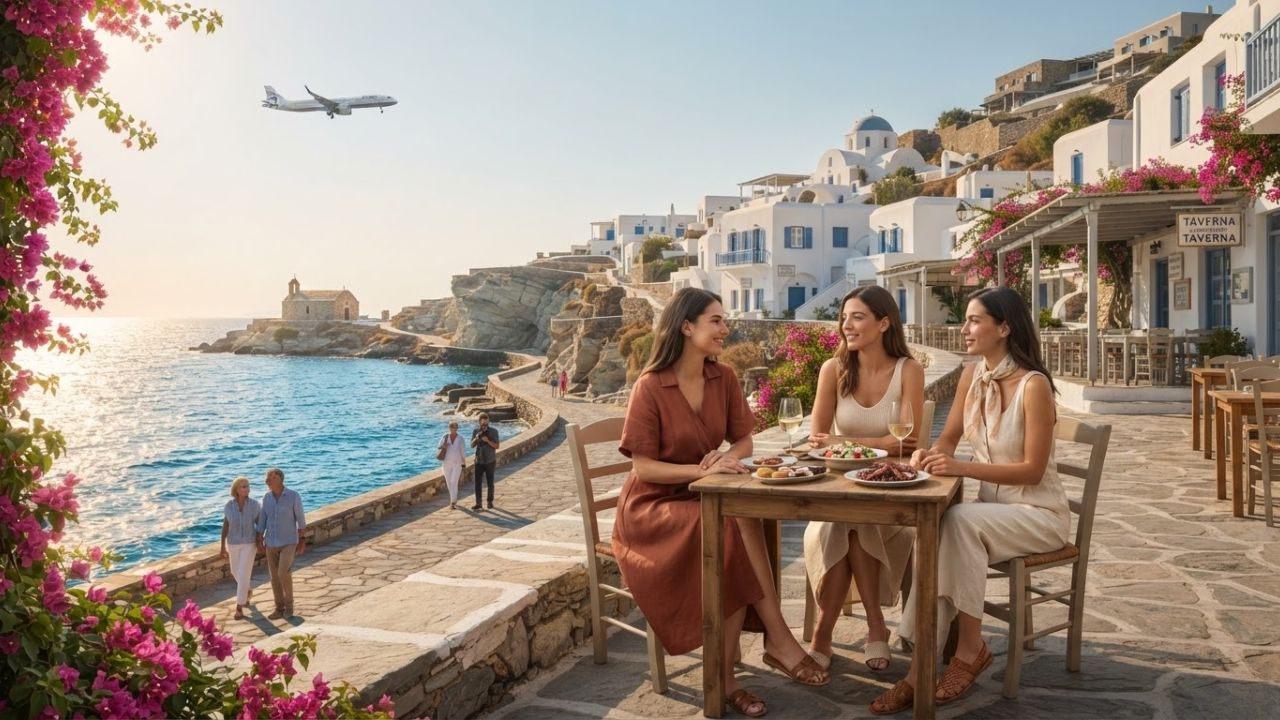
Image generated by AI
Greece is set to record an extended tourism season in 2026, driven by a significant expansion of scheduled international flight capacity deep into the autumn. Official schedules show approximately 14.1 million international seats from August through October 2026, representing a 9 percent year-on-year increase, highlighted by a 19 percent capacity surge in October.
The aviation market in southern Europe is observing a structural shift in seasonal operations, with carriers extending flight schedules deeper into the autumn to accommodate growing demand for travel outside peak summer weeks. In Greece, which relies heavily on air connectivity to link international source markets with Athens and its numerous island gateways, this trend is reshaping the traditional travel calendar. According to the INSETE Airdata Tracker, airlines have scheduled approximately 30.66 million international inbound seats for the entire March-to-October 2026 summer season, representing a 7.6 percent year-on-year increase. A primary milestone in this capacity growth is the scheduling of approximately 14.1 million seats between August and October 2026, representing a 9 percent increase compared to the corresponding period in 2025.
For the traveler, the real impact of this capacity expansion is the availability of more flight choices, broader departure-market coverage, and more competitive airfares during the traditional shoulder season. By maintaining flight frequencies into autumn, airlines are enabling tourists to plan late-season holidays without facing the limited access that historically followed the summer peak.
Autumn Momentum in the Seasonal Flight Calendar
The expansion of flight capacity is distributed across the late-season months, preventing a sudden drop in access after August:
- August Capacity: Remains the busiest month of the year with approximately 5.70 million scheduled inbound seats, representing a 6.1 percent annual increase.
- September Capacity: Sustains momentum with approximately 4.81 million seats, a 5.8 percent increase compared to September 2025.
- October capacity: Represents the most significant growth rate, reaching approximately 3.60 million scheduled seats. This represents a 19 percent year-on-year surge, far exceeding the growth rates of August and September.
Although October capacity is lower in absolute numbers than August, the 19 percent increase represents a key shift in how airlines view the late-autumn market. This capacity is supported by actual traffic benchmarks from the first half of 2026, where international arrivals at Greek airports grew by 5 percent year-on-year, and passenger traffic through Athens International Airport rose by 4.2 percent.
Major Source Markets and Geographic Diversification
The United Kingdom and Germany remain the primary source markets driving Greece's international aviation pipeline, though scheduled capacity is growing across multiple regions:
- United Kingdom: Remains the largest market with approximately 6.17 million scheduled seats for the summer season, representing a 9.3 percent annual increase. For the August-October window, UK-origin seats rose by 10.5 percent to 2.82 million.
- Germany: Remains the second-largest market with approximately 5.20 million scheduled seats, showing a 6.6 percent annual increase. Late-season capacity from Germany grew by 10.4 percent to 2.51 million seats.
- Regional Markets: Italy recorded a 7.9 percent increase in capacity, while the Netherlands saw a 6.9 percent increase. France registered a 2.4 percent capacity growth, and scheduled seats from the United States grew by 2.1 percent. The 2.1 percent growth in scheduled capacity from the United States represents an essential revenue pipeline. American tourists generally book longer itineraries and spend more per capita on premium accommodations, dining, and cultural excursions. Major US carriers, including Delta Air Lines, United Airlines, and American Airlines, have extended their seasonal non-stop routes from key hubs like New York (JFK), Newark (EWR), and Chicago (ORD) to Athens International Airport. This sustained connectivity facilitates high-value cultural tourism, helping local operators maintain business volumes deep into the autumn season.
This broader geographic distribution increases Greece's tourism resilience, reducing reliance on a single outbound economy and attracting diverse traveler profiles ranging from short-haul holidaymakers to high-value long-haul visitors.
Ecotourism and Community Support in Greece
Spreading visitor arrivals across a longer period is essential to reducing the environmental pressure on Greece's delicate island ecosystems, which face resource scarcity during peak summer weeks. For the traveler, the real impact is a sustainable travel model that minimizes local ecological footprints. Visiting in autumn allows travelers to avoid the intense summer heat (which often exceeds 40°C in July and August) and heavy tourist crowds, while supporting local businesses that rely on seasonal employment.
Travelers can practice sustainable tourism by utilizing the extensive regional public ferry network to travel between islands instead of private motor transport. Staying in locally owned guest houses, dining at family-run tavernas, and purchasing regional olive oil and honey directly from rural agricultural cooperatives ensures that tourism spending directly supports independent resident families and protects the surrounding rural terrains. Furthermore, travelers are urged to minimize their environmental footprints by using eco-certified tour operators, conserving water on arid Cycladic islands where water systems are under extreme strain, and opting for off-season travel which reduces the daily pressure on local sewage and waste systems. Supporting local fishermen and agricultural workers by buying fresh fish, herbs, and traditional cheeses directly from town squares ensures that tourism revenues are distributed equitably across the resident communities, protecting the local way of life.
Destination Specialist Local Insider Tips
To help you plan late-season journeys to Greece safely and comfortably, regional specialists suggest the following local tips:
- Lock In Shoulder Season Bookings Early: With October capacity rising by 19 percent, take advantage of lower lodging rates and mild weather by booking flights and accommodations for early autumn.
- Savor Traditional Moussaka and Fresh Octopus: Try local culinary specialties. Sample authentic Moussaka (layered eggplant and minced meat bake) or fresh grilled octopus at a local seaside taverna.
- Utilize Public Ferries for Island Hopping: Avoid private charter boats and domestic short-haul flights. The regional passenger ferry network offers reliable, cheap, and environmentally friendly transport between mainland ports like Piraeus and Cycladic island destinations, providing a authentic slow-travel sea voyage experience.
- Observe Etiquette at Historic Monasteries: When visiting landmarks like Meteora, dress modestly (shoulders and knees covered) and avoid taking photos of the resident monks or inner sanctuaries.
- Target the Late Autumn Swimming Window: Plan your beach visits in September or October. The Aegean Sea remains warm from the summer sun, with daytime temperatures averaging a comfortable 20°C to 26°C.
- Explore the Neoclassical Heritage of Syros: Visit the island of Syros, the administrative capital of the Cyclades, to explore its historic town of Hermoupolis, featuring beautiful neoclassical buildings and local theater traditions.
Long-Term Outlook for Greece's Aviation Infrastructure
The long-term outlook for the Greek visitor economy and regional civil aviation development remains highly positive, supported by the integration of regional airport networks under the supervision of the Hellenic Civil Aviation Authority. By distributing visitor demand across a longer period, operators can optimize infrastructure usage.
As airlines continue to maintain capacity into late autumn, the collaboration between airport operators, municipal planners, and local businesses will remain essential. This balanced approach protects Greece's unique island environments, supports seasonal employment, and ensures that the country's aviation-driven tourism sector remains a sustainable and resilient choice for future generations of global travelers.
Related Travel Guides
Disclaimer
This article is for informational and educational purposes only. It does not constitute legal, financial, or professional advice. While we strive to provide accurate and up-to-date information, travel policies, regulations, and conditions change rapidly. Always verify information with official sources before making travel decisions. Nomad Lawyer makes no representations about the accuracy, reliability, completeness, or suitability of the information provided. Readers should consult qualified professionals for advice specific to their circumstances. The views expressed in this article are those of the author and do not necessarily reflect the views of Nomad Lawyer.
Kunal K Choudhary
Co-Founder & Contributor
A passionate traveller and tech enthusiast. Kunal contributes to the vision and growth of Nomad Lawyer, bringing fresh perspectives and driving the community forward.
Learn more about our team →