
Grand Canyon Flash Floods 2026: Infrastructure Collapse and South Rim Hotel Suspensions
Severe flash flooding in Bright Angel Canyon has caused two deaths, destroyed critical footbridges, and forced the suspension of all overnight park lodging due to waterline failure.

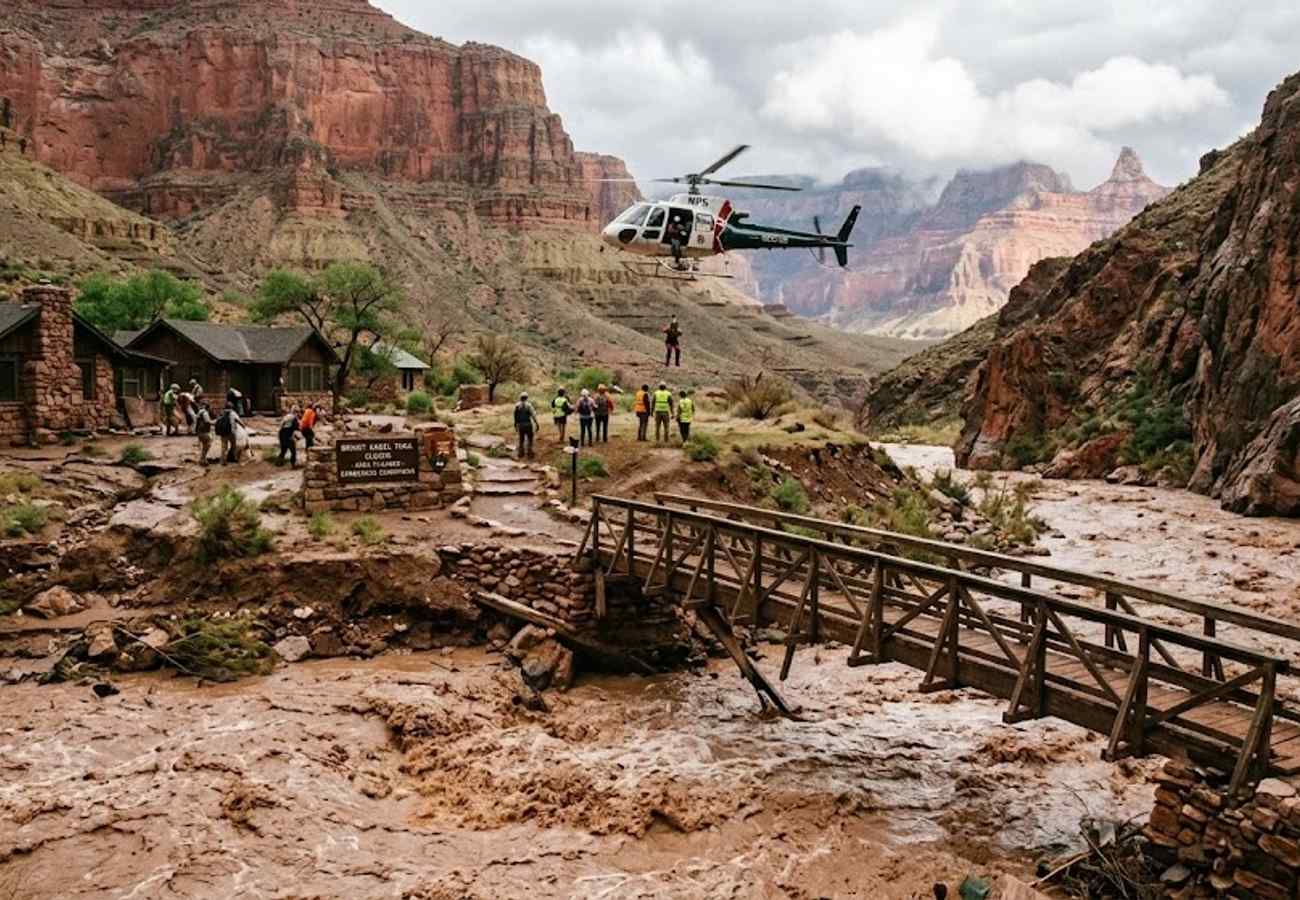
Image generated by AI
Severe flash flooding has triggered a tourism emergency at Grand Canyon National Park, resulting in two confirmed deaths and the evacuation of approximately 80 visitors. The disaster has crippled inner-canyon infrastructure and forced the immediate suspension of all overnight accommodations operated by park concessioners on the South Rim.
Inner Canyon Infrastructure Collapse and Emergency Response
On August 29, 2026, at approximately 2:30 p.m., intense rainfall triggered powerful flash floods within Bright Angel Canyon and the Phantom Ranch area. The National Park Service (NPS) reports that the rapidly moving water devastated the region's pedestrian infrastructure, destroying nearly all footbridges crossing Bright Angel Creek.
The emergency response required a multi-agency effort involving the NPS and the Arizona Department of Public Safety. Due to the destruction of trails and bridges, helicopters became the primary means of extraction. By the morning of August 30, 62 people were evacuated from Phantom Ranch and the lower North Kaibab Trail, with total rescues eventually reaching approximately 80 individuals. Currently, two deaths are confirmed, and one person remains missing.
Transit and Facility Status Specifications
The flooding has created a tiered disruption across the park. While the South Rim remains open for day-use sightseeing, the inner canyon is largely inaccessible, and essential utilities have failed.
| Tourism Area | Current Status | Impact on Travellers |
|---|---|---|
| Phantom Ranch | Closed | All overnight stays and visitor services suspended |
| Bright Angel Campground | Closed | Backcountry camping permits voided |
| North Kaibab Trail | Closed | Primary inner-canyon hiking access severed |
| Bright Angel Canyon | Critical Damage | Footbridges destroyed; infrastructure unstable |
| Transcanyon Waterline | Non-operational | Stage 4 water restrictions in effect |
| South Rim Lodging | Suspended | El Tovar, Bright Angel, Maswik, Yavapai, Trailer Village closed |
| South Rim Day Visits | Accessible | Sightseeing permitted with restrictions |
| Tusayan Accommodation | Operational | Primary alternative for displaced tourists |
South Rim Lodging and Water Crisis
The most significant systemic failure is the destruction of the Transcanyon Waterline. This critical artery provides the water necessary for the park's hospitality operations. Consequently, as of August 31, all overnight guest accommodations operated by park concessioners inside the national park have been suspended.
This suspension affects the park's premier properties, including:
- El Tovar
- Bright Angel Lodge
- Maswik Lodge
- Yavapai Lodge
- Trailer Village
- Phantom Ranch
The NPS has implemented Stage 4 water restrictions. Under these mandates, only dry camping is permitted, and most campground water spigots are deactivated. While the Grand Canyon Clinic, Post Office, and various food and beverage outlets remain open, they may operate on reduced schedules.
Traveler Logistics Guide: Navigating the Crisis
From a ground-level perspective, the best way to navigate this disruption is to decouple your "sightseeing" plans from your "lodging" plans. The park is not closed, but the infrastructure for staying is broken.
Booking and Accommodation If you hold a reservation at any of the suspended South Rim lodges, do not travel to the park expecting to check in. Immediately pivot your booking to Tusayan, Arizona. Tusayan is located just outside the park boundary and remains unaffected by the waterline failure.
Hiking and Safety Protocols Avoid all attempts to enter the inner canyon via the North Kaibab Trail. In the Arizona monsoon season (summer through early autumn), flash floods can occur with zero local warning. A storm miles away can send a wall of water down a narrow canyon. If you are in a watershed affected by previous wildfires, the risk is amplified; burned landscapes lack vegetation to slow runoff, leading to faster, more lethal debris flows of mud and rock.
Essential Checklist for Current Visitors:
- Water: Carry double the recommended water supply; do not rely on park spigots.
- Verification: Check the official National Park Service (NPS) alerts page every 6 hours.
- Flexibility: Have a secondary destination planned if South Rim access becomes further restricted.
Infrastructure Impact Assessment
This event underscores the extreme vulnerability of "single-point-of-failure" infrastructure in remote tourism hubs. The Transcanyon Waterline is a lifeline; its failure creates a domino effect that transforms a localized flood in the inner canyon into a regional economic shutdown on the South Rim.
The destruction of the footbridges in Bright Angel Canyon will likely result in long-term closures of the most popular hiking corridors. Given the remote nature of the inner canyon—where materials must be flown in or hauled by mule—repair timelines will be significantly longer than standard urban infrastructure projects.
Travelers are urged to prioritize safety over itinerary adherence during the 2026 monsoon season.
Related Travel Guides
Disclaimer
This article is for informational and educational purposes only. It does not constitute legal, financial, or professional advice. While we strive to provide accurate and up-to-date information, travel policies, regulations, and conditions change rapidly. Always verify information with official sources before making travel decisions. Nomad Lawyer makes no representations about the accuracy, reliability, completeness, or suitability of the information provided. Readers should consult qualified professionals for advice specific to their circumstances. The views expressed in this article are those of the author and do not necessarily reflect the views of Nomad Lawyer.
Raushan Kumar
Founder & Lead Developer
Full-stack developer with 11+ years of experience and a passionate traveller. Raushan built Nomad Lawyer from the ground up with a vision to create the best travel and law experience on the web.
Learn more about our team →