
Germany’s Rostock Launches Siemens Signaling To Redefine Digital Rail Networks in 2026
Germany’s Rostock Launches Siemens Signaling To Redefine Digital Rail Networks in 2026

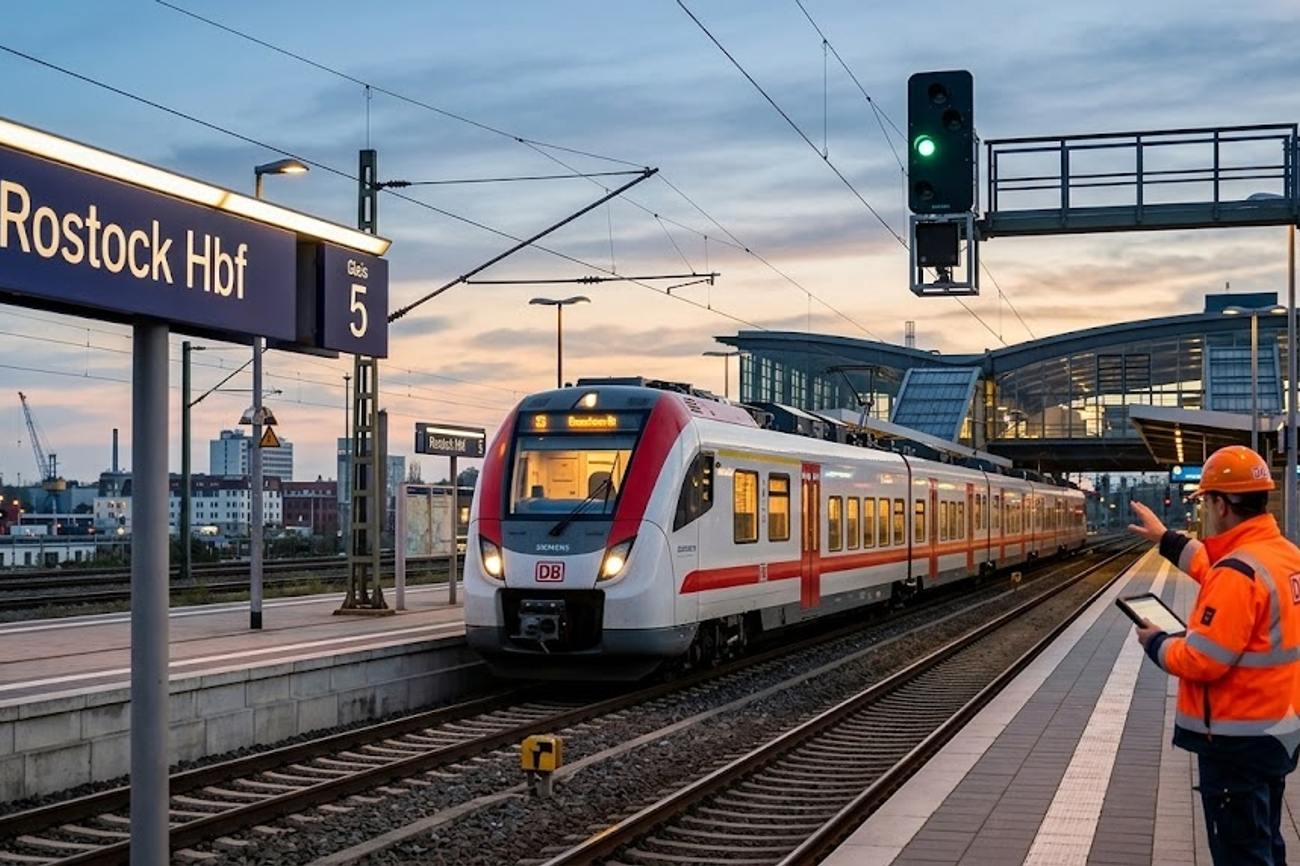
Image generated by AI
The future of urban mobility in Germany is currently being decided not by the speed of the trains, but by the invisible code running in a tunnel beneath Rostock Central Station. While most travelers focus on the sleek exteriors of modern rail, the real revolution is the shift toward "software-defined" signaling, where the safety of thousands of passengers is managed by commercial IT servers rather than massive, proprietary hardware arrays.
The Digital Shift in Rostock’s Rail Arteries
Rostock is currently serving as the primary living laboratory for a fundamental change in how cities move. In September 2026, Siemens Mobility and Rostocker Straßenbahn AG (RSAG) initiated the deployment of Signaling X, a system that decouples safety-critical software from the physical hardware. For the residents and visitors navigating the city, this transition is felt most acutely on tram lines 2, 3, 5, and 6, where signaling adjustments are currently being integrated into the daily flow of traffic.
Historically, rail networks functioned like analog clocks—complex, rigid, and requiring specialized parts that took years to replace. If a signaling component failed, it often required a total infrastructure overhaul. The Rostock trial represents a pivot toward a cloud-like architecture for transit. By utilizing the DS3 platform, the city is moving toward a model where updates are pushed via software, allowing the network to evolve without tearing up the tracks. This approach transforms the rail network into a flexible digital asset rather than a static piece of industrial machinery.
What Makes Rostock’s Transit Experiment Unique
What separates the Rostock project from previous iterations of rail tech is the environment. While this technology was previously vetted at the Singapore Rail Test Center in 2025, the move to Germany places it in a high-pressure, operational urban setting. The trial is concentrated beneath Rostock Central Station, a critical bottleneck where multiple tram routes converge in a tunnel section.
The technical achievement here is the attainment of SIL 4—the Safety Integrity Level 4. Under CENELEC railway safety standards, SIL 4 is the most stringent reliability requirement possible. Achieving this on standard commercial IT hardware, rather than specialized railway-grade equipment, is a paradigm shift. It proves that the highest levels of safety do not require proprietary, expensive hardware silos. For the global transit industry, this means that the "invisible backbone" of the city—the systems that prevent collisions and manage frequency—can now be scaled and updated with the same agility as a corporate IT network.
Visitor Insider Tips
When visiting Rostock during this period of digital transformation, understanding the local rhythm is key to avoiding the friction of urban construction.
Navigating the Trams: If you are staying near the city center, be aware that lines 2, 3, 5, and 6 are the primary corridors for the Signaling X testing. While service remains operational, these lines are more prone to temporary signaling-related adjustments. To avoid delays, use the official Deutsche Bahn app or local RSAG updates for real-time tracking.
Timing Your Transit: To avoid the heaviest commuter crowds around the Central Station tunnel, aim to move between 10:00 and 14:00. The midday lull provides a much smoother experience on the trams as the system handles lower volumes of traffic.
Local Base of Operations: For those wanting to experience the city’s blend of maritime history and modern tech, base yourself in the Altstadt (Old Town). It allows you to walk to many attractions, reducing your reliance on the tram network during peak testing windows.
Regional Flavities: While navigating the city, seek out the local fish markets near the Warnow river. Try the smoked eel or fresh Baltic herring, which are regional staples that offer a sensory contrast to the high-tech rail projects happening downtown.
Cultural and Environmental Context
The push toward software-defined rail is not merely a technical preference; it is an environmental and economic necessity. European cities are facing a dual crisis: aging infrastructure and an urgent mandate to move passengers away from private cars to meet climate goals. Traditional rail upgrades are often prohibitively expensive and disruptive, involving years of closed stations and diverted routes.
By shifting to a software-centric model, Rostock is testing a way to increase network capacity and frequency without the carbon footprint of massive new construction projects. This "invisible" upgrade allows for more trains per hour and better reliability, making public transit a more viable competitor to the automobile. However, this transition also introduces new cultural challenges, specifically regarding cybersecurity. As rail systems move from isolated hardware to IT-based servers, the protection of urban infrastructure against digital threats becomes as important as the physical maintenance of the tracks. This shift reflects a broader European trend of integrating UNESCO recognized urban heritage sites with 21st-century smart-city technology, ensuring that historic city centers remain functional and accessible.
FAQ: Visiting Rostock 2026
What is the best time to visit Rostock? The summer months (June to August) offer the best weather for exploring the Baltic coast, though late September provides a quieter experience with beautiful autumn colors and fewer crowds at the Central Station.
How do I get to Rostock from Berlin? The most efficient route is via the Deutsche Bahn regional or IC trains, typically taking about 2 to 3 hours. Booking through the official DB portal is recommended for the most accurate scheduling.
Is the tram system safe during the signaling trials? Yes. The Signaling X system operates under SIL 4 safety standards, the highest possible reliability level. The trials are designed to enhance safety and efficiency, not compromise them.
Is Rostock safe for solo travelers? Rostock is generally very safe for solo travelers. The city is walkable, well-lit, and the local population is accustomed to international visitors and digital nomads.
The next great leap in travel won't be a faster engine, but a smarter line of code.
Tags: Rostock-Transit-2026, Siemens-Signaling-X, Germany-Rail-Tech, RSAG-Urban-Mobility, Baltic-Coast-Travel
Related Travel Guides
Disclaimer
This article is for informational and educational purposes only. It does not constitute legal, financial, or professional advice. While we strive to provide accurate and up-to-date information, travel policies, regulations, and conditions change rapidly. Always verify information with official sources before making travel decisions. Nomad Lawyer makes no representations about the accuracy, reliability, completeness, or suitability of the information provided. Readers should consult qualified professionals for advice specific to their circumstances. The views expressed in this article are those of the author and do not necessarily reflect the views of Nomad Lawyer.
Kunal K Choudhary
Co-Founder & Contributor
A passionate traveller and tech enthusiast. Kunal contributes to the vision and growth of Nomad Lawyer, bringing fresh perspectives and driving the community forward.
Learn more about our team →