Germany Caravanning Tourism Hits Record 76 Million Overnights and €23 Billion Market Revenue

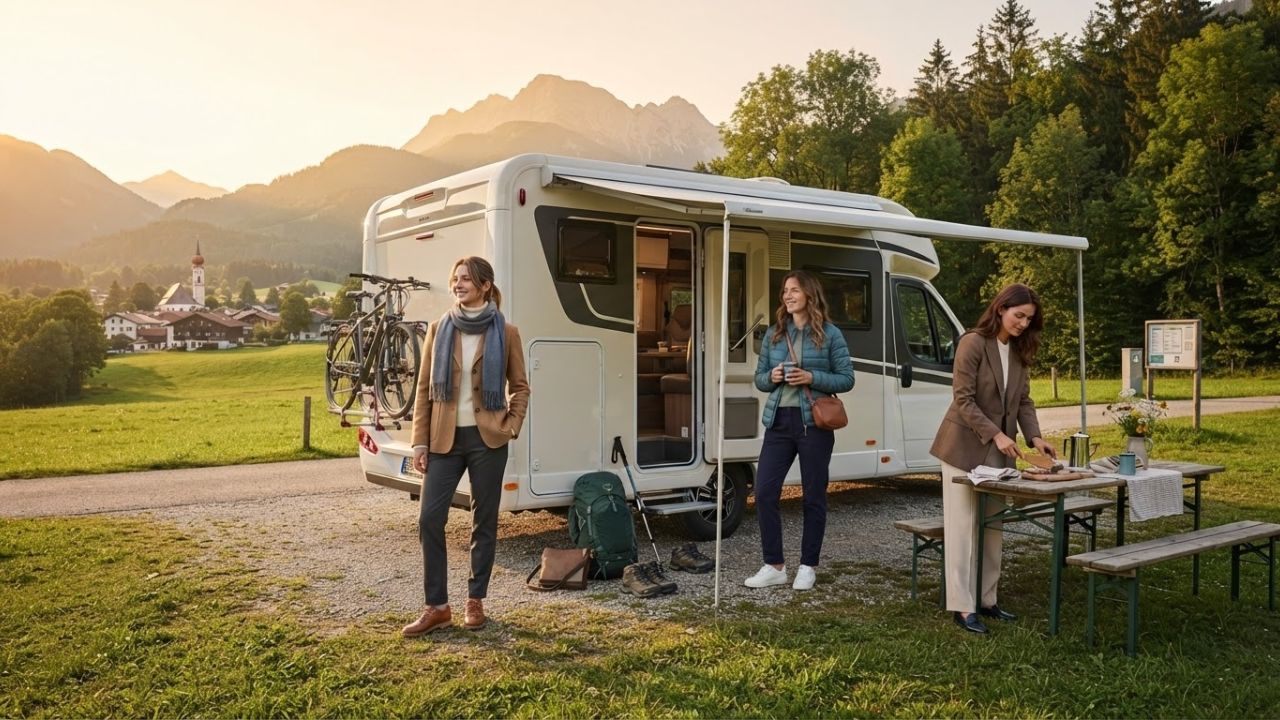
Germany’s outdoor leisure travel sector has achieved historic milestones, recording 76 million total overnight stays in campsites and motorhome pitches while generating nearly €23 billion in economic revenue. Driven by middle-class domestic travelers and international road-trippers seeking flexible, nature-centric vacations, the caravanning movement has expanded site capacity by 80% over the last two decades, decentralizing visitor footfall away from congested urban centers and nourishing regional economies across Nordrhein-Westfalen, Bayern, and Baden-Württemberg.
[BERLIN, Germany] — Official metrics released by German tourism and caravanning industry associations confirm an extraordinary expansion in outdoor mobile holidays. During 2025, registered campsites across Germany logged 56 million overnight stays, while designated motorhome pitches outside conventional camping grounds recorded an additional 20 million overnight stays—bringing total annual mobile overnight stays to a record 76 million.
This volume of self-contained road travel generated nearly €23 billion in national economic revenue throughout 2025, up from €21 billion in 2024 and marking an 80% surge compared to 2015 baseline figures. By shifting visitor traffic away from crowded metropolitan centers toward rural municipalities, Germany’s caravanning boom is reshaping European tourism management and establishing a model for sustainable regional travel.
| Industry Metric | Value / Financial Benchmark |
|---|---|
| Campsite Overnight Stays (2025) | 56 Million Overnights |
| Motorhome Pitch Overnights (2025) | 20 Million Overnights |
| Total Mobile Overnight Volume | 76 Million Overnights Combined |
| National Economic Revenues (2025) | €23.0 Billion (up from €21.0B in 2024) |
| Revenue Growth vs 2015 Baseline | +80% Expansion over 10-Year Period |
| Pitch Capacity Expansion | +80% More Pitches than 20 Years Ago |
| New Leisure Registrations (Jan-Jul 2026) | 63,329 Total New Registrations |
| Motorhome Registrations (2026) | 50,118 Units |
| Caravan Registrations (2026) | 13,211 Units |
| Ecotourism Market Valuation (2026) | USD $21.6 Billion (Projected $40.1B by 2036) |
Economic Contributions: €23 Billion Revenue and Regional Capital Distribution
The €23 billion generated by mobile holidaymakers represents a major financial pillar for Germany's regional commerce. Unlike urban hotel tourism, where visitor spend remains concentrated in metropolitan centers, caravanning revenue flows directly into rural communities, benefiting local gastronomy, independent bakeries, artisanal craft markets, fuel stations, and regional repair workshops.
Operational spending by leisure vehicle owners provides consistent year-round funding to local businesses. On average, campervan and motorhome owners spend between €4,000 and €7,000 annually on routine operational costs and vehicle maintenance (excluding long-term depreciation).
| Expense Category | Annual Cost Range per Unit | Economic Recipient |
|---|---|---|
| Fuel Expenditures | €1,500 – €2,200 / year | Regional fuel stations |
| Mechanical & Servicing | €1,000 – €1,500 / year | Local auto workshops |
| Vehicle Insurance | €800 – €1,500 / year | Financial services |
| Pitch & Campsite Fees | €1,000 – €2,000 / year | Municipalities & sites |
| Total Annual Operational | €4,000 – €7,000 / year | Rural commercial sector |
| Operational Expense Category | Annual Spending Range | Primary Economic Beneficiaries |
|---|---|---|
| Fuel Expenditures | €1,500 – €2,200 / year | Regional fuel stations and highway stops |
| Maintenance & Servicing | €1,000 – €1,500 / year | Independent auto workshops and mechanics |
| Vehicle Insurance | €800 – €1,500 / year | Regional financial and insurance providers |
| Routine Operations Total | €4,000 – €7,000 / year | Broad distribution across non-urban economies |
Demographic Profile: Middle-Class Households and Dual-Income Travelers
Demographic data reveals that caravanning in Germany is anchored by middle-class households and mature families:
- Income Distribution: 73% of German campervan owners earn a net monthly household income between €1,500 and €3,499, demonstrating that mobile vacations cater to cost-conscious, middle-income families seeking high-value holidaying options.
- Age Distribution: The mean age among registered leisure vehicle owners stands at 47.3 years, with 47% of owners situated in the 40 to 59 age bracket.
- Group Dynamics: The average travel group size remains consistent at 2.3 to 2.4 occupants per vehicle, reflecting strong demand among couples and small family units.
| Demographic Parameter | Recorded Benchmark |
|---|---|
| Monthly Household Net Income | 73% Earn Between €1,500 and €3,499 / Month |
| Average Owner Age | 47.3 Years Mean Age |
| Core Age Group (40 – 59 Years) | 47% of Total Vehicle Owners |
| Average Occupants per Vehicle | 2.3 to 2.4 Persons per Trip |
| Owner Demographic Attribute | Recorded Metric | Tourism Industry Impact |
|---|---|---|
| Household Income Bracket | 73% earn €1,500 – €3,499/month | High demand for middle-market, cost-effective holidaying |
| Mean Owner Age | 47.3 Years | Stable purchasing power with focus on nature retreats |
| Primary Age Bracket | 47% aged 40 – 59 | Mature dual-income couples and family units |
| Average Occupancy | 2.3 – 2.4 people per unit | Consistent demand for 2-to-4 berth vehicle layouts |
2026 Vehicle Registration Trends and Industry Resilience
Official registry data from January to July 2026 indicates that 63,329 new leisure vehicles were registered across Germany. Motorhomes accounted for 50,118 units, while traditional towable caravans represented 13,211 units.
Although overall new registrations reflected a modest 3% decline compared to the peak volumes of the previous year, industry analysts view these numbers as proof of structural resilience amid broader macroeconomic challenges.
| Vehicle Category | Registered Units (Jan-Jul) | Year-on-Year Trend |
|---|---|---|
| Motorhomes (Self-Driven) | 50,118 Units | Stable demand |
| Caravans (Towable) | 13,211 Units | Moderate alignment |
| Combined Leisure Total | 63,329 Units | Minor -3% adjustment |
| Vehicle Type | Jan–Jul 2026 Registrations | Market Characteristics |
|---|---|---|
| Motorhomes (Self-Propelled) | 50,118 Units | Driven by demand for off-grid mobility and solar packages |
| Towable Caravans | 13,211 Units | Preferred by long-stay families at seasonal campsites |
| Total New Fleet Additions | 63,329 Units | Reflects strong structural demand despite economic friction |
Pricing Tiers, Secondary Market Dynamics, and Rental Fleets
The leisure vehicle market displays distinct pricing tiers across new and pre-owned segments:
- A-Class Fully Integrated Motorhomes: High-end luxury models command retail prices exceeding €100,000.
- Semi-Integrated Models: Mid-range motorhomes sell between €50,000 and €90,000.
- Compact Campervans: Entry-level vans range from €30,000 to €70,000.
In the secondary pre-owned market, annual vehicle depreciation has stabilized between 8% and 12%. An influx of former rental fleet vehicles from commercial providers is supplying the pre-owned sector with well-maintained units, making mobile travel accessible to a broader demographic of travelers.
| Vehicle Category | Retail Pricing Range |
|---|---|
| A-Class Fully Integrated Motorhomes | Exceeds €100,000 |
| Semi-Integrated Standard Models | €50,000 – €90,000 |
| Compact Campervans | €30,000 – €70,000 |
| Used Vehicle Depreciation Rate | 8% to 12% Annual Depreciation |
| Towable Caravan European Market | USD $9,101 Million (2026 Valuation) |
Regional Distribution: West and South Lead Campervan Fleet Density
Leisure vehicle ownership and campsite usage are concentrated in three key western and southern federal states:
- Nordrhein-Westfalen: Accounts for 20% of national fleet registrations.
- Bayern (Bavaria): Represents 19% of registered leisure vehicles.
- Baden-Württemberg: Holds 15% of national registrations.
Together, these three states account for over 54% of all registered campervans in Germany. Conversely, major urban centers exhibit low ownership density relative to population size; Berlin logs 19,029 total campervans, while Frankfurt am Main registers 3.6 vehicles per 1,000 inhabitants.
| Federal State / Region | Share of National Fleet | Regional Market Focus |
|---|---|---|
| Nordrhein-Westfalen | 20% of National Registrations | Primary owner hub |
| Bayern (Bavaria) | 19% of National Registrations | Major alpine & lake hub |
| Baden-Württemberg | 15% of National Registrations | Black Forest tourism |
| Top 3 States Combined | 54% of Total German Fleet | Dominant regional core |
| Berlin (Metropolitan Hub) | 19,029 Total Campervans | Urban rental market |
| Frankfurt am Main | 3.6 Vehicles per 1,000 People | Low urban density |
| Region / City | Share of Registrations | Tourism Strategy |
|---|---|---|
| Nordrhein-Westfalen | 20% of National Fleet | High suburban ownership driving outbound road trips |
| Bayern (Bavaria) | 19% of National Fleet | Alpine and lakefront campsites attracting international drivers |
| Baden-Württemberg | 15% of National Fleet | Black Forest and Rhine valley eco-camping networks |
| Berlin & Frankfurt | Low per-capita density | Focus on urban rental pick-up hubs for inbound tourists |
Sustainability Policies and Eco-Tech Innovations
Sustainability initiatives are accelerating green infrastructure across German campsites. Germany’s ecotourism market is projected to reach USD 21.6 billion in 2026 and expand to USD 40.1 billion by 2036.
Federal campaigns, such as the German National Tourist Board’s "Embrace German Nature," encourage low-impact travel. Additionally, national rail operator Deutsche Bahn transitioned all station and facility operations to 100% renewable energy on January 1, 2025.
Technological advancements are also extending the operational season for road-trippers:
- Standardized Commercial Chassis: Over 75% of European motorhome builds utilize standardized chassis designs, simplifying cross-border servicing.
- Off-Grid Capabilities: Lithium-iron-phosphate battery packs, high-output solar panels, and winter insulation packages allow year-round off-grid travel.
- Dealership Support: The Deutscher Caravaning Handels-Verband expanded its certified service network to 425 primary corporate members and 107 supporting members, ensuring technical support along major transit corridors.
| Industry / Policy Metric | Recorded Benchmark |
|---|---|
| National Ecotourism Valuation | USD $21.6 Billion (2026) -> $40.1B (2036) |
| Deutsche Bahn Renewable Transition | 100% Renewable Energy across All Stations |
| Standardized Chassis Adoption | >75% of European Motorhomes on Std Chassis |
| Trade Association Network | 425 Primary & 107 Supporting Members (DCHV) |
| Towable Caravan European Market | USD $9,101 Million (2026 Valuation) |
| EU Commercial Overnight Share | 13.5% of 3B EU Tourist Nights in Campsites |
Alleviating European Urban Overtourism
Camping grounds and motorhome parks account for 13.5% of the total 3 billion tourist nights spent in commercial accommodation establishments across the European Union.
By redistributing visitor traffic from crowded metropolitan hubs into smaller towns and rural nature parks, mobile tourism offers an effective strategy for managing visitor density. This decentralization model provides global urban planners with a blueprint for fostering sustainable regional travel across Europe.
Why This Matters (Information Gain & Experience)
Germany’s caravanning boom illustrates how outdoor, mobile travel can support sustainable tourism growth. For international travelers, renting or driving a motorhome in Germany offers access to an expanded network of modern campsites, off-grid capabilities, and scenic rural destinations.
For destination managers and municipal leaders worldwide, Germany demonstrates that investing in campsite infrastructure (+80% pitch growth) and supporting middle-class family demographics can drive substantial economic returns (€23B revenue) while reducing tourist congestion in major urban centers.
Frequently Asked Questions
How many overnight stays were recorded at German campsites in 2025?
German campsites logged 56 million overnight stays, while designated motorhome pitches recorded 20 million overnights, bringing the combined mobile total to 76 million overnight stays.
What is the economic value of caravanning tourism in Germany?
Caravanning tourism generated €23 billion in economic revenue in 2025, up from €21 billion in 2024—representing an 80% increase over 2015 baseline figures.
What are the income and age demographics of campervan owners in Germany?
73% of campervan owners earn a net monthly household income between €1,500 and €3,499. The mean owner age is 47.3 years, with 47% falling between 40 and 59 years old.
Which German states have the highest concentration of campervan registrations?
Nordrhein-Westfalen (20%), Bayern (19%), and Baden-Württemberg (15%) collectively account for 54% of all registered campervans in Germany.
How much do owners spend annually on vehicle maintenance and fuel?
Vehicle owners spend between €4,000 and €7,000 annually on operational costs, including €1,500 to €2,200 for fuel, €1,000 to €1,500 for servicing and repairs, and €800 to €1,500 for insurance.
Related Travel Guides
- Cambodia Sustainable Tourism Records Massive Expansion as $200 Oil and US-Iran Conflict Disrupt Global Travel Hubs: How Phnom Penh, Saudi Arabia, and UAE Navigate 2026 Energy Crisis and Strait of Hormuz Lockdown
- How Vienna is Leading a Global Sustainable Tourism Reform Through a Major Accommodation Tax Increase Starting in 2027
- Taiwan Ranks in Japan's Top 3 Golden Week Destinations 2026
This article is for informational purposes. Flight routes, passenger regulations, visa rules, and transit advisories are subject to change by airlines and aviation authorities. Readers are advised to verify schedules and travel documentation with relevant carriers and border agencies before departure.
Related Stories


Angola Courts Gulf Capital to Power Tourism Expansion as Portuguese Hospitality Enrolments Surge by 106%