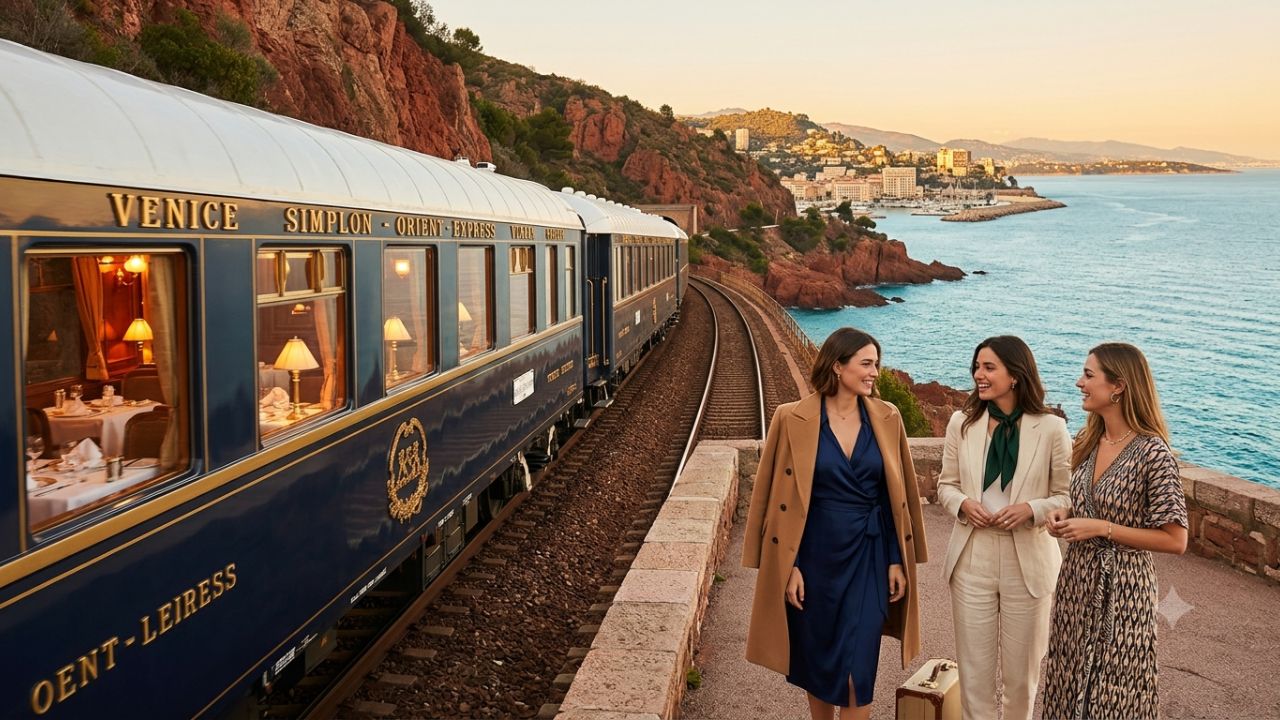
Germany and France Lead Ten-Nation European Coalition Expanding Sustainable High-Speed and Sleeper Rail to Replace Short-Haul Flights

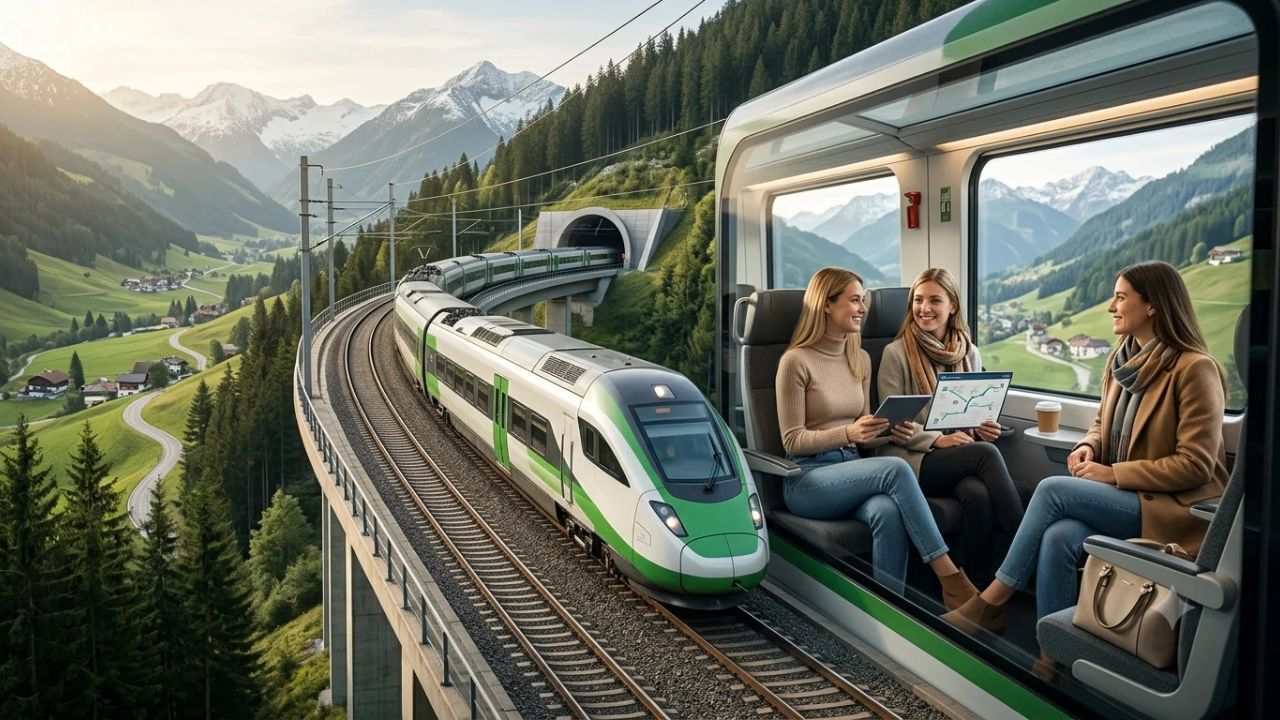
BRUSSELS — A formidable coalition of ten European nations, spearheaded by Germany and France, has mobilized an unprecedented multibillion-euro cross-border investment campaign to systematically expand high-speed railway networks and overnight sleeper trains, creating a unified rail system designed to replace commercial short-haul flights across the continent.
Joined by Austria, Switzerland, Italy, Portugal, Poland, the Czech Republic, Hungary, and Ireland, the alliance represents an extraordinary geopolitical and logistical commitment to transport decarbonization.
Inspired by the newly adopted European Union Strategy for Sustainable Tourism, European transport ministers are fundamentally altering the continental mobility landscape.
Over past decades, Europe’s airspace was defined by the rapid rise of low-cost air carriers, which transformed flying into the default option for intercity journeys between European capitals.
That carbon-intensive model is now encountering decisive structural opposition.
By upgrading physical tracks, deploying digital signaling systems, eliminating cross-border ticketing friction, and modernizing rolling stock fleets, the ten-nation partnership is repositioning rail travel as the foundational pillar of Europe’s sustainable tourism economy.
TEN-NATION EUROPEAN RAIL EXPANSION: STRATEGIC OVERVIEW
| Entity / Route | Metrics | Operational Status |
|---|---|---|
| Country Coalition Member | Core Strategic Focus Area | Primary Investment / Milestone |
| France | TGV fleet life extensions; | €3 Billion program modernizing |
| domestic short-haul flight ban | 360 high-speed trainsets | |
| Germany | Digital signaling (ETCS); | Pfaffensteig Tunnel project; |
| bottleneck corridor overhauls | high-density network upgrades | |
| Austria | Continental night train hub; | Next-generation Nightjet fleet |
| European Investment Bank loans | connecting Vienna to Paris/Rome | |
| Switzerland | Alpine cross-border precision; | Long-term SBB/ÖBB operational |
| Gotthard corridor integration | partnership extended to 2036 | |
| Italy | On-track open competition; | €1 Billion EIB loan; Naples- |
| southern network expansions | Bari and Brescia-Verona lines | |
| Portugal | Slashing Iberian travel times; | Staggering +25.7% passenger |
| high-speed link to Madrid | demand surge in 2025 | |
| Poland | CPK high-speed rail spokes; | +8.6% passenger traffic surge; |
| Trans-European Network (TEN-T) | 250 km/h regional integration | |
| Czech Republic & Hungary | Joint Central European HSR; | Historic €10B joint financing |
| cross-border corridor funding | memorandum signed in Nov 2026 | |
| Ireland | All-Island rail review; | +13.1% passenger expansion; |
| regional car-trip replacement | intercity line electrification |
The European Transport Paradigm Shift: Replacing Aviation with Steel Rails
To appreciate the scale of this continental rail renaissance, one must examine the environmental and operational limitations that have converged upon European aviation.
For thirty years, the proliferation of point-to-point budget airlines stimulated massive tourism volumes, but it simultaneously inundated atmospheric corridors with millions of tons of greenhouse gases, saturated airspace over Western Europe, and exacerbated runway congestion at major hub airports.
The environmental mathematics of transport modes have made continuation of unchecked short-haul aviation untenable.
Independent environmental audits conducted across European transit corridors demonstrate that traveling by electrified high-speed train produces between eighty and ninety percent fewer carbon dioxide emissions per passenger-kilometer compared to an equivalent commercial jet flight.
On highly competitive trunk routes—such as Paris to Lyon, Frankfurt to Munich, or Milan to Rome—high-speed electric trains operate on national energy grids increasingly powered by renewable solar, wind, and nuclear generation, making rail the greenest mode of mass intercity transit available.
                     EMISSIONS AND EFFICIENCY TRAJECTORY

   [ Commercial Short-Haul Jet Aircraft (Under 500 km) ]
         * High carbon burn during takeoff and climb phases (150–250g CO2 per pass-km)
         * Requires airport perimeter security, runway taxiing, and remote terminal transit
         * Generates intense localized noise pollution and air particulate emissions

   [ Modern Electrified High-Speed Rail (250–320 km/h) ]
         * Powered by decarbonized electrical grids (10–30g CO2 per pass-km)
         * Direct downtown-to-downtown connectivity eliminates airport ground transit
         * Continuous onboard productivity with high passenger density and zero airport lines
Beyond carbon metrics, European transport philosophy has evolved qualitatively.
The train is no longer regarded merely as an industrial conveyance to travel between distant coordinates; it is being actively reclaimed as an enjoyable, relaxing element of the European journey.
Spacious seating, panoramic windows, onboard dining cars serving regional culinary dishes, and uninterrupted digital connectivity transform travel time into productive work or mindful leisure, rendering the cramped discomfort of regional jet cabins obsolete.
The Franco-German Industrial Engine: Fleet Life Extensions and Digital Signaling
France and Germany together account for nearly half of all passenger-kilometers traveled by rail within the European Union.
Their coordinated bilateral commitment forms the industrial and operational foundation that propels the rest of the continent toward rail integration.
FRANCO-GERMAN RAILWAY MODERNIZATION MATRIX
| Entity / Route | Metrics | Operational Status |
|---|---|---|
| Nation & Operator | Primary Technical Intervention | Expected Passenger & System Impact |
| France (SNCF Voyageurs) | €3 Billion rolling stock life | Extends service life of 360 TGV |
| extension program at industrial sites | sets by 10–15 years; cuts waste | |
| France (Statutory Ban) | Climate and Resilience Law enforcing | Eliminates redundant domestic |
| short-haul commercial flight bans | flights where trains take <2.5 hrs | |
| Germany (Deutsche Bahn) | Digital Rail Germany (Digitale | Increases corridor capacity up to |
| Schiene Deutschland) via ETCS Level 2 | 30% without building new tracks | |
| Germany (Mega-Projects) | Construction of the 11-kilometer | Removes regional bottlenecks; |
| Pfaffensteig Tunnel near Stuttgart | accelerates transit to Switzerland |
1. France: Extending High-Speed Heritage While Enforcing Policy Bans
France, the historic pioneer of the Train à Grande Vitesse (TGV), treats high-speed rail as an instrument of national environmental strategy.
Rather than relying entirely on commissioning new trains, the French government and state railway operator SNCF launched an extensive three-billion-euro industrial modernization program.
This program executes comprehensive overhauls across 360 existing double-decker TGV trainsets at specialized maintenance centers in Hellemmes and Romilly-sur-Seine.
By upgrading traction motors, replacing interior accommodations, and refurbishing electrical control units, France extends the operating life of its fleet by up to fifteen years.
This life-extension approach prevents the massive carbon emissions associated with manufacturing new aluminum-body trainsets from scratch, embodying circular industrial economics.
Simultaneously, France has enacted decisive statutory regulations to phase out short-haul commercial aviation.
Under national climate legislation, domestic commercial air routes are prohibited where an equivalent, direct train journey of two and a half hours or less exists.
Routes connecting Paris-Orly to Nantes, Lyon, and Bordeaux have transitioned to rail, proving that clear statutory mandates combined with robust train frequency can redirect passenger demand without compromising domestic mobility.
2. Germany: Digital Signalling Overhauls and Bottleneck Engineering
Across the Rhine, Germany is executing one of the most technologically complex overhauls of a national railway network in modern industrial history.
Deutsche Bahn (DB) is confronting severe network congestion caused by decades of traffic growth outstripping physical infrastructure.
To resolve these constraints, Germany is executing the Digital Rail Germany (Digitale Schiene Deutschland) initiative.
By outfitting high-density corridors with the European Train Control System (ETCS) Level 2 and Level 3, alongside digital interlocking technology (DSTW), Germany is transitioning away from traditional trackside optical signals.
Digital signaling transmits continuous movement authorities directly into the train driver’s cab via encrypted radio links, allowing trains to operate safely at tighter headway intervals.
This advancement expands effective line capacity by up to thirty percent across existing tracks without requiring years of disruptive land acquisition and civil earthworks.
In parallel with digital upgrades, Germany is constructing monumental civil engineering projects to clear physical bottlenecks.
The premier project is the eleven-kilometer Pfaffensteig Tunnel, a multibillion-euro underground bypass near Stuttgart.
By linking the newly transformed Stuttgart rail hub directly to the Gäubahn corridor heading south toward Zurich, the project eliminates urban transit friction and ensures that long-distance international services connecting Germany, Switzerland, and Italy operate with punctual reliability.
The Alpine Sleeper Masters: Austria and Switzerland's Nightjet Revolution
While daytime high-speed rail captures business travelers on three-to-four-hour routes, the renaissance of the overnight sleeper train addresses journeys spanning eight hundred to fifteen hundred kilometers, replacing early-morning airport departures.
Austria and Switzerland have established themselves as the architects of Europe’s sleeper train revival.
                    NIGHTJET TRANS-EUROPEAN SLEEPER NETWORK

   [ Central Alpine Hubs: Vienna (Wien Hbf) & Zurich (Zürich HB) ]
                                |
       +------------------------+------------------------+
       |                                                 |
       v                                                 v
   [ Western European Corridors ]            [ Mediterranean & Northern Corridors ]
   * Vienna–Innsbruck–Amsterdam              * Vienna–Salzburg–Rome / Venice
   * Vienna–Linz–Brussels / Paris            * Zurich–Basel–Berlin / Hamburg
   * Zurich–Geneva–Barcelona (Planned)       * Munich–Innsbruck–Florence–Bologna
1. Austria: The Uncontested King of the European Night Train
A decade ago, major state railways across Western Europe abandoned their overnight sleeper carriages, citing aging rolling stock, high shunting costs, and unbeatable competition from budget airlines.
Austria’s national railway, ÖBB, took the opposite approach: it recognized that climate-conscious travelers would gladly trade cramped airport security lines for the comfort of falling asleep in one city and waking up refreshed in another.
Supported by substantial low-interest loans from the European Investment Bank (EIB), ÖBB launched a major fleet acquisition program, investing hundreds of millions of euros in thirty-three next-generation Nightjet trainsets manufactured by Siemens Mobility.
These seven-car trainsets feature innovative design elements tailored for contemporary privacy:
- Individual Mini Cabins: Designed for solo travelers, these capsule-style private sleeping pods offer secure, lockable sliding doors, ambient dimmable lighting, integrated reading tables, storage compartments for footwear and carry-on bags, and wireless charging surfaces.
- En-Suite Comfort Compartments: Deluxe sleeper compartments provide private washrooms equipped with fully enclosed showers, toilets, and comfortable convertible beds, rivaling upscale boutique hotel accommodations.
- Accessibility and Quiet Running: Fully accessible couchette compartments cater to travelers with reduced mobility, while advanced bogie suspension systems and acoustic dampening materials insulate passenger cabins from track vibration and rail squeal.
Today, ÖBB’s Nightjet network spans the continent, linking Vienna and Innsbruck directly to Paris, Amsterdam, Brussels, Berlin, Rome, and Venice, capturing tens of thousands of passengers who would otherwise have boarded short-haul flights.
2. Switzerland: Frictionless Alpine Interoperability
Operating in close coordination with Austria, the Swiss Federal Railways (SBB) has cemented an operational partnership that guarantees cross-border night train integration through at least 2036.
Switzerland’s railway network is internationally celebrated for the Taktfahrplan—a synchronized clock-face scheduling system where passenger trains across the nation arrive at transfer junctions every thirty or sixty minutes, allowing travelers to change trains across platforms with single-digit connection windows.
By completing landmark alpine base tunnels—including the 57-kilometer Gotthard Base Tunnel and the Ceneri Base Tunnel—Switzerland created flat rail corridors piercing the alpine granite barrier.
These engineering marvels allow heavy high-speed and freight trains to glide across the Alps at water level, connecting northern European commercial centers in Germany and Switzerland directly to Milan and the industrial heart of northern Italy.
Southern European High-Speed Transformation: Italy’s Open Competition and Portugal’s Expansion
In Southern Europe, rail modernization is dismantling historical geographic isolation and proving that open commercial competition can stimulate passenger demand.
SOUTHERN EUROPE RAILWAY TRANSFORMATION METRICS
| Nation & Transit Corridor | Infrastructure / Regulatory Action | Quantifiable Travel Metric |
|---|---|---|
| Italy (Open Competition) | Free on-track competition between | High-speed rail fares dropped 40%; |
| (Frecciarossa vs Italo) | state Trenitalia & private Italo | passenger volumes more than doubled |
| Italy (Southern Network) | Construction of the €6B high-speed | Slashes Rome-Bari travel time to |
| (Naples-Bari Corridor) | line linking Campania and Puglia | two hours; supported by €1B EIB loan |
| Portugal (Passenger Boom) | Intensive modernization of CP rolling | +25.7% passenger demand surge in |
| (National Rail Network) | stock; national ticketing passes | 2025 (Highest growth in Europe) |
| Portugal & Spain | Strategic planning for the Lisbon- | Targets 3-hour journey time; |
| (Iberian High-Speed Link) | Madrid high-speed corridor by 2035 | eliminates thousands of flights |
1. Italy: The Global Benchmark for On-Track Competition
Italy transformed high-speed rail economics by becoming the first country in the world to open its high-speed tracks to direct, private-sector competition.
Since the private operator Italo (NTV) launched services alongside state carrier Trenitalia’s Frecciarossa network, the results have been remarkable: average ticket prices dropped by forty percent, service frequencies surged, and overall passenger volume doubled across the premier Milan–Bologna–Florence–Rome corridor.
Aviation collapsed along the route, with commercial airlines terminating domestic shuttle flights between Milan and Rome as trains captured over eighty percent of all business travel.
Building on this success, Italy is utilizing a one-billion-euro European Investment Bank loan to extend its high-speed footprint into the south.
The premier project is the Naples–Bari high-speed line, an ambitious civil engineering undertaking through the Apennine Mountains that will slash transit times between the Tyrrhenian and Adriatic coasts to two hours.
In the north, construction of the Brescia–Verona–Padua corridor is closing the final gaps between Milan and Venice, connecting bullet trains directly into zero-emission municipal transit hubs.
2. Portugal: Europe's Fastest-Growing Rail Market
On the western edge of the Iberian Peninsula, Portugal recorded an astonishing 25.7 percent surge in rail passenger traffic in 2025, the fastest growth rate documented anywhere in the European Union.
Spurred by affordable regional transit passes and rising fuel costs, Portuguese travelers have embraced rail travel en masse.
To capitalize on this momentum, the Portuguese government and infrastructure agency Infraestruturas de Portugal have committed billions to build a high-speed line linking Lisbon to Porto in just one hour and fifteen minutes.
Equally significant is the bilateral commitment between Portugal and Spain to construct a dedicated high-speed link connecting Lisbon to Madrid by 2035.
Slashing journey times between the two Iberian capitals to under three hours, this rail link is projected to eliminate dozens of daily short-haul flights across the Iberian corridor, connecting Portugal’s Atlantic seaboard directly to the broader European standard-gauge network.
The Central and Eastern European High-Speed Grid: Poland, Czech Republic, and Hungary
For decades, the rail networks of Central and Eastern Europe suffered from aging legacy trackage and slow operating speeds.
Today, this region represents the construction site of Europe’s most ambitious international rail megaprojects, bridging the gap between Eastern and Western Europe at 250 kilometers per hour.
                    CENTRAL EUROPE HIGH-SPEED CORRIDOR BLUEPRINT

   [ Prague (Czech Republic) ]
                 |
                 v (New 320 km/h High-Speed Line)
   [ Brno High-Speed Junction ]
                 |
           +-----+-----+
           |           |
           v           v
   [ Bratislava ]     [ Vienna Interconnect ]
   (Slovakia)          (Austria)
           |
           v
   [ Budapest (Hungary) ]
1. Poland: The Eastern Anchor of Continental Mobility
Poland recorded an 8.6 percent increase in rail passenger volume in 2025, driven by heavy domestic infrastructure investments.
Through its newly established Centre for Transport and Mobility, the Polish government is planning passenger mobility patterns for the next half-century.
The centerpiece of Poland’s rail strategy is the railway component of the Central Communication Port (Centralny Port Komunikacyjny / CPK).
This project entails the construction of approximately 2,000 kilometers of new high-speed rail lines, configured as an expansive spoke-and-hub network.
The first priority line—the "Y-line" linking Warsaw to Łódź, Poznań, and Wrocław—will allow modern electric trains to operate at 250 kilometers per hour, drastically shortening domestic transit times and integrating seamlessly into the European Union's Trans-European Transport Network (TEN-T) corridor heading west toward Berlin.
2. The Czech-Hungarian €10 Billion High-Speed Corridor
In a landmark diplomatic and economic breakthrough in November 2026, the transport ministers of the Czech Republic and Hungary formally signed a joint memorandum to seek European Union mega-funding for a unified Central European high-speed rail corridor.
Projected at ten billion euros, this infrastructure corridor will link Prague, Brno, Bratislava (Slovakia), and Budapest with newly constructed high-speed tracks engineered for speeds up to 320 kilometers per hour.
By collaborating across national boundaries, the partner nations ensure interoperable signaling standards, shared electrical traction architectures, and unified border clearances.
Once operational, the line will shrink the journey between Prague and Budapest from nearly seven hours down to under three and a half hours, establishing an efficient, zero-emission alternative to regional puddle-jumper flights across Central Europe.
Island Mobility Resilience: Ireland’s All-Island Rail Renaissance
Even on the western periphery of Europe, where island geography naturally necessitates international aviation links, the commitment to sustainable rail travel is transforming domestic travel.
Ireland recorded a 13.1 percent expansion in rail passenger traffic in 2025, demonstrating strong public appetite for sustainable overland transport.
IRELAND SUSTAINABLE TRANSIT OVERHAUL METRICS
| Entity / Route | Metrics | Operational Status |
|---|---|---|
| Strategic Dimension | Engineering & Policy Implementation | Domestic Mobility Advantage |
| All-Island Rail Review | Comprehensive long-term masterplan | Re-opens dismantled rural rail |
| (Cross-Border Scope) | shared between Dublin and Belfast | corridors; links regional ports |
| Fleet Electrification | Introduction of battery-electric | Decarbonizes suburban and regional |
| (DART+ Program) | multiple units across Dublin network | commuter links; replaces car trips |
| Trunk Line Upgrades | Track doubling and line speed hikes | Accelerates intercity links; |
| (Dublin-Cork Corridor) | to 200 km/h on core passenger routes | draws tourists off regional roads |
Guided by the landmark All-Island Strategic Rail Review—a joint cross-border planning initiative between the Republic of Ireland and Northern Ireland—the Irish government is investing billions of euros to revitalize its national rail network.
The strategy focuses on electrifying intercity trunk lines connecting Dublin to Cork, Limerick, and Galway, while upgrading the cross-border Enterprise service linking Dublin to Belfast with modern 200 km/h trainsets.
By expanding commuter capacity under the DART+ program and reopening historical rail lines across regional counties, Ireland is pulling international tourists out of rental cars and regional tour buses.
Visitors arriving at Dublin Airport can transfer directly to electrified rail links, accessing rugged coastal landscapes and cultural heritage centers along the Wild Atlantic Way with minimal carbon footprint.
The Legislative Pillars of the European Union Sustainable Rail Strategy
Constructing physical tracks and ordering rolling stock represents only part of the solution.
To permanently supplant short-haul aviation, the ten-nation alliance, backed by the European Commission, is executing a coordinated package of statutory and regulatory reforms.
                    EU LEGISLATIVE AND REGULATORY PILLARS

   [ The 2040 High-Speed Rail Mandate (TEN-T Revision) ]
         * Legally binding targets: Double HSR traffic by 2030; triple by 2050
         * Mandatory HSR links to all EU capital cities & airports by 2040

   [ Single Europe-Wide Interoperable Ticketing Directive ]
         * Mandates open APIs for real-time schedule & fare sharing across operators
         * Guaranteed through-ticketing protections for multi-carrier missed connections

   [ Track Access Charge (TAC) Harmonization & Reductions ]
         * Pushes infrastructure tolls down to marginal cost for night trains
         * Eliminates artificial pricing advantages enjoyed by untaxed aviation fuel

   [ Station-Centric Multimodal Mobility Hubs ]
         * Transforms railway terminals into integrated mobility centers
         * Synchronized scheduling with electric city buses, bike shares, and light rail
1. The 2040 High-Speed Rail Mandate
Under the revised Trans-European Transport Network (TEN-T) Regulation, European Union member states are subject to legally binding infrastructure development timelines:
- High-speed rail traffic across the EU must double by 2030 and triple by 2050 compared to 2015 baselines.
- By 2040, high-speed rail lines operating at minimum speeds of 200 km/h must connect all EU capital cities and primary urban nodes.
- Major European passenger airports exceeding twelve million annual passengers must be physically connected to the high-speed rail network, enabling direct air-to-rail intermodal transfers and eliminating domestic connecting feeder flights.
2. Single Europe-Wide Ticketing and Through-Ticketing Rights
A major historical obstacle to international train travel was the bureaucratic frustration of booking multi-country journeys.
While air travelers could book complex multi-airline itineraries on a single website, booking a train from Lisbon to Berlin required visiting three or four separate national railway websites, with zero protection if a delay on the first train caused a missed connection on the second.
Under the EU’s newly advanced Passenger Mobility Package, the European Commission is mandating open, interoperable Application Programming Interfaces (APIs) across all national rail operators.
Commercial ticket platforms will be able to sell single, through-ticket itineraries combining services from SNCF, Deutsche Bahn, Trenitalia, and ÖBB.
Equally important, the legislation mandates Through-Ticketing Protection: if an initial train delay causes a passenger to miss an onward connection with a different operating company, the passenger has the statutory legal right to board the next available train without purchasing a new ticket, alongside complimentary meals and hotel lodging during extended delays.
3. Slashing Track Access Charges for Sleeper Trains
Unlike commercial airlines, which historically enjoyed exemptions from fuel taxation and value-added tax on international flight tickets, passenger train operators pay substantial Track Access Charges (TAC)—tolls paid to national rail infrastructure managers to operate over tracks.
The European Commission is actively working with member states to slash track access charges for cross-border night trains down to marginal operating costs.
Lowering infrastructure tolls directly reduces operational expenses for sleeper operators, enabling companies like ÖBB to offer competitive ticket prices that undercut airfares while maintaining commercial profitability.
Passenger Rights, Delay Compensation, and Consumer Protections
International travelers exploring Europe by train are protected by one of the world’s most comprehensive passenger rights frameworks under Regulation (EU) 2021/782.
EU RAIL PASSENGER RIGHTS STATUTORY SCHEDULE
| Entity / Route | Metrics | Operational Status |
|---|---|---|
| Disruption Threshold | Statutory Operator Obligation | Passenger Compensation Right |
| 60 to 119 Minute Delay | Provision of complimentary beverages | 25% Mandatory cash fare refund |
| at Final Destination | and light refreshments if available | processed within 30 calendar days |
| 120+ Minute Delay at | Provision of meals; complimentary | 50% Mandatory cash fare refund |
| Final Destination | hotel lodging if overnight stay needed | processed to original payment |
| Anticipated Delay >60m | Rerouting on alternative services | Right to full ticket cancellation |
| Prior to Departure | at earliest opportunity at no charge | and 100% immediate cash refund |
| Lost or Damaged Mobility | Full repair or replacement cost; no | Mandatory assistance boarding |
| Equipment (Wheelchairs) | statutory liability liability cap | trains and navigating platforms |
Under this legal statute, rail passengers facing significant delays are shielded from out-of-pocket losses.
If a train arrival is delayed between sixty and one hundred and nineteen minutes, the operating carrier must refund twenty-five percent of the ticket price; for delays of two hours or more, the mandatory compensation rises to fifty percent.
Importantly, carriers cannot offer vouchers instead of cash unless the traveler explicitly agrees in writing.
In addition, if a journey is disrupted by severe weather or operational failures that strand passengers overnight, the operating railway is legally mandated to provide complimentary hotel accommodations and ground transportation.
The regulation also establishes strict mandates regarding bicycles on trains.
All newly commissioned high-speed and intercity trains in Europe must feature dedicated bicycle zones equipped with a minimum of four designated bicycle racks, enabling eco-tourists to combine long-distance rail journeys with cycling adventures across rural and coastal regions.
The Modern Rail Traveler’s Playbook: Maximizing European Cross-Border Train Travel
For international tourists, business executives, and independent explorers planning journeys across Europe, understanding rail booking strategy unlocks substantial cost savings and seamless travel experiences.
CROSS-BORDER RAIL EXPEDITION ACTION PLAYBOOK
| Entity / Route | Metrics | Operational Status |
|---|---|---|
| Tactical Dimension | Recommended Action | Strategic Value to Traveler |
| 1. Advance Booking | Book long-distance tickets 90 to 180 | Secures deeply discounted Sparpreis |
| days out when booking windows open | and Prem's promotional fares | |
| 2. Pass vs. Point-to-Pt | Compare Eurail Global Pass against | Flexible rail passes excel for |
| fixed tickets for complex routes | multi-country, spontaneous travel | |
| 3. Seat Reservations | Book dedicated seat reservations on | Mandatory on TGV and Frecciarossa; |
| high-speed routes during peak season | guarantees luggage space and seats | |
| 4. Nightjet Cabins | Reserve private couchette or sleeper | Combines overnight transit with |
| compartment 4 to 6 months in advance | hotel accommodation savings |
Step 1: Master Operator Booking Horizons
Unlike airlines that release flight schedules 330 days in advance, European national railways operate on distinct seasonal booking windows:
- Deutsche Bahn (Germany): Tickets generally open 180 days in advance. Securing tickets early unlocks discounted Sparpreis and Super Sparpreis fares, which allow travel across Germany and into neighboring countries for as little as €19.90.
- SNCF (France): High-speed TGV tickets are released in seasonal blocks approximately ninety to one hundred and twenty days in advance, with holiday periods opening simultaneously. Early booking secures discounted Prem's fares.
- ÖBB Nightjet (Austria): Overnight sleeper berths open up to 180 days in advance. Due to soaring consumer demand, private deluxe compartments and Mini Cabins between Vienna, Paris, and Amsterdam routinely sell out months in advance during summer and autumn seasons.
Step 2: Evaluate Eurail Passes vs. Point-to-Point Tickets
For travelers undertaking multi-week itineraries spanning three or more countries, an Eurail Global Pass offers unmatched flexibility, allowing travel across thirty-three European nations on a single digital pass loaded onto a smartphone.
However, travelers must account for seat reservation fees: while countries like Germany, Switzerland, and Austria do not require mandatory seat reservations on daytime trains, high-speed services in France (TGV) and Italy (Frecciarossa) require mandatory seat reservations (typically €10 to €20 per sector).
For straightforward point-to-point itineraries between two cities, booking fixed advance tickets directly through national carrier websites often proves more economical.
Step 3: Capitalize on Luggage and City-Center Convenience
A major economic advantage of rail travel over commercial aviation is the total absence of baggage fees.
Passengers on European trains can bring multiple large suitcases without paying weight penalties, avoiding the restrictive carry-on limits and expensive check-in fees imposed by low-cost air carriers.
Equally advantageous, railway stations are situated in the geographic heart of European cities—such as Paris Gare de Lyon, Frankfurt Hauptbahnhof, or Milano Centrale—allowing travelers to step directly off the train onto subway platforms and avoid the expensive forty-euro taxi rides and one-hour highway traffic jams associated with suburban airports like Charles de Gaulle, Beauvais, or Malpensa.
Strategic Horizons: The Decarbonized Future of European Travel
The ten-nation alliance uniting Germany, France, Austria, Switzerland, Italy, Portugal, Poland, the Czech Republic, Hungary, and Ireland represents a turning point in the history of international passenger transport.
By committing more than one hundred billion euros in collective capital investments, these nations are doing far more than upgrading railway infrastructure; they are proving that sustainable tourism is an upgrade rather than a compromise.
The era of cheap, carbon-heavy short-haul aviation that dominated European travel over the past thirty years is giving way to an intelligent, interconnected, and highly civilized mobility ecosystem.
Through the revival of romantic overnight sleeper trains, the relentless expansion of 300 km/h high-speed rail lines, and the legislative dismantling of digital ticketing barriers, Europe is engineering a future where exploring the continent leaves an enduring cultural impression rather than an indelible carbon scar.
As the physical lines converge toward the 2040 high-speed mandate, the steel rails stretching from the Atlantic shores of Lisbon to the historic boulevards of Budapest are knitting the continent together, welcoming global travelers into a new golden age of sustainable discovery.
Related Travel Guides
- Netherlands and European Nations Shift Tourism from Volume to Value: Landmark JRC Economic Data Drives Sustainable Reforms
- Busan Triggers Historic One Trillion Won Tourism Boom Bypassing Seoul: Direct International Flights, Maritime Cruises, and Global Visitor Surge
- Princess Cruises Launches Blue Friday 2026 Campaign with 50% Fare Cuts, US$400 Instant Savings, and Complimentary Guests
- UAE and Global Destinations Face Compounding Travel Strain as International Visitor Arrivals Decelerate
- Hyatt Relaunches Hyatt Leverage with Spotnana: Cloud-Native SME Corporate Travel Platform Unifies Booking and Spend
This article is for informational purposes. Flight routes, passenger regulations, visa rules, and transit advisories are subject to change by airlines and aviation authorities. Readers are advised to verify schedules and travel documentation with relevant carriers and border agencies before departure.
Related Stories
Belmond Venice Simplon-Orient-Express Launches Paris to Monaco Luxury Route in 2027
Amtrak Expands Thanksgiving Train Services Nationwide as Record Holiday Rail Demand Surges in 2026