Western Ireland Becomes Europe's Cool Climate Refuge: Kerry, Mayo, Sligo, and Roscommon Drive High-Yield Slow Tourism Boom

KILLARNEY, Ireland — As southern Europe endures consecutive summers of record-shattering heatwaves, water rationing, and anti-tourism protests, a profound geographical realignment is reshaping the European travel landscape.
Exhausted by summer temperatures frequently exceeding 42 degrees Celsius across the Mediterranean basin, millions of international travelers are trading sweltering southern beaches for the temperate, mist-kissed expanses of Western Ireland.
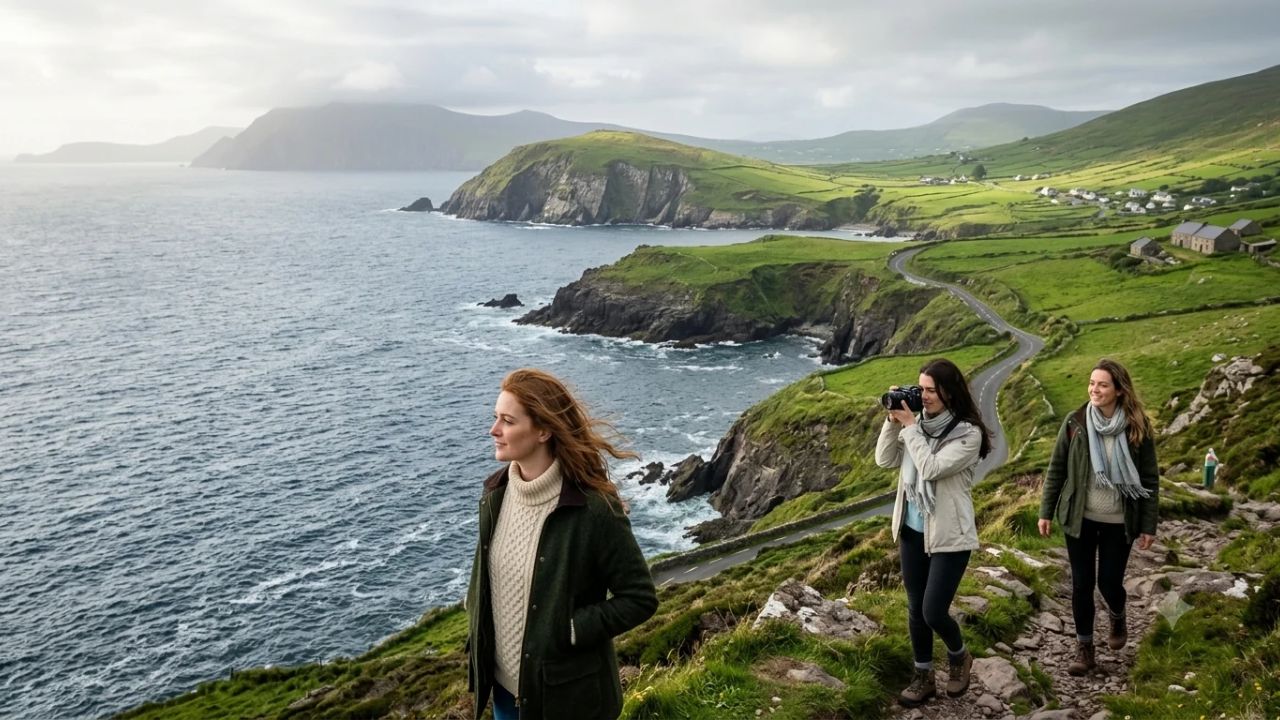
Spanning the dramatic Atlantic coastlines and tranquil inland lakelands of County Kerry, County Mayo, County Sligo, and County Roscommon, the western seaboard has emerged as Europe's premier cool-climate refuge.
This migration represents a structural shift from high-density, low-margin mass tourism toward high-yield, low-impact slow travel.
According to regional economic tracking and Central Statistics Office data, multi-day touring visitors to Western Ireland generate an average daily expenditure exceeding €135 per head, with over 68 percent of visitor spending penetrating directly into local community supply chains.
Supported by the Atlantic Economic Corridor's network of over 450 remote working digital hubs, extensive traffic-free greenways, and an oceanfront wellness economy specializing in cold-water thalassotherapy, Western Ireland is demonstrating how rural destinations can achieve long-term economic prosperity while fiercely safeguarding their fragile ecosystems and cultural heritage.
WESTERN IRELAND REGIONAL TOURISM BENCHMARK 2026
| Performance Metric Indicator | Recorded Industry Benchmark | Strategic Tourism Meaning |
|---|---|---|
| Average Daily Spend Per Visitor | Exceeds €135 per Traveler Day | High-yield economic model |
| Local Community Supply Retention | Over 68% of Total Expenditure | Prevents corporate leakage |
| Mediterranean Summer Booking Drop | 27% Contraction in S. Europe | Climate refuge flight north |
| Atlantic Average Summer Temperature | 18°C to 21°C Temperate Window | Ideal active outdoor climate |
| Remote Working Hub Network | Over 450 Connected Facilities | Atlantic Economic Corridor |
| Long-Stay Remote Professional Surge | +34% Year-on-Year Influx | Smooths seasonal dips |
| Green Mobility Emissions Reduction | 19% Carbon Footprint Drop | Greenways and EV corridors |
| Regional Food Agri-Economy Value | Over €110 Million Annually | 35% of holiday expenditure |
| Specialized Wellness Booking Surge | +55% Ocean Hydrotherapy Growth | Seaweed baths & cold surf |
| Dark Sky Nocturnal Winter Revenue | Estimated €14 Million Lift | Off-peak shoulder economy |
| Ancestral Heritage Stay Duration | 11.4 Nights (3.2x Spend Lift) | Deep diaspora engagement |
The Coolcation Phenomenon: Escaping Mediterranean Thermal Stress
The primary catalyst driving international holidaymakers toward the Atlantic seaboard is the accelerating reality of climate disruption across southern latitudes.
During recent summer seasons, prolonged heatwaves across southern Spain, Greece, southern Italy, and the Mediterranean islands pushed daytime temperatures beyond 42 degrees Celsius for weeks at a time.
These extreme conditions triggered severe wildfire emergencies, prompted water conservation mandates, and caused a documented 27 percent contraction in summer bookings across traditional Mediterranean beach resort destinations.
In sharp contrast, Western Ireland offers an invigorating maritime sanctuary.
Washed by the North Atlantic Drift, the coastal counties of Kerry, Mayo, and Sligo maintain average summer maximum temperatures ranging between 18 and 21 degrees Celsius.
This temperate climate enables comfortable, active outdoor exploration—such as coastal hillwalking, long-distance cycling, sea kayaking, and archaeological field study—without the risk of heat exhaustion or oppressive thermal discomfort.
                               THE CLIMATE REFUGE TRAVEL TRANSITION

   +---------------------------------------------------------------------------------+
   | SOUTHERN MEDITERRANEAN: > 42°C Heatwaves, Overcrowding, 27% Booking Drop        |
   +---------------------------------------------------------------------------------+
                                           |
                                           v [The Northward Coolcation Flight]
   +---------------------------------------------------------------------------------+
   | WESTERN IRELAND: 18°C - 21°C Temperate Maritime Air, Open Atlantic Breezes      |
   +---------------------------------------------------------------------------------+
          |                     |                      |                     |
          v                     v                      v                     v
   [County Kerry]        [County Mayo]          [County Sligo]       [County Roscommon]
   (Iconic Heritage)     (Greenway Adventure)   (Yeats & Cold Surf)  (Inland Lakelands)
In addition, this coolcation phenomenon is driving a philosophical transformation in visitor expectations.
Modern travelers are deliberately rejecting the hurried, superficial itinerary model of checking off crowded tourist monuments.
Instead, they are embracing slow travel: settling into single rural hubs for a week or more, patronizing village bakeries and independent pubs, engaging with local storytellers, and immersing themselves in the unhurried rhythms of rural Irish community life.
County Kerry: The Tourism Powerhouse and Sustainable Dispersal
County Kerry stands as the undisputed titan of Ireland's international visitor economy.
Official metrics compiled by the Central Statistics Office (CSO) and Kerry County Council confirm that this southwestern region consistently commands approximately 13 percent of all overseas visitors entering the Republic of Ireland.
Among North American travelers, Kerry's magnetic draw is even more pronounced: an astounding one out of every three American visitors explicitly incorporates the Kingdom of Kerry into their Irish itinerary.
FOUR-COUNTY WESTERN REGIONAL MATRIX
| Entity / Route | Metrics | Operational Status |
|---|---|---|
| County Jurisdiction | Defining Geographic Character | Signature Cultural Assets |
| County Kerry | High Coastal Fjiords, Dramatic Peninsulas | Ring of Kerry, Killarney, Skellig |
| County Mayo | Sweeping Ocean Bogs, Sacred Mountains | Great Western Greenway, Croagh P. |
| County Sligo | Table Mountains, Cold-Water Surf Breaks | Benbulben, Strandhill, Yeats Sites |
| County Roscommon | Inland Waterways, Ancient Lakelands | Lough Key Forest, King House |
Kerry's enduring international appeal is anchored by legendary touring corridors, notably the Ring of Kerry around the Iveragh Peninsula and the Dingle Peninsula along the Wild Atlantic Way.
The county encompasses exceptional natural monuments: Killarney National Park—Ireland's oldest national park, sheltering the country's only surviving herd of native red deer amidst ancient oak and yew woodlands—alongside Carrauntoohil and the towering MacGillycuddy's Reeks, and the UNESCO World Heritage Site of Skellig Michael, an isolated 6th-century monastic island rising dramatically from the Atlantic Ocean.
To mitigate over-tourism pressures during peak summer weeks, Kerry County Council has implemented an aggressive dispersal strategy.
The council actively channels marketing campaigns toward the shoulder seasons of spring and autumn, encouraging travelers to explore lesser-known inland valleys and coastal headlands.
Events like the Kerry Homecoming Festival celebrate diaspora connections while filling family-run guesthouses outside the traditional July-August window, ensuring that tourism revenue supports local livelihoods year-round without overwhelming fragile mountain ecosystems.
                               KERRY SUSTAINABLE DISPERSAL ARCHITECTURE

   +---------------------------------------------------------------------------------+
   | WORLD-CLASS ANCHORS: Ring of Kerry, Killarney National Park, Skellig Michael    |
   +---------------------------------------------------------------------------------+
                                           |
                                           v [Strategic Shoulder Season Promotion]
   +---------------------------------------------------------------------------------+
   | HORIZONTAL DISPERSAL: Channeling visitors into inland valleys & shoulder months |
   +---------------------------------------------------------------------------------+
                                           |
                                           v [Community Reinvestment]
   +---------------------------------------------------------------------------------+
   | SUSTAINABLE HERITAGE: 13% of all Irish Overseas Visitors Supported Responsibly  |
   +---------------------------------------------------------------------------------+
County Mayo: Pioneering Greenway Engineering and Sacred Pilgrimages
To the northwest, County Mayo represents a premier model of sustainable outdoor recreation and ancient spiritual heritage along the Atlantic seaboard.
Mayo's dramatic landscape transitions from the drowned drumlins of Clew Bay to the vast, windswept peatlands of Erris—an isolated coastal wilderness that was officially voted the best place to go wild in Ireland.
The infrastructural centerpiece of Mayo's eco-tourism economy is the celebrated Great Western Greenway.
Constructed along the route of the historic Westport-to-Achill railway line, which was closed in 1937, this traffic-free 42-kilometer cycling and walking trail connects the heritage town of Westport with Newport, Mulranny, and the dramatic sea cliffs of Achill Island.
The greenway has become a national benchmark for rural active-mobility engineering, accommodating over 120,000 cyclists and walkers annually while keeping visitors safely separated from vehicular traffic.
The trail has revitalized local villages, sparking the opening of bicycle rental hubs, artisan bakeries, and boutique guesthouses along its length.
COUNTY MAYO ADVENTURE & HERITAGE PROFILE
| Entity / Route | Metrics | Operational Status |
|---|---|---|
| Landmark Asset | Primary Experience Focus | Sustainable Tourism Impact |
| Great Western Greenway | 42km Traffic-Free Trail Loop | Revitalizes rural rail towns |
| Croagh Patrick Holy Mountain | Barefoot Pilgrim Ascent | Sustainable path management |
| Céide Fields Archaeological Center | 5,500-Year-Old Neolithic Farm | World's oldest field systems |
| Erris Coastal Wilderness | Sea Cliffs & Pristine Dunes | Low-density nature retreat |
Simultaneously, Mayo preserves profound spiritual and archaeological heritage.
Rising sharply above Clew Bay is Croagh Patrick, Ireland's holy mountain, where thousands of pilgrims ascend each year to honor Saint Patrick's 441 AD fast.
Along the northern coast, the Céide Fields archaeological complex preserves the world's most extensive Stone Age monument: a 5,500-year-old network of neolithic stone-walled fields, dwelling houses, and megalithic tombs preserved beneath a blanket bog.
By balancing high-energy trail recreation with solemn cultural pilgrimage, Mayo demonstrates that ancient history and modern active tourism can coexist in complete ecological harmony.
County Sligo: Yeatsian Myth, Cold-Water Marine Sports, and Bogland Ecology
County Sligo, celebrated globally as the land of literary inspirations, occupies a unique position where dramatic coastal geology merges with profound poetic heritage.
The county's identity was immortalized by Nobel laureate William Butler Yeats, whose poetry drew constant inspiration from Sligo's mythic topography: the dramatic limestone plateau of Benbulben, the ancient cairn of Queen Maeve atop Knocknarea, and the peaceful waters of Lough Gill surrounding the Isle of Innisfree.
Literary enthusiasts from around the globe journey to Sligo Town and Drumcliffe churchyard to pay homage to Yeats and participate in the annual Yeats International Summer School.
Yet alongside its intellectual heritage, Sligo has established an international reputation as the cold-water marine adventure capital of Ireland.
                               SLIGO HERITAGE AND ADVENTURE SYNERGY

   +---------------------------------------------------------------------------------+
   | LITERARY ANCHOR: W.B. Yeats Heritage at Benbulben, Knocknarea, and Drumcliffe   |
   +---------------------------------------------------------------------------------+
                                           |
                                           v
   +---------------------------------------------------------------------------------+
   | COLD-WATER MARINE SPORTS: World-class big-wave surfing at Strandhill & Mullagh  |
   +---------------------------------------------------------------------------------+
                                           |
                                           v
   +---------------------------------------------------------------------------------+
   | ECOLOGICAL STEWARDSHIP: Strict conservation of coastal machair & peat bogs      |
   +---------------------------------------------------------------------------------+
Driven by powerful Atlantic swells generated in the deep ocean, the reef and beach breaks of Strandhill and Mullaghmore Head attract elite big-wave surfers and international surf schools.
Mullaghmore has hosted legendary big-wave sessions where waves exceed fifty feet in height, drawing global sports media attention.
Behind this active adventure sector lies a strict conservation ethos.
Sligo's coast is fringed by machair—a globally rare, lime-rich coastal sand-dune grassland found only in western Ireland and northwestern Scotland—and vast upland blanket bogs.
Local authorities enforce protective zoning to safeguard these fragile habitats from vehicular access and sand erosion, ensuring that cold-water sports enthusiasts act as environmental guardians of the coastline they admire.
COUNTY SLIGO MULTI-FACETED VISITOR ATTRACTIONS
| Entity / Route | Metrics | Operational Status |
|---|---|---|
| Attraction Complex | Primary Activity Sector | Global Cultural Standing |
| Benbulben Table Mountain | Geological & Wilderness Hike | Iconic Yeatsian landmark |
| Strandhill Peninsula | Cold-Water Surf & Thalassoth. | National surf capital |
| Mullaghmore Head | Big-Wave Surfing & Maritime | World-famous Atlantic swell |
| Knocknarea & Queen Maeve Cairn | Neolithic Megalithic Trek | Unexcavated passage tomb |
County Roscommon: The Inland Lakelands Sanctuary and Heritage Estates
While coastal counties capture the raw energy of Atlantic waves, County Roscommon provides an essential, tranquil inland counterbalance to western seaboard travel.
As the premier inland territory in regional tourism development, Roscommon offers a peaceful sanctuary of slow-moving waterways, extensive native woodlands, and grand historical estates that remain delightfully free from coastal crowding.
The centerpiece of Roscommon's slow-travel offerings is Lough Key Forest Park near Boyle.
Historically part of the Rockingham Estate, the park covers 350 hectares of lakeside forest and islands, managed under progressive public forestry frameworks that prioritize biodiversity conservation alongside community recreation.
Visitors can explore the country's first Tree Canopy Walk, which elevates walkers high into the tree canopies, or walk along tranquil woodland trails leading to 19th-century church ruins, historic icehouses, and fairy bridges.
The park's sheltered marina connects directly to the Shannon Navigation system, allowing cruisers and kayakers to explore historic castle ruins situated on secluded lake islands.
                               ROSCOMMON INLAND SLOW-TRAVEL CYCLE

   +---------------------------------------------------------------------------------+
   | LOUGH KEY FOREST PARK: 350-hectare woodland sanctuary & tree canopy walk        |
   +---------------------------------------------------------------------------------+
                                           |
                                           v
   +---------------------------------------------------------------------------------+
   | HISTORIC ESTATE PRESERVATION: 18th-century grandeur of King House in Boyle      |
   +---------------------------------------------------------------------------------+
                                           |
                                           v
   +---------------------------------------------------------------------------------+
   | RIVER SHANNON NAVIGATION: Peaceful inland cruising, angling & rural renewal     |
   +---------------------------------------------------------------------------------+
In the historic market town of Boyle, the magnificent restoration of King House serves as a premier regional cultural institution.
Built in the early 18th century as an aristocratic mansion and later utilized as an army barracks for the Connaught Rangers, the restored mansion showcases exhibitions dedicated to local folklore, Irish military history, and traditional music.
In parallel, the majestic River Shannon and the surrounding Lakelands provide world-class freshwater angling, peaceful boating, and riverside walking routes.
Through proactive town renewal schemes and the South Roscommon Heritage Trail, Roscommon County Council directs tourism spending into independent rural businesses, proving that inland destinations can thrive by offering genuine tranquility and rich local history.
COUNTY ROSCOMMON INLAND LEISURE PROFILE
| Entity / Route | Metrics | Operational Status |
|---|---|---|
| Site Feature | Operational Character | Traveler Experience Insight |
| Lough Key Forest Park | Public Forestry & Lake Canopy | Lakeside woodland immersion |
| King House Cultural Center | Restored Georgian Grandeur | Irish history & civil music |
| Shannon River Navigation | Inland Cruising Waterway | Traffic-free peaceful boat |
| Strokestown Park & Famine Museum | Palladian Estate & Archives | Deep historical scholarship |
High-Yield Economics: The €135 Daily Spend and 68% Local Retention Model
The economic foundation of Western Ireland's tourism strategy is built on maximizing yield rather than volume.
Traditional Mediterranean mass resorts frequently pursue a volume-driven model: packing tens of thousands of budget travelers into hyper-dense hotel zones.
While gross arrival numbers appear impressive, much of the revenue leaks out of the host destination, flowing directly to foreign-owned airline carriers, multinational booking engines, and international hotel chains, leaving local communities with low financial retention and severe environmental degradation.
In contrast, official tourism economic reports indicate that multi-day touring visitors to Western Ireland generate an average daily expenditure exceeding €135 per head.
More remarkably, over 68 percent of visitor expenditure directly penetrates local community supply chains.
Because the western tourism ecosystem is overwhelmingly composed of family-owned bed-and-breakfasts, independent boutique hotels, artisan bakeries, traditional craft workshops, and local guide cooperatives, tourist capital circulates multiple times through the regional economy.
ECONOMIC RETENTION: MASS TOURISM VS WESTERN IRISH SLOW MODEL
| Entity / Route | Metrics | Operational Status |
|---|---|---|
| Economic Dimension | Mediterranean Mass Resort | Western Ireland Slow Travel |
| Average Daily Visitor Yield | Low to Moderate (€60 - €85) | High Yield (> €135 / Day) |
| Local Community Capital Retention | Low (< 25% - Heavy Leakage) | High (> 68% Stays Local) |
| Average Stay Duration | 4 to 7 Days in Single Resort | 8 to 14 Days Across Counties |
| Supply Chain Integrity | Standardized Corporate Import | Hyper-Local Farms & Artisans |
| Infrastructure Burden | Severe Grid & Water Depletion | Low-Density Distributed Net |
A traveler spending €150 on an overnight farm stay in Mayo or a dinner in Sligo directly supports a local farming family, an inshore crab fisherman, an artisan cheesemaker, and an independent musician performing in the village pub.
This high-retention model transforms tourism from an extractive industry into a sustainable rural development tool.
Communities are empowered to invest in historic building preservation, town center renewal, and trail maintenance, establishing economic resilience that insulates rural Ireland from global macroeconomic volatility.
                               LOCAL ECONOMIC RETENTION FLOW

   [Touring Traveler Outlay (> €135/Day)] ===> Family-Owned B&B / Boutique Inn
                                                        |
                                                        v
   [Local Food Procurement] ==================> Hyper-Local Fisherman & Organic Dairy
                                                        |
                                                        v
   [Community Circulation] ===================> Local Craft Guilds & Traditional Pubs
Atlantic Remote Work & Digital Nomads: The 450-Hub Connected Corridor
The emergence of remote working infrastructure has introduced a vital new demographic to Western Ireland: extended-stay remote professionals and digital nomads.
Under the regional development umbrella of the Atlantic Economic Corridor, state agencies and county councils have established more than 450 connected remote working hubs across Kerry, Mayo, Sligo, and Roscommon.
Equipped with enterprise-grade gigabit fiber broadband, ergonomic desks, sound-isolated video conferencing suites, and bilingual administrative support, these hubs allow professionals to maintain demanding global careers while living in pristine coastal surroundings.
Regional property tracking reveals a 34 percent year-on-year surge in medium-term stays (30 days to six months) by remote professionals across western counties.
ATLANTIC ECONOMIC CORRIDOR REMOTE WORK METRICS
| Entity / Route | Metrics | Operational Status |
|---|---|---|
| Infrastructure Feature | Operating Parameter / Volume | Rural Community Benefit |
| Connected Remote Working Hubs | Over 450 Active Facilities | Gigabit fiber in small towns |
| Medium-Term Stay Expansion | +34% Year-on-Year Growth | Balances seasonal occupancy |
| Professional Demographics Captured | Tech, Finance, Consulting | Injects mid-week capital |
| Co-Working Community Synergy | Networking & Skill Exchange | Fosters local innovation |
This remote work migration delivers profound structural benefits.
Professionals relocating temporarily during the spring, autumn, and winter months provide steady, mid-week patronage for local cafes, bakeries, yoga studios, and restaurants, smoothing out the seasonal revenue cliffs that once plagued rural hospitality.
By bridging digital technology with scenic tranquility, Western Ireland has established a permanent work-from-the-west lifestyle model that redefines the relationship between professional mobility and rural living.
Specialized Niches: Agritourism, Dark Skies, Screen Tourism, and Thalassotherapy
Western Ireland's slow tourism boom is enriched by a collection of specialized, high-value travel sectors that cater to diverse traveler passions:
Regenerative Agritourism and Farm Stays
Bookings for working farm stays, sheepdog demonstrations, and artisan farming workshops surged by 45 percent throughout 2025 and 2026.
Farming families across Roscommon and Mayo report that diversifying into agritourism has increased household agricultural incomes by nearly 28 percent.
Urban families participate in daily farm tasks—milking native Kerry cattle, gathering fresh eggs, and learning about regenerative soil management—gaining an authentic appreciation for foundational food systems while providing vital supplementary revenue for small family farms.
Indigenous Food Trails and Farm-to-Table Gastronomy
Culinary tourists account for 35 percent of total holiday spending in Western Ireland.
Regional food networks—including the Sligo Oyster Trail, Kerry artisanal dairy producers, and Roscommon farm-to-table dining—contribute over €110 million annually to the regional agri-food economy, keeping supply chains strictly local.
SPECIALIZED TOURISM NICHES ACROSS WESTERN COUNTIES
| Specialized Travel Sector | Key Metric / Growth Rate | Primary Geographic Focus |
|---|---|---|
| Regenerative Agritourism Farm Stays | +45% Reservation Expansion | Mayo & Roscommon Farmlands |
| Regional Food & Seafood Trails | €110 Million Annual Economic V | Sligo Oysters & Kerry Dairy |
| Ocean Thalassotherapy & Seaweed Baths | +55% Booking Acceleration | Strandhill & Mayo Headlands |
| Astrotourism & Dark Sky Reserves | €14 Million Off-Peak Revenue | North Mayo & Roscommon Bogs |
| Cinematic Screen Tourism | +40% Film-Induced Arrival Lift | Skelligs, Achill, Sligo |
| Genealogical Diaspora Repatriation | 11.4 Nights (3.2x Spend Lift) | Parishes across 4 Counties |
Cold-Water Wellness and Traditional Thalassotherapy
Capitalizing on a 42 percent global surge in marine hydrotherapy demand, coastal centers like Strandhill in Sligo have experienced a 55 percent increase in wellness bookings.
Travelers immerse themselves in hot Atlantic seaweed baths—a therapeutic tradition dating back over a century—soaking in mineral-rich iodine and ocean nutrients before taking guided dips in cold Atlantic breakers, combining physical recovery with mental revitalization.
Astrotourism and Dark Sky Conservation
With over 80 percent of Europeans living under light-polluted skies, Western Ireland's pristine night skies represent a rare celestial asset.
Designated dark sky reserves in North Mayo and remote areas of Roscommon attract astro-tourists whose autumn and winter overnight stays generate an estimated €14 million in off-peak revenue.
Cinematic Screen Tourism
Film and television locations influence over 32 percent of holiday bookings to Ireland.
Iconic filming sites—including Skellig Michael in Kerry (Star Wars), Achill Island in Mayo (The Banshees of Inisherin), and Sligo's coastline (Normal People)—have driven a 40 percent spike in screen-tourist arrivals, with travelers spending 22 percent more per trip exploring film-induced heritage trails.
Genealogical Diaspora Tourism
Archival records confirm that ancestral heritage travelers stay an average of 11.4 nights per trip (nearly double the national average) and spend 3.2 times more on local lodging, parish archives, and regional experiences.
Counties Kerry, Mayo, and Sligo serve as primary pilgrimage destinations for the global Irish diaspora from North America, the UK, and Australia seeking deep personal connections to their ancestral roots.
                               SPECIALIZED NICHE REVENUE DIVERSIFICATION

   +---------------------------------------------------------------------------------+
   | AGRITOURISM & GASTRONOMY: +45% Farm Stays, €110M Regional Food Economy          |
   +---------------------------------------------------------------------------------+
                                           |
   +---------------------------------------------------------------------------------+
   | WELLNESS & DARK SKIES: +55% Seaweed Baths, €14M Off-Peak Stargazing Revenue     |
   +---------------------------------------------------------------------------------+
                                           |
   +---------------------------------------------------------------------------------+
   | SCREEN & ANCESTRAL HERITAGE: 11.4 Night Average Stays, 3.2x Local Spending Lift |
   +---------------------------------------------------------------------------------+
The Conscientious Traveler's Strategic Field Guide to Western Ireland
Exploring Western Ireland through a slow-travel philosophy requires thoughtful preparation, flexibility, and respect for maritime geography.
The region offers extraordinary scenic grandeur, provided visitors approach the landscape with mindful care.
CONSCIENTIOUS TRAVELER STRATEGIC FIELD GUIDE
| Entity / Route | Metrics | Operational Status |
|---|---|---|
| Travel Dimension | Recommended Traveler Protocol | Key Operational Insight |
| Low-Carbon Transit | Iarnród Éireann Rail + EV Ren. | Direct trains to Killarney |
| Maritime Climate Layering | "Four Seasons in One Day" Gear | Waterproof breathable shell |
| Eco-Lodging Certification | Select Green-Hospitality Stays | > 70% of Local B&Bs Certified |
| Active Greenway Mobility | Bicycle Hire on Great Western | Traffic-free coastal loops |
| Environmental Etiquette | Strict Leave No Trace Ethics | Protects machair & peat bogs |
Step 1: Embrace Green Transit and Rail Corridors
Avoid congested roadways and high vehicle rental costs by utilizing Ireland's national rail carrier, Iarnród Éireann.
Comfortable passenger trains depart Dublin's Heuston Station frequently, offering direct, scenic routes to Killarney and Tralee in Kerry, Westport in Mayo, Boyle and Roscommon town, and Sligo Town.
Upon arrival, pick up an electric vehicle from local charging corridors or rent a touring bicycle to traverse traffic-free routes like the Great Western Greenway.
Step 2: Pack for Maritime Weather Realities
The Atlantic climate is famously dynamic, giving rise to the local saying that one can experience "four seasons in one day."
Even during mid-summer, pack high-performance layered clothing: moisture-wicking base layers, a fleece insulating mid-layer, and a high-grade windproof and waterproof outer jacket.
Sturdy, waterproof hiking boots are essential when traversing wet peatlands, coastal clifftops, or mountain paths like Croagh Patrick.
Step 3: Practice Uncompromising Ecological Stewardship
Western Ireland's natural beauty depends on delicate ecosystems that take centuries to form.
When hiking across coastal sand dunes or mountain blanket bogs, stay strictly on designated boardwalks and marked trails to prevent soil erosion.
Never disturb nesting seabirds or resting marine mammals along coastal cliffs.
Support family-owned businesses, patronize village markets, and observe Leave No Trace principles by packing out all waste, ensuring that these pristine landscapes endure for generations to come.
Strategic Horizons: Setting the Global Benchmark for Climate-Resilient Slow Tourism
Western Ireland's emergence as Europe's premier cool-climate sanctuary provides a compelling blueprint for the future of international tourism.
By consciously rejecting the destructive impulses of hyper-dense mass commercialization, the counties of Kerry, Mayo, Sligo, and Roscommon have proved that rural destinations can capture superior economic value by prioritizing quality, sustainability, and authentic cultural connection.
As global climate volatility intensifies, the appeal of temperate Atlantic breezes, traffic-free greenways, deep historical roots, and genuine community hospitality will only grow.
In the mist-shrouded valleys and majestic coastal cliffs of Western Ireland, travelers find more than a temporary escape from the heat; they discover a living reminder that the greatest travel experiences are not measured in crowds and speed, but in depth, peace, and enduring connection with the wild earth.
Related Travel Guides
- California Pacific Coast Highway Reopens: Big Sur Restoration and Santa Ynez Surge
- Shanghai Inbound Tourism Surges to 5.31M Visitors: Jinshan Expansion and Luxury Rates
- China Revolutionizes Cultural Souvenir Tourism: Dongguan's Agile Manufacturing and Museum Retail
- Thailand Cultural Tourism Boom Accelerates as Grab Unveils TASTE Digital Framework
- Gyeonggi Province Elevates South Korean Family Tourism: Six Autumn Nature and Heritage Day Trips
This article is for informational purposes. Flight routes, passenger regulations, visa rules, and transit advisories are subject to change by airlines and aviation authorities. Readers are advised to verify schedules and travel documentation with relevant carriers and border agencies before departure.