Thailand Cultural Tourism Boom Accelerates as Grab Unveils TASTE Digital Framework and 15 Billion Baht Economic Impact

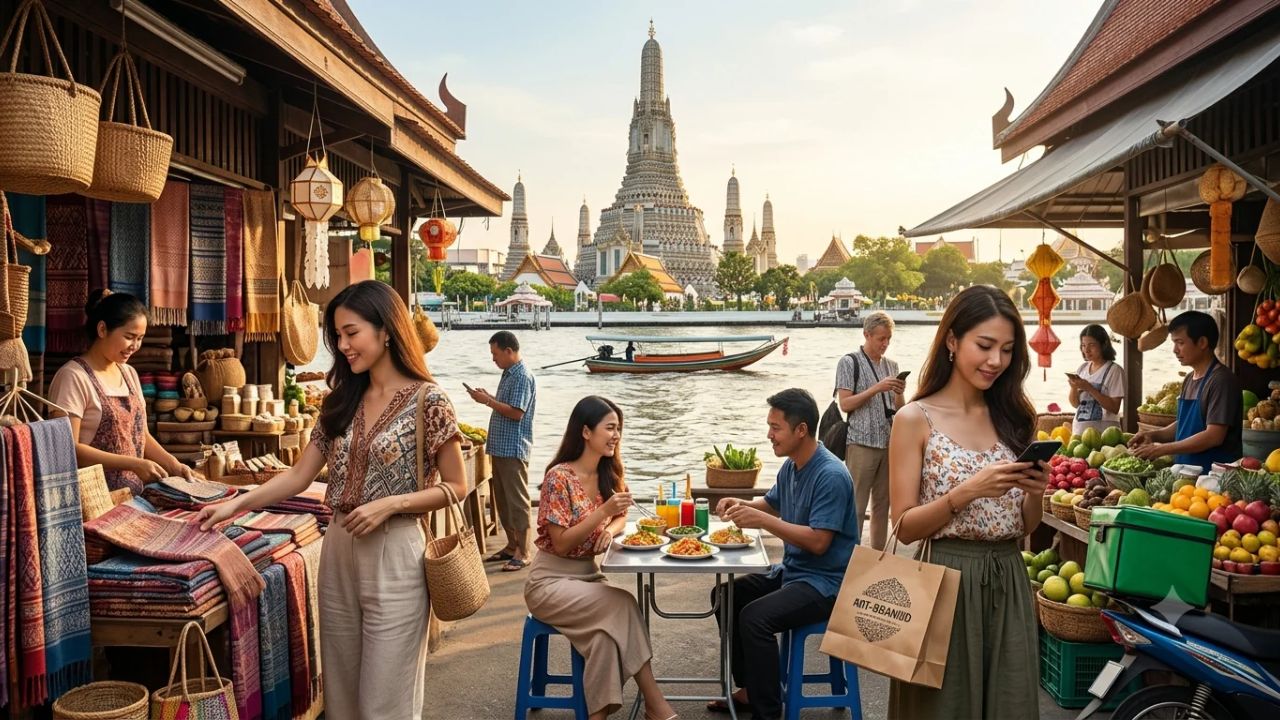
BANGKOK, Thailand — In a transformative convergence of digital platform economics and national heritage promotion, Grab Thailand has unveiled a sweeping cultural tourism strategy designed to monetize traditional Thai heritage across its multi-service ecosystem.
Formally presented at the Grab NEXT 2026 forum in Bangkok on 6 November 2026, the corporate offensive is anchored by the newly developed TASTE framework—an operational model spanning Travel, Awake, Support, Transform, and Elevate.
The strategy capitalizes on a landmark three-year Memorandum of Understanding executed on 22 October 2026 between Grab Thailand and Thailand's Ministry of Culture, aiming to channel international tourist expenditures directly into family-owned culinary establishments, neighborhood craft artisans, and secondary historical districts.
The commercial scope of this digital integration is extensive.
Official corporate figures presented at the forum reveal that between 2023 and 2025, international travelers using Grab's ride-hailing, food delivery, and digital commerce applications generated a direct economic contribution of 15 billion baht to the Thai domestic economy.
When evaluated through macroeconomic research conducted by the Thailand Development Research Institute (TDRI), Grab's broader commercial activities generated an economic impact of 179 billion baht in 2023, representing approximately 1.0 percent of Thailand's gross domestic product.
By leveraging its regional network of 54 million monthly active transacting consumers across eight Southeast Asian nations, Grab is positioning its digital infrastructure as an indispensable bridge connecting foreign holidaymakers with Thailand's 2.7-trillion-baht tourism economy and 1.63-trillion-baht creative industry matrix.
GRAB THAILAND CULTURAL TOURISM PERFORMANCE METRICS
| Performance Metric Indicator | Recorded Corporate Benchmark | Strategic Tourism Meaning |
|---|---|---|
| Foreign Visitor Economic Impact | 15 Billion Baht (2023 - 2025) | Direct tourist consumption |
| TDRI National Economic Footprint | 179 Billion Baht (1.0% of GDP) | Macro platform contribution |
| Regional Platform User Base | 54 Million Transacting Users | 8 Southeast Asian nations |
| International App User Proportion | 25% of Active Users in Thai. | High foreign penetration |
| Average Foreign Stay & App Frequency | 4 Days / At Least 2x Daily | Integral daily holiday tool |
| Rides to Cultural Attractions (2025) | Over 3.6 Million Rides | Temples, museums & heritage |
| Regional GrabFood Thai Food Orders | 22 Billion Baht (2025) | Strong cross-border demand |
| Community Merchant Share (GrabMart) | 74% Small & Local Enterprises | Grassroots retail inclusion |
| Thai Aromatic Products Sold (2025) | Over 250,000 Units | Inhalers, candles, diffusers |
The Platformization of Soft Power: Deconstructing Grab NEXT 2026
The strategic announcements delivered at Grab NEXT 2026 illustrate a profound structural evolution in how Southeast Asian destination economies manage visitor distribution.
Historically, international tourism revenue in Thailand has exhibited high geographic and commercial concentration, pooling primarily within multinational resort chains, major duty-free retailers, and centralized shopping mall conglomerates along Bangkok's central Sukhumvit corridor.
Small-scale street food vendors, traditional textile weavers, and neighborhood heritage temples frequently struggled to gain visibility among foreign travelers who lacked local language proficiency or cash-payment confidence.
Grab's digital ecosystem circumvents these historical distribution bottlenecks by embedding micro-merchants into a unified digital interface equipped with automated language translation, cashless international credit card settlement, and algorithmically guided discovery.
The 15-billion-baht economic contribution recorded from international visitors between 2023 and 2025 demonstrates that foreign travelers increasingly utilize ride-hailing not merely for point-to-point airport transfers, but as an essential sensory navigation device to explore off-the-beaten-path dining enclaves and provincial monuments.
                               THE DIGITAL TOURISM CONVERSION FUNNEL

   +---------------------------------------------------------------------------------+
   | INTERNATIONAL ARRIVAL: Visitor arrives with Grab app already pre-installed      |
   +---------------------------------------------------------------------------------+
                                           |
                                           v [GrabCar / GrabBike Mobility]
   +---------------------------------------------------------------------------------+
   | HERITAGE MOBILITY: 3.6M rides to temples (Wat Arun, Wat Pho, Song Wat, Lamphun) |
   +---------------------------------------------------------------------------------+
                                           |
                                           v [GrabFood "The Lost Taste"]
   +---------------------------------------------------------------------------------+
   | CULINARY IMMERSION: 150+ heritage eateries, heirloom provincial recipes         |
   +---------------------------------------------------------------------------------+
                                           |
                                           v [GrabMart CPOT Integration]
   +---------------------------------------------------------------------------------+
   | GRASSROOTS COMMERCE: 250,000+ aromatic inhalers, handcrafted elephant apparel    |
   +---------------------------------------------------------------------------------+
In addition, the timing of this initiative aligns with the Ministry of Culture's Cultural NEXUS framework, which seeks to modernize Thailand's soft power assets—encompassing food, film, fashion, fighting (Muay Thai), and festivals—into high-yield economic generators.
By partnering directly with a digital super-app, the Thai government is validating platform technology as a legitimate instrument of state cultural diplomacy and grassroots economic development.
The TASTE Framework: Architecture of an Integrated Cultural Economy
At the analytical core of Grab's strategy is the TASTE framework, a comprehensive five-pillar blueprint that systematically links corporate operational capabilities with cultural preservation goals.
Rather than deploying isolated promotional marketing campaigns, the framework designs an integrated economic circuit where transportation, dining, event ticketing, and retail merchandise reinforce one another.
THE TASTE FRAMEWORK OPERATIONAL ARCHITECTURE
| Entity / Route | Metrics | Operational Status |
|---|---|---|
| Framework Pillar | Strategic Focus Area | Tangible Operational Mechanism |
| T - Travel | Connecting Visitors with Heritage Sites | Ride-hailing to cultural hubs |
| A - Awake | Awakening Traditional Cultural Interest | Festival mobility & Muay Thai |
| S - Support | Grassroots Merchant Monetization | GrabMart onboarding of artisans |
| T - Transform | Exporting Thai Brands Regionally | Regional GrabFood cloud delivery |
| E - Elevate | Maximizing Soft Power Valuation | Ministry of Culture branding |
The first pillar, Travel, addresses physical mobility barriers.
By offering transparent, pre-negotiated fares and eliminating language hurdles between international passengers and drivers, Grab enables foreign visitors to venture confidently into intricate, historic urban fabrics such as Bangkok's Chinatown, Thonburi's canal networks, and the ancient temple ruins of Ayutthaya.
The second pillar, Awake, focuses on event-driven cultural awareness.
Grab plans to coordinate dedicated transportation zones, discount promotional codes, and logistical routing around major national festivals, including the Songkran water festival in April, Loy Krathong in November, and regional traditions such as the Bun Bang Fai rocket festivals in northeastern Isan.
This pillar also encompasses partnerships with authentic Muay Thai training camps and traditional Thai massage wellness sanctuaries.
The third pillar, Support, directly targets grassroots retail commerce by onboarding community craft guilds and souvenir producers onto GrabMart.
The fourth pillar, Transform, uses Grab's eight-nation regional presence to export Thai culinary brands to consumers across Southeast Asia.
Finally, the fifth pillar, Elevate, provides official Ministry of Culture certification seals to participating merchants, raising their perceived quality and prestige in the global marketplace.
The 54-Million Regional User Engine: Seamless Mobility for Southeast Asian Visitors
A critical competitive advantage underpinning Grab's cultural tourism strategy is its regional network across Southeast Asia.
With approximately 54 million monthly active transacting users spanning Singapore, Malaysia, Indonesia, the Philippines, Vietnam, Cambodia, and Myanmar, Grab commands immense brand loyalty across Thailand's primary international feeder markets.
When travelers from Singapore, Kuala Lumpur, or Jakarta land at Suvarnabhumi Airport (BKK) or Don Mueang International Airport (DMK), they do not need to download a new regional application, register local payment cards, or learn an unfamiliar user interface.
The application automatically reconfigures into the Thai operating environment while maintaining the user's stored credit cards, language settings, and loyalty tier rewards.
                           REGIONAL APP SYNERGY AND CONSUMER ENGAGEMENT

   [Singaporean / Malaysian Traveler] =======> Lands in Bangkok / Chiang Mai / Phuket
                                                        |
                                                        v
   [Pre-Installed Grab Super-App] ===========> Retains Stored Credit Card & English UI
                                                        |
                                                        +---> Transacts 2x Daily on Average
                                                        +---> Completes 4-Day Typical Stay
                                                        +---> Books Cultural Rides & Meals
According to company usage statistics, international tourists currently represent approximately 25 percent (one out of every four) of all active consumers transacting on Grab's platform in Thailand.
The data indicates that short-stay foreign holidaymakers spend an average of four days in the country and initiate at least two discrete transactions on the application each day of their stay.
This high frequency of engagement transforms the digital platform from an occasional utility into a continuous holiday companion that influences where visitors travel, what dishes they consume, and which local products they purchase.
Sacred Geographies: 3.6 Million Temple Rides and the Rise of Heritage Micro-Districts
The scale of physical mobility directed toward cultural landmarks is documented in Grab's 2025 transport records, which logged more than 3.6 million individual ride completions to cultural, historic, and religious destinations across Thailand.
An analysis of foreign visitor booking patterns reveals five premier cultural destinations that capture the highest volume of platform-mediated passenger drop-offs:
First, Wat Arun (The Temple of Dawn) in Bangkok, famous for its porcelain-encrusted central prang rising above the Chao Phraya River.
Second, Wat Pho (The Temple of the Reclining Buddha) in Bangkok, renowned for its 46-meter gilded Buddha image and historical status as the birthplace of traditional Thai medical massage.
Third, the Sanctuary of Truth in Pattaya, an all-wood architectural marvel hand-carved according to ancient Ayutthayan woodworking techniques.
Fourth, Ancient City (Muang Boran) in Samut Prakan, an open-air museum preserving scaled architectural replicas of historical palaces and shrines from across the Kingdom.
Fifth, the Jim Thompson House Museum in central Bangkok, which showcases traditional teak residential architecture and preserves Thailand's silk weaving heritage.
TOP 5 CULTURAL SIGHTS BY GRAB PASSENGER VOLUME (2025)
| Entity / Route | Metrics | Operational Status |
|---|---|---|
| Cultural Landmark | Geographic Sector | Architectural & Heritage Sig |
| Wat Arun (Temple of Dawn) | Bangkok Riverside (Thonburi) | Khmer-style porcelain prang |
| Wat Pho (Reclining Buddha) | Bangkok Historic Rattanakosin | UNESCO memory of the world |
| Sanctuary of Truth | Pattaya (Chonburi Province) | Hand-carved wooden temple |
| Ancient City (Muang Boran) | Samut Prakan (South Metro) | 800-acre open-air museum |
| Jim Thompson House Museum | Central Bangkok (Pathum Wan) | Teak architecture & silk |
Significantly, internal platform data released in October 2026 demonstrates that traveler preferences are rapidly evolving beyond these established landmarks into hyper-local cultural micro-districts.
This trend is particularly evident among Mainland Chinese travelers, whose ride bookings surged by more than 75 percent year on year during the first nine months of 2026.
Rather than booking large tour buses to crowded monumental sites, younger, independent Chinese travelers are using ride-hailing to reach historic residential neighborhoods:
Ride bookings to Song Wat Road—a historic commercial street in Bangkok's Chinatown flanked by century-old shophouses, artisanal coffee roasteries, and contemporary art galleries—experienced an extraordinary tenfold (1,000 percent) surge in volume.
Bookings to Khlong Bang Luang, an ancient canalside community in Thonburi centered around the traditional Artist's House and waterside puppet theaters, jumped by more than twelvefold (1,200 percent).
In northern Thailand, the historic town of Lamphun—one of the oldest continuously inhabited settlements in the Kingdom, celebrated for its ancient Hariphunchai architecture and handwoven silk—saw a fourfold (400 percent) increase in foreign visitor drop-offs.
                           HERITAGE MICRO-DISTRICT RIDE SURGE (JAN-SEP 2026)

   +---------------------------------------------------------------------------------+
   | SONG WAT ROAD (Bangkok Chinatown): 10x Surge (Historic Shophouses & Cafes)      |
   +---------------------------------------------------------------------------------+
                                           |
   +---------------------------------------------------------------------------------+
   | KHLONG BANG LUANG (Thonburi Canals): 12x Surge (Artist's House & Puppetry)      |
   +---------------------------------------------------------------------------------+
                                           |
   +---------------------------------------------------------------------------------+
   | LAMPHUN HISTORIC TOWN (Northern Lanna): 4x Surge (Hariphunchai Monastic Sites)  |
   +---------------------------------------------------------------------------------+
Culinary Diplomacy and The Lost Taste: Monetizing a 22-Billion-Baht Appetite
Gastronomic exploration represents one of the primary motivations for international travel to Thailand.
To quantify the commercial scale of regional appetite for Thai flavors, Grab reported that orders for Thai food placed across its GrabFood network in seven Southeast Asian markets reached an aggregate gross merchandise value of 22 billion baht in 2025.
This regional appetite establishes a direct bridge to the Ministry of Culture's culinary preservation agenda.
Under the newly forged partnership, Grab is integrating over 150 independent eateries participating in The Lost Taste program into the GrabFood interface.
The Lost Taste is an official cultural initiative designed to resurrect, document, and preserve rare regional recipes, royal court delicacies, and indigenous culinary traditions that risk being overshadowed by standardized commercial dishes like Pad Thai and Green Curry.
THE LOST TASTE CULINARY PRESERVATION PROFILE
| Entity / Route | Metrics | Operational Status |
|---|---|---|
| Program Dimension | Operational Feature | Cultural & Economic Purpose |
| Participating Heritage Eateries | Over 150 Certified Merchants | Promotes authentic recipes |
| Regional Food Demand Baseline | 22 Billion Baht across ASEAN | Captures culinary soft power |
| Digital Interface Curation | Dedicated In-App Heritage Hub | Eliminates language barriers |
| Recipe Protection Scope | Royal Court & Provincial Heir. | Prevents culinary extinction |
| Micro-Merchant Revenue Model | Direct Delivery & Dine-In Map | Boosts small family kitchens |
Through specialized digital banners, multi-lingual menu translations, and curated thematic collections, foreign travelers can easily identify authentic family-run kitchens serving dishes such as Gaeng Ran Juan (an ancient royal beef soup seasoned with fermented shrimp paste and lemongrass), Massaman curry prepared according to century-old southern methods, or northern Lanna khao soi crafted with hand-pounded spice pastes.
By directing tourist capital toward smaller culinary proprietors who maintain traditional cooking techniques, the platform helps ensure that economic modernization does not erode intangible culinary heritage.
Micro-Retail Empowerment: GrabMart, CPOT, and 250,000 Aromatic Goods
Beyond transport and dining, the digital strategy encompasses grassroots retail commerce through GrabMart, the platform's instant on-demand delivery marketplace.
Internal merchant auditing indicates that 74 percent of active merchants operating on GrabMart qualify as small businesses, family retail shops, or local community cooperatives.
The platform is systematically onboarding artisan associations certified under the Ministry of Culture's Cultural Product of Thailand (CPOT) program.
CPOT is a rigorous state certification that validates authentic local craftsmanship, indigenous raw materials, and fair community wages across regional handicraft guilds.
Through GrabMart, international travelers staying in hotels can browse and purchase authentic handwoven Thai silk scarves, Benjarong porcelain items, celadon ceramics, and traditional elephant-patterned cotton trousers, receiving deliveries at their hotel lobbies within 30 to 45 minutes.
COMMUNITY CRAFT COMMERCE ON GRABMART (2025 DATA)
| Entity / Route | Metrics | Operational Status |
|---|---|---|
| Product Classification | Documented Commercial Volume | Grassroots Economic Impact |
| Community Enterprise Presence | 74% of Total Mart Merchants | Direct small-business access |
| Traditional Aromatic Products | Over 250,000 Units Sold | Herbal inhalers & diffusers |
| International Tourist Order Growth | +50% Year-on-Year Expansion | Surging souvenir demand |
| Cultural Product of Thailand (CPOT) | State-Certified Craft Guilds | Fair wages for rural artisans |
| Fast-Fulfillment Delivery Window | 30 to 45 Minute Turnaround | Frictionless hotel delivery |
A remarkable success story within this digital retail channel is the explosive demand for traditional Thai wellness and aromatic products.
Grab recorded that more than 250,000 units of Thai aromatic items—including traditional herbal nasal inhalers (ya dom), herbal massage balms, aromatic scented candles, and organic lemongrass diffusers—were purchased through GrabMart during 2025.
Driven by viral social media trends across East Asia, total GrabMart orders for locally produced artisanal goods placed by foreign accounts expanded by 50 percent year on year, proving that instant digital fulfillment can dramatically expand sales horizons for grassroots community producers.
Physical and Digital Infrastructure: Waiting Hubs, QR Maps, and AI Assist
The collaboration between Grab and the Ministry of Culture extends beyond digital software into tangible physical urban infrastructure across Thailand's historic cities.
Recognizing that international visitors often encounter chaotic traffic conditions and limited pedestrian facilities when visiting historic quarters, the partnership is deploying dedicated physical transit infrastructure.
                               HYBRID PHYSICAL-DIGITAL INFRASTRUCTURE

   +---------------------------------------------------------------------------------+
   | PHYSICAL TOURIST HUBS: Shaded waiting pavilions, seating & umbrella stands      |
   | Deployed at key heritage sites across Bangkok, Chiang Mai, and Ayutthaya        |
   +---------------------------------------------------------------------------------+
                                           |
                                           v
   +---------------------------------------------------------------------------------+
   | COMMUNITY QR MAPS: Scannable localized guides curated by neighborhood residents |
   | Unlocks hidden cafes, handicraft workshops, and independent cultural venues     |
   +---------------------------------------------------------------------------------+
                                           |
                                           v
   +---------------------------------------------------------------------------------+
   | GRABMERCHANT AI ASSISTANT: 275,000+ local vendors utilizing predictive analytics |
   | Optimizes inventory, pricing, and multi-lingual marketing for foreign demand     |
   +---------------------------------------------------------------------------------+
Under the approved rollout plan, customized tourist pick-up and drop-off stations will be established at high-density cultural sites across Bangkok, Chiang Mai, and Ayutthaya.
These physical hubs will provide designated shaded seating pavilions, weather-protective umbrella stands, multi-lingual directional signage, and free Wi-Fi access points.
Integrated into each physical hub are localized QR discovery codes.
When scanned with a smartphone camera, the codes load interactive digital walking maps curated by local neighborhood preservation associations.
These maps highlight hidden community cafes, family-owned bronze-casting workshops, traditional puppet theaters, and independent fruit stalls situated within walking distance of major monuments, effectively encouraging visitors to disperse their footfall and spending throughout the surrounding residential quarter.
To ensure small merchants can effectively handle this influx of foreign patronage, Grab is providing business capacity training through GrabAcademy, alongside automated software tools.
By October 2026, more than 275,000 merchants nationwide had adopted the GrabMerchant AI Assistant.
This artificial intelligence application analyzes historical customer ordering patterns, translates customer inquiries in real time, and provides predictive recommendations on inventory purchasing, menu pricing, and operating hours during peak international holiday seasons.
Additionally, the platform built upon the Amazing Thailand Grab Travel Pass—launched in April 2026 in partnership with the Tourism Authority of Thailand (TAT)—which offered arriving tourists an entry pass for 30 baht that unlocked more than 3,000 baht in cumulative discounts across transportation, dining, and shopping.
Regulatory Scrutiny and Fair Trade: The TCCT Platform Fee Consultation
While Grab's cultural tourism expansion delivers undeniable promotional reach and commercial opportunities for local enterprises, it unfolds against a complex domestic regulatory environment regarding digital platform practices.
The Trade Competition Commission of Thailand (TCCT) has initiated comprehensive regulatory scrutiny over dominant digital ride-hailing and food delivery platforms.
The regulatory agency scheduled a formal public consultation window running from 4 November to 3 December 2026 to review proposed draft regulations governing platform commissions, promotional discounting mandates, and merchant contract terms.
TCCT DIGITAL PLATFORM REGULATORY FRAMEWORK 2026
| Regulatory Dimension | Official Parameter / Status | Industry & Merchant Impact |
|---|---|---|
| Regulatory Authority | Trade Competition Commission of Thailand | Public consultation Nov 4 - Dec 3 |
| Food Delivery Fee Cap | Maintained at Maximum 30% GP Rate | Merchant gross profit deduction |
| Ride-Hailing Fee Cap | Maintained at Maximum 20% Commission | Driver fare retention threshold |
| Merchant Profitability | Balancing Digital Reach vs Fee Overhead | High volume vs net margin tension |
| Operating Cost Factor | Delivery fees, payment fees, packaging | Vital for micro-eatery survival |
In formal representations submitted to the competition regulator, Grab emphasized that its maximum gross profit (GP) commission fee rates have remained capped and unchanged for several consecutive years: food delivery commissions are capped at a maximum of 30 percent, while ride-hailing commissions are maintained at a maximum of 20 percent.
The company stressed that its maximum food delivery fee caps have not experienced upward revisions since the pandemic period.
The outcome of this regulatory consultation carries substantial weight for Thailand's grassroots cultural economy.
For a small family-run noodle shop or an independent handicraft artisan operating on slim commercial profit margins, a 30 percent commission deduction represents a substantial portion of potential earnings.
While the digital platform provides unprecedented access to international travelers who would otherwise never discover the shop, merchant success depends on maintaining a delicate balance between increased sales volume and net operational profitability.
Industry analysts observe that as digital platforms assume an increasingly quasi-public utility role within national tourism ecosystems, fair trade oversight will be essential to ensure that platform earnings do not extract excessive capital from the very cultural communities they seek to empower.
The International Traveler's Digital Guide to Navigating Thailand via Grab
For foreign tourists planning a heritage-rich journey through Thailand, utilizing digital super-app tools strategically can transform travel logistics, minimize communication friction, and open doors to authentic cultural enclaves.
INTERNATIONAL TRAVELER DIGITAL NAVIGATION PLAYBOOK
| Entity / Route | Metrics | Operational Status |
|---|---|---|
| Travel Requirement | Platform Tool / Feature | Strategic Execution Protocol |
| Currency & Payments | GrabPay / Linked International Card | Eliminates local cash handling |
| Alleyway Navigation | GrabBike / JustGrab | Navigates narrow historic sois |
| Authentic Dining | GrabFood "The Lost Taste" Category | Orders certified heirloom recipes |
| Souvenir Shopping | GrabMart CPOT Delivery to Hotel | Direct delivery of verified craft |
| Airport Connectivity | Pre-Booked GrabCar Airport Transfer | Fixed upfront fare, avoids queues |
Step 1: Establish Seamless Payment and Language Protocols
Upon arrival at Suvarnabhumi Airport or Don Mueang Airport, connect your smartphone to an international roaming data plan or local Thai eSIM.
Open the Grab application and link an internationally recognized credit card or debit card that charges zero foreign transaction fees.
This step eliminates the need to carry large quantities of physical Thai baht banknotes, protects against currency conversion markups, and provides itemized electronic receipts for every journey.
The application automatically utilizes your smartphone's primary language setting, providing two-way automated translation in driver-passenger messaging chats.
Step 2: Utilize Specialized Vehicle Types for Historic Quarters
When navigating densely settled historic quarters such as Bangkok's Chinatown (Yaowarat), Thonburi's canal lanes, or Chiang Mai's walled Old City, avoid booking oversized premium vehicles that can become trapped in narrow alleyways (sois).
Opt for JustGrab or standard GrabCar for family travel, or utilize GrabBike when traveling solo to navigate traffic congestion swiftly.
When visiting monumental complexes like the Grand Palace, Wat Pho, or Wat Arun, utilize designated official Grab pick-up and drop-off points to avoid conflicting with restricted municipal taxi zones.
Step 3: Seek Out Official Cultural Product of Thailand (CPOT) Certifications
When shopping for souvenirs or traditional wellness goods on GrabMart, search specifically for merchants bearing the official Cultural Product of Thailand (CPOT) emblem or The Lost Taste restaurant accreditation.
This ensures that your purchases support verified grassroots artisans, independent family cooks, and regional craft cooperatives rather than mass-produced, imported imitation goods.
Schedule deliveries directly to your hotel concierge desk during afternoon resting periods, allowing you to travel unencumbered by bulky shopping bags during sightseeing excursions.
Strategic Horizons: Super-Apps as the Future of Inclusive Heritage Tourism
The strategic alignment between Grab Thailand and the Ministry of Culture marks a defining milestone in the modernization of Southeast Asian tourism.
By mobilizing digital algorithms, location-based services, instant commerce, and artificial intelligence in service of cultural heritage, Thailand is illustrating how technological innovation can be harnessed to protect and monetize national identity.
As global leisure travelers increasingly reject standardized mass-resort packages in favor of deeply authentic, localized cultural experiences, the ability to deliver frictionless access to neighborhood kitchens, village artisans, and sacred monuments becomes a decisive national advantage.
The ultimate success of Thailand's digital cultural tourism boom will be measured not merely by headline economic contribution figures, but by its enduring capacity to sustain the independent artisans, cooks, and community custodians who breathe living vitality into the Kingdom's heritage every day.
Related Travel Guides
- Gyeonggi Province Elevates South Korean Family Tourism: Six Autumn Nature and Heritage Day Trips
- Spain Smashes All-Time Tourism Records with 80.5M Visitors and €114.4B in Spending: Historic 100M Milestone
- Vietnam Unveils Bold Green Island Vision for Con Dao: Mangrove Restoration and Coral Nurseries in 2050 Master Plan
- The Mall Group Injects 600 Million Baht into Bangkok Festive Tourism: Mr. Men Campaign Targets 20% Surge
- Mogadishu Tourism Bets on TikTok to Convert Social Scrolls into Travel Bookings: Diaspora Demand and Logistics
This article is for informational purposes. Flight routes, passenger regulations, visa rules, and transit advisories are subject to change by airlines and aviation authorities. Readers are advised to verify schedules and travel documentation with relevant carriers and border agencies before departure.
Related Stories

Gyeonggi Province Elevates South Korean Family Tourism: Six Autumn Nature and Heritage Day Trips Beyond Seoul Revealed

Spain Smashes All-Time Tourism Records with 80.5M Visitors and €114.4B in Spending: Historic 100 Million Milestone Looms in 2026