
Shanghai Inbound Tourism Surges to 5.31M Visitors: Jinshan Suburban Expansion, Multilingual Guide Shortages, and Luxury Hotel Rate Inflation Reshape Megacity Travel

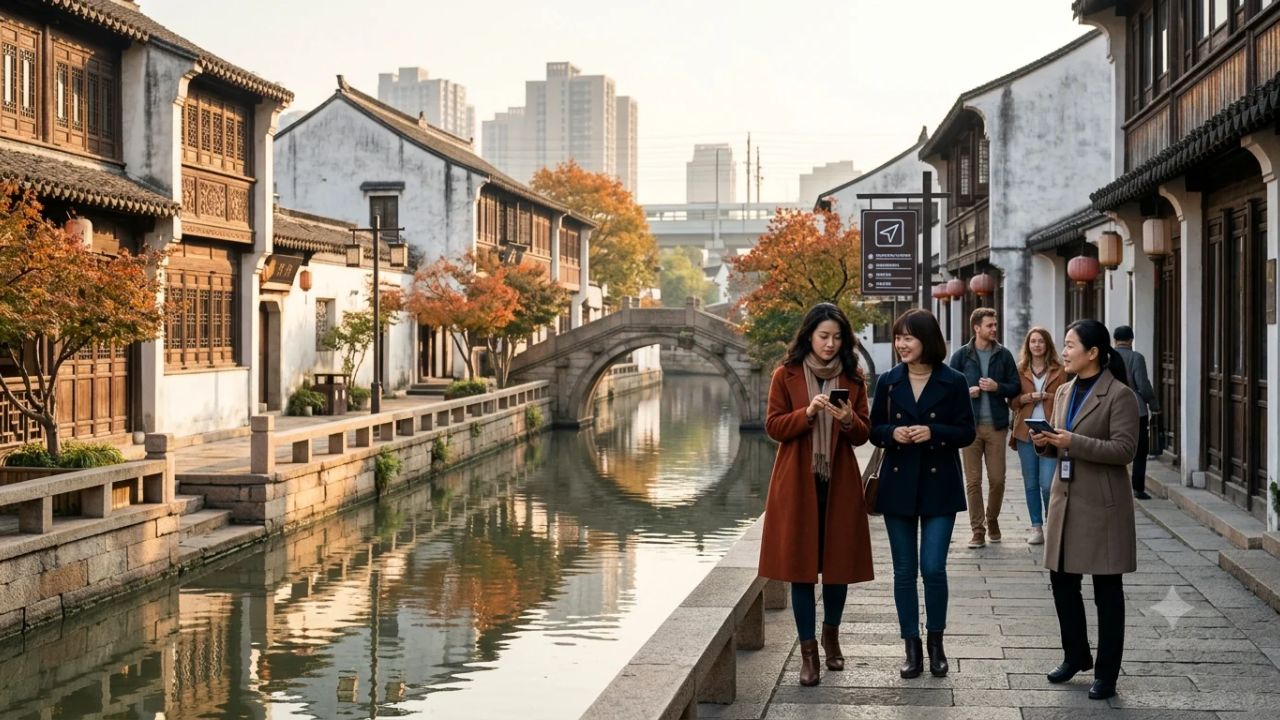
SHANGHAI, China — Driven by expanded visa-free transit policies, international commercial conferences, and a resurgent appetite for Chinese urban culture, Shanghai has welcomed a remarkable 5.31 million overseas visitor arrivals.
Official data published by the Shanghai Municipal Administration of Culture and Tourism establishes that the global metropolis is experiencing an unprecedented inbound travel renaissance, reasserting its position as China's primary gateway for international commerce and leisure.
However, this massive influx of foreign travelers has unleashed complex economic shifts across the municipal hospitality ecosystem.
Record occupancy levels within premier five-star establishments across central commercial districts have exerted significant upward pressure on luxury room rates, prompting corporate executives and leisure travelers to disperse their capital into peripheral boutique properties.
Concurrently, municipal authorities and tour agencies are confronting an acute deficit of licensed multilingual personnel, with demand for Russian-speaking, Spanish-speaking, and multilingual tour guides severely outstripping local labor supply.
To alleviate urban core congestion and ensure that the economic benefits of international tourism are distributed equitably, municipal planners are actively developing suburban districts—most notably Jinshan, Songjiang, Qingpu, and Fengxian.
By integrating high-speed regional rail, artificial intelligence crowd-control systems, coastal eco-tourism, and living heritage conservation, Shanghai is pioneering a decentralized, technologically empowered model of megacity tourism governance.
SHANGHAI INBOUND TOURISM BENCHMARK METRICS 2026
| Performance Metric Indicator | Recorded Municipal Benchmark | Strategic Tourism Meaning |
|---|---|---|
| Overseas Visitor Inflow | 5.31 Million Foreign Arrivals | Unprecedented gateway volume |
| Bleisure Share of Business Travel | 35% of Total Corporate Stays | Blended work-leisure growth |
| Long-Stay Remote Work Influx | +34% Rental Demand Expansion | Digital nomad ecosystem |
| Wellness Tourism Spend Acceleration | +22% Annual Outlay Growth | Coastal & suburban health |
| Gastronomic Trip Budget Allocation | 25% of Total Travel Spending | Street food to fine dining |
| Regional High-Speed Rail Growth | +28% Intercity Passenger Lift | Yangtze River Delta links |
| Intangible Heritage Participation | +42% Workshop Attendance Lift | Hands-on craft immersion |
| Night-Time Tourism Spend Expansion | +31% Evening Commercial Output | Nocturnal skyline economy |
| Eco-Certified Accommodation Demand | 76% Verified Traveler Bias | Green circular hospitality |
The 5.31 Million Influx: Deconstructing Shanghai's Inbound Renaissance
The arrival of 5.31 million international visitors highlights the success of China's recent immigration and tourism facilitation policies.
The expansion of the 144-hour visa-free transit framework, coupled with bilateral and unilateral visa exemption agreements signed with dozens of European, Southeast Asian, and Middle Eastern nations, has dramatically lowered administrative barriers for international travelers.
Arriving passengers through Shanghai Pudong International Airport (PVG) and Shanghai Hongqiao International Airport (SHA) now experience streamlined customs processing, on-site multi-currency foreign exchange booths, and immediate assistance for digital SIM activation.
Demographic analysis of the inbound influx reveals a highly diversified visitor portfolio.
While traditional business travel from regional financial centers such as Singapore, Tokyo, and Seoul remains robust, leisure travel from Western Europe, Central Asia, and Russia has accelerated sharply.
These travelers arrive with varied expectations: long-haul European visitors seek deep architectural and culinary immersion, while Russian trade delegations and holidaymakers increasingly combine business negotiations in Pudong's financial free-trade zones with leisure retreats across surrounding coastal districts.
                               INBOUND VISITOR SPATIAL FLOW IN SHANGHAI

   +---------------------------------------------------------------------------------+
   | INTERNATIONAL GATEWAYS: Pudong Airport (PVG) & Hongqiao Airport (SHA)           |
   +---------------------------------------------------------------------------------+
                                           |
                                           v [144-Hour Transit & Visa Exemption]
   +---------------------------------------------------------------------------------+
   | HISTORIC URBAN CORE (Huangpu, Pudong, Jing'an): High hotel rates & dense crowds |
   +---------------------------------------------------------------------------------+
          |                     |                      |                     |
          v                     v                      v                     v
   [Jinshan District]    [Songjiang District]   [Qingpu District]    [Fengxian District]
   (Coastal Fishing)     (Ancient Heritage)     (Water Town Retail)  (Eco-Health Wellness)
However, absorbing over five million international visitors requires sophisticated destination management.
When tourist footfall remains confined strictly to iconic central sites—such as The Bund, Yu Garden, and Nanjing Road Pedestrian Street—municipal infrastructure faces severe strain.
The central challenge confronting Shanghai's tourism leadership is not simply increasing total arrival numbers, but ensuring that visitor distribution enhances regional economic development without compromising the living standards of local residents.
Luxury Hospitality Economics: Rate Inflation and the Dispersion of Guest Capital
The unprecedented volume of international visitors has profoundly disrupted pricing dynamics within Shanghai's premier accommodation sector.
Throughout central districts like Huangpu, Jing'an, and Pudong, luxury five-star hotels and heritage boutique properties have operated at near-capacity occupancy levels across consecutive quarters.
Properties such as The Peninsula Shanghai, The Peace Hotel, Bulgari Hotel Shanghai, and The Ritz-Carlton Pudong have experienced strong pricing power, elevating average daily room rates (ADR) and revenue per available room (RevPAR) to historic heights.
SHANGHAI LODGING SEGMENTATION AND PRICING PRESSURES
| Entity / Route | Metrics | Operational Status |
|---|---|---|
| Lodging Category | Occupancy & Rate Pressures | Market Adjustment Behavior |
| Central Luxury Hotels (5-Star) | Peak Occupancy / High ADR | Corporate budgets reassessed |
| Heritage Boutique Properties | Strong Cultural Leisure Demand | Premium pricing justified |
| Suburban Boutique Guesthouses | +25% Occupancy Spillover | Attracts budget-conscious |
| Serviced Co-Living Residences | +34% Long-Stay Remote Growth | Digital nomads & bleisure |
| Eco-Certified Wellness Resorts | +22% Revenue Expansion | Health-conscious clientele |
This sustained rate inflation has forced corporate travel managers, event organizers, and independent travelers to recalibrate their accommodation budgets.
Securing luxury suites in prime waterfront locations along the Huangpu River has become intensely competitive, requiring reservations weeks in advance.
To maintain guest satisfaction amidst soaring prices, luxury operators are rolling out customized loyalty privileges, private art collection viewings, and dedicated multilingual butler services.
Equally significant is the economic ripple effect generated by this pricing surge.
Price-conscious leisure visitors, extended-stay professionals, and digital nomads are increasingly bypassing central luxury hotels in favor of alternative accommodations situated in peripheral and suburban neighborhoods.
Boutique guesthouses, restored historic shikumen apartments, and serviced residential towers in outer districts are capturing substantial market share.
This structural migration disperses tourism revenue outward, channeling foreign expenditure into neighborhood bakeries, family-run noodle shops, local grocery stores, and artisanal coffee roasteries far removed from conventional tourist enclaves.
                               HOSPITALITY PRICING SPILLOVER DYNAMICS

   [Central Luxury Hotels at Full Capacity] ===> Soaring Room Rates in Prime Core
                                                        |
                                                        v
   [Travelers Seek Alternative Stays] =======> Suburban Guesthouses & Shikumen Lofts
                                                        |
                                                        +---> Disperses Capital to Outer Boroughs
                                                        +---> Sustains Small Neighborhood Eateries
                                                        +---> Incentivizes Transit Modernization
The Multilingual Talent Deficit: Bridging the Language Gap
Beyond physical infrastructure and hotel accommodations, the rapid diversification of inbound visitor demographics has exposed a severe operational bottleneck: an acute shortage of specialized, licensed multilingual personnel.
While English-speaking guides are relatively abundant across major urban agencies, the sudden influx of non-English-speaking traveler cohorts has created unprecedented recruitment challenges.
The most urgent deficiency is observed in the supply of certified Russian-speaking tour guides.
As bilateral commerce and travel between China and the Russian Federation expand, business delegations, trade delegations, and cultural tour groups are arriving in Shanghai in record numbers.
Traditional translation services and automated smartphone software prove inadequate when guiding specialized industrial tours, navigating complex maritime logistics zones, or delivering nuanced lectures on ancient Chinese architectural history.
Local agencies report similar recruitment strains for guides fluent in Spanish, German, French, Italian, and Arabic.
SPECIALIZED MULTILINGUAL TALENT DEFICIT (2026 AUDIT)
| Entity / Route | Metrics | Operational Status |
|---|---|---|
| Linguistic Skillset | Demand Growth Index | Operational Scarcity Level |
| Russian Language Proficiency | +65% Inbound Growth Surge | Critical Shortage |
| Spanish & Latin American Fluency | +40% Inbound Tour Influx | Severe Deficit |
| German & Central European Expertise | +28% Cultural Heritage Travel | Moderate Scarcity |
| Arabic Language Capability | +35% Trade & Luxury Delegation | High Priority Need |
| Multi-Dialect Contextual English | Baseline Standard | Adequately Supplied |
In response to this human capital challenge, the Shanghai Municipal Administration of Culture and Tourism, in collaboration with premier academic institutions such as Shanghai International Studies University (SISU), has initiated accelerated professional development frameworks.
Intensive training academies are fast-tracking language acquisition, diplomatic protocol, and cross-cultural intelligence among young university graduates entering the hospitality labor market.
These programs pair foreign language graduates with veteran cultural historians, equipping new guides with deep contextual knowledge of Shanghai's complex evolution from an ancient fishing town into a global financial capital.
For international visitors, having access to an articulate, culturally fluent guide transforms an ordinary sightseeing excursion into a memorable intellectual encounter, proving that human communication remains the ultimate foundation of exceptional travel.
                               WORKFORCE DEVELOPMENT PIPELINE

   +---------------------------------------------------------------------------------+
   | ACADEMIC RECRUITMENT: Shanghai International Studies University Graduates        |
   +---------------------------------------------------------------------------------+
                                           |
                                           v [Fast-Track Cultural Intelligence]
   +---------------------------------------------------------------------------------+
   | DIPLOMATIC & HISTORICAL TRAINING: Deep architectural, maritime, and civic study |
   +---------------------------------------------------------------------------------+
                                           |
                                           v [Licensing & Certification]
   +---------------------------------------------------------------------------------+
   | HIGH-CONTEXT MULTILINGUAL GUIDES: Eliminating language barriers for global guests|
   +---------------------------------------------------------------------------------+
Spatial Rebalancing: Jinshan's Coastal Eco-Tourism and Fishing Village Resurgence
To absorb secondary waves of international visitor traffic and alleviate pressure on central monuments, Shanghai municipal authorities are executing a deliberate spatial rebalancing strategy.
Leading this suburban decentralization is Jinshan District, situated along the southwestern coastal edge of the municipality bordering Hangzhou Bay.
Traditionally regarded as an industrial and agricultural sector, Jinshan has systematically repositioned itself as a premier coastal ecotourism destination.
The crown jewel of Jinshan's visitor portfolio is the Jinshanzu Fishing Village—the only remaining marine fishing hamlet in mainland Shanghai with a documented heritage spanning several centuries.
Visitors navigating narrow cobblestone alleyways encounter preserved fisherman residences, traditional net-weaving workshops, and open-air seafood markets where coastal catches are prepared according to ancient maritime recipes.
JINSHAN DISTRICT ECOTOURISM PROFILE
| Entity / Route | Metrics | Operational Status |
|---|---|---|
| Key Heritage Asset | Primary Experience Focus | Infrastructure Upgrades |
| Jinshanzu Fishing Village | Shanghai's Last Coastal Hamlet | Multilingual historical plaques |
| Jinshan City Beach | Marine Recreation & Water Spor | High-speed railway link |
| Agricultural Eco-Sanctuaries | Organic Farming & Fruit Picking | Integrated mobile payments |
| Coastal Wetland Reserves | Migratory Bird Observation | Dedicated walking boardwalks |
Regional authorities have invested heavily in visitor infrastructure to make Jinshan accessible to international tourists.
The Jinshan Railway express commuter line connects downtown Shanghai South Railway Station to Jinshanweizhan in just 32 minutes, delivering travelers directly to the coast.
Throughout the district, directional signage, interpretive museum plaques, and public transit schedules have been updated with bilingual Chinese-English text.
In addition, local small businesses, guesthouses, and seafood stalls have adopted universal digital payment interfaces that accept foreign credit cards directly via linked Alipay and WeChat Pay accounts.
This infrastructure modernization enables international travelers to explore coastal village life with the same frictionless ease experienced along The Bund.
Songjiang's Cultural Heritage: Ancient Roots and Archaeological Immersion
While Jinshan captures coastal interest, Songjiang District—situated in southwestern Shanghai—is experiencing a remarkable cultural renaissance among international heritage enthusiasts.
Widely revered as the root of Shanghai culture, Songjiang possesses an urban history that predates the commercial rise of central Shanghai by more than a thousand years.
The centerpiece of Songjiang's heritage offerings is the Guangfulin Ancient Relics Park, an extraordinary archaeological museum complex built partially submerged beneath the waters of an artificial lake.
The site preserves Neolithic cultural strata dating back over 5,000 years, featuring artifacts from the Liangzhu and Majiabang archaeological cultures.
The museum's iconic architectural design—featuring traditional tiled gabled roofs emerging from the surface of the water—provides a visually striking metaphor for history emerging from the depths of time.
                               SONGJIANG HERITAGE CONSERVATION ARCHITECTURE

   +---------------------------------------------------------------------------------+
   | GUANGFULIN ANCIENT RELICS: 5,000-Year Archaeological Relics Submerged in Water   |
   +---------------------------------------------------------------------------------+
                                           |
                                           v
   +---------------------------------------------------------------------------------+
   | CLASSICAL SPACES: Zuibaichi Garden (Ming Dynasty) & Ancient Pagoda Sanctuaries  |
   +---------------------------------------------------------------------------------+
                                           |
                                           v
   +---------------------------------------------------------------------------------+
   | BOUTIQUE HERITAGE GUESTHOUSES: Restored timber residences catering to scholars  |
   +---------------------------------------------------------------------------------+
Beyond Guangfulin, Songjiang features the classical Zuibaichi Garden—one of Shanghai's five renowned classical Ming Dynasty scholars' gardens—alongside the Sheshan National Forest Park, home to the Sheshan Catholic Basilica and astronomical observatory.
To manage visitor inflows without threatening fragile historical monuments, park administrators utilize dynamic capacity monitoring and advance digital ticketing.
The influx of cultural tourists has stimulated private investments in boutique heritage hotels and scholarly guesthouses, allowing travelers to lodge inside restored timber-frame residences that combine ancient architectural elegance with modern luxury amenities.
SUBURBAN DISTRICT TOURISM COMPARISON MATRIX
| Entity / Route | Metrics | Operational Status |
|---|---|---|
| District Sector | Primary Tourism Identity | Key Iconic Attractions |
| Jinshan | Maritime Fishing & Coastal Ecotourism | Jinshanzu Village, City Beach |
| Songjiang | Ancient Archaeological & Garden Heritage | Guangfulin Relics, Zuibaichi |
| Qingpu | Canal Water Towns & Modern Retail Hubs | Zhujiajiao Town, Mega Outlets |
| Fengxian | Coastal Wellness & Health Sanctuaries | Eco-Resorts, Coastal Health Hubs |
Qingpu and Fengxian: Water Town Commerce and Coastal Wellness Retreats
The spatial diversification of Shanghai's tourism ecosystem is further exemplified by the outer districts of Qingpu and Fengxian, which cater to contrasting traveler preferences.
In western Shanghai, Qingpu District has established an enviable commercial synergy by combining ancient canal heritage with modern shopping facilities.
Qingpu is anchored by Zhujiajiao Ancient Water Town, a celebrated 1,700-year-old settlement traversed by 36 stone bridges and lined with traditional waterside courtyard homes.
Visitors can board hand-poled wooden sampans along historic canals before traveling a short distance to expansive modern outlet retail villages featuring premier global fashion houses.
Directly linked to downtown via Shanghai Subway Line 17, Qingpu offers an ideal day-trip itinerary that blends historical sightseeing with duty-free retail therapy.
                               QINGPU COMMERCE AND WATER TOWN DUALITY

   [Zhujiajiao Water Town] ===============> 1,700-Year-Old Canal Bridges & Courtyards
                                                        |
                                                        v
   [Modern Outlet Malls] ================> High-End Duty-Free Shopping Infrastructure
                                                        |
                                                        v
   [Subway Line 17 Transit] =============> Direct 35-Minute Commute to Central Hubs
Conversely, Fengxian District along the southeastern shoreline focuses on wellness, nature, and holistic rejuvenation.
Surrounded by extensive coastal wetlands and protected forest reserves, Fengxian has cultivated an ecosystem of wellness resorts, organic agricultural estates, and traditional Chinese medicine (TCM) therapeutic retreats.
Market research indicates that international wellness tourism expenditures have grown by 22 percent annually, with travelers actively seeking restorative retreats that provide acupuncture, herbal nutrition consultations, and mindfulness meditation far from downtown traffic.
By capturing this health-conscious travel segment, Fengxian plays a pivotal role in expanding the breadth of Shanghai's international visitor offerings.
The Smart City Engine: AI Visitor Management and Real-Time Controls
Managing over 5.3 million international arrivals alongside tens of millions of domestic travelers requires advanced civic technology.
Shanghai has integrated artificial intelligence, Internet-of-Things (IoT) sensor arrays, and predictive big-data analytics into its core tourism management systems.
Across high-density pedestrian corridors—including The Bund, Yu Garden, and the Lujiazui financial plaza—subterranean and overhead optical sensors track pedestrian movement velocity in real time.
When crowd densities approach safe operational thresholds, machine learning algorithms automatically alert municipal dispatchers.
Digital signage boards dynamically update walking directions, while automated alerts sent through public transit applications recommend alternative, less congested sightseeing routes.
SMART TOURISM TECHNOLOGIES DEPLOYED IN SHANGHAI 2026
| Entity / Route | Metrics | Operational Status |
|---|---|---|
| Technological System | Operational Deployment | Traveler Benefit Delivered |
| Real-Time Optical Footfall Sensors | The Bund, Yu Garden, Lujiazui | Mitigates dangerous crowds |
| Predictive Flow Algorithms | Municipal Transit Command | Dynamic route redirection |
| AI Multilingual Concierge Apps | WeChat/Alipay Mini-Programs | Instant natural translation |
| Digital Ticketing & Identification | Major Museums & Historical S. | Eliminates ticket queues |
| Energy Management Automation | Eco-Certified Hotel Towers | 30% Resource reduction |
For foreign travelers, this technological foundation translates into a frictionless travel experience.
AI-powered digital concierge applications equipped with natural language processing allow visitors to speak queries in their native tongues—whether German, Russian, Japanese, or French—and receive instantaneous, localized directions, transit recommendations, and ticket reservations.
At major cultural institutions, digital ticketing systems linked directly to international passport numbers have eliminated long queues, allowing foreign guests to scan their physical passports at electronic turnstiles for immediate entry.
                               AI VISITOR FLOW OPTIMIZATION CYCLE

   +---------------------------------------------------------------------------------+
   | IOT OPTICAL SENSING: Continuous monitoring of footfall velocity across The Bund |
   +---------------------------------------------------------------------------------+
                                           |
                                           v [Algorithmic Density Evaluation]
   +---------------------------------------------------------------------------------+
   | DYNAMIC LOAD BALANCING: Smart signs redirect visitors to adjacent promenades    |
   +---------------------------------------------------------------------------------+
                                           |
                                           v [Mobile Interactivity]
   +---------------------------------------------------------------------------------+
   | AI CONCIERGE GUIDANCE: Multilingual smartphone apps deliver instant navigation  |
   +---------------------------------------------------------------------------------+
Bleisure Convergence and the Digital Nomad Ecosystem
The boundaries separating professional commerce from personal leisure have dissolved across Shanghai's business districts.
Hospitality research indicates that corporate bleisure—the practice of extending business trips for personal holiday exploration—now accounts for approximately 35 percent of all international business arrivals in the city.
Corporate executives visiting multinational regional headquarters in Jing'an or Pudong routinely extend their stays through the weekend, booking excursions into Jinshan or Songjiang.
BLEISURE & DIGITAL NOMAD HOUSING TRANSFORMATION
| Entity / Route | Metrics | Operational Status |
|---|---|---|
| Traveler Category | Typical Length of Stay | Housing & Amenity Demand |
| Corporate Bleisure Traveler | 4 to 7 Days (Midweek to Sun) | High-speed Wi-Fi, fine dine |
| Extended Remote Professional | 30 to 90 Days | Serviced lofts, co-working |
| International Digital Nomad | 14 to 30 Days | Community shikumen hubs |
| Cultural Scholar / Researcher | 14 to 60 Days | Suburban heritage stays |
Simultaneously, flexible visa policies have ignited an expansion in the international digital nomad and remote worker community.
Rental demand for long-stay serviced apartments and specialized co-living spaces expanded by 34 percent year on year throughout 2026.
Commercial real estate developers have responded by retrofitting historic brick courtyard buildings and former industrial warehouses into creative co-working sanctuaries.
These facilities provide enterprise-grade gigabit fiber connections, ergonomic workspaces, bilingual administrative support, and networking lounges where foreign entrepreneurs collaborate with local innovators.
This remote-work ecosystem injects reliable, year-round purchasing power into neighborhood service economies, supporting community businesses during traditional off-peak tourism months.
Gastronomic Diversity and the 24-Hour Nocturnal Economy
Gastronomy serves as an indispensable pillar of Shanghai's international travel appeal.
Visitor expenditure research indicates that international tourists allocate approximately 25 percent of their total travel budgets toward dining experiences.
Shanghai's culinary scene offers an extraordinary spectrum: from historic street-side counters serving steaming xiaolongbao (soup dumplings) and shengjianbao (pan-fried pork buns) to world-renowned Michelin-starred dining rooms overlooking the skyline lights of the Pudong financial center.
                           GASTRONOMIC AND NOCTURNAL COMMERCE ALLOCATION

   [Total Traveler Budget] ===> 25% Allocated Directly to Dining & Culinary Tours
                                       |
                                       +---> Heritage Breakfast Street Stalls
                                       +---> Michelin-Starred Fine Dining
                                       +---> Regional Farm-to-Table Suburban Eateries
                                       |
   [Sunset Transition] =======> +31% Surge in Night-Time Economy Spending
                                       |
                                       +---> Huangpu River Evening Cruises
                                       +---> Illuminated Architectural Walks
                                       +---> Late-Night Jazz & Theater Enclaves
Equally transformative is the city's night-time economy.
Industry data demonstrates that evening tourism spending across dining, theatrical performances, night river cruises, and illuminated architectural promenades grew by 31 percent in 2026.
Urban planning initiatives have transformed the riverfront promenades along both banks of the Huangpu River into pedestrian-only corridors bathed in golden architectural lighting.
International visitors flock to night river cruises to admire the juxtaposition of colonial 1920s architecture on The Bund with futuristic skyscrapers in Lujiazui.
Dispersing visitor spending into the late evening hours alleviates daytime congestion at major sights while providing international guests with unforgettable nocturnal encounters.
The International Traveler's Strategic Field Guide to Shanghai
For foreign tourists planning an expedition to Shanghai, navigating this vast metropolis of 25 million residents requires strategic preparation and an appreciation of modern digital infrastructure.
INTERNATIONAL TRAVELER STRATEGIC FIELD GUIDE
| Entity / Route | Metrics | Operational Status |
|---|---|---|
| Travel Requirement | Recommended Execution Protocol | Key Operational Insight |
| Cashless Payment Integration | Bind Visa/Master to Alipay/WeC | Eliminates cash friction |
| Regional Mobility | Shanghai Metro & High-Speed R. | Download English Metro App |
| Airport Connectivity | Maglev Train from Pudong (PVG) | Reaches metro in 8 minutes |
| Cultural Monument Ticketing | Advance Digital Passport Reserv | Shanghai Museum & Yu Garden |
| Suburban Exploration | Jinshan Rail / Line 9 / Line 1 | Fast day-trip access |
Step 1: Bind Foreign Credit Cards to Mobile Payment Platforms
Physical cash is seldom accepted in daily commercial transactions across Shanghai.
Prior to boarding your flight, download Alipay or WeChat and bind an international Visa, Mastercard, or Discover card that waives foreign exchange transaction fees.
The applications offer full English interfaces, enabling seamless QR code payments at roadside dumpling stalls, suburban farm stands, taxicabs, and luxury boutiques alike.
Alternatively, international travelers can utilize the official Shanghai TourCard digital wallet for pre-paid convenience.
Step 2: Utilize the High-Speed Rail and Subway Infrastructure
Avoid surface road traffic during morning and evening rush hours by utilizing the Shanghai Metro, which spans over 800 kilometers across 20 lines.
Download the official English Shanghai Metro application for live transfer planning.
When arriving at Pudong Airport, take the Shanghai Maglev train, which travels at speeds up to 300 km/h, reaching Longyang Road Metro station in just eight minutes.
To explore outer districts, board the Jinshan Railway from Shanghai South Station for a 32-minute trip to the coast, or take Subway Line 9 to explore Songjiang and Line 17 to reach Qingpu.
Step 3: Book Cultural Venues and Multilingual Guides Well in Advance
Major cultural attractions—most notably the Shanghai Museum East Hall, Yu Garden, and the Shanghai Astronomy Museum—enforce strict daily visitor quotas.
Book your entry reservations online through official English portals at least seven to ten days before your visit.
If you require a specialized multilingual guide (particularly for Russian, Spanish, or German language services), book your tour agency services at least four weeks in advance to ensure accredited talent is secured.
Strategic Horizons: The Next Frontier of Megacity Destination Governance
Shanghai's handling of 5.31 million overseas arrivals offers profound lessons for metropolitan destination management worldwide.
Rather than succumbing to the pitfalls of overtourism, municipal authorities have demonstrated that smart infrastructure, digital inclusivity, and regional decentralization can expand an urban economy while preserving community harmony.
By channeling visitor capital from crowded central skyscrapers into the historic fishing lanes of Jinshan, the ancient waters of Songjiang, the serene canals of Qingpu, and the coastal sanctuaries of Fengxian, Shanghai is redefining the boundaries of urban travel.
As the city continues to welcome the world with open doors, progressive technology, and living cultural pride, it stands as an enduring beacon of how a modern global capital can grow with grace, confidence, and limitless vision.
Related Travel Guides
- China Revolutionizes Cultural Souvenir Tourism: Dongguan's Agile Manufacturing and Museum Retail
- Thailand Cultural Tourism Boom Accelerates as Grab Unveils TASTE Digital Framework
- Gyeonggi Province Elevates South Korean Family Tourism: Six Autumn Nature and Heritage Day Trips
- Spain Smashes All-Time Tourism Records with 80.5M Visitors and €114.4B in Spending: Historic 100M Milestone
- Vietnam Unveils Bold Green Island Vision for Con Dao: Mangrove Restoration and Coral Nurseries in 2050 Master Plan
This article is for informational purposes. Flight routes, passenger regulations, visa rules, and transit advisories are subject to change by airlines and aviation authorities. Readers are advised to verify schedules and travel documentation with relevant carriers and border agencies before departure.
Related Stories

Western Ireland Becomes Europe's Cool Climate Refuge: Kerry, Mayo, Sligo, and Roscommon Drive High-Yield Slow Tourism Boom

California Pacific Coast Highway Reopens: Big Sur Restoration, Santa Ynez Wine Country, and Coastal Resilience Drive $166B Tourism Surge
