France Matches Spain as Italy Advances With United States in a Powerful Aviation Surge Beyond Summer Peak

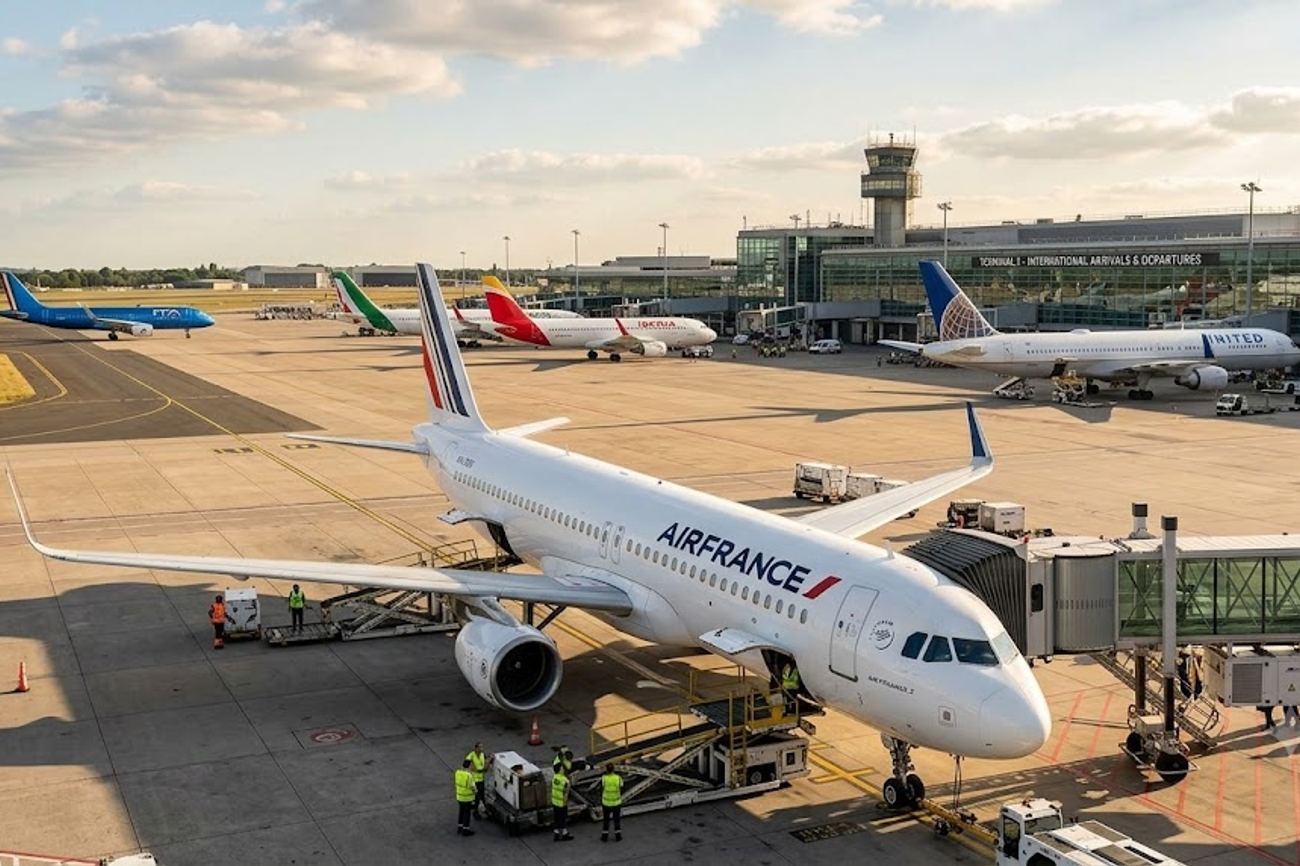
Image generated by AI
58.1 million international tourists arrived in Spain between January and July 2026, anchoring a broader structural shift in European aviation that is moving away from the traditional "summer peak" model. This surge in volume is not merely a recovery of numbers but a strategic redesign of how airlines deploy aircraft across the continent, shifting from a rigid seasonal calendar to a flexible, year-round connectivity framework.
The Strategic Pivot to Shoulder-Season Aviation
For decades, the European aviation market operated on a binary system: a hyper-congested summer window followed by a significant contraction in winter. However, the 2026 data indicates a systemic move toward "season extension," where carriers are intentionally pushing services into the autumn and winter months to stabilize revenue and distribute tourist footprints.
This evolution is driven by a symbiotic relationship between North American carriers and European regional hubs. By establishing direct links to secondary cities, airlines are bypassing the traditional bottlenecks of major gateways like London Heathrow or Paris Charles de Gaulle. This allows travelers to penetrate deeper into regional markets—such as Puglia in Italy or Galicia in Spain—without the friction of multiple transfers.
The scale of this movement is reflected in the 2026 tourism performance metrics. Spain continues to lead in sheer volume, while Italy has seen a 3.9% increase in overnight stays between April and June, totaling 148.0 million nights. France, though showing a more modest 1.4% increase in hotel nights (61.1 million) during the same period, remains a primary pillar of this expanded network.
Route Expansion and Capacity Metrics
The current aviation surge is defined by a shift toward "long-tail" destinations. Rather than adding more seats to already saturated routes, carriers are diversifying their portfolios. The following table outlines the specific capacity injections and route launches for the 2026 cycle.
| Airline | New Route / Destination | Launch Date (2026) | Frequency / Capacity |
|---|---|---|---|
| United Airlines | Newark $\rightarrow$ Split (Croatia) | April 30 | 3 weekly flights |
| United Airlines | Newark $\rightarrow$ Bari (Italy) | May 1 | 4 weekly flights |
| United Airlines | Newark $\rightarrow$ Glasgow (Scotland) | May 8 | Daily flights |
| United Airlines | Washington-Dulles $\rightarrow$ Reykjavik | May 21 | (Not specified) |
| United Airlines | Newark $\rightarrow$ Santiago de Compostela | May (Late) | 3 weekly flights |
| Finnair | Luxembourg, Valencia, Turin | Summer 2026 | Year-round service |
| Finnair | Stavanger, Umeå | Summer 2026 | Extended beyond summer |
The scale of United Airlines' operation is particularly telling; the carrier now services 36 European destinations, including Greenland, with peak daily operations reaching 210 flights. This suggests a permanent shift in the United Airlines transatlantic strategy, treating the European market as a diversified portfolio rather than a seasonal excursion.
Expert Analysis: The De-seasonalization of European Travel
The data suggests that we are witnessing the "de-seasonalization" of the European travel market. For the professional traveler or digital nomad, the direct consequence is a significant reduction in "transit friction." When a carrier like Finnair converts a summer route to Valencia or Turin into a year-round service, it transforms that city from a vacation spot into a viable business or residential hub.
The pricing pressure created by this shift is twofold. First, by extending services into the winter, airlines are creating more supply during the traditional "off-season," which should theoretically lower fares for those traveling outside of July and August. Second, by bypassing major hubs, airlines are capturing a "premium convenience" market—travelers willing to pay more for a direct flight to a regional airport like Bari rather than navigating a connection in Rome.
France has matched Spain in terms of aviation growth, with a significant increase in passenger traffic, as reported by the French Civil Aviation Authority. This surge is expected to continue beyond the summer peak, with major airlines such as Air France and KLM increasing their flight frequencies. According to the authority, this growth is largely driven by tourism, with popular destinations like Paris and the French Riviera attracting millions of visitors.
From a regulatory and logistical standpoint, this puts immense pressure on regional airports to upgrade their infrastructure. Airports in Split or Santiago de Compostela, which were designed for seasonal spikes, must now manage consistent, year-round international flows. This trend aligns with the broader goals of the International Air Transport Association (IATA), which advocates for more efficient global connectivity and the reduction of hub congestion.
Furthermore, the return of routes to Faro, Madeira, Palermo, and Bilbao—with some starting earlier than in 2025—indicates that airlines are no longer "testing" these markets; they are institutionalizing them. The move toward 1.321 billion overnight stays across the EU-27 in the first half of 2026 proves that the demand is not just present, but growing.
Key Takeaways
- Diversified Gateways: United Airlines has bypassed major hubs to launch direct services to regional centers including Split, Bari, and Santiago de Compostela.
- Year-Round Connectivity: Finnair is transitioning summer-only routes (Luxembourg, Valencia, Turin) into permanent, year-round links to capture business and winter sports demand.
- Volume Growth: Spain remains the dominant market with 58.1 million arrivals (Jan-July 2026), while Italy saw a 3.9% increase in overnight stays.
- Capacity Scaling: Peak operations for major US carriers are hitting new highs, with United operating up to 210 daily flights to 36 European destinations.
- Strategic Scheduling: The "shoulder season" is expanding, with routes to Madeira and Nuuk launching earlier in the 2026 cycle than they did in 2025.
FAQ: European Aviation Trends 2026
Which new direct flights are available from the US to regional Europe in 2026? United Airlines has introduced direct flights from Newark to Split, Bari, and Santiago de Compostela, as well as daily service to Glasgow and a route from Washington-Dulles to Reykjavik.
Are European flights becoming cheaper in the winter? As airlines like Finnair and United extend their schedules into autumn and winter, the increase in seat capacity during the off-season typically creates more competitive pricing compared to the summer peak.
Which European countries saw the most growth in 2026? Spain led in total volume with 58.1 million arrivals, while Italy showed strong growth in overnight stays (+3.9%) and Croatia saw a 1.4% increase in arrivals.
Why are airlines flying to smaller cities instead of major hubs? Airlines are targeting high-demand leisure markets and reducing congestion at major airports. This provides travelers with faster access to regional destinations and helps local tourism boards spread visitors across the year.
The era of the "summer-only" European vacation is ending, replaced by a permanent, high-frequency bridge between the Americas and the European periphery.
Tags: United Airlines, Finnair, EU-27 Tourism 2026, Transatlantic Routes, Regional Aviation Europe, IATA Connectivity
Related Travel Guides
This article is for informational purposes. Flight routes, passenger regulations, visa rules, and transit advisories are subject to change by airlines and aviation authorities. Readers are advised to verify schedules and travel documentation with relevant carriers and border agencies before departure.
Related Stories

France and European Source Markets Drive Tunisia Tourism Receipts to $2.38 Billion as Long-Haul Corridors Expand in 2026

European Winter Travel Surge as 76% Plan Seasonal Getaways Across France, Spain, and Italy