
Fiji Issues Major Travel And Marine Alert As Powerful Swells Bring Dangerous Sea Conditions Across Coastal Waters
Fiji Issues Major Travel And Marine Alert As Powerful Swells Bring Dangerous Sea Conditions Across Coastal Waters

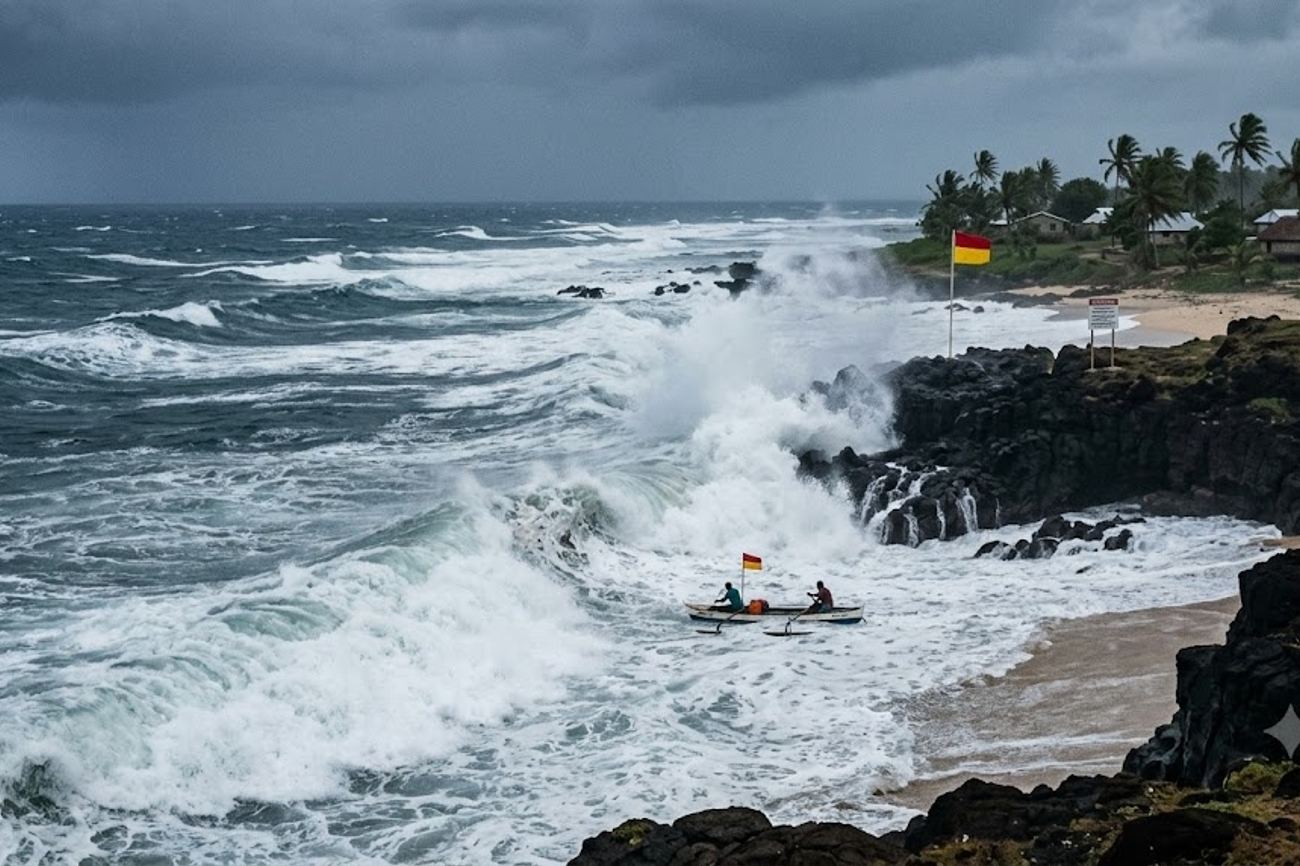
Image generated by AI
Wave height thresholds in the South Pacific have shifted from manageable seasonal norms to extreme alerts, with current southwesterly swells reaching 4 metres in open waters—a significant escalation in marine risk for the region. This surge in ocean energy, characterized by wave periods extending up to 16 seconds, signals a volatile period for Fiji’s maritime infrastructure and tourism logistics. When comparing these figures to standard operating conditions for small-vessel transfers, a 4-metre swell represents a critical safety threshold that typically triggers the suspension of non-essential inter-island transit.
The Southwesterly Swell in Numbers
The current marine alert is driven by a high-pressure system positioned far southwest of Fiji. The data indicates a high-energy ocean event that transcends simple surface wind chop, focusing instead on long-period swells that carry immense kinetic energy across vast distances.
The specific metrics driving this alert include:
- Maximum Wave Height: 4 metres in open waters.
- Wave Period: Up to 16 seconds.
- Primary Direction: Southwesterly.
- Affected Zones: South West Viti Levu, Yasawa and Ramanujan waters, Kadavu Passage, Koro Sea, and Southern Laud waters.
From a data perspective, the 16-second wave period is the most concerning metric. In oceanography, longer periods indicate that the swell has originated from a distant, powerful weather system rather than local winds. These waves do not dissipate quickly; instead, they maintain their energy until they hit shallow reefs or shorelines, where they transform into unpredictable and powerful breakers. For the tourism sector, which relies on small-to-medium craft for resort transfers, these specific dimensions create a high-risk environment for capsizing or structural damage to smaller vessels.
Regional Marine Volatility: Comparative Context
Fiji's geography makes it uniquely susceptible to these high-pressure systems. Unlike continental coastlines, the fragmented nature of the Fijian archipelago means that a single weather system can create vastly different conditions across different passages. The current alert highlights a systemic risk across the primary tourism corridors.
The following table compares the current alert conditions against standard "Cautionary" levels typically seen in the region during non-alert periods.
| Metric | Standard Cautionary Level | Current Alert Level (Sept 2026) | Risk Delta |
|---|---|---|---|
| Open Water Wave Height | 1.5 - 2.5 Metres | 4 Metres | +60% to +166% |
| Wave Period | 8 - 12 Seconds | 16 Seconds | +33% to +100% |
| Primary Risk Zone | Localized coastal areas | Multi-region (Viti Levu to Southern Laud) | Systemic/Widespread |
| Vessel Suitability | All registered craft | Large vessels only; small craft hazardous | High Restriction |
When analyzing this against broader Pacific trends, we see a pattern of increasing maritime volatility. According to data trends often tracked by the World Tourism Organization (UNWTO), climate-driven weather anomalies are increasingly disrupting "last-mile" transport in island nations. In Fiji, where sea transport is the primary artery for both the economy and the International Air Transport Association (IATA) connected arrivals moving toward outer islands, these swells represent a significant bottleneck in the travel chain.
What This Means for Travelers
For those currently in Fiji or planning a visit in September 2026, these data points translate into immediate operational disruptions. The "island hopping" experience, which is a cornerstone of Fijian tourism, is currently compromised.
1. Transfer Delays and Cancellations If your itinerary involves the Yasawa or Ramanujan waters, expect boat transfers to be delayed or cancelled. Operators are likely to prioritize safety over schedules when wave heights hit the 4-metre mark. Travelers should maintain a 48-hour buffer in their schedules to account for sea-state volatility.
2. Activity Restrictions Diving, snorkeling, and sailing excursions in the Koro Sea and Kadavu Passage are high-risk. Long-period swells create powerful undercurrents and unpredictable surf zones. Travelers should avoid shoreline activities in exposed coastal areas, as the energy from 16-second waves can cause sudden water surges on beaches.
3. Booking Flexibility Now is the time to verify "Force Majeure" clauses in resort bookings. If a resort is inaccessible due to official marine alerts, understanding the refund or rescheduling policy is essential. If you are planning a trip to the outer islands in the coming weeks, booking flexible transfers is no longer optional—it is a necessity.
Projection of Maritime Disruptions
Based on the trajectory of the high-pressure system southwest of the islands, the impact will likely remain systemic across the southern and western corridors before dissipating. However, the pattern of "long-period swells" suggests that even after the primary system moves, the ocean energy will linger.
We anticipate a "ripple effect" in the tourism data for Q3 2026. As transfers are cancelled, we expect to see a temporary spike in hotel occupancy on Viti Levu (the main island) as travelers are unable to reach their intended outer-island resorts. This creates a paradoxical situation where the main hub becomes overcrowded while luxury resorts in the Yasawas experience sudden vacancies.
Furthermore, the reliance on small-vessel transport for the "last mile" of the tourist journey remains a vulnerability. We project that the industry will move toward larger, more stable catamaran transfers to mitigate the impact of 4-metre swells, as the frequency of these high-energy events increases.
FAQ: Fiji Marine Alert 2026
Will boat prices increase due to these swells? Not directly, but you may see surcharges for "emergency" alternative transport or last-minute changes to larger, more stable vessels. Standard ferry rates typically remain fixed, but availability will drop sharply.
Is it safe to swim at the beach during this alert? No. The 16-second wave period creates powerful rip currents and unpredictable surges, even on beaches that appear calm. It is advised to stay out of the water in the affected regions.
Which regions are most affected? The highest risk is currently in South West Viti Levu, Yasawa, Ramanujan, Kadavu Passage, Koro Sea, and Southern Laud waters. These areas are facing the brunt of the southwesterly energy.
When will sea travel return to normal? Travelers should monitor official marine updates daily. Normalcy typically returns once the high-pressure system moves further east and wave periods drop below 10-12 seconds.
When the ocean moves with this much energy, the only logical travel strategy is patience.
Tags: Fiji-Maritime-Risk-2026, Southwesterly-Swell-Data, Viti-Levu-Transport-Disruption, Pacific-Wave-Period-Analysis, Fiji-Tourism-Logistics-Q3
Related Travel Guides
- Saudi Arabia Tourism Enters Critical Phase As East-West Oil Pipeline Closure Raises Global Crude Oil, LPG And LNG Supply Security Questions
- UK Travel Alert As 25C Heat Surge Returns With Met Office Revealing England’s 17 Hottest Monday Spots
- UK Aligns With Uzbekistan US And Other Countries Evaluating Unprecedented State Security For International VIP Travellers
Disclaimer
This article is for informational and educational purposes only. It does not constitute legal, financial, or professional advice. While we strive to provide accurate and up-to-date information, travel policies, regulations, and conditions change rapidly. Always verify information with official sources before making travel decisions. Nomad Lawyer makes no representations about the accuracy, reliability, completeness, or suitability of the information provided. Readers should consult qualified professionals for advice specific to their circumstances. The views expressed in this article are those of the author and do not necessarily reflect the views of Nomad Lawyer.
Preeti Gunjan
Contributor & Community Manager
A passionate traveller and community builder. Preeti helps grow the Nomad Lawyer community, fostering engagement and bringing the reader experience to life.
Learn more about our team →