
FAA Warns of Thunderstorm-Driven Flight Disruptions at Denver and Florida Hubs in September 2026
The Federal Aviation Administration (FAA) has flagged significant thunderstorm risks for Denver and major Florida airports, triggering traffic-management programs that may cause cascading delays for weekend travelers.

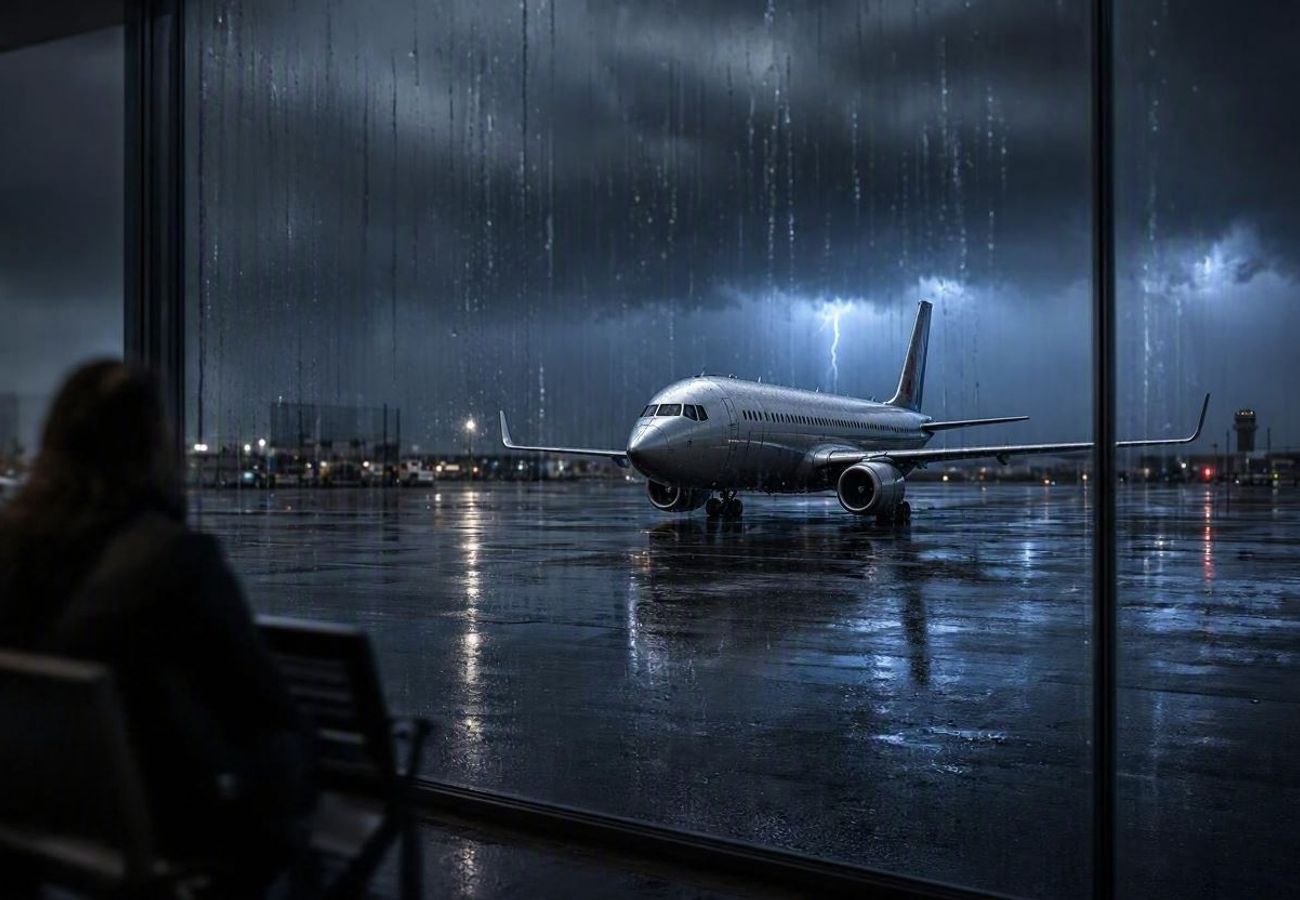
Image generated by AI
15 minutes or less was the reported average delay for several Florida hubs and Denver International Airport during early updates on September 19, 2026, yet these modest figures mask a volatile operational environment. The Federal Aviation Administration (FAA) has issued warnings regarding convective weather patterns that frequently trigger aggressive traffic-management initiatives. For the modern traveler, these warnings are not mere weather reports; they are precursors to systemic bottlenecks that can paralyze hub-and-spoke networks.
The Mechanics of Convective Weather Disruptions
The current volatility stems from thunderstorm activity across two of the United States' most sensitive aviation corridors: the Rocky Mountain region and the South Florida peninsula. According to FAA planning guidance, the risk period began on Friday, September 18, 2026, and extended into Saturday, September 19, 2026.
When the FAA identifies thunderstorm cells moving across arrival corridors, they do not simply "wait and see." They implement specific regulatory tools to prevent airspace saturation. These include Ground Delay Programs (GDPs), which hold aircraft at their origin airports to ensure the destination airport is not overwhelmed, and "miles-in-trail" restrictions, which increase the physical distance between arriving aircraft to allow controllers more flexibility in rerouting planes around storm cells.
In Florida, the geography of the coast creates a specific peril. Sea-breeze boundaries often collide with inland heat, generating rapid-onset storms near terminals. This means a flight departing from a clear-sky city may face a sudden ground stop upon reaching the airspace of Miami (MIA) or Fort Lauderdale (FLL), even if the airport itself appears clear of rain.
Operational Impact Data: September 19, 2026
While the FAA's real-time status pages initially showed light delays, the nature of convective weather means these numbers fluctuate rapidly. The following table outlines the reported status during the early phase of the September 19 alert:
| Airport Location | Airport Code | Reported Delay Status | Primary Risk Factor |
|---|---|---|---|
| Denver, CO | DEN | $\leq$ 15 Minutes | Rapidly changing convective cells |
| Miami, FL | MIA | $\leq$ 15 Minutes | Arrival corridor blockage |
| Fort Lauderdale, FL | FLL | $\leq$ 15 Minutes | Tactical route adjustments |
| Orlando, FL | MCO | $\leq$ 15 Minutes | Regional airspace congestion |
It is important to note that these averages are deceptive. A "15-minute average" can consist of 90% of flights being on time and 10% being delayed by three hours. In Denver, the high volume of transit traffic means that a single cluster of storms near final-approach fixes can force a sharp reduction in the number of arrivals per hour, creating a backlog that lasts long after the storm has passed.
Expert Analysis: The Domino Effect of Hub Restrictions
From a logistical standpoint, the FAA's warnings for Denver and Florida highlight a systemic vulnerability in the National Airspace System (NAS). For travelers booking these routes, the direct consequence is not necessarily a canceled flight, but a "cascading delay."
When a hub like Denver International Airport (DEN) implements a traffic-management program, the ripple effect extends thousands of miles. If an aircraft is held on the ground in New York or Los Angeles due to a GDP in Denver, that aircraft is now late for its next scheduled leg. This creates a shortage of available aircraft and crews, making rebooking significantly harder as the day progresses.
The FAA advises travelers to monitor real-time flight statuses and weather advisories to mitigate delays during the peak thunderstorm season. Passengers are encouraged to check the FAA's official aviation weather portal for updated safety protocols and airspace restrictions.
The pricing pressure this creates is often invisible but real. As capacity drops due to weather, the remaining available seats on later flights become high-demand assets. For those with tight connections, the "minimum connection time" listed on a ticket becomes irrelevant. If the inbound flight is metered into the airport via a slow-approach sequence, the passenger will miss their connection regardless of the airport's theoretical efficiency.
Furthermore, the distinction between "flight restrictions" and "Temporary Flight Restrictions (TFRs)" is vital. While TFRs are usually for security or VIP movement, these weather-driven restrictions are operational. They are fluid, meaning a flight might be delayed, then cleared, then delayed again as storm cells redevelop during the afternoon heating cycle.
Key Takeaways
- Monitor Inbound Aircraft: Delays at hubs like DEN or MIA often originate from the aircraft's previous location, not the current departure gate.
- Avoid Afternoon Banks: In both Colorado and Florida, convective weather typically peaks in the afternoon and early evening; morning flights are statistically safer.
- Verify Status via Official Channels: Use the International Air Transport Association (IATA) guidelines or the FAA's National Airspace System status feeds rather than relying solely on third-party apps.
- Proactive Rebooking: If a hub is under a Ground Delay Program, review same-day standby options immediately, as available seats on later flights vanish quickly.
- Understand GDPs: A "Ground Delay Program" means the delay happens at your departure city to prevent airborne holding (circling) at the destination.
FAQ: Weather Delays Denver & Florida 2026
Why is my flight delayed if the weather at my departure airport is clear? If your destination (like Denver or Miami) is under a Ground Delay Program, the FAA holds flights at the origin to prevent congestion and dangerous airborne holding patterns at the destination airport.
What is a "ground stop" versus a "ground delay"? A ground delay slows the flow of traffic to a manageable rate. A ground stop is a total halt of all departures to a specific airport, usually triggered by a severe weather cell directly over the runways.
How can I track if my flight will actually be delayed by these storms? Check the FAA's real-time airport status pages and use flight-tracking software to see where your inbound aircraft is currently located and if it is currently in a holding pattern.
Will the airline provide compensation for thunderstorm delays? Generally, no. Thunderstorms are considered "Acts of God" or weather-related disruptions, which typically exempt airlines from providing monetary compensation, though they may assist with rebooking.
When the radar turns red, the schedule turns gray.
Related Travel Guides
Disclaimer
This article is for informational and educational purposes only. It does not constitute legal, financial, or professional advice. While we strive to provide accurate and up-to-date information, travel policies, regulations, and conditions change rapidly. Always verify information with official sources before making travel decisions. Nomad Lawyer makes no representations about the accuracy, reliability, completeness, or suitability of the information provided. Readers should consult qualified professionals for advice specific to their circumstances. The views expressed in this article are those of the author and do not necessarily reflect the views of Nomad Lawyer.
Kunal K Choudhary
Co-Founder & Contributor
A passionate traveller and tech enthusiast. Kunal contributes to the vision and growth of Nomad Lawyer, bringing fresh perspectives and driving the community forward.
Learn more about our team →