
Exploring Canh Mai Mountain: How the World’s First UNESCO Tea Heritage Site Breathes Life into Autumn
Exploring Canh Mai Mountain: How the World’s First UNESCO Tea Heritage Site Breathes Life into Autumn

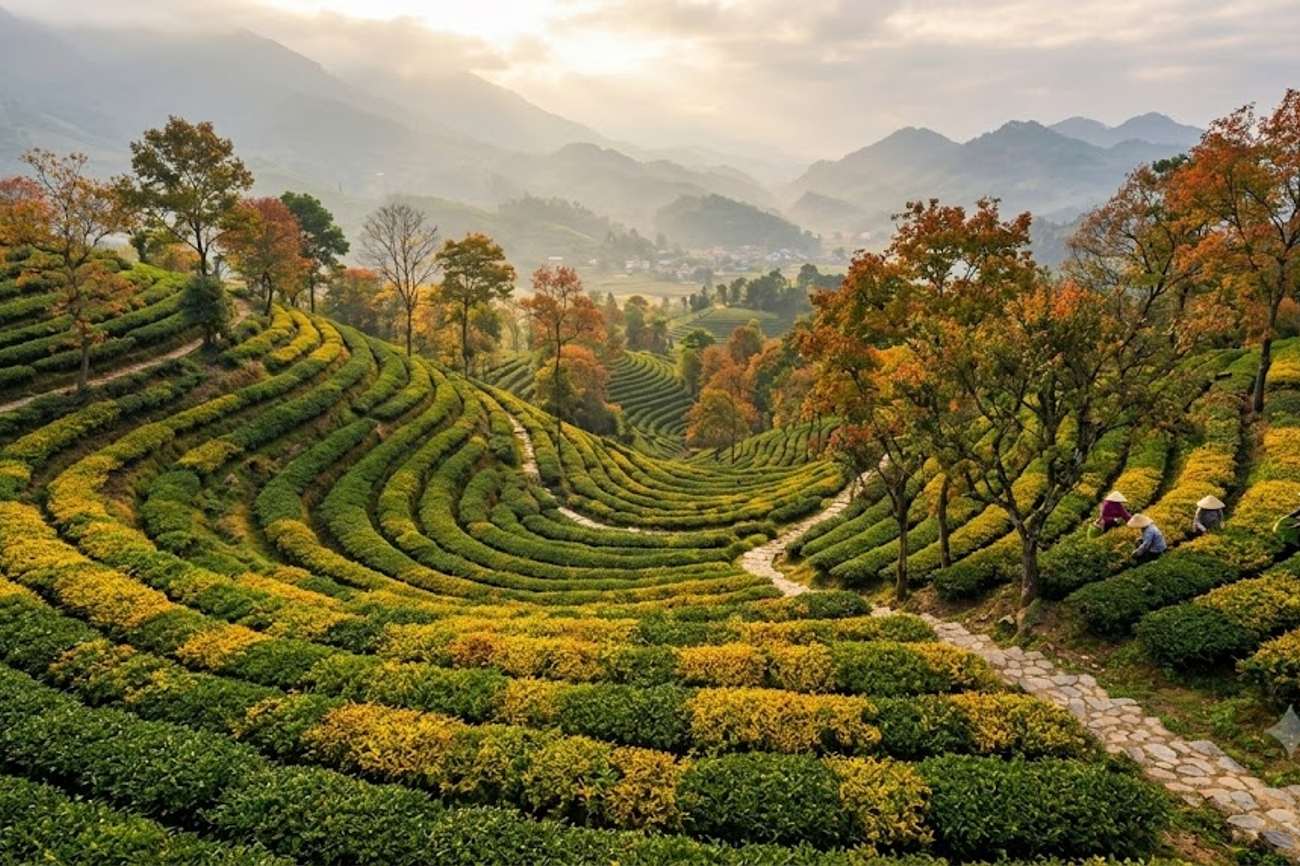
Image generated by AI
The tea forests of Canh Mai Mountain are not plantations in any traditional sense; they are wild, ancient ecosystems where tea trees grow naturally beneath a subtropical forest canopy. This distinction earned the site the honor of becoming the first tea-related location globally to be formally recognized as a UNESCO World Heritage Site. Unlike the manicured green steps seen in tourist brochures of East Asia, this is a rugged, biodiverse wilderness where agriculture and nature exist in a seamless, symbiotic state.
The Shift Toward Ancestral Agroforestry
For decades, the world viewed tea production through the lens of industrial efficiency—terraced hills and chemical fertilizers. However, Pu’er City in Yunnan Province is currently leading a cultural pivot back toward ancestral agroforestry. The recognition of Canh Mai Mountain by the UNESCO World Heritage Centre marks a shift in how we value agricultural history. It is no longer just about the yield, but about the "exceptional testimony" of indigenous cultivation methods that have survived for centuries.
What is happening on these slopes right now is a reclamation of traditional ecological knowledge. The region is seeing a surge in visitors who are tired of curated experiences and are instead seeking the anthropological depth of the Blang and Dai peoples. These ethnic minority communities are the true architects of this landscape. They have spent generations managing a system where towering canopy trees provide the necessary shade for tea plants, creating a natural microclimate that eliminates the need for any artificial chemical fertilizers. For the modern traveler, this means the terroir remains pure, and the air is devoid of the industrial scents common in commercial farming zones.
What Makes Canh Mai Different
The experiential difference between Canh Mai and other tea regions lies in the verticality and the wildness of the flora. In a standard plantation, you walk through rows of pruned shrubs. On Canh Mai, you are trekking through a living museum. The tea trees here are ancient, often reaching heights and ages that defy the standards of modern agriculture. They are integrated into a subtropical forest, meaning your walk is shared with wild orchids, ancient ferns, and a dense canopy that filters the sunlight into a soft, emerald glow.
The sensory experience is anchored by the Pu’er tea itself. Because the plants grow wild and are harvested by hand, the resulting tea possesses a profile that is impossible to replicate in a factory. There are deep, earthy undertones mixed with high floral notes, a direct result of the organic soil and the specific humidity of the Yunnan highlands. The architecture of the surrounding villages further distinguishes the region; you will find elevated wooden stilt houses, a design choice by the indigenous populations to navigate the damp mountain climate and keep living quarters above the forest floor.
Visitor Insider Tips
To experience Canh Mai without the interference of crowds or the frustration of poor timing, you must align your trip with the local rhythms.
Timing the Visit The absolute window for visiting is autumn, specifically October and November. This is when the mountain undergoes a dramatic visual transformation, shifting from deep emerald to amber and russet. More importantly, the morning mists in these months create a heavy, ethereal atmosphere that is a dream for photographers. If you arrive in the early hours, you can catch the fog clinging to the ancient treetops before the sun burns it off by midday.
Etiquette and Engagement When entering the villages of the Blang and Dai people, remember that you are entering a home, not a theme park. The most authentic way to engage is through a traditional tea-tasting ceremony. Do not rush these interactions. The process of brewing and sipping is a slow art here. When purchasing tea, avoid the middlemen in the city centers. Instead, buy directly from the indigenous growers or local artisan co-operatives. This ensures your money supports the actual caretakers of the forest.
Navigating the Terrain The trails are winding and can be slippery. Wear sturdy hiking boots and stick strictly to the designated paths. The soil surrounding the roots of the ancient tea trees is highly sensitive; compacting this soil can damage the trees' ability to absorb nutrients, threatening plants that have lived for centuries. For transport, I recommend arranging a local guide from Pu’er City who can navigate the backroads and translate the nuances of the tea-pressing techniques. You can find more general travel logistics through the official China tourism resources.
Cultural and Environmental Context
The relationship between tourism and the Canh Mai ecosystem is a delicate one. Because this site is a UNESCO World Heritage location, the priority is preservation over profit. The local government and provincial conservation offices have implemented strict sustainable tourism guidelines to prevent the "over-tourism" that has plagued other parts of Yunnan.
Visitors can access the tea plantations of Canh Mai Mountain via regional rail networks connecting to the central highlands. For comprehensive travel guidelines and visa requirements, travelers should consult the official portal of the Vietnam National Authority of Tourism.
The challenge lies in balancing the economic needs of the Blang and Dai communities with the need to protect the biodiverse canopy. Currently, the model focuses on educational workshops and cultural exhibitions. By allowing visitors to observe the sun-drying of leaves on bamboo mats and the manual pressing of tea cakes, the region generates income without requiring the construction of massive hotel complexes that would fragment the forest.
The environmental stakes are high. The symbiotic relationship between the canopy trees and the tea plants is what keeps the ecosystem resilient. If the forest canopy were thinned for infrastructure, the tea plants—which are shade-loving—would suffer. This makes the "low-impact" approach not just a preference, but a necessity for the survival of the species.
FAQ: Visiting Canh Mai Mountain 2025
What is the best time to visit? The ideal window is October and November. This period offers the most striking autumn foliage, pleasant temperatures, and the opportunity to witness the seasonal tea harvest and traditional processing rituals.
How do I get there from Pu'er City? Most visitors hire a local driver or guide from Pu’er City to navigate the mountain roads. It is highly recommended to use a local expert to ensure you reach the specific UNESCO-recognized zones and indigenous villages.
Is it safe for solo travelers? Yes, but it is not recommended to trek the ancient forests alone. The terrain is rugged, and hiring a local guide from the Blang or Dai communities provides both safety and essential cultural context.
Do I need a special permit for the UNESCO site? While general access is available, certain conservation zones may have restrictions. Always check with your local guide or the provincial tourism bureau regarding current access rules for the protected forest areas.
Leave the paved roads behind and step into a world where the tea grows wild and time is measured by the harvest.
Related Travel Guides
Disclaimer
This article is for informational and educational purposes only. It does not constitute legal, financial, or professional advice. While we strive to provide accurate and up-to-date information, travel policies, regulations, and conditions change rapidly. Always verify information with official sources before making travel decisions. Nomad Lawyer makes no representations about the accuracy, reliability, completeness, or suitability of the information provided. Readers should consult qualified professionals for advice specific to their circumstances. The views expressed in this article are those of the author and do not necessarily reflect the views of Nomad Lawyer.
Preeti Gunjan
Contributor & Community Manager
A passionate traveller and community builder. Preeti helps grow the Nomad Lawyer community, fostering engagement and bringing the reader experience to life.
Learn more about our team →