
Kazakhstan Introduces Next-Generation Travel With Astana Light Rail Driverless System
Kazakhstan Introduces Next-Generation Travel With Astana Light Rail Driverless System

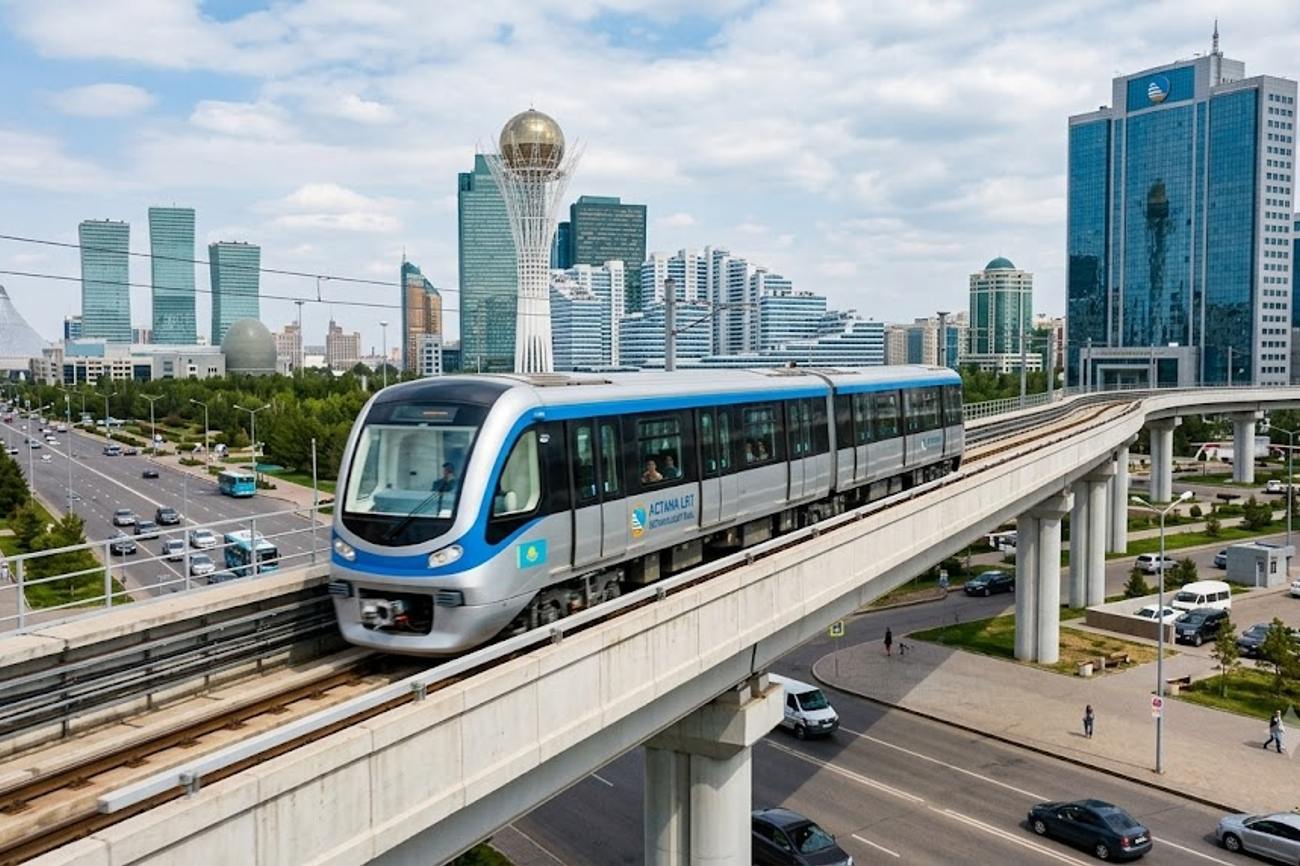
Image generated by AI
[Astana, November 2026] — Kazakhstan’s first fully automated transit network has surpassed 7.3 million passengers within its first 100 days of service. The Astana Light Rail (LRT), branded as Tarlan Astana, officially launched on 24 August 2026, introducing Grade of Automation 4 (GoA4) technology to the Central Asian capital.
The 22.4km network operates entirely without onboard drivers, utilizing a sophisticated autonomous system to manage train activation, departures, stops, and precise platform alignment. The project represents a strategic pivot toward smart urban infrastructure for the Government of Kazakhstan, aiming to streamline connectivity between the city's government districts, business hubs, and primary cultural landmarks.
The Shift to GoA4 Automation
The implementation of Grade of Automation 4 (GoA4) marks a significant technological leap for the region. Unlike semi-automated systems, Tarlan Astana removes the need for human intervention on the trains themselves. The system handles all critical operational tasks through a centralized real-time management hub.
This automation extends to the basic lifecycle of the daily commute. From the initial activation of the fleet before the morning rush to the exact positioning of the doors at station platforms, the system is designed to eliminate human error and increase frequency. By removing the driver from the cab, the city has increased the efficiency of its transit flow, allowing for more predictable headways and reduced dwell times at stations.
The operational success of the first 100 days indicates a high adoption rate among both residents and international visitors. The ability to move millions of people across a 22.4km corridor suggests that the automated system is scaling effectively to meet the demands of a capital city in transition.
Infrastructure Built for Extreme Cold
One of the primary engineering hurdles for the Astana Light Rail was the city's notorious climate. Astana is known for some of the most severe winter conditions globally, where temperatures frequently plummet. To combat this, the system was engineered to remain fully operational in temperatures as low as -40°C.
The rolling stock includes specific adaptations to prevent failure during deep freezes. These include:
- Enhanced Cold Resistance: Specialized materials and lubricants that prevent mechanical seizure in sub-zero environments.
- Performance-Optimized Wheel-Rail Interfaces: Systems designed to maintain traction and safety despite the presence of ice and snow on the tracks.
- Vibration and Noise Mitigation: Advanced dampening technology that ensures passenger comfort despite the rigidity caused by extreme cold.
- Lightweight Construction: A design philosophy that reduces energy consumption while maintaining structural integrity against harsh winds and snow loads.
These specifications ensure that the LRT does not become a seasonal service, but rather a year-round reliability pillar for the city's mobility strategy.
CRRC Tangshan Technical Integration
The hardware powering Tarlan Astana is the result of a technical collaboration with CRRC Corporation Limited, specifically the Tangshan branch. The trains were manufactured using production standards derived from the Fuxing high-speed rail program in China, one of the world's most advanced rail initiatives.
The vehicles utilize a six-axle configuration, which provides a balance of stability and efficiency. By applying high-speed rail quality standards to an urban light rail context, CRRC has provided Astana with rolling stock that is both lightweight and high-capacity. This collaboration demonstrates a successful transfer of autonomous rail technology from the Chinese market to the specific environmental and demographic needs of Kazakhstan.
Practical Traveler Advisory and Strategic Insights
For the international tourist or business traveler arriving in Astana, the launch of the LRT fundamentally changes how the city is navigated. The transition to a driverless system removes several traditional friction points of urban travel.
The Astana Light Rail Transit (LRT) system is designed to modernize urban mobility in the capital, utilizing driverless technology to connect key administrative and residential hubs. This infrastructure project aligns with the broader national goals of digitalization and sustainable development promoted by the Ministry of Transport of the Republic of Kazakhstan.
Passenger Impact Assessment:
- Predictability: Because the system is automated (GoA4), schedules are tighter and more reliable than traditional bus or taxi services. Travelers can plan arrivals at government buildings or museums with minute-to-minute precision.
- Winter Accessibility: Travelers no longer need to rely on expensive private transport or risk exposure to -40°C temperatures while waiting for non-automated transit; the LRT provides a climate-controlled, reliable link.
- Ease of Navigation: The system creates a "smart link" across the city, making it easier for those unfamiliar with the local geography to move between the business district and cultural attractions without needing a local guide or complex app navigation.
- Safety and Standards: The use of Fuxing-grade technology means the ride quality is comparable to top-tier global metros, reducing the "transit stress" often associated with visiting emerging markets.
The Future of Kazakhstan’s Smart Mobility
The 100-day milestone is viewed by city planners as a proof-of-concept for wider autonomous integration across Kazakhstan. The success of Tarlan Astana provides a blueprint for how other major cities in the region can implement high-tech transit despite extreme weather constraints.
Moving forward, the city expects the LRT to act as a catalyst for tourism growth. By lowering the barrier to city exploration, Astana is positioning itself as a modern, accessible Central Asian hub. The integration of smart transport is expected to correlate with an increase in international visitor numbers, as the city becomes easier to navigate for non-Kazakh speakers.
The next phase of development will likely focus on integrating the LRT with other "smart city" initiatives, potentially including unified digital ticketing and real-time AI-driven passenger flow management to handle peak loads during national holidays and international summits.
FAQ: Astana Light Rail 2026
Is the Astana Light Rail safe without a driver? Yes. The system uses Grade of Automation 4 (GoA4), meaning it is fully autonomous. It employs real-time operational management and precise automated stopping procedures to ensure passenger safety without the need for an onboard operator.
Can the trains run during the winter? Yes. The system is specifically engineered for extreme weather and is rated to operate in temperatures as low as -40°C, featuring specialized wheels and rails to handle ice and snow.
How long is the network and how many people use it? The network spans 22.4km. In its first 100 days of operation, it has already transported more than 7.3 million passengers.
Who manufactured the trains for Tarlan Astana? The trains were built by CRRC Tangshan, utilizing the same high-quality production standards used for China's Fuxing high-speed rail program.
Astana's leap into autonomous transit signals a new era of connectivity for the heart of Eurasia.
Related Travel Guides
Disclaimer
This article is for informational and educational purposes only. It does not constitute legal, financial, or professional advice. While we strive to provide accurate and up-to-date information, travel policies, regulations, and conditions change rapidly. Always verify information with official sources before making travel decisions. Nomad Lawyer makes no representations about the accuracy, reliability, completeness, or suitability of the information provided. Readers should consult qualified professionals for advice specific to their circumstances. The views expressed in this article are those of the author and do not necessarily reflect the views of Nomad Lawyer.
Preeti Gunjan
Contributor & Community Manager
A passionate traveller and community builder. Preeti helps grow the Nomad Lawyer community, fostering engagement and bringing the reader experience to life.
Learn more about our team →