
Europe River Cruise Operations Adapt to Drought: Rhine and Danube Route Changes 2026
European river cruise operators are implementing flexible itineraries and advanced monitoring to combat low water levels on the Rhine and Danube caused by prolonged drought.

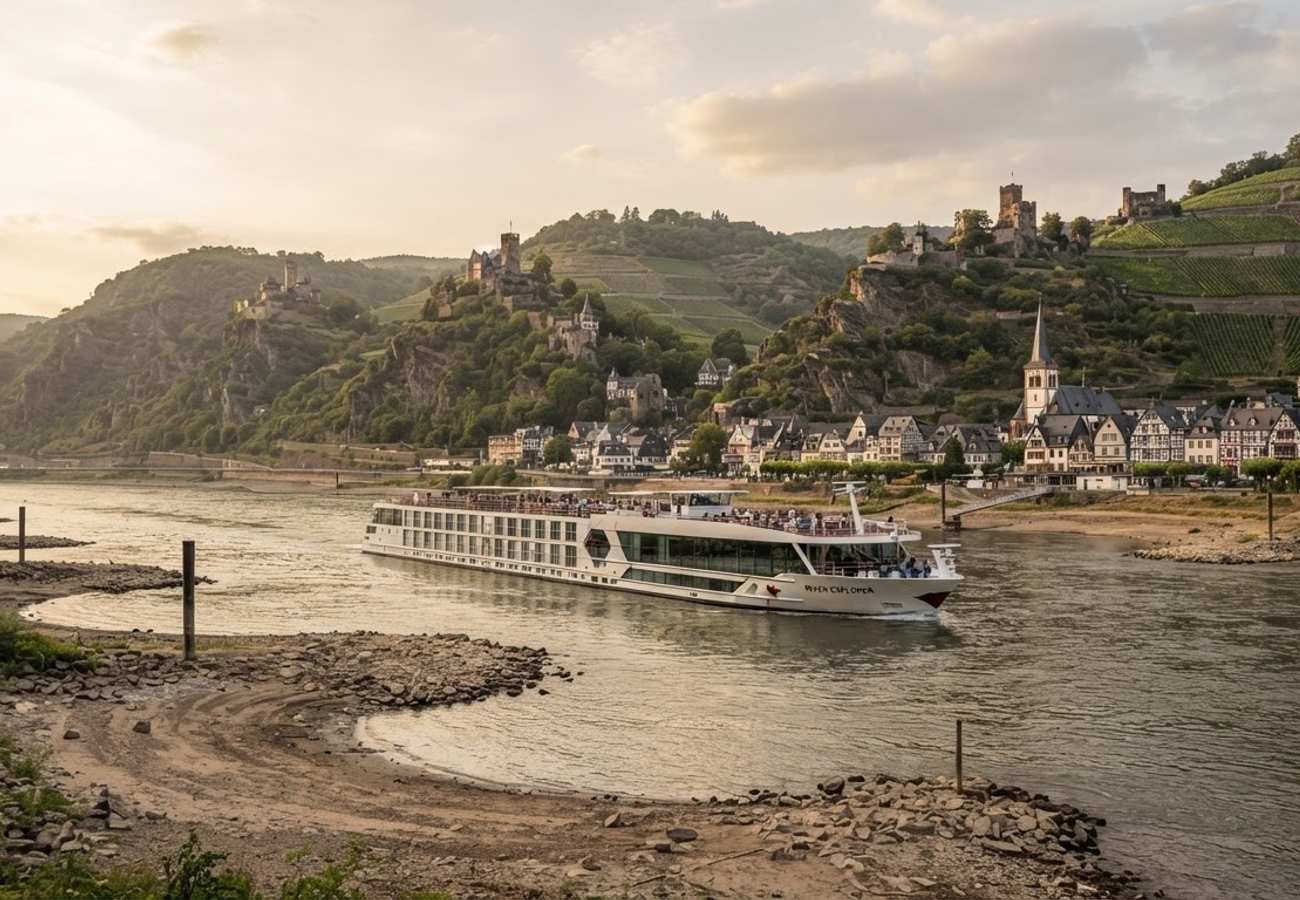
Image generated by AI
European river travel is entering a critical adaptation phase as prolonged drought and rising temperatures impact the Rhine and Danube. Cruise operators are now deploying flexible itineraries and advanced forecasting to maintain service despite fluctuating water depths.
Climate Pressures on European Waterways
The European river cruise industry is currently confronting significant environmental volatility. The Rhine and Danube—the continent's primary arteries for luxury river travel—have seen recurring periods of critically low water levels. This trend is driven by a combination of reduced annual rainfall, intense heatwaves, and shifting climate patterns that increase evaporation rates.
Because river vessels require specific minimum depths to navigate safely, these low-water events create immediate operational hurdles. The impact extends beyond tourism, affecting commercial freight, regional agriculture, and energy production across the heart of Europe.
Regional Impact Analysis
The Danube, spanning 10 countries including Germany, Austria, Hungary, Croatia, Serbia, Bulgaria, and Romania, has shown significant water level variance. Similarly, the Rhine, which connects key hubs in Germany, Switzerland, France, and the Netherlands, continues to face navigation restrictions during peak drought cycles.
To counter these risks, the industry is shifting away from rigid scheduling toward a model of "dynamic routing," where itineraries are adjusted in real-time based on hydrographic data.
Route Specifications and Affected Hubs
While cruises remain operational, the following primary routes are the most susceptible to climate-driven adjustments.
| River | Key Destinations | Primary Risk Factor | Adaptation Measure |
|---|---|---|---|
| Danube | Budapest, Vienna, Bratislava, Passau, Belgrade | High variance in water levels | Alternative land transfers between cities |
| Rhine | Amsterdam, Cologne, Strasbourg, Basel, Swiss Rhine | Critical low-water bottlenecks | Reduced vessel capacity or ship swaps |
Traveler Logistics Guide: Navigating Drought-Impacted Cruises
From a ground-level perspective, the best way to navigate this environment is to prioritize flexibility over a fixed itinerary. A drought does not typically result in total cancellation, but it frequently triggers "hybrid" journeys.
Managing Itinerary Changes When water levels drop below safe navigation thresholds, operators typically employ one of three strategies:
- Bus Transfers: Passengers are transported via luxury coach between two river ports to bypass a shallow section.
- Ship Swapping: Passengers move from a larger vessel to a shallower-draft ship.
- Port Modification: Docking locations may shift from city centers to outskirts where water depth is more stable.
Booking and Insurance Recommendations
- Insurance Verification: Ensure your travel insurance specifically covers "itinerary changes" and "transport replacements." Standard policies may cover cancellations but not the cost of unplanned land transfers.
- Seasonal Timing: While summer offers the best weather, it also carries the highest drought risk. Spring and autumn provide more stable water levels, though they offer shorter daylight hours.
- Operator Selection: Prioritize established lines with a proven history of contingency planning. Larger operators generally have better access to the fleet of shallow-draft vessels needed for ship swaps.
Infrastructure and Regional Connectivity Impact
The shift toward climate-adapted cruising is forcing a broader transformation in European tourism infrastructure. There is an increasing reliance on integrated transport—where river cruises are paired with high-speed rail or private coach networks to ensure continuity of travel.
Future vessel engineering is also evolving. The industry is now evaluating new hull designs that maintain stability and luxury standards while requiring significantly less water depth for propulsion. This evolution is essential for the long-term viability of river tourism in the face of permanent climate shifts.
Despite these challenges, the demand for river cruising remains high due to its unique ability to deliver passengers directly into the historic centers of cities like Vienna and Budapest, avoiding the logistical friction of large-scale ocean ports.
Adaptability is now the primary currency of European river travel.
Related Travel Guides
Disclaimer
This article is for informational and educational purposes only. It does not constitute legal, financial, or professional advice. While we strive to provide accurate and up-to-date information, travel policies, regulations, and conditions change rapidly. Always verify information with official sources before making travel decisions. Nomad Lawyer makes no representations about the accuracy, reliability, completeness, or suitability of the information provided. Readers should consult qualified professionals for advice specific to their circumstances. The views expressed in this article are those of the author and do not necessarily reflect the views of Nomad Lawyer.
Preeti Gunjan
Contributor & Community Manager
A passionate traveller and community builder. Preeti helps grow the Nomad Lawyer community, fostering engagement and bringing the reader experience to life.
Learn more about our team →