
Europe Night Train Revival 2026: ÖBB Nightjet and European Sleeper Expand Sustainable Rail Networks
Austria's ÖBB Nightjet and private operator European Sleeper are leading a massive resurgence in European night trains, replacing short-haul flights with modern sleeper cabins across major corridors in 2026.

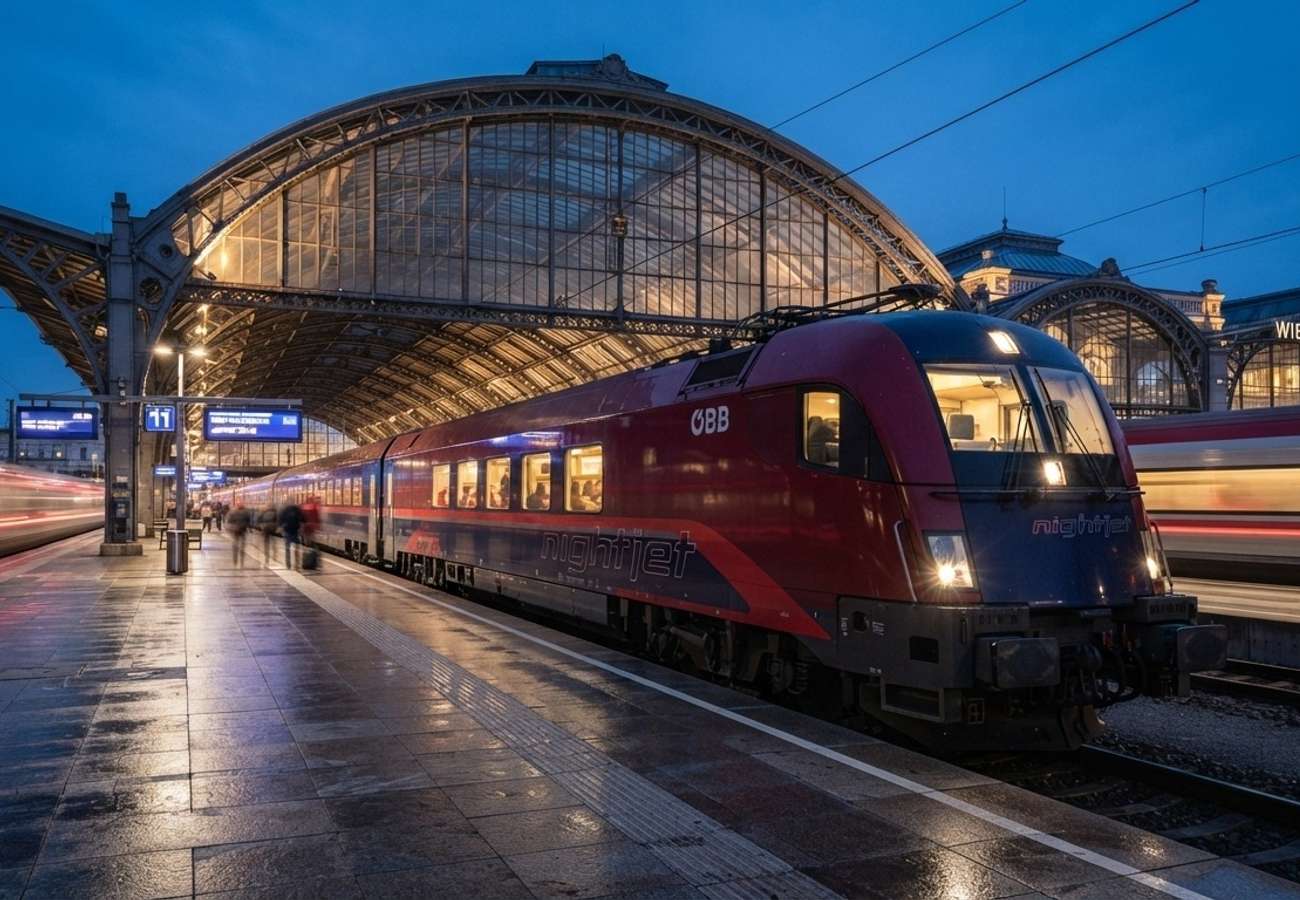
Image generated by AI
European rail operators are aggressively expanding overnight services across Austria, Germany, France, Italy, Belgium, the Netherlands, and Sweden to dismantle the dominance of short-haul aviation.
The resurgence of the European night train is no longer a niche trend but a structural shift in continental transport. Led by heavyweights like ÖBB Nightjet and agile private entrants like European Sleeper, the sector is replacing outdated carriages with high-tech sleeper suites and digital integration. This movement is driven by a convergence of strict climate policies—such as France's ban on domestic flights where rail alternatives under 2.5 hours exist—and a growing passenger demand for city-center connectivity.
From the Vienna-Rome corridor to the Stockholm-Hamburg line, the focus has shifted from mere transportation to a combined travel-and-accommodation model. This eliminates the "airport friction" of security queues and remote terminals, allowing passengers to depart from hubs like Paris Gare du Nord or Berlin Hauptbahnhof and wake up in a different capital.
The New Standard of Overnight Rail
Modern sleeper trains have abandoned the old model of large, shared compartments. The current rollout emphasizes privacy, security, and hotel-grade amenities.
- Private Mini-Cabins: Specifically designed for solo travelers and digital nomads, featuring lockable doors and NFC keycard access.
- Integrated Tech: Cabins now include wireless phone charging, personal lighting, and foldable working tables.
- Premium Tiers: Options range from affordable 4-6 berth couchettes to deluxe sleeper compartments with private showers and toilets.
ÖBB Nightjet: The Engine of Expansion
Austria’s ÖBB remains the primary catalyst for this revival, investing heavily in a new generation of Siemens-built rolling stock. Their network now serves as the backbone for Central European transit.
Core ÖBB Nightjet Operational Routes
| Route | Countries Connected | Status |
|---|---|---|
| Vienna – Amsterdam | Austria, Germany, Netherlands | Operational |
| Vienna – Brussels | Austria, Germany, Belgium | Operational |
| Vienna – Rome | Austria, Italy | Operational |
| Vienna – Bologna | Austria, Italy | Operational |
| Munich – Rome | Germany, Italy | Operational |
| Zurich – Hamburg/Berlin | Switzerland, Germany | Operational |
| EuroNight Carpatia | Poland, Austria, Germany | Operational |
Private Competition and Regional Networks
The market is no longer a monopoly of national carriers. European Sleeper, a Dutch-Belgian cooperative, is carving out significant market share by linking Western and Central Europe.
- Paris – Berlin: A critical link between two of Europe's primary political and cultural hubs.
- Brussels/Amsterdam – Berlin – Prague: A strategic corridor connecting three major tourism markets.
- Brussels/Amsterdam – Milan: Providing essential access to Northern Italy via the Alps.
In Northern Europe, SJ and Snälltåget are bridging the gap between Scandinavia and the mainland. Snälltåget has specifically pivoted toward "experience travel," utilizing its "Krogen" restaurant carriage to turn the journey from Stockholm to Germany into a social event.
Meanwhile, Trenitalia’s Intercity Notte continues to dominate the Italian peninsula, linking Milan and Rome to Sicily (Palermo and Catania) and Puglia (Bari and Lecce), merging rail travel with maritime accessibility.
Why This Matters: Industry Analysis
From a logistical perspective, the revival of night trains solves the "last mile" inefficiency of aviation. While a flight from Paris to Berlin may seem faster on paper, the total travel time—including transit to out-of-city airports, security screening, and baggage claim—often exceeds the duration of a night train journey.
For the digital nomad and the high-value tourist, the "transport-as-accommodation" model is the primary value driver. By converting travel time into sleeping time, passengers save the cost of one hotel night and gain a full working or sightseeing day at their destination.
Our analysis suggests that the introduction of Private Mini-Cabins is a direct response to the rise of solo remote work. By providing a secure, lockable pod with NFC access and charging ports, rail operators are effectively creating "mobile micro-hotels" that appeal to a demographic that previously found couchettes too exposed and deluxe suites too expensive.
Forward Outlook
Expect further integration between national rail networks and private operators to create a seamless "sleeper grid" across the EU. As carbon taxes on aviation increase and more nations follow France's lead in restricting short-haul flights, the demand for sleeper berths will likely outpace current rolling stock production. The next phase of growth will likely see an increase in "experience-led" rail, where onboard dining and wellness services become standard to compete with the luxury hotel sector.
The era of the short-haul flight is fading; the era of the sleeper suite has returned.
Related Travel Guides
Disclaimer
This article is for informational and educational purposes only. It does not constitute legal, financial, or professional advice. While we strive to provide accurate and up-to-date information, travel policies, regulations, and conditions change rapidly. Always verify information with official sources before making travel decisions. Nomad Lawyer makes no representations about the accuracy, reliability, completeness, or suitability of the information provided. Readers should consult qualified professionals for advice specific to their circumstances. The views expressed in this article are those of the author and do not necessarily reflect the views of Nomad Lawyer.
Raushan Kumar
Founder & Lead Developer
Full-stack developer with 11+ years of experience and a passionate traveller. Raushan built Nomad Lawyer from the ground up with a vision to create the best travel and law experience on the web.
Learn more about our team →