
Sweden, Austria, and European Nations Expand Rail Travel in 2026 with Arctic Routes and High-Speed Investments: Latest Update
Sweden and Austria lead European railway expansion in 2026, launching Arctic sleeper trains, high-speed lines, and major cross-border corridors.

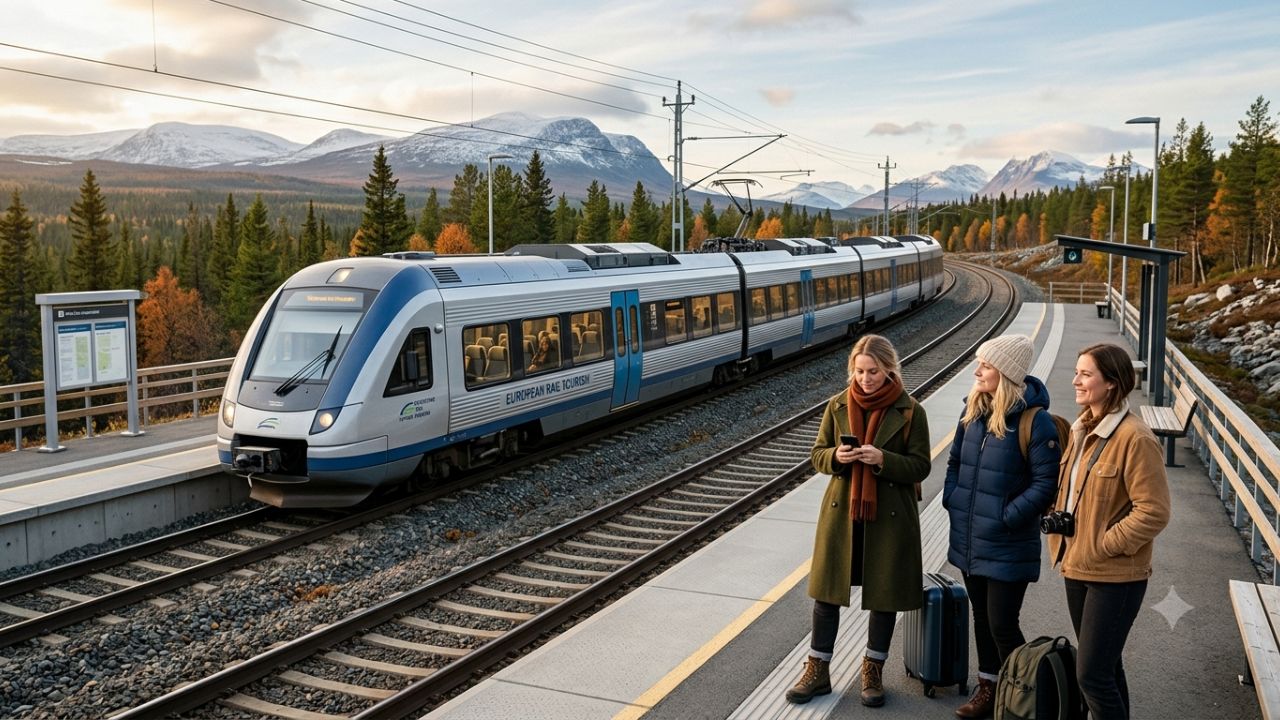
European rail operators expand cross-border train travel in 2026 with new Arctic routes, Alpine tunnels, and high-speed networks.
Sweden and Austria are spearheading an unprecedented renaissance in European railway travel throughout 2026, joining Germany, France, Spain, Italy, and neighboring nations in deploying historic capital investments, high-speed capacity expansions, and direct cross-border routes. From 2,156-kilometer Arctic sleeper services traversing Swedish Lapland to high-speed Alpine links cutting through southern Austria, European railway networks are transforming multi-country leisure tourism and providing environmentally sustainable alternatives to regional aviation.
Under Sweden’s recently enacted SEK 1,171 billion national transport infrastructure framework (2026–2037), overseen by Trafikverket, the state is allocating SEK 210 billion specifically to railway modernization, track reinvestment, and international passenger corridors. Simultaneously, national operators such as Austria’s ÖBB, Germany’s Deutsche Bahn, and France’s SNCF Réseau are synchronizing timetables, rolling out ComfortJet trains, and eliminating border transfer bottlenecks across the continent.
Pan-European Railway Expansion: 2026 Country-by-Country Matrix
European railway networks have introduced distinct infrastructure enhancements and passenger services tailored to regional travel demand:
| Country | National Operator / Authority | Core 2026 Rail Initiative | Primary Tourism & Passenger Dividend |
|---|---|---|---|
| Sweden | Trafikverket / Snälltåget | 2,156-km Malmö–Narvik Arctic train; Sälen ski link; Gothenburg Station Centralen | Subarctic northern lights tourism; Swedish ski resort access |
| Austria | ÖBB | Full operation of Koralm Railway (Graz–Klagenfurt); Nightjet expansion | Trans-Alpine mountain tourism; direct Central European connections |
| Germany | Deutsche Bahn (DB) | ~40 new daily cross-border connections; half-hourly service across 21 cities | Direct links to Poland, Scandinavia, Belgium, and Austria |
| France | SNCF Réseau | €6 Billion modernization program across 1,700 sites (1,017 km tracks renewed) | Long-term reliability on Paris, Lyon, Marseille, and Bordeaux routes |
| Spain | Renfe | 21.6M summer seats; Madrid–Málaga high-speed frequency increases | Peak Mediterranean summer holiday and Andalusian cultural access |
| Italy | Trenitalia | Frecciarossa high-speed grid; trilateral Munich–Milan/Rome prep | Accelerated north-south transit; future direct Alpine-German links |
| Denmark | DSB | Direct Prague–Copenhagen ComfortJet service via Germany | Seamless Scandinavian-Central European journeys without train transfers |
| Czechia | České dráhy (ČD) | Modern ComfortJet deployment linking Prague to Berlin and Copenhagen | Premium dining and digital amenities for international city breaks |
| Netherlands | NS / ProRail | Projected 22% expansion in international cross-border passenger services | Faster connections into Germany, Belgium, and Eurostar hubs |
| Belgium | SNCB / Infrabel | New ICE services linking Cologne and Antwerp via Brussels Airport | Integrated air-to-rail transit for international travelers |
| Poland | PKP Intercity | Leipzig–Kraków EuroCity direct cross-border connection | Heritage tourism and direct rail access to historic Kraków |
| Switzerland | SBB | ~300 infrastructure projects under CHF 16B expansion to 2035 | High-frequency Alpine resort access and trans-European connectivity |
| United Kingdom | Network Rail / SWR | £250M Cambridge South station; 39 new Arterio trains (+27% capacity) | Upgraded regional and suburban commuter accessibility |
| Portugal | Infraestruturas de Portugal | €200M upgrade of Northern & Minho lines; Ovar–Espinho track renewals | Smoother, safer rail access to Porto and northern wine regions |
| Bulgaria, Greece, Romania | Joint Ministries | Tripartite Transport Action Plan (signed 9 Oct 2026); Giurgiu–Ruse bridge | Elimination of South-Eastern European cross-border freight & passenger delays |
Sweden: Arctic Sleepers, Ski Corridors, and Gothenburg Centralen
Sweden's railway strategy bridges high-density southern metropolitan transit with remote northern wilderness tourism:
- The 2,156-km Arctic Sleeper Service: In November 2026, private operator Snälltåget operates a direct long-haul Arctic rail expedition from Malmö through Stockholm to Narvik in northern Norway. The route provides international tourists with direct sleeper access to Kiruna, the world-renowned Abisko Aurora Sky Station, and Swedish Lapland's winter wilderness.
- Dedicated Sälen Ski Shuttle: From December 2026 through April 2027, a dedicated Saturday train-and-bus connection links southern urban centers directly with Sälen, Sweden’s premier winter sports hub, cutting reliance on private road travel.
- Gothenburg Underground Station Centralen: Scheduled to open for passenger service in December 2026, Gothenburg’s subterranean Station Centralen significantly boosts regional commuter throughput and provides direct underground links for Scandinavian cross-border services to Oslo and Copenhagen.
Austria and Central Europe: Alpine Nightjets and the Koralm Breakthrough
Austria continues to serve as the continental epicenter of European overnight train travel:
- The Koralm Railway Impact: Following its formal inauguration in late 2025, the high-speed Koralm line is experiencing its first full year of operation in 2026. The route slashes travel times between Graz and Klagenfurt from three hours to just 45 minutes, revolutionizing southern Austrian regional mobility.
- Trans-Alpine Frecciarossa Alliances: A trilateral partnership uniting ÖBB, Deutsche Bahn, and Italy’s Trenitalia is finalizing operational safety protocols to operate direct Italian Frecciarossa high-speed trains from Milan and Rome to Munich via Austria, with commercial passenger launches planned for summer 2027.
- Nightjet Network Primacy: ÖBB’s state-of-the-art Nightjet fleet continues to expand sleeper links connecting Vienna and Salzburg with Hamburg, Amsterdam, Venice, and Brussels, providing business and leisure travelers with private sleeping cabins equipped with en-suite showers.
Germany, Denmark, and Czechia: Connecting Central Europe to Scandinavia
International rail cooperation across Northern and Central Europe has eliminated historic rolling stock barriers:
- The Prague–Copenhagen ComfortJet Corridor: Launched in partnership between České dráhy, Deutsche Bahn, and DSB, two daily return ComfortJet train pairs now connect Prague, Dresden, Berlin, Hamburg, and Copenhagen. Featuring onboard bistro dining, family zones, and continuous Wi-Fi, the service enables travelers to journey between Central Europe and Denmark before connecting onward across the Öresund Bridge into Sweden.
- German Cross-Border Expansion: Deutsche Bahn’s updated 2026 timetable introduces roughly 40 new or extended daily international trains, linking German hubs with nine sovereign neighbors and establishing half-hourly intercity rhythms across 21 major German cities.
- Poland's EuroCity Renaissance: The new Leipzig–Kraków EuroCity service provides a comfortable rail link between central Germany and Poland’s cultural capital, supporting multi-destination European cultural itineraries.
Southern & Western Europe: High-Speed Capacity and Giant Infrastructure Upgrades
In Spain, France, and Portugal, rail operators are prioritizing massive infrastructure renewal and high-speed seat availability:
- Spain’s 21.6 Million Seat Summer Blitz: National operator Renfe allocated 21.6 million seats between late June and mid-September 2026, including over 8.9 million seats on high-speed AVE and Avlo trains. The Madrid–Málaga route along the Andalusian corridor saw weekly departures expand from 166 to 174, lifting weekly capacity to 61,176 seats.
- France’s €6 Billion Modernization Blitz: SNCF Réseau is managing 1,700 active civil worksites in 2026, replacing 1,017 kilometers of track, upgrading 275 kilometers of overhead catenary electrification, and reconfiguring 380 critical track switches to enhance long-term punctuality across the TGV network.
- Portugal’s Northern Corridor Renewal: A targeted €200 million investment is modernizing the Northern and Minho railway corridors, removing 11 dangerous level crossings between Nine and Barroselas while expanding capacity around Porto.
Key Passenger Facts & Highlights
- SEK 210B Swedish Rail Commitment: Part of Sweden's wider SEK 1,171 billion transport infrastructure plan running through 2037.
- 2,156-Kilometer Arctic Route: Direct sleeper services connecting Malmö to Narvik through Kiruna and Abisko launch in November 2026.
- 45-Minute Graz–Klagenfurt Transit: Austria’s Koralm Railway cuts southern intercity transit times by over two hours.
- Prague–Copenhagen Direct ComfortJets: Two daily return pairs connect Czechia, Germany, and Denmark without train transfers.
- 21.6M Spanish Rail Seats: Renfe delivered record summer seat capacity to support Mediterranean and Andalusian holidaymakers.
Practical Advice for Booking European Rail Journeys in 2026
- Book International Sleepers 3 to 6 Months Ahead: Nightjet, Snälltåget, and European Sleeper private compartments sell out rapidly during peak winter ski and summer holiday seasons; secure reservations as soon as booking windows open.
- Utilize Integrated Booking Platforms: Use multi-operator platforms such as the DB Navigator or the ÖBB app to track complex cross-border transfers and receive real-time delay notifications across international borders.
- Understand Rail Pass Rules: While Eurail and Interrail global passes are valid across most participating national networks, high-speed routes in France (TGV), Spain (AVE), and Italy (Frecciarossa) require mandatory seat reservations that carry separate supplements.
- Monitor Network Maintenance Windows: When traveling through France or Germany, check operator notices for planned track modernization work, particularly during weekend night closures.
The Long-Term Horizon for European Mobility
The coordinated rail initiatives of 2026 demonstrate that European railways are moving beyond fragmented national networks toward a truly unified continental transit grid. By pairing historic infrastructure outlays in Sweden and France with agile cross-border passenger alliances in Austria, Germany, and Czechia, Europe is providing travelers with a fast, scenic, and climate-conscious alternative to short-haul commercial flights.
FAQ: European Rail Travel Expansion 2026
What new Arctic train routes are launching in Sweden in late 2026?
Operator Snälltåget is launching a 2,156-kilometer direct sleeper journey from Malmö to Narvik in November 2026, alongside a seasonal train-and-bus connection to the Sälen ski resort.
How does the Koralm Railway change travel in Austria?
Opened in late 2025 and fully operational in 2026, the Koralm Railway slashes travel times between Graz and Klagenfurt from three hours to just 45 minutes.
Can travelers take a direct train between Prague and Copenhagen?
Yes. Launched in June 2026, modern ComfortJet trains operated by České dráhy, DB, and DSB run directly between Prague and Copenhagen twice daily via Berlin and Hamburg.
When will direct Frecciarossa high-speed trains connect Munich with Milan and Rome?
The tripartite alliance between Trenitalia, ÖBB, and Deutsche Bahn is scheduled to launch direct Munich–Milan and Munich–Rome Frecciarossa services in summer 2027.
Related Travel Guides
Disclaimer
This article is for informational and educational purposes only. It does not constitute legal, financial, or professional advice. While we strive to provide accurate and up-to-date information, travel policies, regulations, and conditions change rapidly. Always verify information with official sources before making travel decisions. Nomad Lawyer makes no representations about the accuracy, reliability, completeness, or suitability of the information provided. Readers should consult qualified professionals for advice specific to their circumstances. The views expressed in this article are those of the author and do not necessarily reflect the views of Nomad Lawyer.
Raushan Kumar
Founder & Lead Developer
Full-stack developer with 11+ years of experience and a passionate traveller. Raushan built Nomad Lawyer from the ground up with a vision to create the best travel and law experience on the web.
Learn more about our team →