Estonia Travel Takes a Wild Turn as Soomaa, Saaremaa and Tartu Expand the Tourist Trail

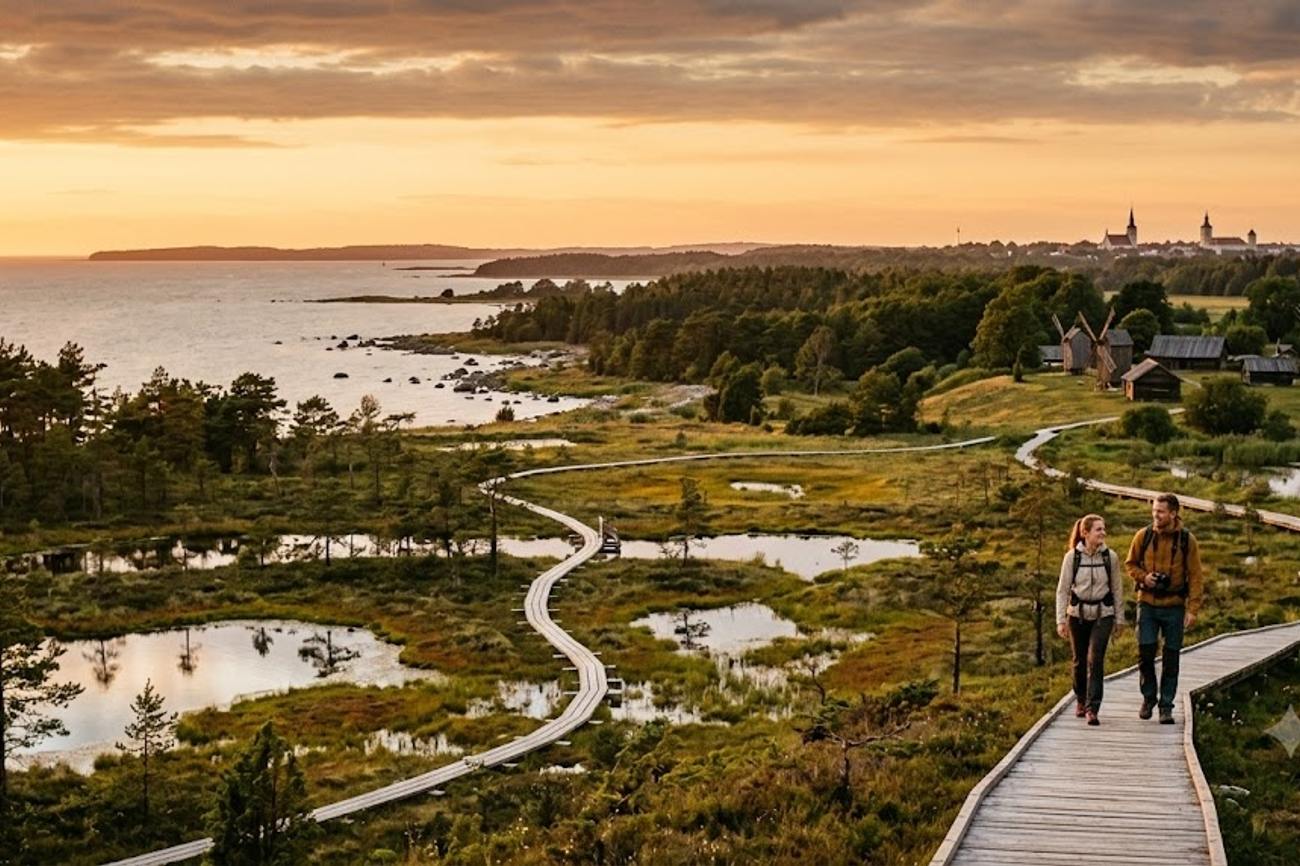
Image generated by AI
[Tallinn, May 2025] — Estonia has recorded nearly 3.7 million tourist stays in 2025, marking a 2% year-on-year increase as the Baltic nation aggressively pivots toward nature-based and sustainable travel.
The growth is driven by a 5% surge in foreign arrivals, which now total nearly 1.95 million visitors. While these figures signal a strong recovery, the Statistics Estonia data confirms that overall accommodation numbers remain 3% below the benchmarks set in 2019. The shift in visitor patterns indicates a move away from concentrated urban tourism in the capital toward a diversified itinerary involving national parks, remote islands, and intellectual hubs.
The Diversification of the Estonian Market
The immediate trigger for this growth is a strategic expansion of the tourism product beyond the medieval walls of Tallinn. The Estonian tourism sector is now actively marketing "slow travel" and wilderness experiences to offset the saturation of its primary urban center. This strategy leverages the country's low population density—currently 31.3 inhabitants per square kilometre—to attract high-value travelers seeking isolation and ecological authenticity.
By integrating the UNESCO World Heritage listed sites in Tallinn with the raw wilderness of the interior, Estonia is attempting to extend the average length of stay. The current market trend shows a transition from "city-break" tourism to "multi-stop" itineraries that combine urban culture with the country's extensive network of bogs, forests, and over 2,000 islands and islets.
Regional Impact and Visitor Distribution
The impact of this tourism surge is distributed across four primary geographic hubs, each serving a distinct traveler demographic:
- Tallinn (The Gateway): Remains the primary entry point. While the medieval Old Town is the main draw, there is a measurable shift toward the creative districts of Telliskivi, the parks of Kadriorg, and the architectural contrasts of Kalamaja and Rotermann.
- Soomaa National Park (The Adventure Hub): A seasonal spike occurs in late March and early April during the "fifth season." This period sees the flooding of up to 17,500 hectares of land, turning forests and roads into navigable waterways for kayakers.
- Saaremaa (The Island Market): The largest island serves as the center for wellness and maritime history, anchored by the Kuressaare Episcopal Castle and a robust spa economy.
- Tartu (The Intellectual Center): As the second-largest city, Tartu attracts a younger, academic demographic focused on the Estonian National Museum and the city's university culture.
Practical Traveler Advisory and Strategic Insights
For passengers and tourists booking trips to Estonia in 2025, the corporate push for "sustainable tourism" translates into several practical operational changes:
1. Avoid the "Cruise Crunch" Travelers arriving via cruise ships will find the Tallinn Old Town severely congested. To avoid peak crowds, visitors should pivot to outer neighborhoods or schedule interior excursions during the peak cruise arrival windows.
2. Nature-Dependent Scheduling The "fifth season" in Soomaa is not a fixed date. Because the flooding of forests and meadows depends entirely on weather conditions, travelers cannot rely on a static calendar. Real-time monitoring of water levels is mandatory for those booking canoeing or kayaking trips.
3. Infrastructure for "Soft" Adventure The expansion of the boardwalk network (such as the Riisa and Viru trails) means that high-latitude bog exploration no longer requires specialist trekking gear. Standard hiking footwear is sufficient for the majority of the national park system.
4. Diversified Transit Needs The shift toward Saaremaa and smaller islands like Ruhnu, Vormsi, and Kihnu requires more complex ferry coordination. Travelers should move away from "Tallinn-only" bookings and incorporate regional transport to avoid the logistics bottlenecks common in the summer months.
The Sustainability Roadmap
Estonia is currently aligning its tourism growth with the European Charter for Sustainable Tourism. This framework is already active in the Lahemaa, Matsalu, and Soomaa regions. The goal is to prevent the "over-tourism" seen in other European capitals by incentivizing travel outside of peak seasons and promoting the use of certified responsible operators.
The inclusion of the haabjas (traditional dugout canoe) on the UNESCO Intangible Cultural Heritage list in 2021 is a key part of this strategy, turning traditional craft into a sustainable tourism asset. Moving forward, the Visit Estonia agency is expected to push further for the decentralization of tourist traffic to protect the fragile peatlands and bogs that define the national landscape.
FAQ: Estonia Travel 2025
When is the best time to visit Soomaa for the flooding? The "fifth season" typically occurs in late March or early April. However, since this is a natural weather event, dates vary annually. Travelers must check local water levels and weather reports immediately prior to departure.
Do I need special equipment to visit Estonian bogs? No. Most major bogs, including Viru and Riisa, feature extensive wooden boardwalks. These allow visitors to explore the peatlands without specialist gear, though waterproof clothing is recommended due to unpredictable weather.
Is Tallinn the only city worth visiting? While Tallinn is the primary hub, Tartu offers a distinct intellectual and youthful atmosphere. It serves as the gateway to southern Estonia and is essential for those interested in museums, universities, and rural landscapes like Otepää.
How crowded is the Tallinn Old Town? It can become extremely crowded during the cruise season. To avoid the heaviest traffic, explore the city's outer districts—such as Telliskivi or Kalamaja—while large ships are docked in the harbor.
Estonia is successfully trading the traditional European city-break for a high-yield, nature-first tourism model.
Related Travel Guides
- Taos Wool Festival 2026: Insider Guide to New Mexico's High-Desert Fiber Arts and Golden Aspen Season
- Rhode Island Coastal Insider Guide 2026: From Newport Gilded Mansions to Block Island's Bluffs
- Puerto Varas Sur Natural Festival 2026: Insider Guide to Chile's Los Lagos Harvest, Music, and Ecotourism
This article is for informational purposes. Flight routes, passenger regulations, visa rules, and transit advisories are subject to change by airlines and aviation authorities. Readers are advised to verify schedules and travel documentation with relevant carriers and border agencies before departure.
Related Stories

Australia and Philippines Forge Historic Defence Cooperation Pact to Protect Indo-Pacific Trade and Travel Corridors

Phuket Luxury Tourism Surge 2026: High-Net-Worth Arrivals and New Aviation Routes