
Endeavor Air Delta Flight EDV5488 Mitsubishi CRJ-900LR Diverts Back to LaGuardia After 3 Hours Airborne on New York-Halifax Route 2026
Endeavor Air Flight EDV5488 operated by Delta Airlines departed LaGuardia for Halifax but returned after over three hours airborne, raising questions about regional jet diversion procedures.

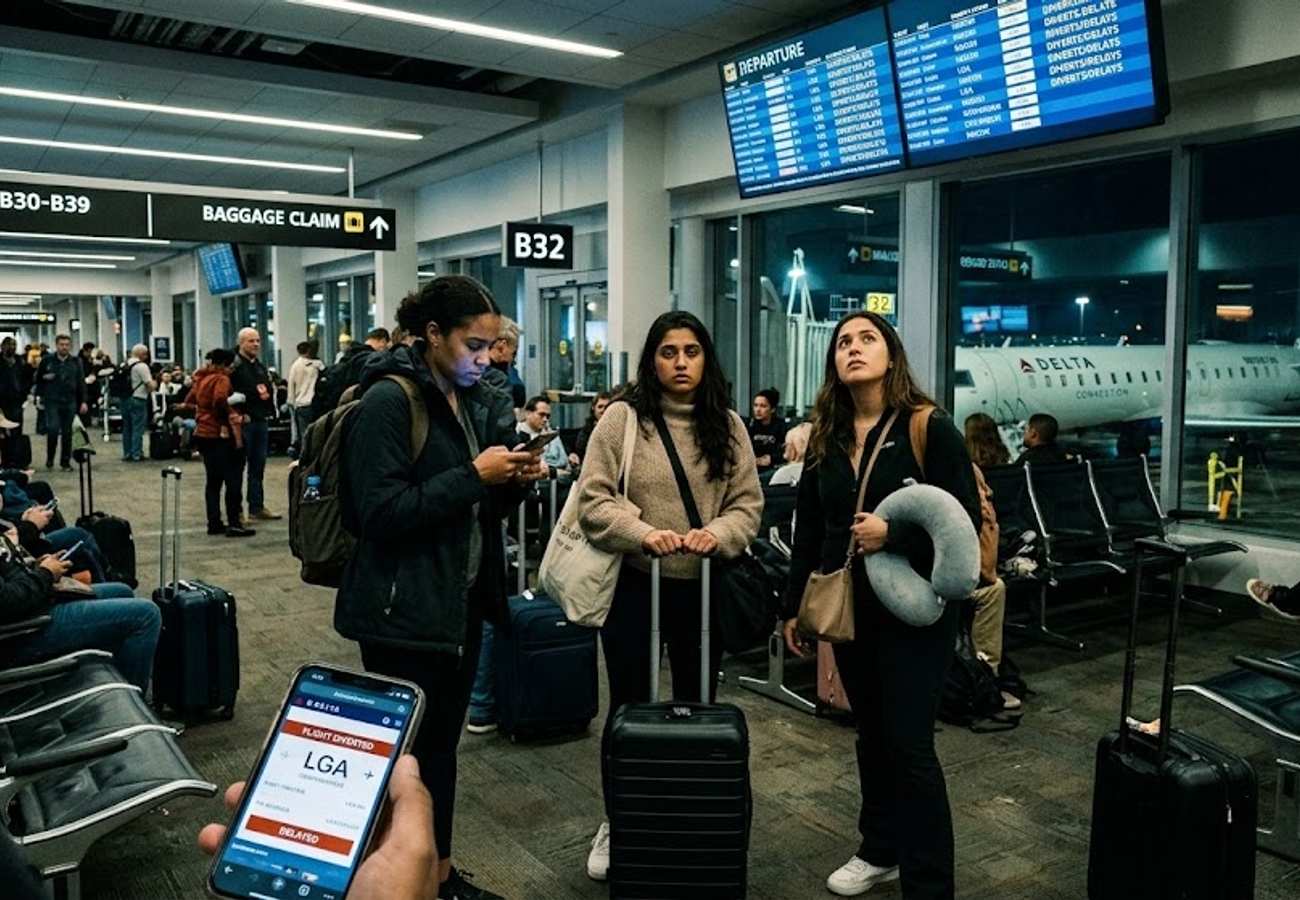
Image generated by AI
A Delta Connection regional jet spent over three hours in the air only to land right back where it started — and the airline has yet to explain why. Endeavor Air Flight EDV5488, operated under the Delta Airlines banner, departed LaGuardia Airport on July 30, 2026, bound for Halifax Stanfield International Airport in Nova Scotia, Canada. Instead of completing the short international hop, the Mitsubishi CRJ-900LR turned back and arrived at the same gate it had left hours earlier.
The incident has drawn attention from aviation watchers and passengers alike, largely because the flight remained airborne far longer than the route typically requires before returning to its origin point. No official statement has been issued by Endeavor Air or Delta Airlines as of publication.
Flight EDV5488: Timeline of the Unexpected Return
Endeavor Air Flight 5488 pushed back from Gate 70 at LaGuardia Airport (LGA) on July 30, 2026. The aircraft departed at 7:58 PM EDT — approximately seven minutes ahead of its scheduled 8:05 PM departure time. The aircraft involved was a Bombardier CRJ900, registration N934XJ, operating under the Mitsubishi CRJ-900LR designation.
Flight tracking data reveals the aircraft remained airborne for approximately 3 hours and 24 minutes. Rather than touching down at Halifax Stanfield International Airport (YHZ), the flight reversed course and landed back at LaGuardia at 11:22 PM EDT. This resulted in an arrival delay of roughly one hour and twenty-nine minutes relative to what passengers would have expected.
The data confirms the aircraft did not divert to an alternate airport. It returned directly to its departure point, which distinguishes this event from a typical diversion to a closer or more suitable field.
What the Tracking Data Shows — and What It Doesn't
Public flight tracking services captured the full movement of N934XJ from gate to gate. The tracking confirms the departure time, the extended airborne duration, and the return landing at LaGuardia. However, tracking platforms cannot provide the reasoning behind crew operational decisions.
Flight tracking systems record timing, routing, and positional data. They do not capture cockpit communications, maintenance flags, or internal airline dispatch instructions. The publicly available data paints an accurate picture of the flight's physical journey but offers no insight into why the crew elected to return rather than continue to Halifax.
That explanation will need to come from Endeavor Air, Delta Airlines, or an aviation regulatory body. Until then, any attribution of cause would be speculative.
Why Airlines Return Flights to Their Origin
Returning a flight to its departure airport is a recognized operational procedure and does not automatically indicate an emergency. Pilots continuously assess multiple variables during flight, including aircraft system performance, weather conditions along the route, destination airport operational status, and crew availability.
When conditions make continuing to the destination less safe or less operationally sound than returning, flight crews coordinate with air traffic control to execute a controlled return. These decisions prioritize passenger safety and are carried out through standard procedures designed to minimize risk.
Several categories of issues can trigger such a return:
- Technical concerns requiring further inspection before continuing the flight
- Weather changes on the planned route or at the destination
- Airport operational issues at the arrival airport
- Crew-related factors such as duty time limitations
- Passenger safety considerations that warrant precautionary action
In the case of EDV5488, none of these categories has been confirmed by the airline.
Post-Diversion Procedures and Passenger Impact
When a flight returns to its departure airport, airlines follow established protocols. Maintenance engineers inspect the aircraft if technical issues are suspected. Operations teams work to rebook passengers on alternative flights or assign a replacement aircraft. Flight crews file operational reports documenting the full sequence of events to ensure compliance with safety and regulatory requirements.
For passengers, this means significant disruption. Travelers expecting to arrive in Halifax found themselves back at LaGuardia with no immediate onward connection confirmed publicly. The delay of approximately one hour and twenty-nine minutes at landing only tells part of the story — the total disruption to travel plans would have been considerably longer once rebooking and any overnight accommodations are factored in.
Regional Jet Operations and the New York-Halifax Corridor
The LaGuardia-to-Halifax route is a transborder regional connection typically served by narrowbody regional jets like the CRJ-900LR. These aircraft are commonly used for shorter international routes connecting major U.S. hubs to secondary Canadian cities. The route serves both business travelers maintaining cross-border commercial ties and leisure passengers visiting Nova Scotia.
Regional jet operations on transborder routes face unique pressures. Aircraft of this class have more limited diversion options over water or remote areas compared to mainline jets flying the same corridors. Crews must weigh fuel reserves, alternate airport availability, and weather conditions with particular care on these segments.
The fact that EDV5488 remained airborne for over three hours — well beyond the typical flight time for this route — suggests the aircraft may have entered a holding pattern or flown an extended routing before the decision to return was finalized. This is consistent with crew assessment procedures where pilots evaluate options before committing to a course of action.
What Comes Next
Endeavor Air has not publicly explained why Flight 5488 returned to LaGuardia instead of proceeding to Halifax. The verifiable facts stand as follows: the flight departed LaGuardia on July 30, 2026, at 7:58 PM EDT, remained airborne for approximately 3 hours and 24 minutes, and safely landed back at LaGuardia at 11:22 PM EDT. The aircraft involved was registered as N934XJ.
Further clarification from the airline or relevant aviation authorities will determine whether the return stemmed from a technical issue, weather, operational constraints, or another factor entirely. Until then, the incident serves as a reminder that flight returns, while disruptive, are precautionary actions rooted in aviation's safety-first framework.
Aviation safety protocols prioritize caution over convenience — and sometimes that means flying three hours to land exactly where you started.
Flight EDV5488 Key Data
| Parameter | Detail |
|---|---|
| Flight Number | EDV5488 (Endeavor Air, operated by Delta Airlines) |
| Aircraft Type | Mitsubishi CRJ-900LR (Bombardier CRJ900) |
| Registration | N934XJ |
| Departure Airport | LaGuardia Airport (LGA), New York |
| Destination Airport | Halifax Stanfield International Airport (YHZ), Nova Scotia, Canada |
| Departure Gate | Gate 70 |
| Scheduled Departure | 8:05 PM EDT, July 30, 2026 |
| Actual Departure | 7:58 PM EDT, July 30, 2026 (7 minutes early) |
| Airborne Duration | Approximately 3 hours 24 minutes |
| Landing Time (Back at LGA) | 11:22 PM EDT, July 30, 2026 |
| Arrival Delay | Approximately 1 hour 29 minutes |
| Diversion Type | Return to departure airport |
| Official Statement | None issued as of publication |
Key Takeaways
- Endeavor Air Flight EDV5488 departed LaGuardia for Halifax on July 30, 2026, at 7:58 PM EDT but returned to LaGuardia after 3 hours and 24 minutes airborne.
- The aircraft, a Mitsubishi CRJ-900LR registered N934XJ, did not divert to an alternate airport — it returned to its origin.
- No official statement has been issued by Endeavor Air or Delta Airlines explaining the reason for the return.
- Flight tracking data confirms the timeline but cannot explain crew decision-making behind the return.
- Returning to a departure airport is a standard precautionary procedure and does not necessarily indicate an emergency.
Frequently Asked Questions
What happened to Endeavor Air Flight EDV5488? The flight departed LaGuardia Airport on July 30, 2026, bound for Halifax but returned to LaGuardia after approximately 3 hours and 24 minutes airborne. No official reason has been provided.
What aircraft was used for Flight EDV5488? The flight operated using a Mitsubishi CRJ-900LR, also identified as a Bombardier CRJ900, with registration N934XJ.
Is returning to the departure airport an emergency? Not necessarily. Airlines routinely return flights to their origin as a precautionary measure when technical, weather, operational, or crew-related factors make continuing to the destination inadvisable.
How long was Flight EDV5488 delayed? The flight landed back at LaGuardia at 11:22 PM EDT, resulting in an arrival delay of approximately one hour and twenty-nine minutes. Total passenger disruption would have been longer due to rebooking requirements.
Has Endeavor Air or Delta Airlines issued a statement? As of publication, neither Endeavor Air nor Delta Airlines has released an official statement explaining the return.
Related Travel Guides
Disclaimer
This article is for informational and educational purposes only. It does not constitute legal, financial, or professional advice. While we strive to provide accurate and up-to-date information, travel policies, regulations, and conditions change rapidly. Always verify information with official sources before making travel decisions. Nomad Lawyer makes no representations about the accuracy, reliability, completeness, or suitability of the information provided. Readers should consult qualified professionals for advice specific to their circumstances. The views expressed in this article are those of the author and do not necessarily reflect the views of Nomad Lawyer.
Kunal K Choudhary
Co-Founder & Contributor
A passionate traveller and tech enthusiast. Kunal contributes to the vision and growth of Nomad Lawyer, bringing fresh perspectives and driving the community forward.
Learn more about our team →