
Middle East Aviation Gridlock: 1,382 Flight Delays and 106 Cancellations
A massive aviation gridlock hits the Middle East, with Dubai, Riyadh, and Tel Aviv recording 1,382 delays and 106 cancellations.

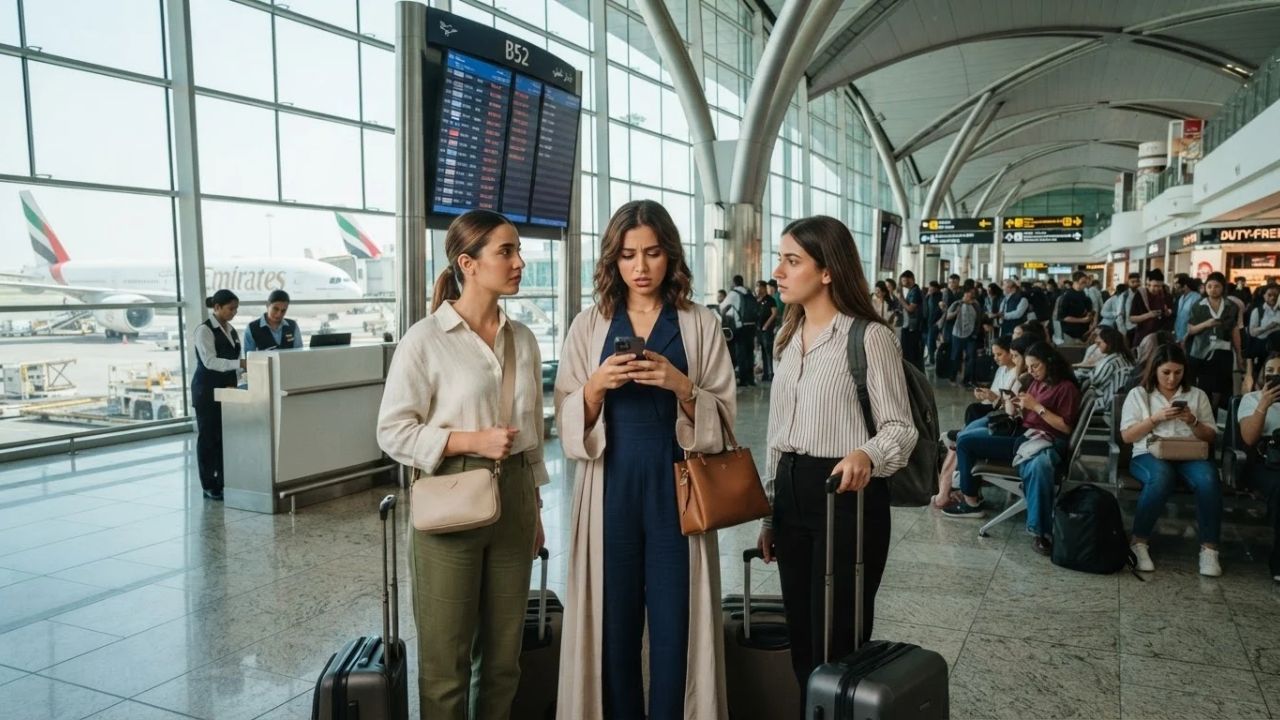
Image generated by AI
A major aviation gridlock swept across the Middle East on August 20, 2026, recording 1,382 flight delays and 106 cancellations across busy hubs like Dubai, Riyadh, and Tel Aviv.
The Local Trend Revealed: Hub Interdependence and Airspace Pressure
A major trend in global aviation is the vulnerability of transcontinental transfer hubs to network-wide scheduling pressures. In the Middle East, where major gateways serve as bridges connecting Europe, Asia, and Africa, localized airspace constraints, regional security updates, and high passenger volumes create chain-reaction disruptions. When arriving flights are delayed, it disrupts precise aircraft rotations, meaning subsequent departures cannot take off on time, compounding delays across multiple airline networks.
According to real-time flight-tracking data compiled on 20 August 2026 at 3:03 pm ET USA (August 20, 11:03 pm GST), the scale of the disruption includes:
- Airport-Level Disruption:
- Dubai (DXB): Experienced 302 delays and 4 cancellations, affecting international transfers.
- Tel Aviv (TLV): Ben Gurion International Airport recorded 211 delays and 10 cancellations, reflecting airline routing challenges.
- Jeddah (JED): King Abdulaziz International Airport logged 153 delays and 15 cancellations.
- Riyadh (RUH): King Khalid International Airport experienced 124 delays and 25 cancellations, representing the highest cancellation count among regional terminals.
- Abu Dhabi (AUH): Reported 162 delays and 2 cancellations.
- Cairo (CAI): Logged 181 delays and 4 cancellations, adding pressure to North Africa's primary gateway.
- Istanbul (SAW): Sabiha Gökçen International Airport reported 160 delays and 2 cancellations.
- Sharjah (SHJ): Recorded 62 delays and 5 cancellations.
- Combined Country Figures:
- United Arab Emirates: Dubai, Abu Dhabi, Sharjah, and Al Maktoum combined for 539 delays and 12 cancellations.
- Saudi Arabia: Riyadh and Jeddah combined for 277 delays and 40 cancellations.
- Airlines Most Affected:
- Turkish Airlines: Recorded 216 delays and 1 cancellation, the highest delay count among regional carriers.
- Pegasus Airlines: Logged 179 delays and 1 cancellation.
- Emirates: Recorded 181 delays and 1 cancellation, impacting long-haul passenger transfers.
- Saudia: Logged 82 delays and 39 cancellations, the highest carrier cancellation count.
- Air Arabia: Reported 54 delays and 5 cancellations.
- Royal Jordanian: Recorded 18 delays and 2 cancellations.
This widespread operational pressure highlights the sensitivity of long-haul networks to localized scheduling delays and aircraft rotation bottlenecks.
Major Middle East Airport Flight Delays & Cancellations (August 20, 2026)
| Target Airport Hub | Stated Flight Delays | Stated Flight Cancellations | Leading Disrupted Carrier | Primary Regional Gateway |
|---|---|---|---|---|
| Dubai (DXB) | 302 delays | 4 cancellations | Emirates (181 delays) | United Arab Emirates |
| Tel Aviv (TLV) | 211 delays | 10 cancellations | Multiple international carriers | Israel |
| Cairo (CAI) | 181 delays | 4 cancellations | EgyptAir / regional routes | Egypt |
| Abu Dhabi (AUH) | 162 delays | 2 cancellations | Etihad Airways / regional links | United Arab Emirates |
| Istanbul Sabiha (SAW) | 160 delays | 2 cancellations | Pegasus (179 delays) | Turkey |
| Jeddah (JED) | 153 delays | 15 cancellations | Saudia (82 delays) | Saudi Arabia |
| Riyadh (RUH) | 124 delays | 25 cancellations | Saudia (domestic routes) | Saudi Arabia |
| Sharjah (SHJ) | 62 delays | 5 cancellations | Air Arabia (54 delays) | United Arab Emirates |
Cultural & Environmental Value: Supporting Airport Communities
For the traveler, the real impact of these international transit delays is the necessity to pivot toward local airport ecosystems and regional hospitality businesses. When extended layovers happen, choosing to stay in eco-certified airport-adjacent hotels or dining at community-sourced restaurants keeps traveler capital within the local community.
Mapped in coordination with the General Authority of Civil Aviation (GACA) and regional airport boards, these operational challenges encourage authorities to design more energy-efficient terminals and localized passenger support networks. This protects the local environment.
Destination Specialist Local Insider Tips
To help you manage travel delays and navigate busy terminal halls comfortably during flight disruptions, regional specialists suggest the following tips:
- Savor Kunafa in Dubai: Experience regional Middle Eastern gastronomy. While waiting through flight delays at Dubai International Airport, try authentic Kunafa (a traditional dessert made of spun shredded pastry soaked in sweet sugar syrup, layered with melted unsalted cheese, and topped with crushed green pistachios).
- Monitor Inbound Aircraft Rotations: Check real-time tracking portals like FlightAware to monitor the incoming flight path of your assigned aircraft, giving you early warnings of delay trends.
- Leverage Passenger Rights Charters: If your flight is delayed for over 4 hours or canceled, immediately check passenger rights guides to request meal vouchers, lounge access, or hotel transfers at major hubs like Dubai or Riyadh.
- Verify Departure Terminals Remotely: Check airport mobile portals before heading to terminals like King Khalid Airport in Riyadh to confirm your flight's gate and check-in location.
- Explore Jubail Mangrove Park: Take an under-the-radar detour. If stuck on a long layover at Abu Dhabi International, visit the under-the-radar Jubail Mangrove Park, featuring boardwalks through protected coastal forests that support local marine conservation.
Long-Term Outlook: Resilient Aviation Frameworks
The long-term outlook for Middle Eastern aviation remains positive, driven by the expansion of terminal capacities and the deployment of advanced flight monitoring systems. As regional civil aviation authorities continue to coordinate with global route-planning agencies to establish backup corridors and bypass restricted zones, network stability will strengthen. By balancing safety protocols with eco-efficient airport structures and passenger support, local planners are building a resilient, long-term transit framework.
Related Travel Guides
Disclaimer
This article is for informational and educational purposes only. It does not constitute legal, financial, or professional advice. While we strive to provide accurate and up-to-date information, travel policies, regulations, and conditions change rapidly. Always verify information with official sources before making travel decisions. Nomad Lawyer makes no representations about the accuracy, reliability, completeness, or suitability of the information provided. Readers should consult qualified professionals for advice specific to their circumstances. The views expressed in this article are those of the author and do not necessarily reflect the views of Nomad Lawyer.
Raushan Kumar
Founder & Lead Developer
Full-stack developer with 11+ years of experience and a passionate traveller. Raushan built Nomad Lawyer from the ground up with a vision to create the best travel and law experience on the web.
Learn more about our team →