Middle East Flight Disruptions: Over 820 Delays and 90 Cancellations Hit Dubai, Riyadh, and Istanbul

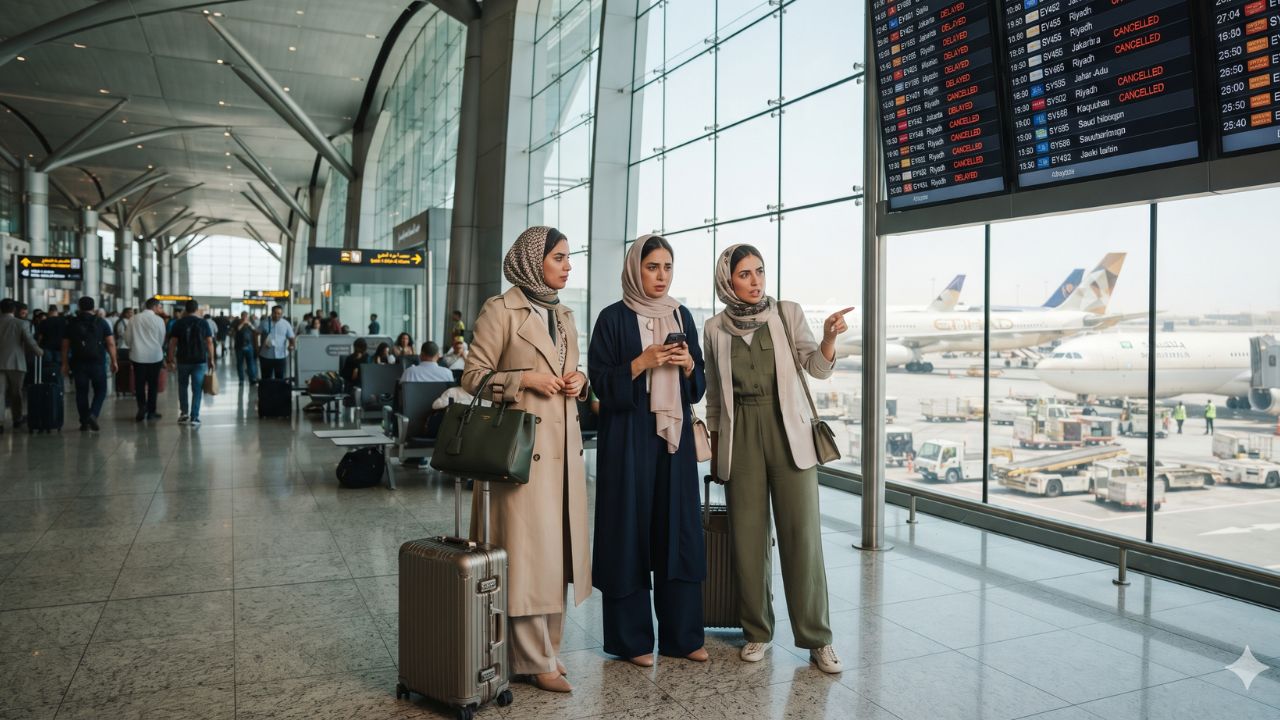
Image generated by AI
While British Airways celebrated its return to Dubai on 3 November 2026 following weeks of conflict-driven suspensions, Singapore Airlines simultaneously pushed its own flight freeze to Dubai through 28 February 2027, illustrating the sharply divided risk assessments fracturing Middle Eastern aviation. On Thursday, 5 November 2026, persistent regional security tensions and strict airspace rerouting triggered 91 flight cancellations and 828 delays across commercial airports in the United Arab Emirates, Saudi Arabia, Türkiye, Egypt, Bahrain, and Kuwait. Sourced from real-time flight tracking telemetry recorded at 2:30 am IST, the disruption concentrated heavily in the Arabian Peninsula, where King Khaled International Airport in Riyadh logged 24 cancellations following four separate security alerts since early October, prompting the United Kingdom Foreign Office to advise its citizens to avoid the airport perimeter.
Fragmented Skies: How Geopolitical Alerts and Carrier Rerouting Divide Middle East Hubs
The operational disruption across the region reflects two distinct mechanical challenges: severe gate and airspace congestion at megahubs, contrasted with targeted flight cancellations driven by military threats in active security corridors.
In terms of raw delays, Istanbul Airport in Türkiye recorded the highest disruption on the continent, with 227 flights delayed alongside three cancellations. The massive transfer hub, which connects East–West passenger traffic, absorbed secondary delays caused by extended aircraft holding stacks and circular flight paths around active conflict zones. In the Gulf, Dubai Airports recorded 166 delays and six cancellations at Dubai International Airport (DXB), reflecting a 15 percent departure delay rate and a 14 percent arrival delay rate. Nearby Zayed International Airport in Abu Dhabi (AUH) registered 130 delays and two cancellations, while Sharjah International Airport (SHJ) recorded 53 delays and four cancellations.
The center of operational cancellations remained firmly within the Kingdom of Saudi Arabia under the jurisdiction of the General Authority of Civil Aviation. King Khaled International Airport (RUH) in Riyadh led all regional airports with 24 cancellations and 21 delays, while King Abdulaziz International Airport (JED) in Jeddah logged 23 cancellations and 89 delays, maintaining a 10 percent departure delay rate and a 12 percent arrival delay rate. In the Eastern Province, King Fahd International Airport (DMM) in Dammam registered 10 cancellations and 27 delays. Both Bahrain International Airport (BAH) in Manama and Kuwait International Airport (KWI) recorded eight cancellations apiece, while Cairo International Airport (CAI) logged three cancellations and 79 delays with an 11 percent departure delay rate.
| Airport Facility & IATA Code | Metropolitan Area & Country | Confirmed Cancellations | Confirmed Flight Delays | Operational Delay Metrics |
|---|---|---|---|---|
| Istanbul Airport (IST) | Istanbul, Türkiye | 3 | 227 | Highest regional delays; secondary holding stacks |
| Dubai International (DXB) | Dubai, United Arab Emirates | 6 | 166 | 15% departure delays, 14% arrival delays |
| Zayed International (AUH) | Abu Dhabi, United Arab Emirates | 2 | 130 | Hub transfer congestion; carrier schedule adjustments |
| King Khaled International (RUH) | Riyadh, Saudi Arabia | 24 | 21 | Highest regional cancellations; 4 security alerts |
| King Abdulaziz International (JED) | Jeddah, Saudi Arabia | 23 | 89 | 10% departure delays, 12% arrival delays |
| Cairo International (CAI) | Cairo, Egypt | 3 | 79 | 11% departure delays; Red Sea corridor detours |
| Sharjah International (SHJ) | Sharjah, United Arab Emirates | 4 | 53 | Low-cost carrier rotation constraints |
| King Fahd International (DMM) | Dammam, Saudi Arabia | 10 | 27 | Regional drone alerts; Gulf transfer suspensions |
| Kuwait International (KWI) | Kuwait City, Kuwait | 8 | 21 | Northern Gulf flight corridor realignments |
| Bahrain International (BAH) | Manama, Bahrain | 8 | 15 | Regional feeder route cancellations |
Carrier Disruptions and International Travel Warnings
The airline impact fell most heavily on national flag carriers maintaining extensive domestic and regional networks. Saudi Arabian Airlines (Saudia) recorded 22 cancellations and 44 delays, marking the highest cancellation count among all commercial carriers in the Middle East. Regional operators followed with targeted schedule cuts: Gulf Air logged eight cancellations and eight delays, EgyptAir recorded five cancellations and 33 delays, Air Arabia posted four cancellations and 47 delays, and Kuwait Airways reported three cancellations and eight delays.
Even major intercontinental operators felt severe schedule friction. Turkish Airlines logged two cancellations but registered 168 delayed flights due to airspace detours. Etihad Airways posted two cancellations and 82 delays as it maintained targeted route cancellations across Saudi Arabian destinations.
| Operating Carrier | Primary Airline Hub | Cancelled Services | Delayed Services | Operational Status Assessment |
|---|---|---|---|---|
| Saudia | Jeddah / Riyadh, Saudi Arabia | 22 | 44 | Highest cancellation count in Middle East |
| Turkish Airlines | Istanbul, Türkiye | 2 | 168 | Extended northern detours around conflict zones |
| Etihad Airways | Abu Dhabi, UAE | 2 | 82 | Suspensions maintained to Riyadh and Dammam |
| Air Arabia | Sharjah, UAE | 4 | 47 | Regional low-cost turnaround compression |
| EgyptAir | Cairo, Egypt | 5 | 33 | Red Sea transit routing adjustments |
| Gulf Air | Manama, Bahrain | 8 | 8 | Gulf feeder route consolidations |
| Kuwait Airways | Kuwait City, Kuwait | 3 | 8 | Regional security schedule alignments |
International diplomatic advisories reflect the volatile security environment. The United States government issued regional alerts advising citizens to exercise extreme vigilance and prepare for abrupt airspace shutdowns. The United Kingdom updated its official travel guidance, advising against all but essential travel to Saudi Arabia, prohibiting travel within 10 kilometers of the border with Yemen, and explicitly cautioning British nationals to avoid King Khaled Airport in Riyadh due to recurring drone and missile threats.
Simultaneously, the European Union Aviation Safety Agency reaffirmed its active conflict-zone information bulletins covering the airspace of Saudi Arabia, Iran, Jordan, Iraq, Lebanon, the Persian Gulf, and the Gulf of Oman, legally obligating European carriers to conduct ongoing risk assessments before transiting regional skies.
Visitor Insider Tips: Riyadh Advisories, Train Alternatives, and Connection Buffers
Managing travel through the Middle East during periods of elevated security alerts requires strategic itinerary design and an awareness of ground alternatives.
- Navigating Riyadh Security Warnings: Given the UK government's explicit advisory against visiting King Khaled International Airport (RUH), international travelers with non-essential travel to Riyadh should consider deferring visits or rerouting through Jeddah or Dammam. If traveling between major Saudi urban centers, bypass regional air travel by using the Saudi Railway Company (SAR) network, which operates comfortable modern passenger trains between Riyadh, Dammam, and the northern provinces.
- Utilizing the Haramain High-Speed Railway: For religious travelers performing Umrah who face flight delays at King Abdulaziz International Airport (JED) in Jeddah, avoid waiting for delayed domestic flights to Medina. The Haramain High-Speed Railway connects Jeddah Airport directly to Makkah in 54 minutes and Madinah in two hours, operating at 300 km/h on dedicated electrified tracks entirely immune to airspace closures.
- Three-Hour Transfer Minimums at Dubai International: With DXB experiencing a 15 percent departure delay rate, never book separate interline tickets with connections under three hours. Transferring between Emirates flights across Concourses A, B, and C can involve lengthy automated train transfers and secondary security screenings. If facing extended layovers, use the Dubai Metro Red Line directly from Terminal 3 into central Downtown Dubai.
- Singapore Airlines Rerouting Alternatives: Passengers holding tickets on Singapore Airlines to Dubai—which are suspended through 28 February 2027—should contact the airline to rebook onto Star Alliance partner flights or reroute through Singapore Airlines services to Muscat, Doha, or alternative Gulf ports with ground transfers.
Cultural and Environmental Context: Regional Sovereignty and Air Corridor Conservation
Civil aviation across the Middle East represents the lifeblood of regional commerce, family ties, and spiritual pilgrimage. Millions of Muslim faithful journey year-round to the holy cities of Makkah and Madinah, relying on dependable air corridors through Jeddah and Madinah. When security threats disrupt civil aviation, they place immense emotional and logistical strain on pilgrims and international workers who support the region's diverse economies.
The environmental cost of airspace avoidance is equally substantial. When commercial airliners are prohibited from utilizing direct flight corridors over Iraq, Jordan, or the Persian Gulf due to EASA conflict-zone bulletins, aircraft must take circuitous southern detours over Egypt and the Red Sea or northern routes across the Caucasus. These diversions add between 45 and 90 minutes of flight time per journey, burning tens of thousands of extra gallons of jet fuel and significantly increasing atmospheric carbon output.
By maintaining disciplined passenger coordination, respecting official diplomatic warnings, and utilizing advanced high-speed rail networks where available, travelers can navigate Middle Eastern journeys responsibly while supporting regional safety and community resilience.
FAQ: Navigating Middle East Flight Disruptions November 2026
Which Middle Eastern airport recorded the highest number of flight cancellations?
King Khaled International Airport in Riyadh (RUH) recorded the highest cancellations in the region, with 24 flights cancelled on 5 November 2026.
Why did British Airways and Singapore Airlines take opposite decisions on Dubai flights?
British Airways resumed London–Dubai flights on 3 November after security reviews, whereas Singapore Airlines extended its flight suspension to Dubai through 28 February 2027 based on independent operational risk assessments.
What official travel warnings apply to King Khaled Airport in Riyadh?
The UK government advises against all but essential travel to Saudi Arabia and explicitly advises British nationals to avoid King Khaled Airport due to recent security alerts and attacks.
Are trains available as an alternative to domestic flights in Saudi Arabia?
Yes. The Haramain High-Speed Railway connects Jeddah Airport to Makkah and Madinah, while the SAR passenger rail network provides daily connections between Riyadh and Dammam.
[High above desert dunes and modern coastal skylines, seasoned travelers rely on verified flight intelligence, generous buffers, and grounded caution to navigate uncertain skies.]
Related Travel Guides
Asia Flight Disruptions: Over 2,270 Delays and 280 Cancellations Hit Bangkok, Beijing, and Mumbai
Middle East Flight Disruptions: Dubai, Jeddah, and Cairo Delays
This article is for informational purposes. Flight routes, passenger regulations, visa rules, and transit advisories are subject to change by airlines and aviation authorities. Readers are advised to verify schedules and travel documentation with relevant carriers and border agencies before departure.
Related Stories
Air India and Air India Express Suspend All Saudi Arabia Flights Amid Security Threats in 2026

Switzerland Leads US, UK, and EU in Escalating Middle East Travel Advisories as SWISS Halts Dubai Flights Over Aviation Security Risks