Interrail Global Pass 2026 Cost Analysis: Does the Merged Rail Pass Save Money Over Point-to-Point Tickets?


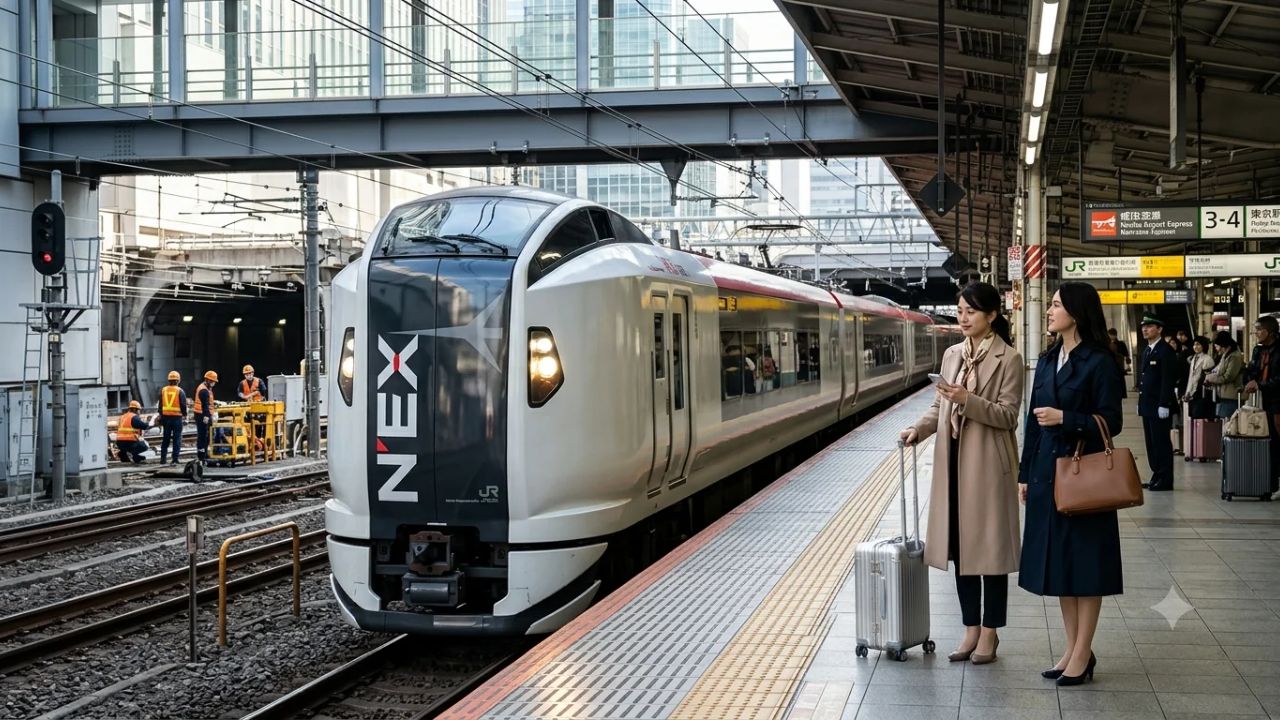
Image generated by AI
The cost of a standard adult one-month continuous Interrail Global Pass has reached nearly 700 euros in 2026, while youth passes start as low as 212 euros for four days. This pricing disparity, combined with a massive corporate restructuring in September 2026, signals a shift in how European rail travel is marketed and consumed, moving away from residency-based branding toward a unified global product.
The Interrail Merger in Numbers: 2026 Pricing Structures
As of September 10, 2026, the industry witnessed the formal dissolution of the Eurail brand, with all products folded into the Interrail Global Pass. While the branding has unified, the underlying economic structure remains tiered by age and duration. Data from operators like Deutsche Bahn indicates that the "travel day" has replaced the "calendar day" as the primary unit of value for the modern traveler.
The 2026 tariff reveals a steep pricing curve based on passenger demographics. Youth travelers (ages 12-27) enter the market at a significantly lower price point than standard adults (ages 28-59). For those seeking premium experiences, first-class upgrades now command a premium of 25% to 35% over second-class rates.
The shift to a mobile-first distribution model via the Rail Planner app has streamlined activation, allowing a window of up to 11 months before the pass must be triggered. However, this digitalization has not eliminated the "hidden" costs of European rail: the compulsory reservations.
Comparative Cost Analysis: Pass vs. Point-to-Point
The primary financial risk for passholders is the "reservation leak"—the accumulation of seat supplements that are not covered by the base pass. In markets like France and the UK, these fees can erode the perceived savings of a Global Pass.
The following table breaks down the 2026 passholder supplements across key European corridors to illustrate the variance in additional costs.
| Rail Operator / Route | Reservation Requirement | Estimated Passholder Fee (2nd Class) | Market Complexity |
|---|---|---|---|
| Eurostar (London-Paris/Brussels) | Compulsory | 30 - 40 Euros | High (Strict Quotas) |
| TGV (France) | Compulsory | 9 - 35 Euros | Medium (Demand-based) |
| Frecciarossa (Italy) | Compulsory | 10 - 13 Euros | Low (High Availability) |
| AVE (Spain) | Compulsory | 10 - 25+ Euros | High (Counter-only options) |
| ÖBB Nightjet (Austria/Central EU) | Compulsory | Varies by berth/seat | Medium (Surcharge based) |
When comparing these figures to point-to-point tickets, the data suggests that the Interrail Global Pass is most efficient for itineraries involving multiple mid-to-long distance legs in Italy or Central Europe, where reservation fees are modest. Conversely, for trips centered on the London-Paris-Amsterdam triangle, the 60 to 80 euro round-trip supplement for Eurostar can make individual tickets more competitive, especially if booked during early-bird windows.
What This Means for Travelers
For those planning a European itinerary in 2026, the data suggests a strategic approach to booking to avoid financial inefficiency.
First, travelers must treat "travel days" as a finite currency. Utilizing a Global Pass day for a 5-euro S-Bahn ride in Munich or a 6-euro regional trip between Florence and Pisa is a mathematical error. To maximize ROI, these short hops should be paid for with local cash or regional tickets, preserving pass days for high-cost international segments.
Second, the 2026 residency rules remain a critical check. While the brand is now unified as Interrail, users still cannot use the pass for unlimited travel within their own country of residence, except for the designated inbound and outbound journeys.
If you are booking for Q1 or Q2 2027, monitor promotional windows. Late 2026 saw discounts of up to 50% on continuous passes and 15% on flexi passes. Securing a pass during these windows often tips the scale in favor of the pass over point-to-point tickets, regardless of reservation fees. For more on global travel disruptions and pricing, see the World Tourism Organization (UNWTO) for broader market trends.
Forward Projection: The Future of Rail Pass Value
The trajectory of European rail suggests a further move toward dynamic pricing for reservations. As passholder quotas on Eurostar and TGV services tighten, we expect the "passholder supplement" to fluctuate more aggressively based on real-time demand, similar to airline pricing models.
We anticipate a shift where the Interrail Global Pass becomes less of a "cost-saving" tool and more of a "flexibility" tool. The value proposition is moving away from the lowest possible price and toward the ability to change plans without the penalty of non-refundable point-to-point tickets. Travelers who prioritize spontaneity will find the pass indispensable, while the "budget-optimizer" will likely continue to favor early-booked individual fares.
FAQ: Interrail Global Pass 2026
Is the Interrail Global Pass cheaper than individual tickets? Not always. It is most cost-effective for youth travelers or those visiting multiple countries with low reservation fees (e.g., Italy, Germany). For trips involving many Eurostar or TGV legs, point-to-point tickets can be cheaper if booked early.
Do I still need to pay for seats with a Global Pass? Yes. The pass covers the fare, but "compulsory reservations" are required for high-speed and night trains. These range from 9 euros on some TGV routes to 40 euros on Eurostar.
Can I use the pass in my home country? Generally, no. You are restricted from unlimited travel within your country of residence, though you can typically use the pass for your initial journey into and final journey out of your home country.
Which pass should I choose: Flexi or Continuous? Choose a Flexi pass (e.g., 7 days in 1 month) if you plan to spend several days in one city. Choose a Continuous pass if you are moving almost every day, as it eliminates the need to track "travel days."
The era of the "unlimited" rail pass has evolved into a calculated game of quotas and supplements.
Related Travel Guides
This article is for informational purposes. Flight routes, passenger regulations, visa rules, and transit advisories are subject to change by airlines and aviation authorities. Readers are advised to verify schedules and travel documentation with relevant carriers and border agencies before departure.
Related Stories

Japan Rail Pass Value Analysis 2027: Pricing Shifts and Route Costing for International Travelers
Southern France Railway Disruption: Heavy Rains and Floods Trigger Severe Travel Delays Across Marseille, Miramas, and Occitanie